Last Updated on July 26, 2026 by Dee
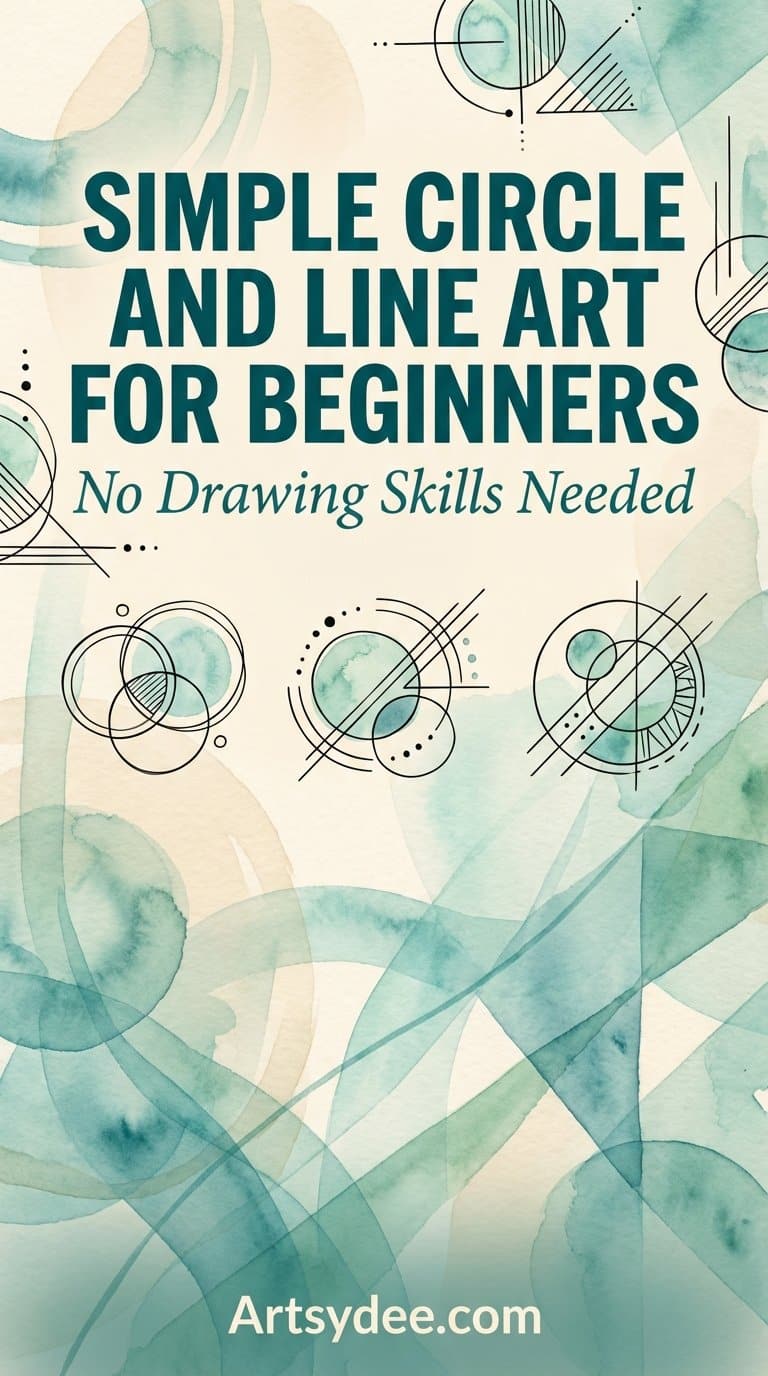
When I feel creatively stuck, I always come back to circles and lines. These two simple elements form the foundation of almost everything we draw and paint—and when combined in watercolor, they create surprisingly sophisticated artwork.
The beauty of working with just circles and lines is that there’s no pressure to “get it right.” A circle doesn’t have to be perfect to be beautiful. A line doesn’t have to be ruler-straight to be expressive. These forgiving shapes are the perfect playground for experimenting with color, water control, and composition.
Whether you’re warming up before a bigger project or looking for a meditative art practice, circles and lines deliver satisfying results every time.
Grab your free Circles and Lines Templates at the end of this post!
🎬 Love video tutorials? Subscribe to my YouTube channel for weekly watercolor tutorials!
What’s Inside
Why Circles and Lines Work So Well
Quick Answer: Circles and lines are the most fundamental elements in visual art. Mastering them in watercolor teaches you essential techniques—brush control, water management, color mixing—without the complexity of drawing accurate subjects.
Think about it: every object can be broken down into circles and lines. A tree? Circular canopy, linear trunk. A face? Circular head, linear features. Learning to paint these basic shapes well means you’re actually learning the building blocks of everything.
Enjoying these simple shapes? My Patreon reference sets add colour-recipe cards so your next painting mixes up beautifully.
Browse the reference sets →Circle-Based Watercolor Ideas
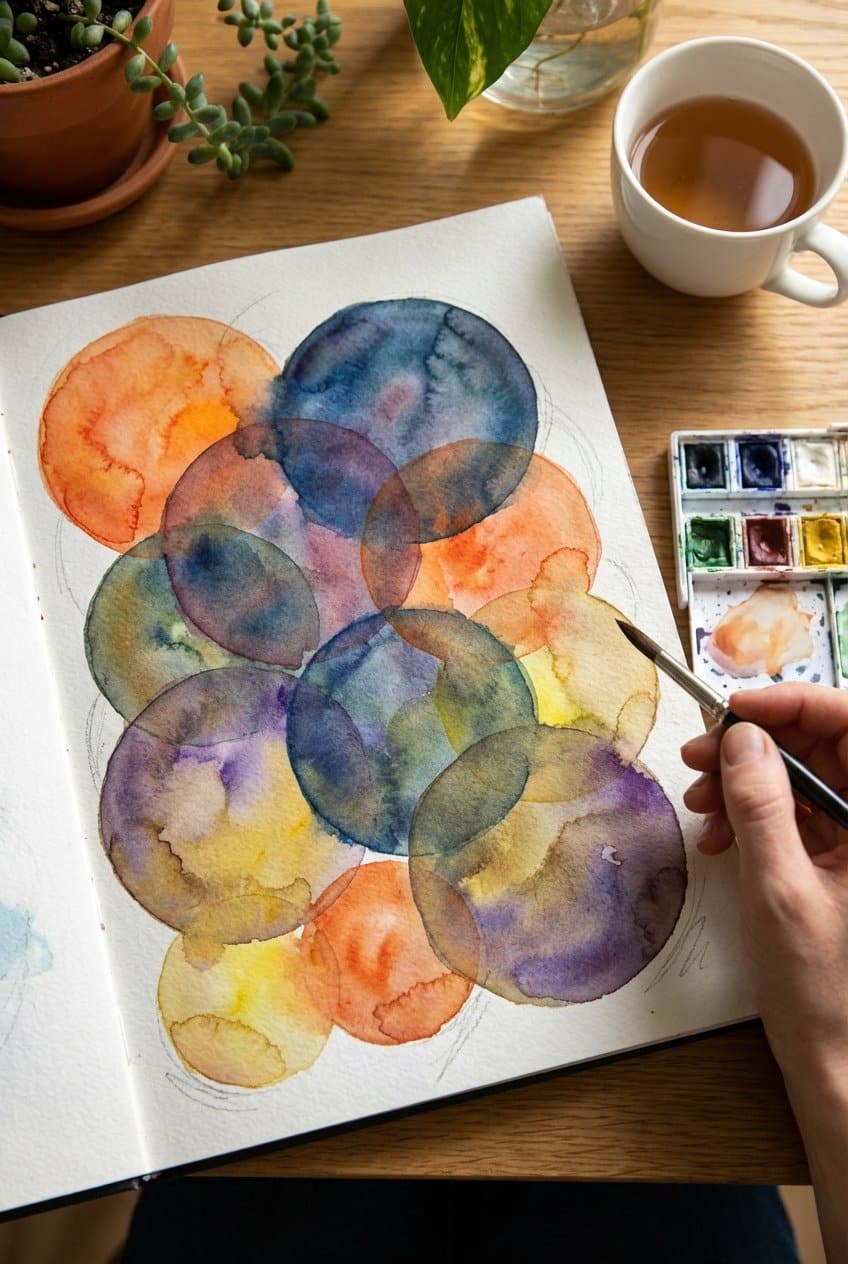
Circles are inherently satisfying to paint. Their continuous curve creates a natural flow for your brush, and their symmetry makes them visually pleasing even in their simplest form.
- Gradient circles – Paint circles that transition from one color to another
- Concentric rings – Layers of circles within circles, like tree rings
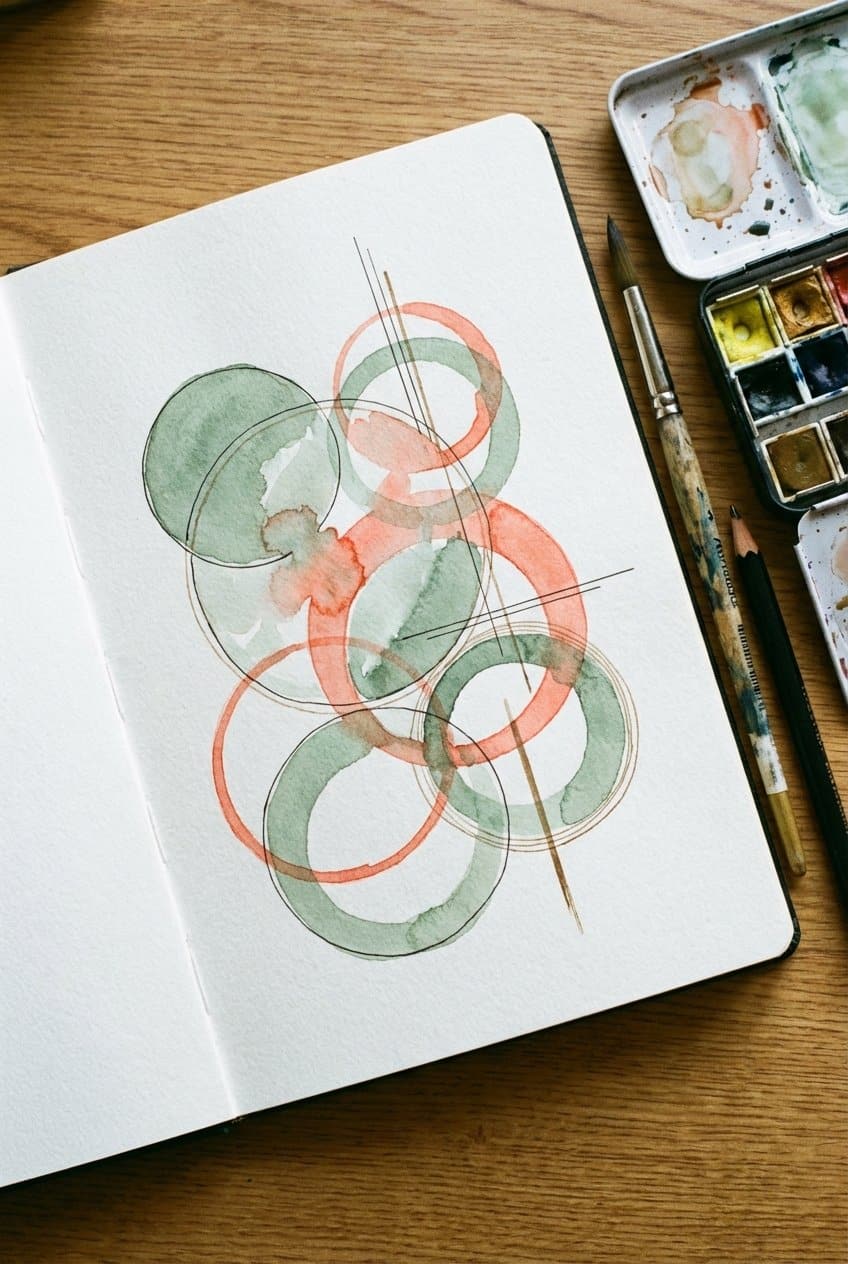
- Overlapping circles – Watch new colors form where circles intersect
- Circle chains – Connected circles like beads on a string
- Moon phases – A row of circles showing different phases
- Abstract orbs – Spherical circles with shadow and highlight
For smooth circles, I use my Escoda round brushes—the consistent point helps create even curves.
Line-Based Watercolor Ideas
Lines teach you brush pressure and paint consistency. A thin line requires a light touch and drier brush; a thick line needs more pressure and wetter paint.
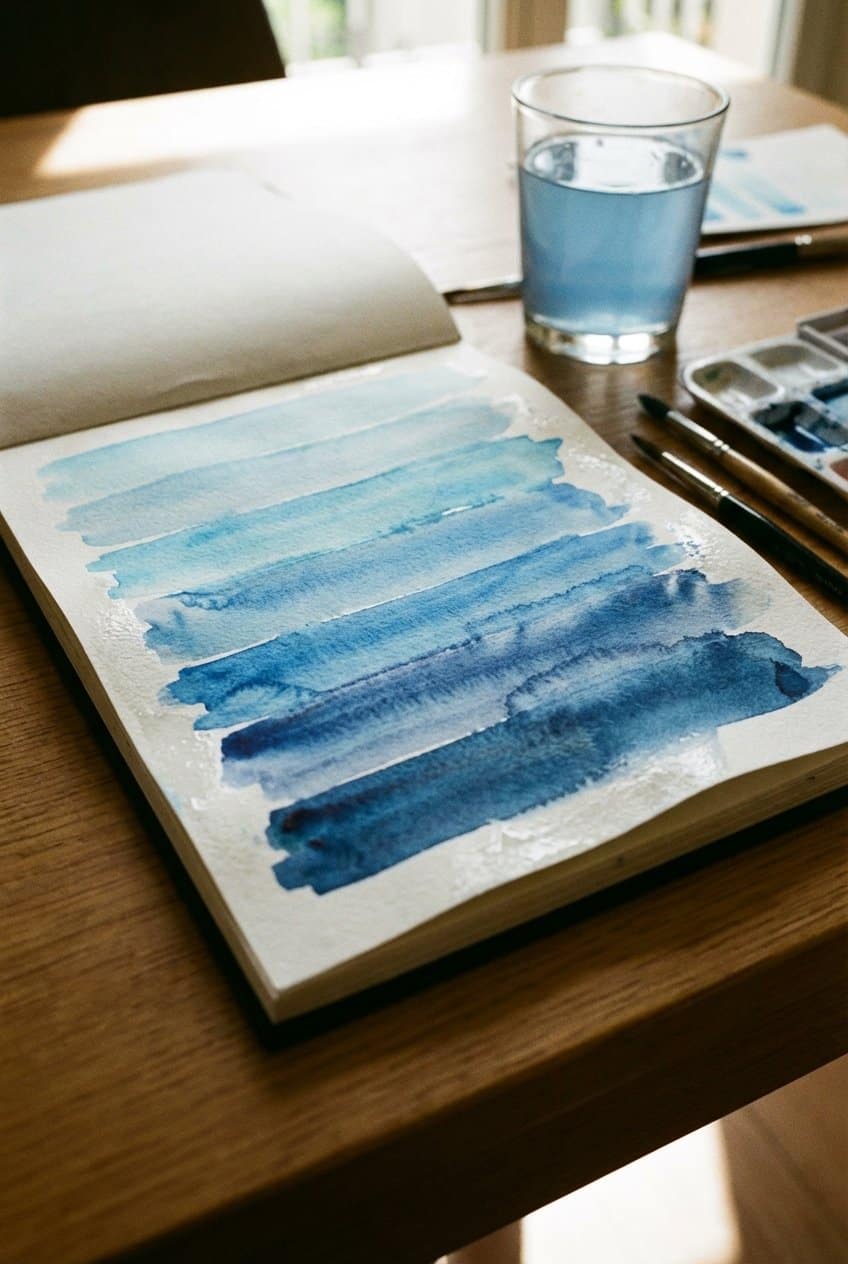
- Horizontal stripes – Simple bands of color, perfect for practicing flat washes
- Parallel lines – Varying thickness and spacing creates rhythm
- Wavy lines – Organic movement, like ocean waves or hills
- Intersecting lines – Grid patterns that create new shapes where they cross
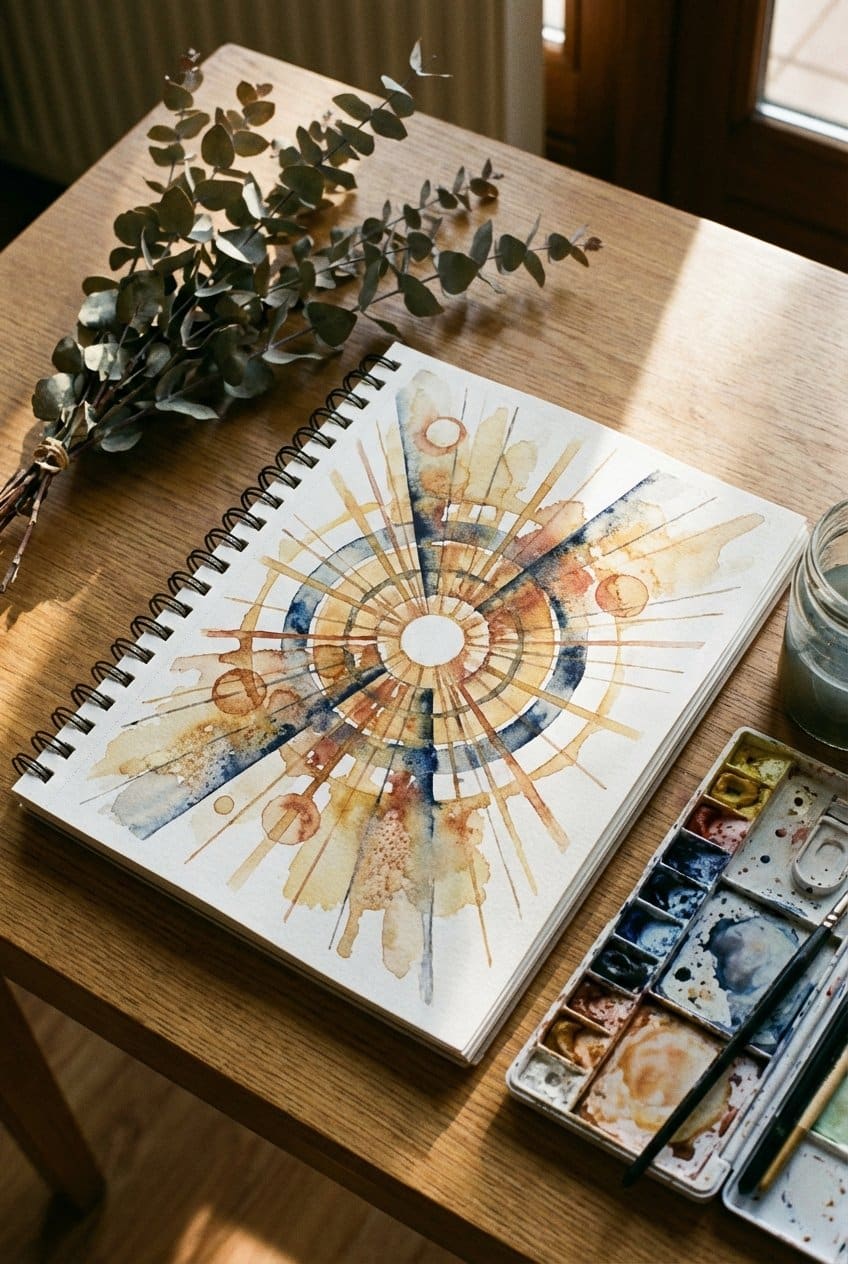
- Radiating lines – Lines spreading outward from a central point
- Freeform scribbles – Expressive, gestural marks
Combining Circles and Lines
Quick Answer: When you combine circles and lines, you create visual contrast—the softness of curves against the structure of straight edges. This tension creates dynamic, interesting compositions.
- Circles on stems – Like abstract flowers or lollipops
- Stripes through circles – Lines running through or behind circle shapes
- Geometric patterns – Circles at line intersections
- Sun and rays – Central circle with radiating lines
- Connected orbs – Circles joined by lines, like molecular structures
Color Combinations That Work
Limiting your palette makes circle and line art more cohesive. Try these combinations:
- Monochromatic – Different values of one color (light to dark blue)
- Analogous – Colors next to each other on the wheel (yellow, orange, red)
- Complementary – Opposite colors (blue and orange, purple and yellow)
- Earth tones – Warm browns, ochres, and siennas
- Pastels – Soft, diluted versions of bright colors
I love mixing colors in my MEEDEN ceramic palette—the deep wells keep washes fresh and prevent muddy mixing.
Supplies You’ll Need
Circle and line art requires minimal supplies—just quality basics that respond well to your techniques.


This post contains affiliate links, which means I may earn a small commission at no extra cost to you if you make a purchase. I only recommend products I genuinely love and use myself!
Free Templates
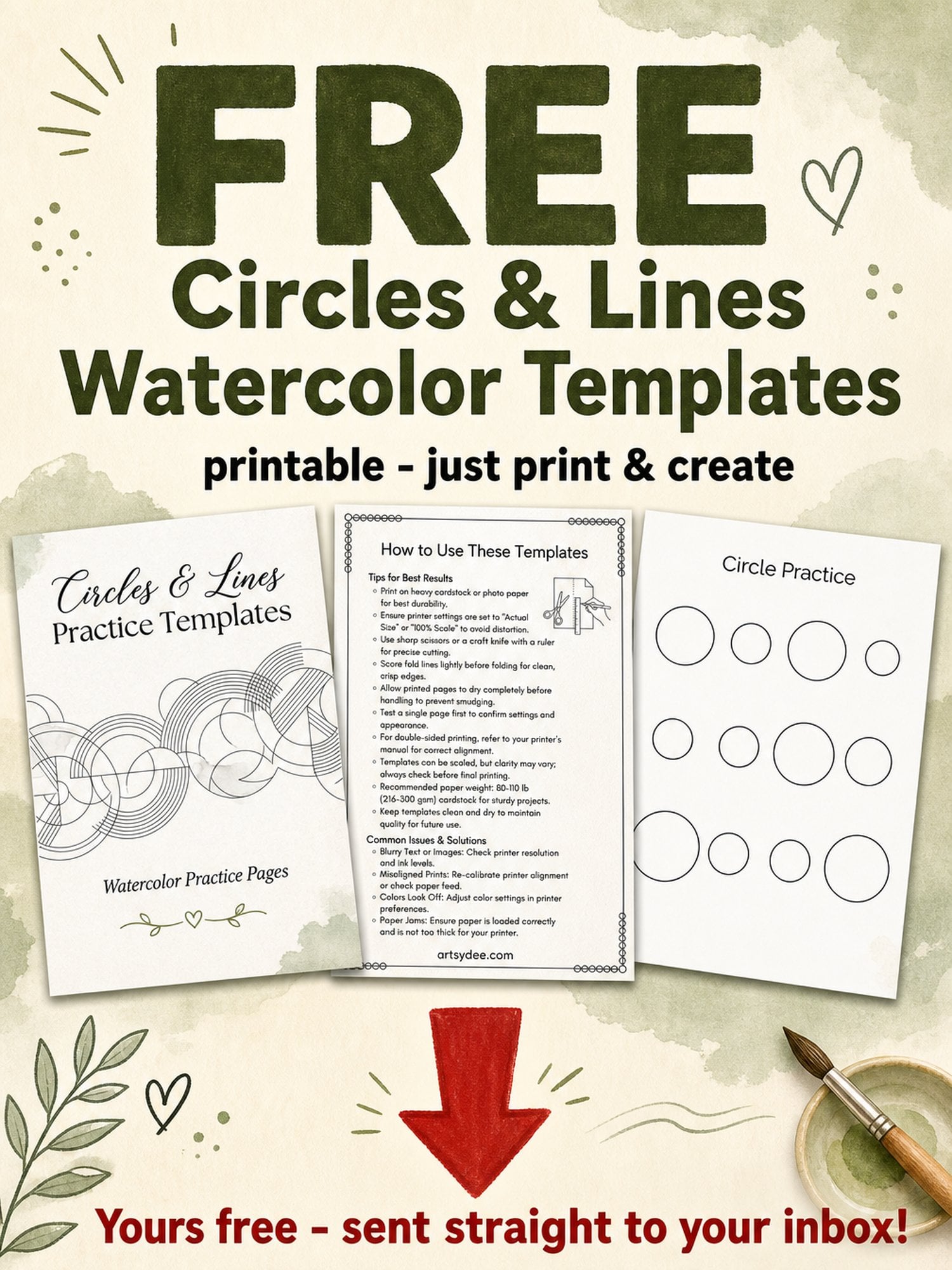
Get started with these printable templates featuring circle and line guides for your watercolor practice.
👉 Pop your email into the box near the top of this post and I’ll send these straight to your inbox — free!
Looking for more? Check out my Payhip shop for premium watercolor templates!
Frequently Asked Questions
Do I need to draw circles perfectly?
Not at all! Hand-drawn imperfect circles have more character than mechanically perfect ones. The slight variations in your circles add to their charm and show the human hand behind the work.
What brush is best for watercolor lines?
A round brush with a good point works best for both thick and thin lines. By varying your pressure, one brush can create lines of many different widths.
How do I keep watercolor lines from bleeding?
Use less water for crisp lines. Load your brush with pigment but blot excess water on a paper towel first. For very precise lines, make sure your paper is completely dry before painting.
Final Thoughts
Circles and lines might seem too simple to be interesting, but I’ve filled entire sketchbooks with nothing but these two elements and never gotten bored. Each page teaches me something new about color, composition, or technique.
Start with a page of circles in your favorite color, or stripes in a gradient you’ve been wanting to try. No pressure, no expectations—just paint and see what happens.
Want to see these techniques in action? Head over to my YouTube channel where I share step-by-step tutorials every week!
Tag me on Instagram @artsydee when you try these ideas—I love seeing your circle and line art!
You Might Also Like
- Tiny Watercolor Florals for Sketchbooks
- One-Page Watercolor Sketchbook Ideas
- Simple Watercolor Shapes to Practice Daily
- Mini Watercolor Landscapes for Beginners
- What to Paint First When You’re New to Watercolor
Pin this for later!
If these free templates got you playing with circles and lines, my premium reference sets on Patreon take it further — finished pieces with colour-recipe cards so every mix is one you can repeat. From £14 (~$18).
Browse the reference sets →