Last Updated on October 6, 2026 by Dee
“I can’t draw, so I can’t paint watercolors.” I’ve heard this so many times, and it makes me want to gently shake some sense into people. Because here’s the truth: some of the most beautiful watercolor paintings require zero drawing ability.
Abstract watercolors, loose florals, atmospheric landscapes, dreamy skies—these don’t need a single pencil line. The magic is in the water and pigment themselves, how they flow and bloom and blend without any help from your sketching skills.
If you’ve been avoiding watercolor because you “can’t draw,” this post is for you.
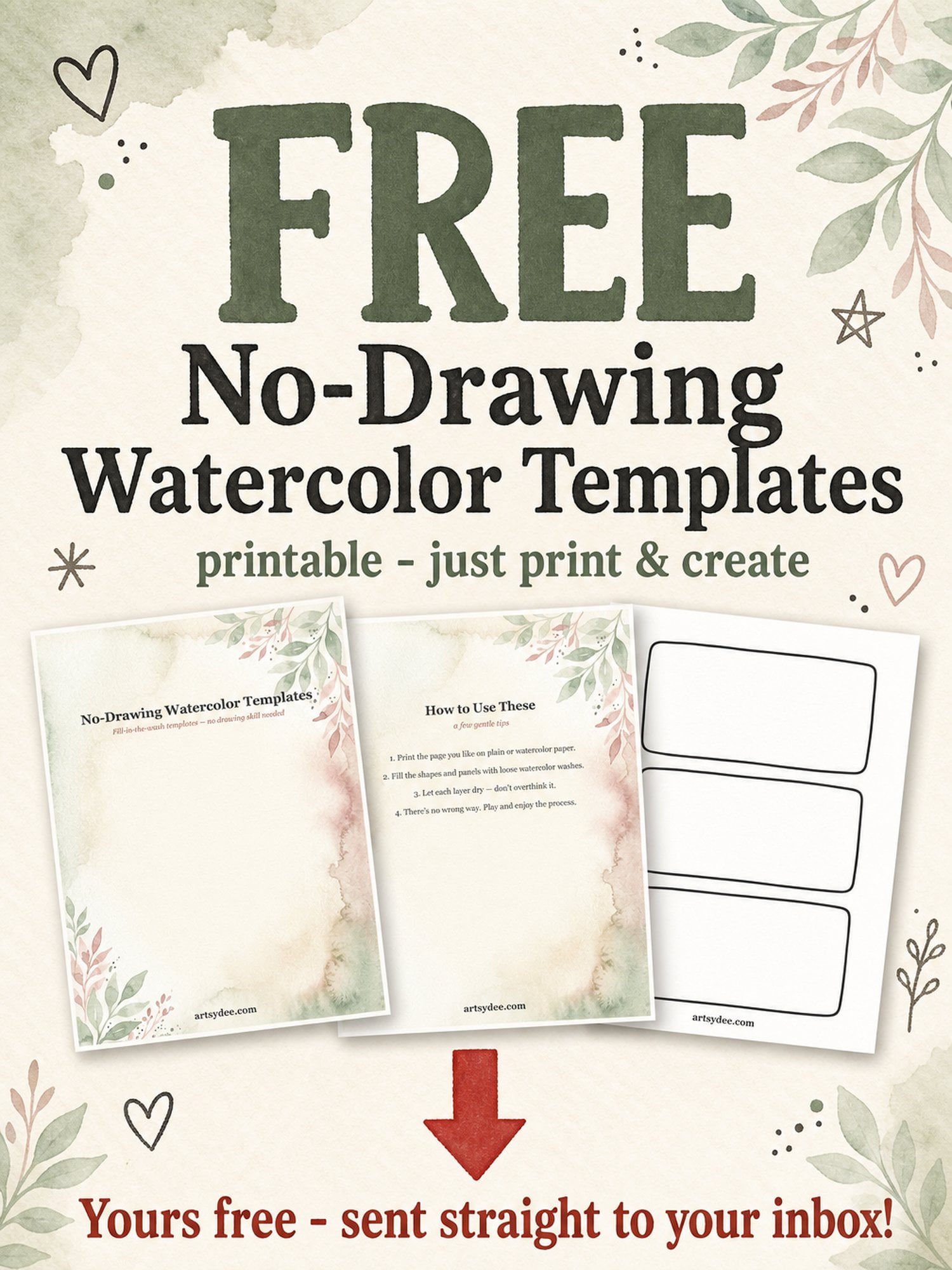
Grab your free No-Drawing Watercolor Templates at the end of this post!
🎬 Love video tutorials? Subscribe to my YouTube channel for weekly tutorials!
What’s Inside
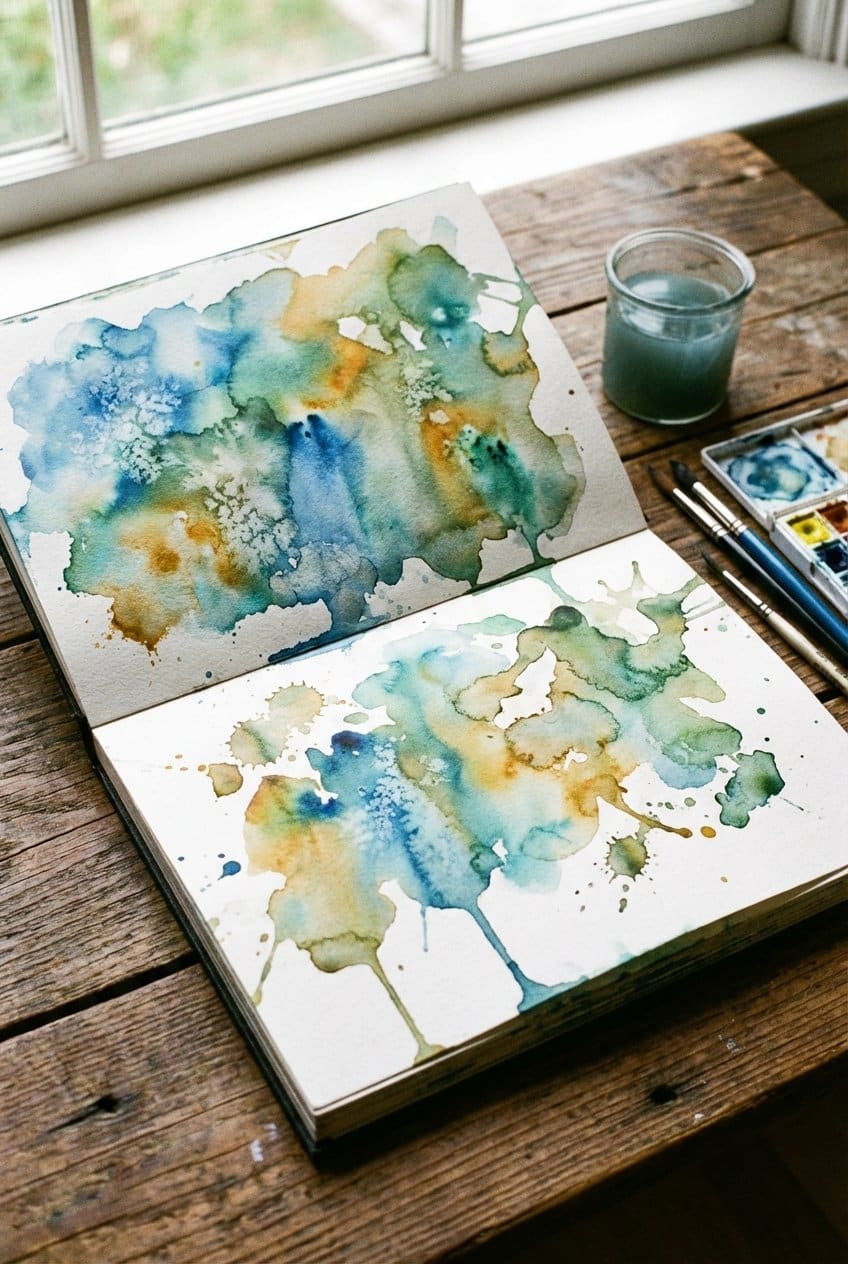
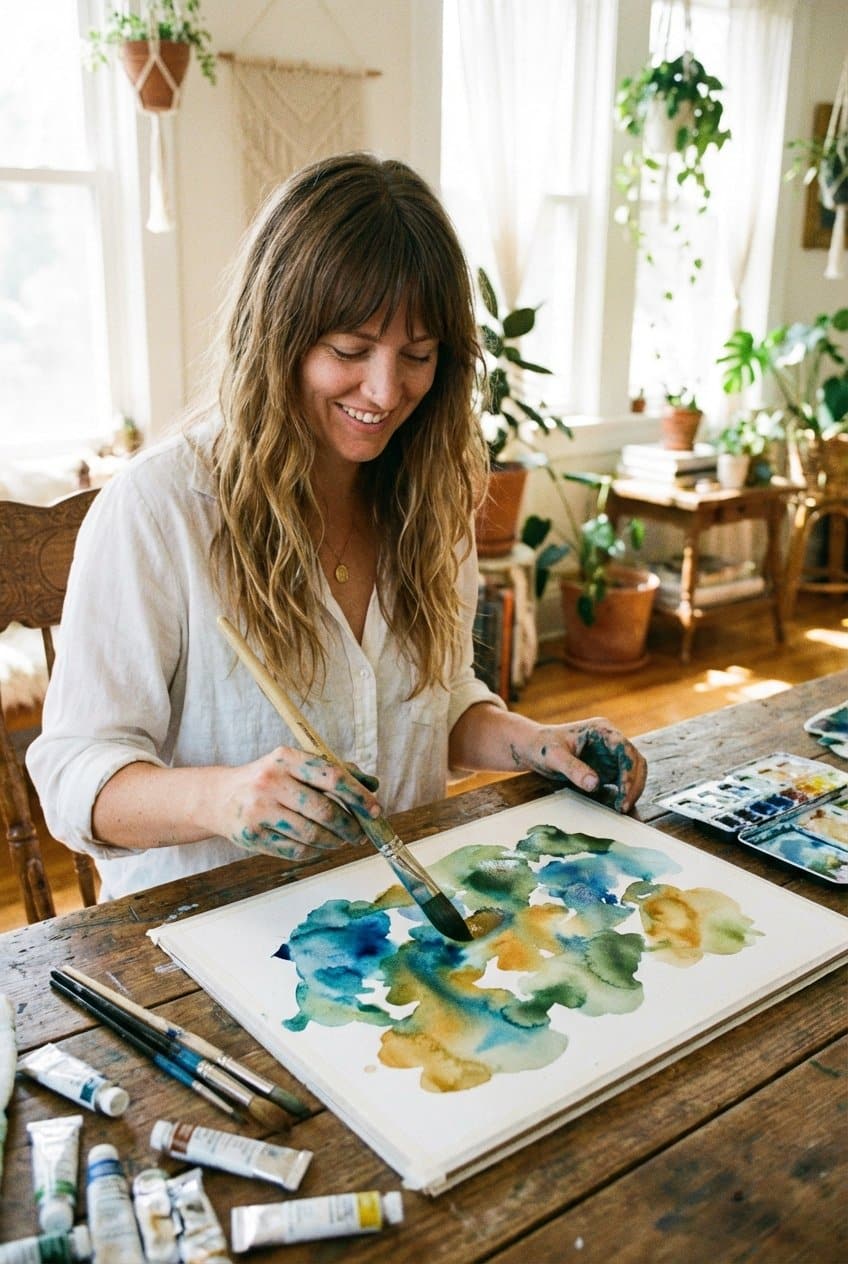
Abstract Washes and Blooms
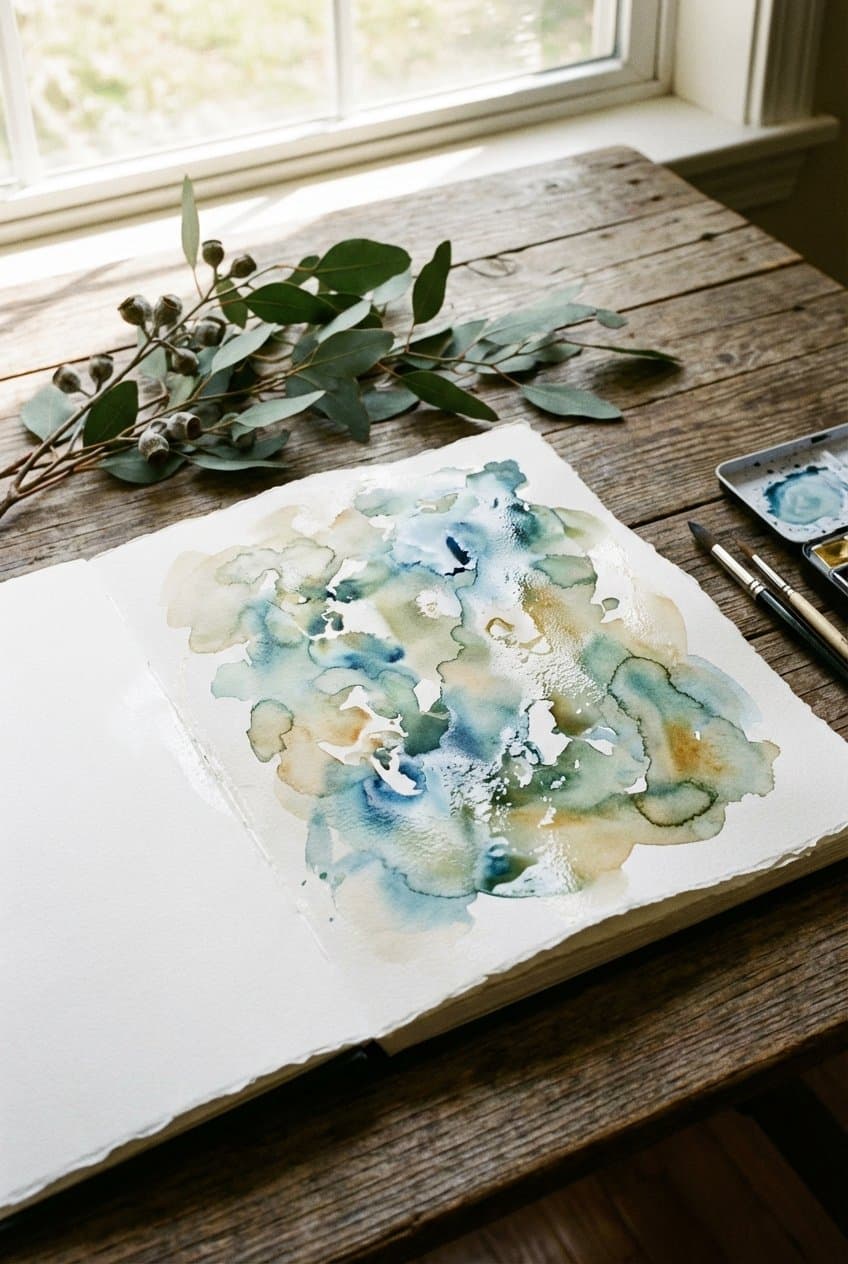
Quick Answer: Abstract watercolor paintings celebrate the natural behavior of water and pigment—blooms, bleeds, soft edges. No drawing needed, just beautiful accidents you learn to guide.
- Wet the paper with clean water
- Drop in color and watch it spread
- Add more colors and let them blend
- Tilt your paper to guide the flow
- Let it dry without interfering
The results are always beautiful and always unique. Every abstract wash is a one-of-a-kind piece of art.
No drawing needed here either — my premium watercolour reference sets on Patreon come with colour-recipe cards for every wash, bloom and gradient.
Browse the reference sets →Gradient Skies
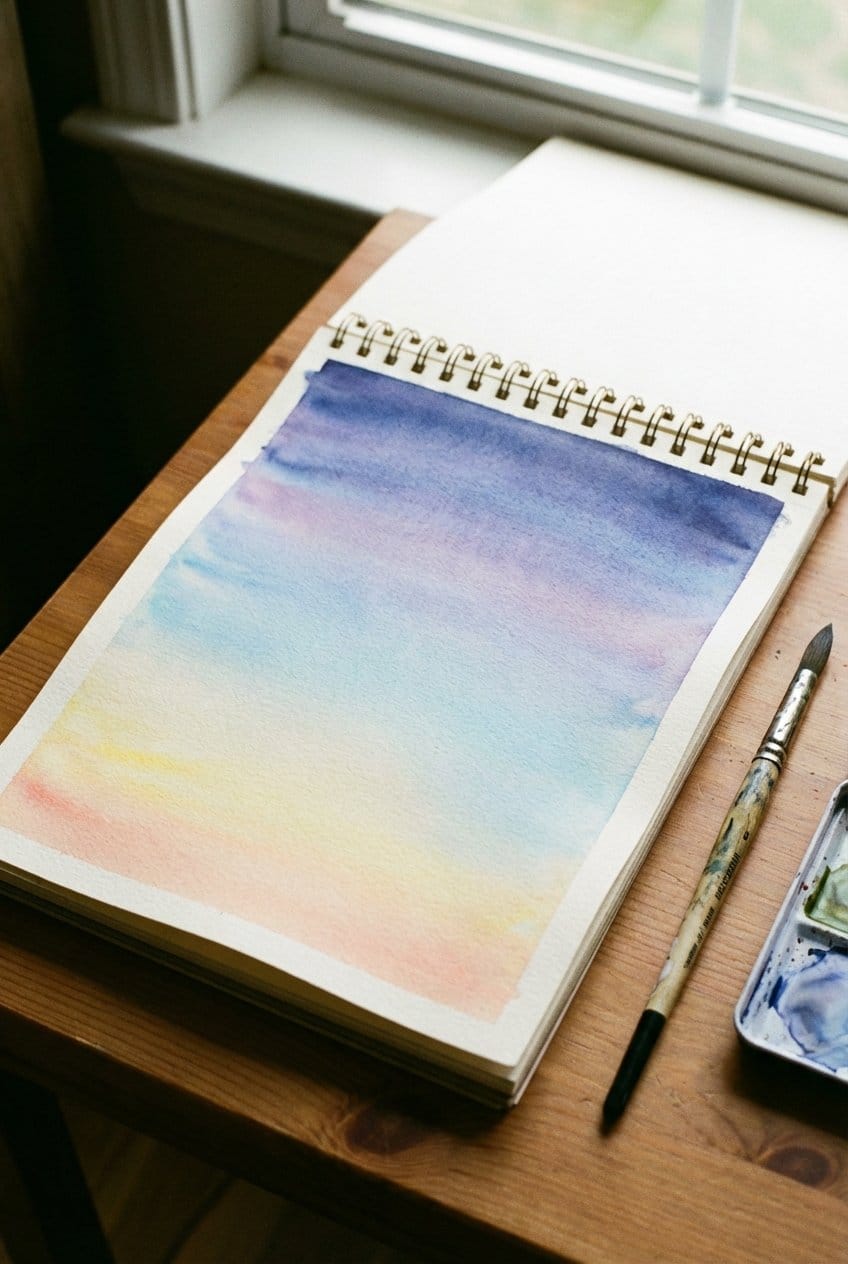
Skies are one of the most satisfying subjects to paint without drawing. A smooth gradient from blue to orange to purple captures the feeling of sunset without requiring any precision.
- Wet your paper with even coverage
- Start with the lightest color at the horizon line
- Work upward with darker or different colors
- Blend where colors meet
- Let it dry flat for even drying
My Winsor & Newton Cotman set creates gorgeous sky gradients with its French Ultramarine and Alizarin Crimson.
Loose Florals Without Sketching
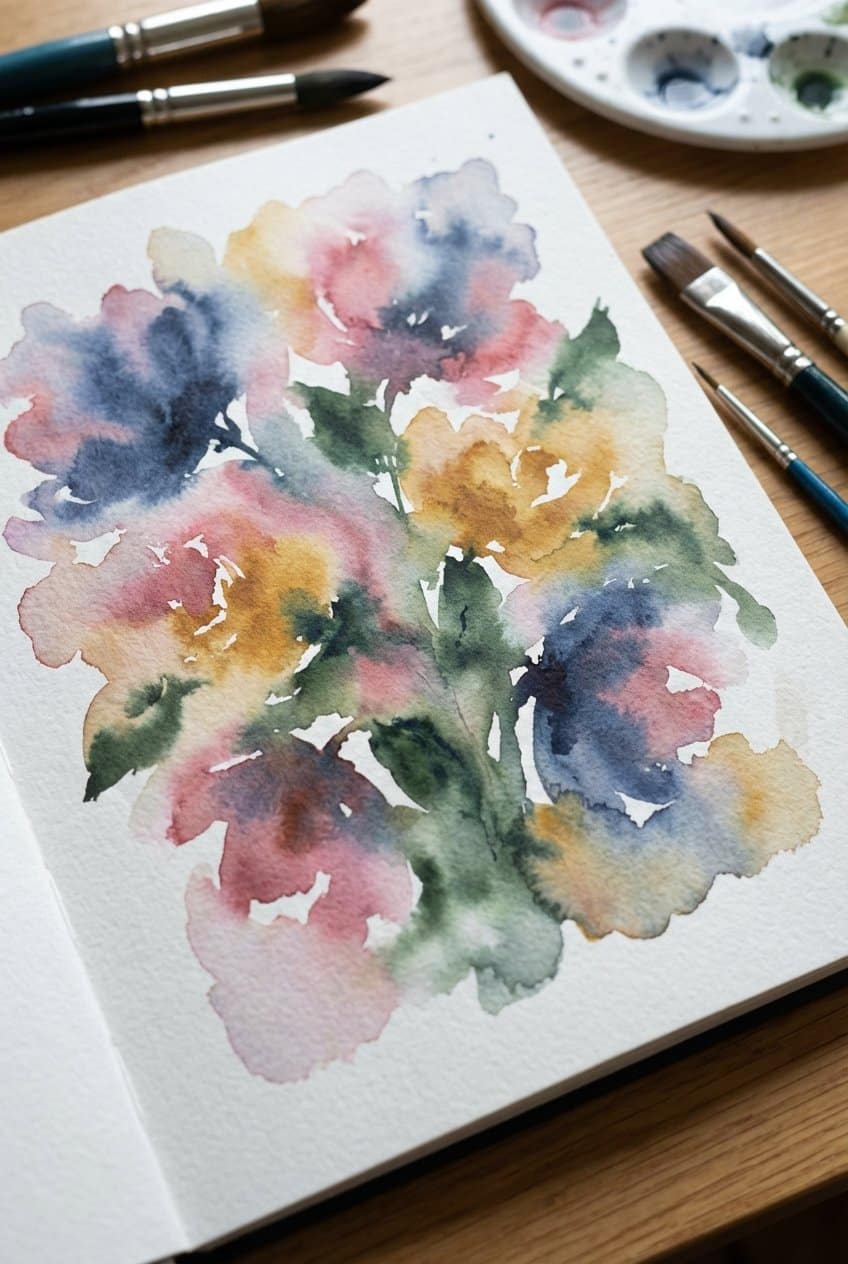
Loose watercolor flowers are painted directly with the brush—no pencil outlines, no planning. Just confident brush strokes that suggest petals and leaves.
- Rose – Start center, spiral outward with petal strokes
- Poppy – Large petal dabs around a dark center
- Lavender – Tiny dots along a stem line
- Daisy – Pointed petals radiating from center
- Leaves – Single brush strokes, varying pressure
The “imperfect” quality is the charm. These aren’t meant to be botanical illustrations—they’re impressions of flowers.
Wet-on-Wet Landscapes
Quick Answer: Wet-on-wet landscapes use the natural bleeding and blending of watercolor to create atmospheric scenes—misty mountains, foggy forests, soft horizons—all without precise drawing.
- Misty mountains – Pale shapes painted on wet paper
- Foggy tree lines – Soft silhouettes with blurred edges
- Ocean horizons – Simple color transitions
- Sunset silhouettes – Dark shapes against colorful skies
Color Studies and Swatches
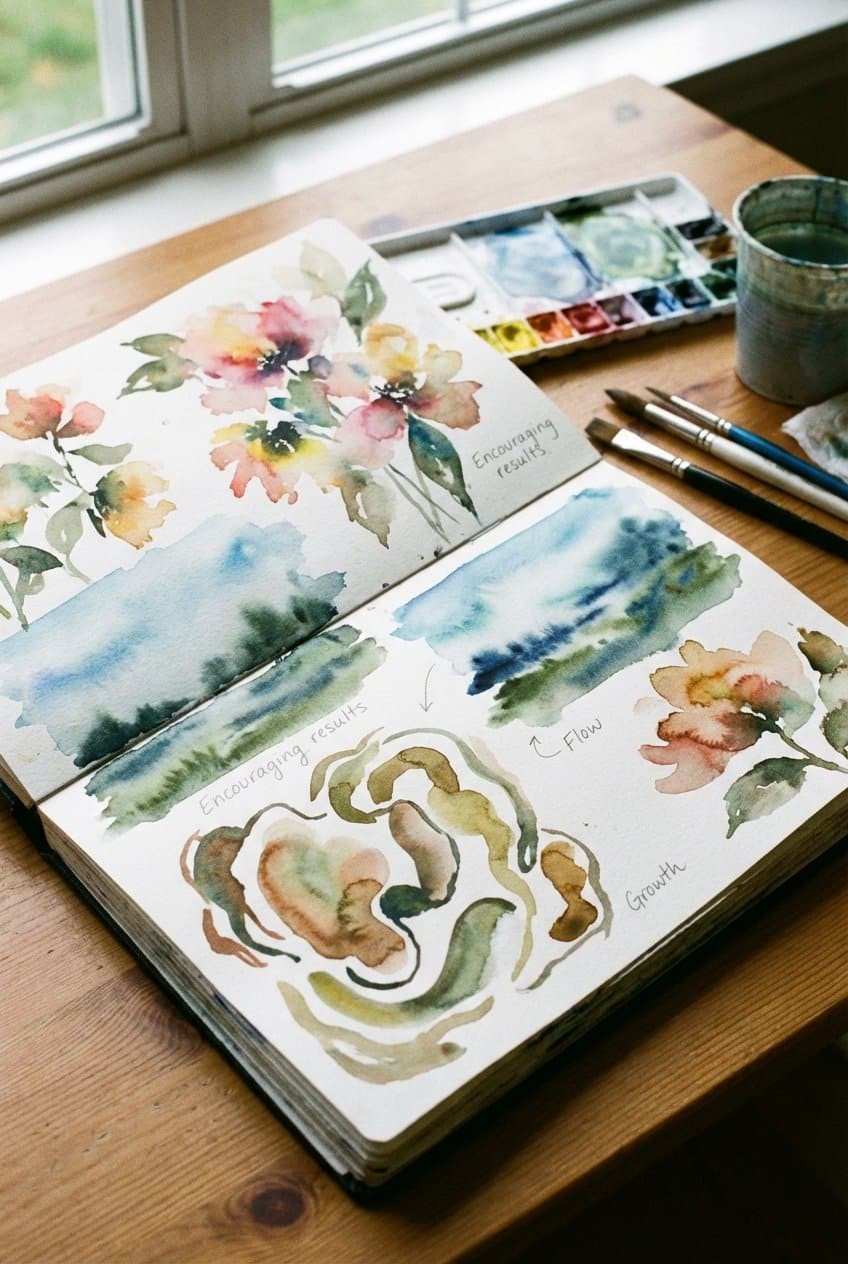
Sometimes the most beautiful “paintings” are simply explorations of color. Swatches, gradients, color mixing experiments—these become art in themselves.
- Rainbow gradients – Moving through the spectrum
- Two-color blends – Seeing what colors create together
- Value scales – Light to dark progressions
- Random color drops – Just play with what happens
Keep a dedicated watercolor sketchbook for these experiments—they become beautiful references and art pieces.
Supplies You’ll Need
Basic supplies work great for no-drawing watercolors. Quality paper matters most here—you want the water to behave predictably.

|

|

|

|
This post contains affiliate links, which means I may earn a small commission at no extra cost to you if you make a purchase.
Free Templates
Get started with these no-drawing watercolor guides and technique sheets.
👉 Pop your email into the box near the top of this post and I’ll send these straight to your inbox — free!
Want more? Check out my Payhip shop for premium templates!
Frequently Asked Questions
Can you really make good art without drawing first?
Absolutely! Many professional watercolor artists work without pencil sketches, especially for abstract, loose, and atmospheric work. Drawing is one skill; painting is another entirely.
What if my no-drawing paintings look messy?
“Messy” often means “loose and expressive” in watercolor. Embrace the organic quality—that’s what makes these paintings charming. Perfect control isn’t the goal.
Will I ever need to learn to draw for watercolor?
Only if you want to paint specific representational subjects like detailed portraits or architecture. Many watercolorists focus exclusively on subjects that don’t require drawing skills.

Final Thoughts
Don’t let drawing anxiety keep you from watercolor. Some of the most beautiful, sought-after watercolor styles require zero sketching—just a willingness to play with water and color.
Try a simple abstract wash tonight. Wet your paper, drop in some color, and just watch what happens. That’s watercolor magic, no drawing required.
Head over to my YouTube channel for video tutorials!
Tag me on Instagram @artsydee with your no-drawing paintings!
You Might Also Like
- Tiny Watercolor Florals for Sketchbooks
- One-Page Watercolor Sketchbook Ideas
- Simple Watercolor Shapes to Practice Daily
- Mini Watercolor Landscapes for Beginners
- Easy Watercolor Ideas Using Circles and Lines
Pin this for later!
Where to buy the full paid set
Enjoying these free resources? When you’re ready to keep going, my Watercolor Starter Vault gives you a whole library of ready-to-paint watercolour outlines in the same paint-inside-the-lines style — just more of them, and all in one tidy download. It’s £9 (~$11 USD) over on Payhip. Or browse the whole watercolour template collection and pick your favourites. Everything is made and tested by me — a real art teacher.
If painting without sketching first felt freeing, the next step is knowing your colours cold. My premium reference sets on Patreon come with colour-recipe cards, so those abstract washes and gradient skies come out the shade you pictured.
See what’s on Patreon →