Last Updated on July 19, 2026 by Dee
Staring at a blank sketchbook page is weirdly intimidating. You’d think it would be freeing — all that white space, all that possibility — but instead your brain goes completely blank. What do I even draw? I’m not good enough. What if I ruin this nice sketchbook?
I get it. I’ve been there. Every artist has been there. The secret that nobody tells beginners is that the hardest part isn’t learning to draw — it’s figuring out what to draw in the first place. Once you have a subject in front of you, your hand knows more than you think it does.
Get Your Free Beginner Sketch Starter Pack below 👇🏻
That’s why I’ve put together over 60 sketch ideas specifically for beginners. Simple subjects, everyday objects, things you can see from where you’re sitting right now. No experience needed. No fancy supplies required. Just a pencil, some paper, and the willingness to make marks that might not be perfect — because they don’t need to be.
🎬 Love video tutorials? Subscribe to my YouTube channel for weekly drawing tutorials and art inspiration!
Table of Contents
Why Simple Subjects Are Best for Beginners
Quick Answer: Simple subjects with basic geometric shapes (cups, fruits, books) help beginners focus on fundamental skills like proportion, shading, and observation without getting overwhelmed by complex details.
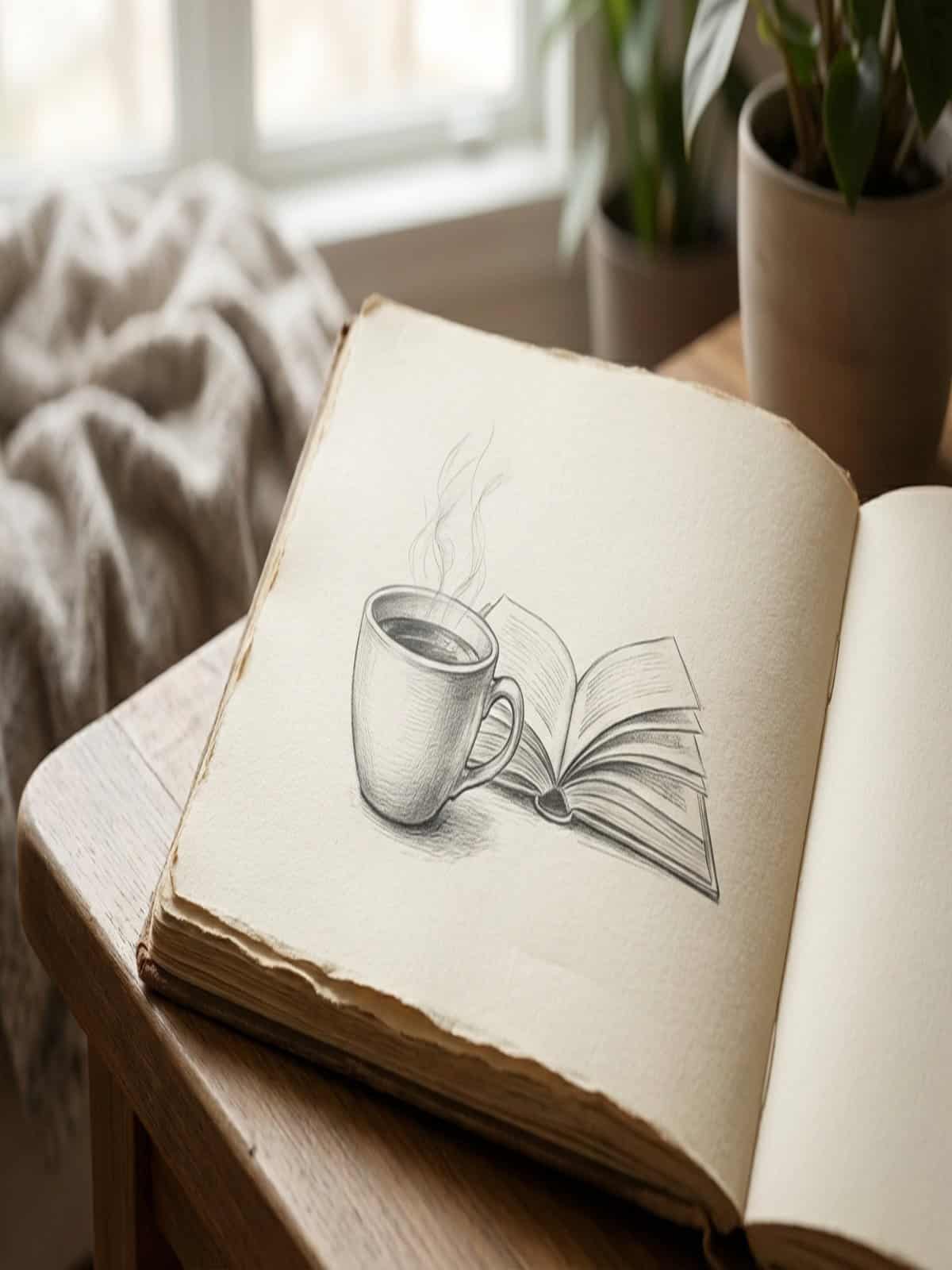
There’s a reason every art teacher in the world starts students with simple objects, and it’s not because they’re boring. A coffee cup teaches you about ellipses (the oval shape at the top), cylinders, and how light wraps around curved surfaces. A single apple teaches you about spheres, shadows, and reflected light. These are the building blocks of literally everything else you’ll ever draw.
The other reason simple subjects work so well? They’re low pressure. Nobody expects a beginner sketch of a coffee cup to be museum-worthy. That takes the performance anxiety right out of the equation. You’re just… drawing a cup. It already exists. You’re just looking at it and making marks.
Worked through the Starter Pack? There are premium template sets waiting in my shop.
Browse the shop →Everyday Objects to Sketch
Look around you right now. Seriously — wherever you’re sitting, there are at least ten things within arm’s reach that would make a great sketch. The best beginner sketch ideas are the ones you don’t have to go looking for.
- Your coffee mug or water glass
- Your phone (propped up at an angle)
- A pair of glasses or sunglasses
- Your keys on a keyring
- A candle (lit or unlit)
- A stack of books
- Your headphones
- A pen or pencil (ironic, but genuinely good practice)
- A small box or container
- A watch or piece of jewellery
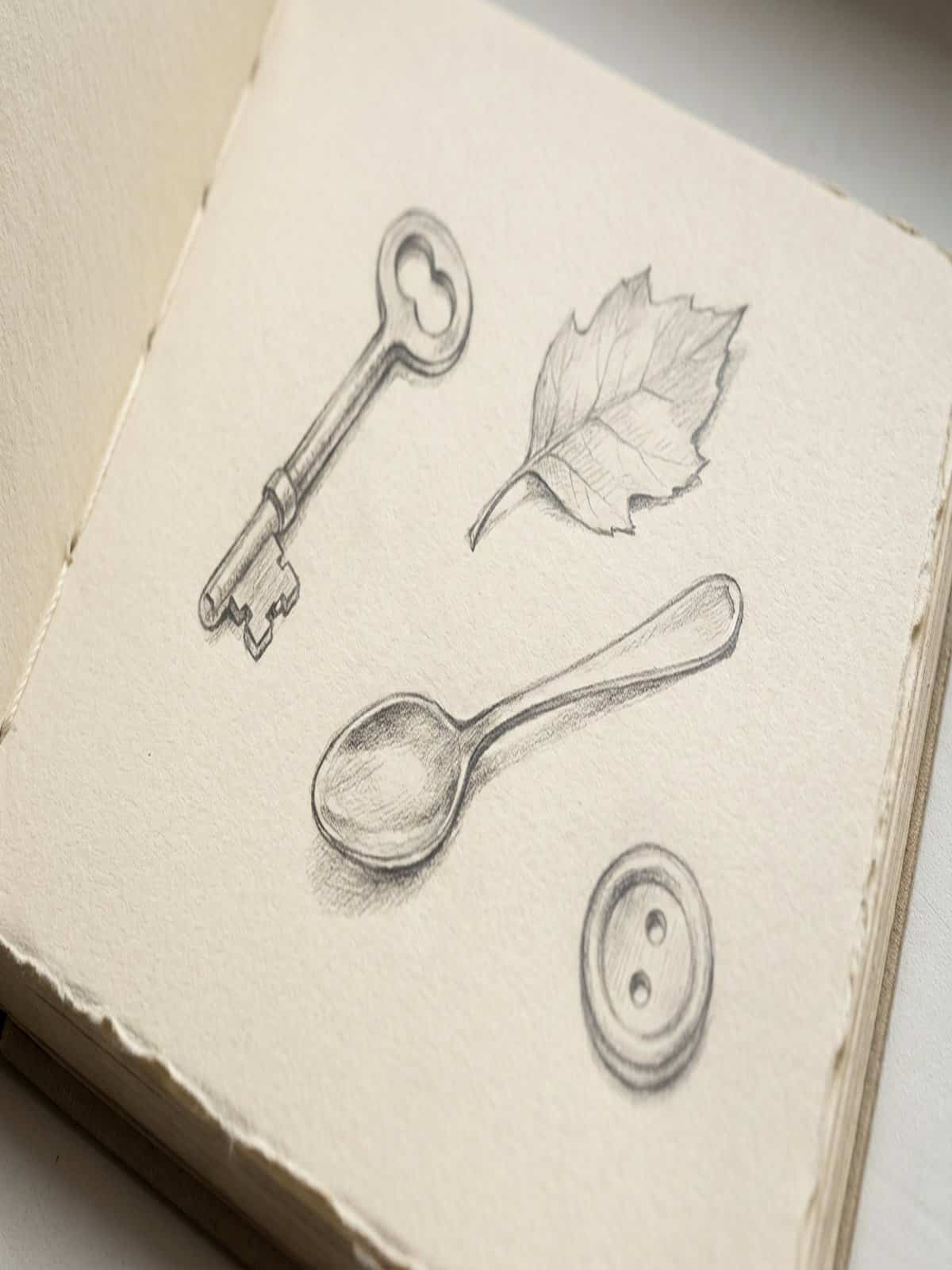
The trick with everyday objects is observation. Before you start drawing, spend 30 seconds just looking. Notice the shapes. Where’s the light coming from? Where’s the shadow? What’s the biggest shape, and what are the smaller details? This looking-before-drawing habit will improve your sketches faster than anything else.
Kitchen and Food Sketches
The kitchen is a goldmine for sketch subjects. Everything in there is made up of basic shapes — bowls are half-circles, jars are cylinders, cutting boards are rectangles. Plus, food has such satisfying textures to draw.
- A piece of fruit (apple, banana, pear — start with one)
- A jar of something (jam, honey, spices)
- An egg (deceptively tricky and great shading practice)
- A slice of bread or toast
- A kitchen utensil (wooden spoon, whisk, spatula)
- A teapot or kettle
- Vegetables (onion, mushroom, bell pepper)
- A bowl of something (cereal, salad, soup)
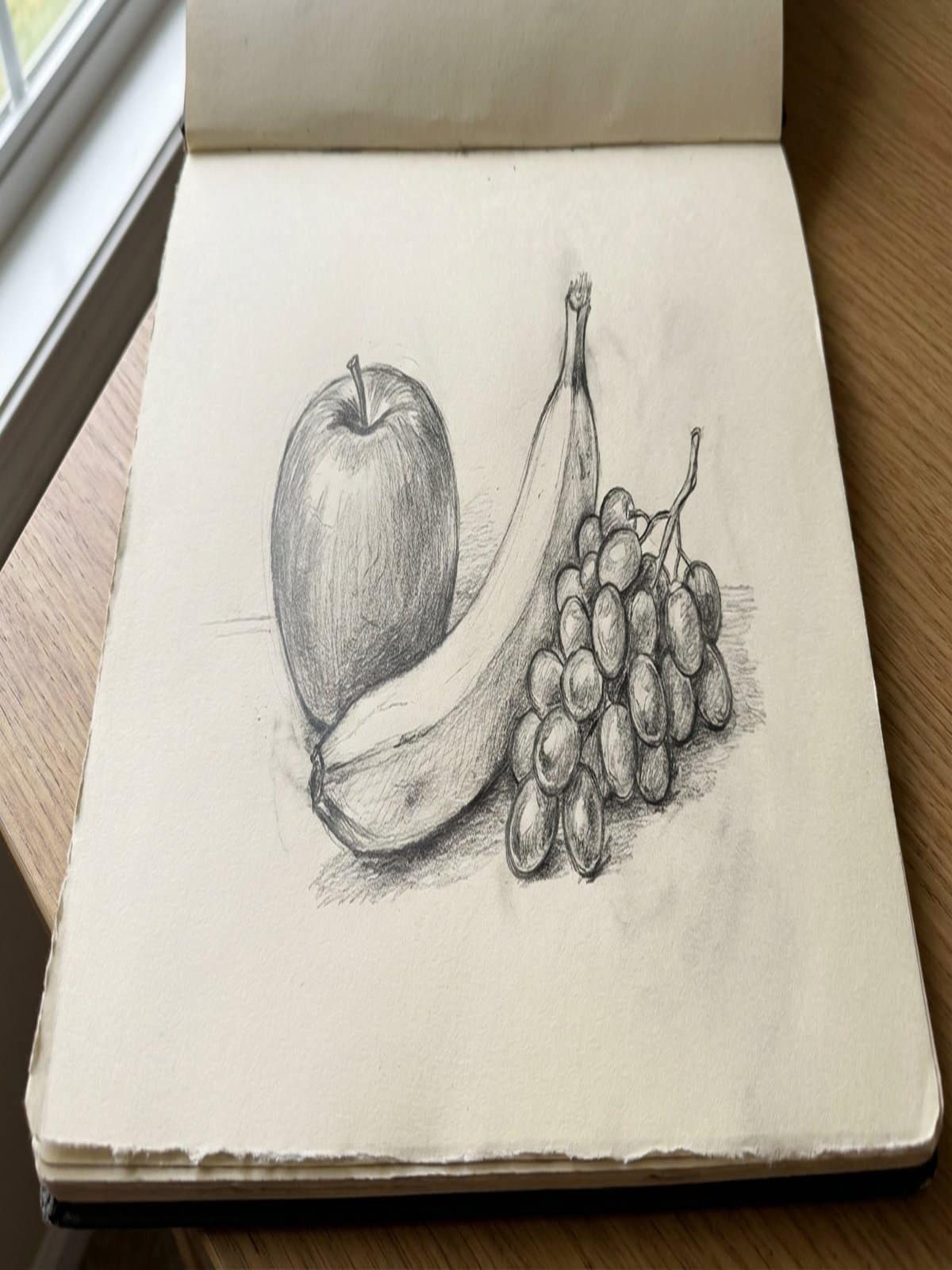
If you want to take your food drawings in a fun direction, check out my cute food drawings post — it’s all about turning simple food shapes into adorable kawaii characters. Same basic shapes, totally different vibe.
Nature and Outdoor Sketch Ideas
Nature is endlessly forgiving as a sketch subject. Trees don’t need to look exactly like the tree in front of you — they just need to look like a tree. Flowers can be loose. Landscapes can be simplified. Nature doesn’t judge your proportions.
- A single leaf (pick one up and draw it at your desk)
- A tree from your window
- A simple flower (daisy or tulip shapes are easiest)
- A potted plant or succulent
- A shell or stone
- A simple landscape (hills + a tree + sky)
- A cloud study (surprisingly relaxing)
- A bird on a wire (silhouette style)
- A pinecone or acorn
- A feather
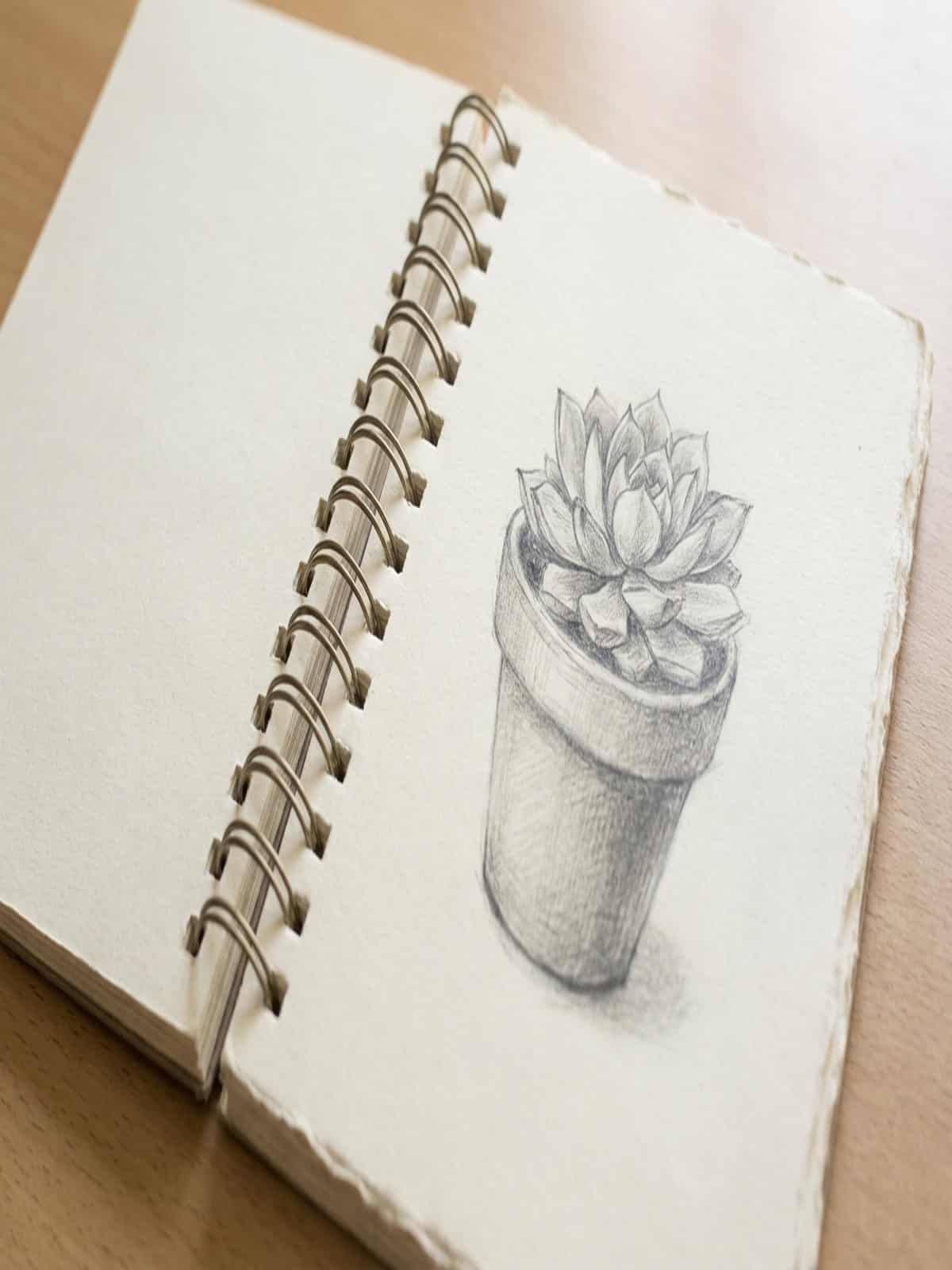
Once you feel comfortable sketching nature, adding watercolour is a gorgeous next step. My loose watercolor flowers tutorial shows you how to paint free-flowing florals — and the loose style means perfection is completely off the table.
Around the House Drawing Ideas
Your home is full of interesting shapes and compositions you probably walk past every day without noticing. These subjects are great because you can draw them from your sofa. No excuses about not having time to go somewhere inspiring.
- Your favourite pair of shoes
- A doorway or window frame
- A lamp (great for practising light and shadow)
- A chair from an interesting angle
- A shelf with books and objects
- A houseplant
- A cushion or pillow (fabric folds are fascinating)
- Your bedside table arrangement
- A coat hung on a hook
- Your bathroom sink and mirror
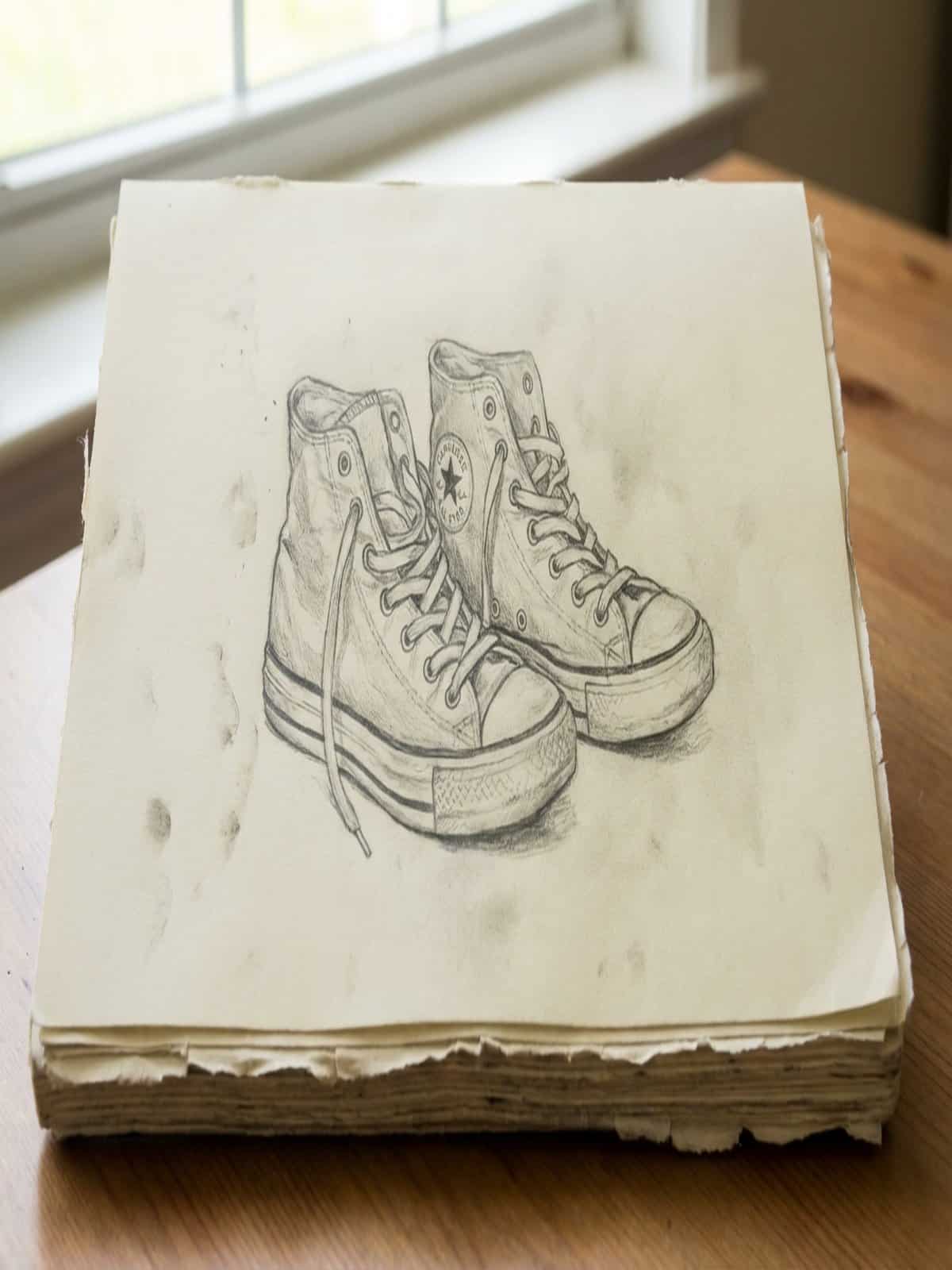
I use a Canson XL Sketchbook for most of my everyday sketching. The pages are thick enough for pencil and even light marker work, and the size fits nicely in a bag so you can take it anywhere.
People and Animals (Beginner Friendly)
People and animals sound scary, but there are absolutely beginner-friendly ways to approach them. The key is to start with gesture and shapes rather than trying to draw a perfect portrait.
- Your own hand (the classic artist exercise)
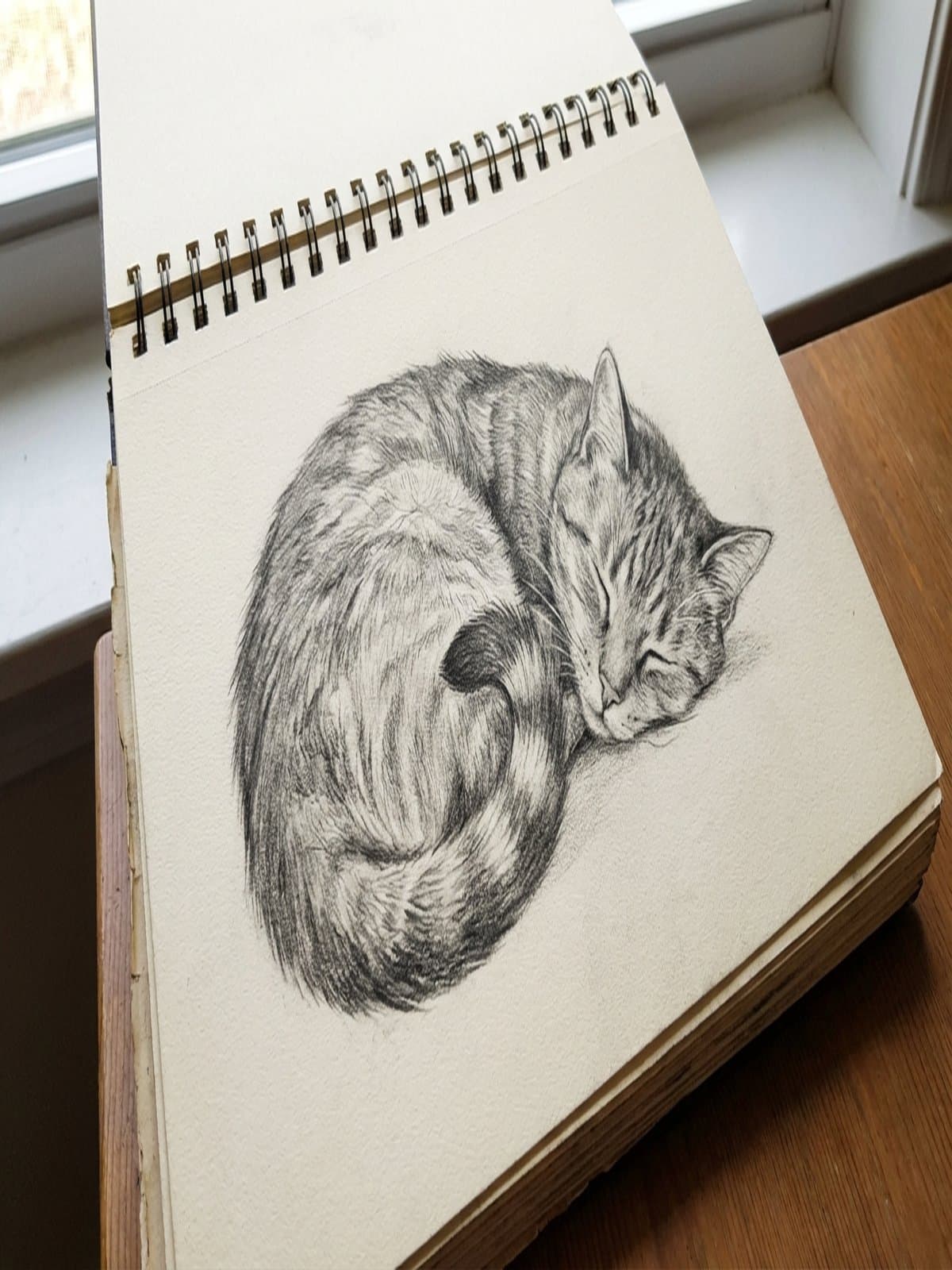
- A sleeping pet (they stay still!)
- A simple stick figure in different poses
- An eye study (just one eye, close up)
- A cartoon version of yourself
- A cat silhouette
- Someone sitting across from you (quick 2-minute sketch)
- A bird from a photo reference
Texture and Detail Studies
Once you’ve drawn some whole objects, try zooming in. Texture studies are brilliant practice because they’re small, focused, and incredibly satisfying. Fill a page with tiny texture samples and you’ll learn more about mark-making in twenty minutes than in a week of full drawings.
- Wood grain on a table
- Fabric weave (denim, knit, linen)
- Tree bark close-up
- Brick wall pattern
- Hair texture (curly, straight, braided)
- Water ripples
- Crumpled paper
- A woven basket
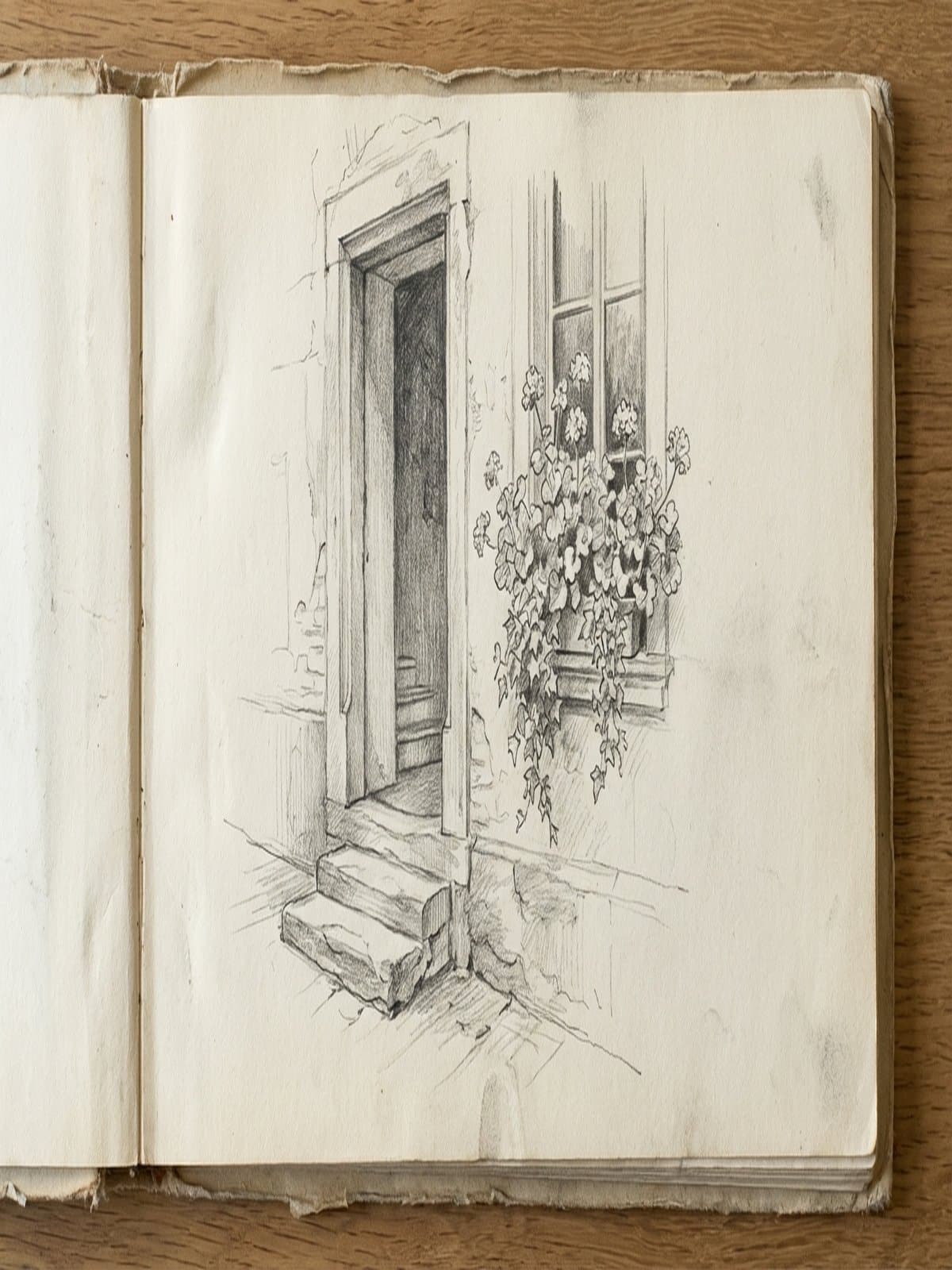
Building a Daily Sketch Habit
The single best thing you can do for your drawing skills is sketch a little bit every day. Even five minutes. Even badly. Consistency beats intensity every time — ten minutes a day for a month will do more for your skills than one epic eight-hour session.
Tips that actually work:
- Keep your sketchbook somewhere visible — not buried in a drawer
- Sketch at the same time each day (morning coffee, lunch break, before bed)
- Set a timer for 5-10 minutes. When it goes off, you can stop guilt-free
- Date every page. You’ll thank yourself later when you flip back and see your progress
- It doesn’t have to be good. It just has to exist on the page
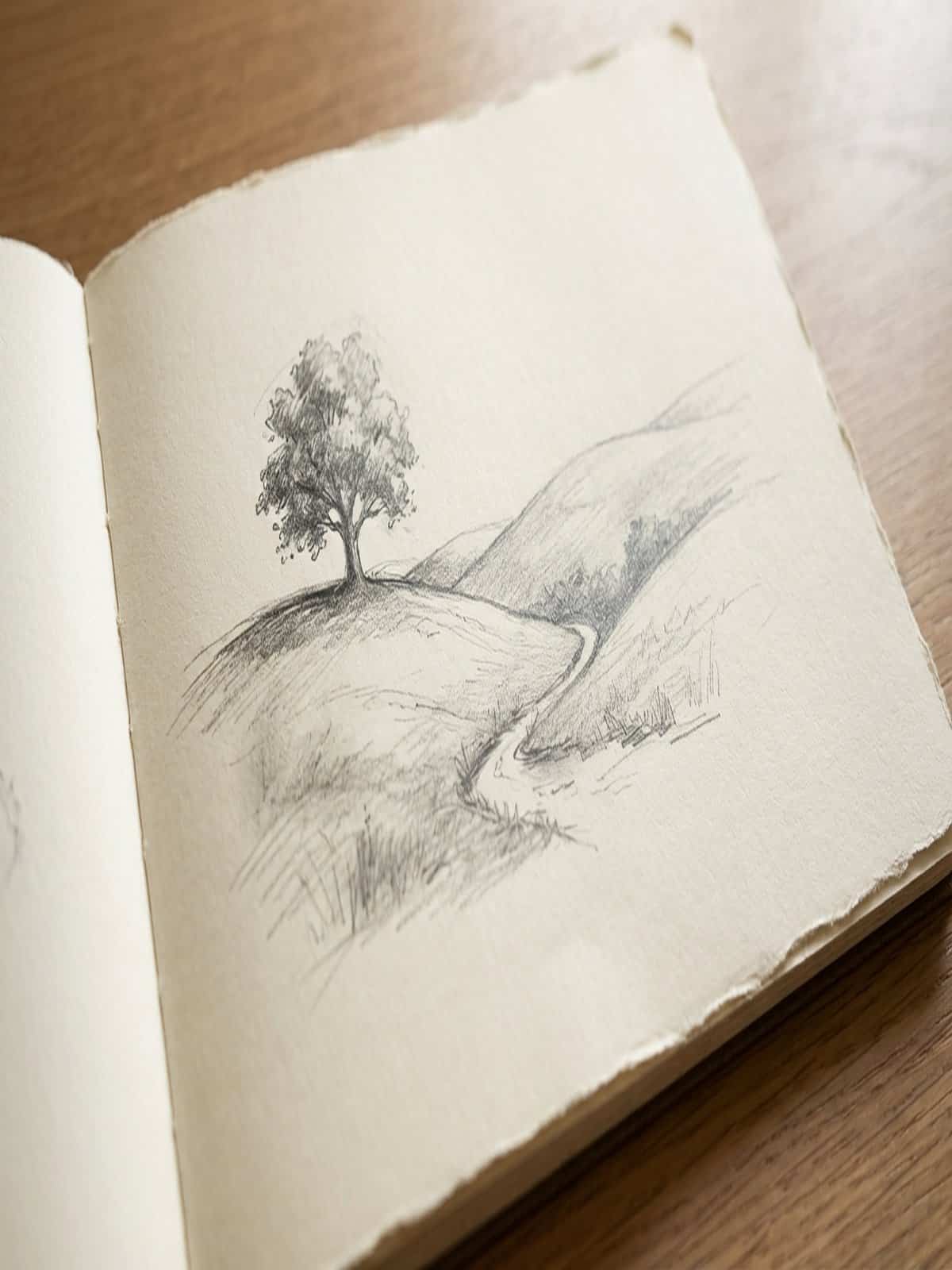
Best Supplies for Beginner Sketching
You genuinely only need a pencil and paper to start sketching. That’s it. But if you want a few upgrades that make the experience more enjoyable, here’s what I’d recommend.
A set of graphite pencils in different grades (2H, HB, 2B, 4B, 6B) gives you a range from light and crisp to dark and soft. The Canson XL Sketchbook is my everyday workhorse — affordable, decent paper, and the spiral binding means it lies flat.


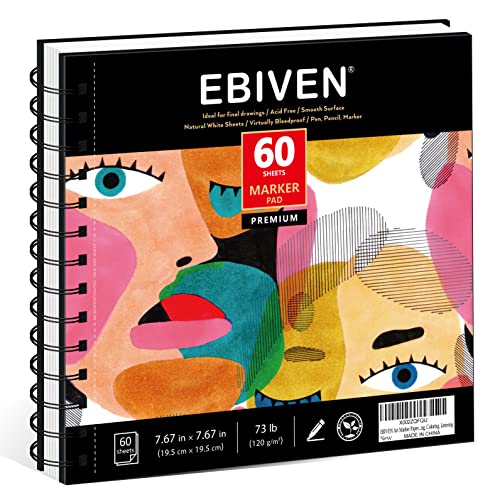
This post contains affiliate links, which means I may earn a small commission at no extra cost to you if you make a purchase. I only recommend products I genuinely love and use myself!
Looking for more printable resources? Check out my Payhip shop for premium drawing templates and creative guides!
Frequently Asked Questions
What should a beginner sketch first?
Start with a simple object that’s right in front of you — a mug, a piece of fruit, or a book. These everyday objects have basic geometric shapes (cylinders, spheres, rectangles) that teach you fundamental drawing skills without overwhelming you. The best first sketch is one of something you can actually see, not something from imagination.
How long should a beginner spend on a sketch?
Start with 5-15 minutes per sketch. Quick sketches actually teach you more than spending hours on one drawing because you practice the decision-making process more frequently. As you get comfortable, you can spend longer on pieces you want to develop. But for daily practice, short and frequent beats long and rare every time.
Do I need expensive supplies to start sketching?
Not at all. A regular HB pencil and any paper will work for your first sketches. As you develop your practice, a basic graphite pencil set and a decent sketchbook will make things more enjoyable, but the most expensive supplies in the world won’t make you a better artist. Practice does that.
How do I stop being afraid of ruining my sketchbook?
Mess up the first page on purpose. Seriously. Scribble on it, splash water on it, write your name badly. Once the “perfect sketchbook” pressure is gone, you’ll find it much easier to actually use it. Remember: a filled sketchbook with messy pages is infinitely more valuable than a pristine empty one.
Final Thoughts
The best sketch idea for a beginner is the one you actually draw. Not the one you save on Pinterest and never get to. Not the one you think about while scrolling. The one that gets pencil marks on paper, even if those marks are wobbly and weird and nothing like what you pictured in your head.
Pick one thing from this list. Just one. Look at it for thirty seconds. Then draw what you see. That’s it. That’s how every artist started.
Don’t forget to grab both free template packs — the Beginner Sketch Starter Pack near the top and the 30-Day Sketch Challenge Cards above. They’ll give you structure and motivation while you build your daily habit.
Want to see sketching techniques in action? Head over to my YouTube channel where I share tutorials every week. Hit subscribe so you don’t miss the next one!
You Might Also Like
- Cute Food Drawings: 50+ Adorable Food Sketches & Easy Drawing Ideas
- Loose Watercolor Flowers: Easy Tutorial for Beautiful Free-Flowing Florals
- 100 Sketchbook Prompts to Spark Your Creativity
- Easy Watercolor Sketchbook Ideas
- Mushroom Drawing: Easy Step-by-Step Tutorial
🎨 Want more free printables? Browse my Free Printables Library — over 400 free templates, coloring pages, drawing guides, and creative resources all in one place!
Pin this for later!
Sixty ideas and the free Beginner Sketch Starter Pack will fill a lot of pages, and then you’ll want fresh ones. My Payhip shop has premium drawing template sets, Procreate brushes and bundles so there’s always something ready to print.
Have a browse →