Last Updated on July 18, 2026 by Dee
Loose watercolor flowers changed everything for me. After years of trying to paint tight, perfectly realistic florals and feeling frustrated every single time, I discovered the loose style — and it was like someone gave me permission to actually enjoy the process. Less control. More magic.
I’ve put together a free printable pack for you in this post! Grab your Loose Floral Bouquet Templates — arrangement guides and wildflower reference sheets to help you build beautiful loose bouquets. Just pop your email into the box below and it’s yours.
Download your free Loose Floral Bouquet Templates 👇
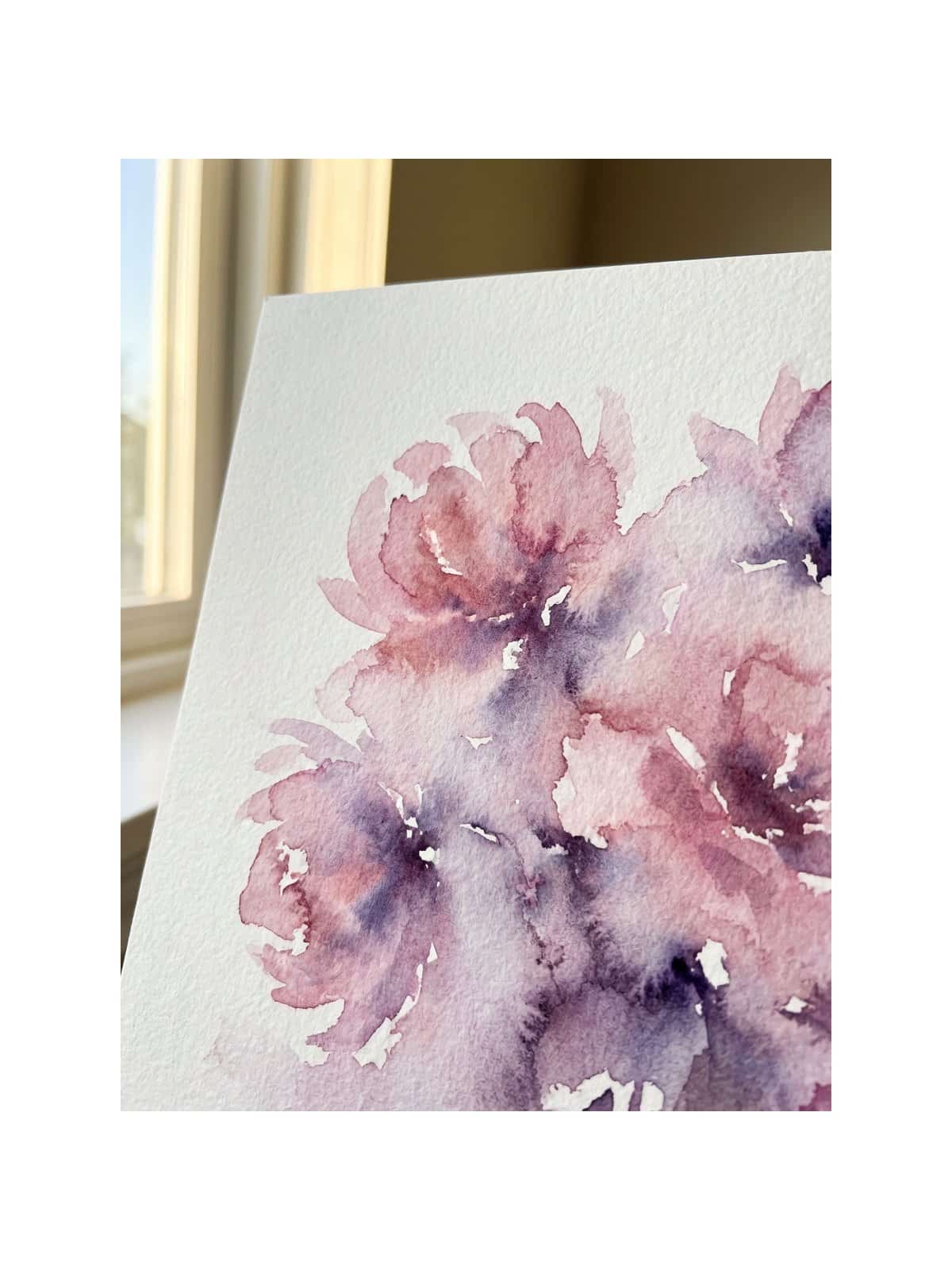
The thing about loose watercolor flowers is that they’re not about precision. They’re about letting the paint and water do their thing while you guide them gently. The pigment bleeds, the colours mix on the paper, and these gorgeous, dreamy florals appear almost by themselves. It feels a bit like a collaboration between you and the water.
In this tutorial, I’m walking you through everything — from the basic wet-on-wet technique to painting individual flowers to creating full bouquet compositions. Whether you’ve never touched watercolour before or you’re looking to loosen up your existing style, this is your starting point.
🎬 Love video tutorials? Subscribe to my YouTube channel for weekly watercolor tutorials and art inspiration!
Table of Contents
What Are Loose Watercolor Flowers
Quick Answer: Loose watercolor flowers are a painting style that uses wet-on-wet techniques, minimal brushstrokes, and natural pigment flow to create soft, free-flowing florals that celebrate imperfection rather than realistic detail.
The “loose” in loose watercolor flowers means exactly what it sounds like — letting go. Instead of painting every single petal with precise edges, you use broad brushstrokes, let colours bleed into each other, and allow the water to create soft, organic shapes. The results are dreamy, atmospheric, and often more beautiful than any tight rendering could be.
This style works so well because watercolour paint naturally wants to move and spread. Fighting that tendency is what makes realistic watercolour so difficult. When you paint loose, you’re working with the medium instead of against it. The paint does half the work — you just need to guide it.
Loving these loose florals? My premium watercolour reference sets on Patreon include colour-recipe cards, so your wet-on-wet blooms land in the right colours first time.
Browse the reference sets →Supplies You Need for Loose Florals
Good news — you don’t need expensive supplies to paint gorgeous loose florals. But the right paper makes a massive difference. You want cold press watercolour paper (the textured kind), at least 140lb/300gsm weight. Anything thinner will buckle and puddle.
I paint most of my loose florals in my Canson XL Watercolor Sketchbook — the paper handles wet-on-wet beautifully and it’s affordable enough that you don’t feel precious about “wasting” pages on practice.
For brushes, you really only need two: a medium round brush (size 8-10) for petals and leaves, and a small round brush (size 2-4) for details and stems. My Escoda Round Watercolour Brushes hold water beautifully and come to a lovely point — perfect for those flowing petal strokes.
The Wet-on-Wet Technique Explained
Wet-on-wet is the foundation of loose watercolour flowers. The concept is simple: you apply wet paint onto paper that’s already wet. This creates those gorgeous soft edges, colour bleeds, and blooms that make loose florals so magical.
Here’s how it works, step by step:
- Wet your paper — Use a clean, damp brush to wet the area where you want your flower. Not dripping wet, just glistening.
- Load your brush — Pick up a generous amount of pigment. For loose florals, you want your paint concentrated, not watery.
- Drop in colour — Touch your loaded brush to the wet paper and watch the pigment bloom outward. This is the magic moment.
- Add variation — While the first colour is still wet, drop in a second, darker colour near the centre. It’ll blend naturally.
- Leave it alone — This is the hardest part. Don’t fiddle. Don’t overwork it. Let the water and pigment do their thing.
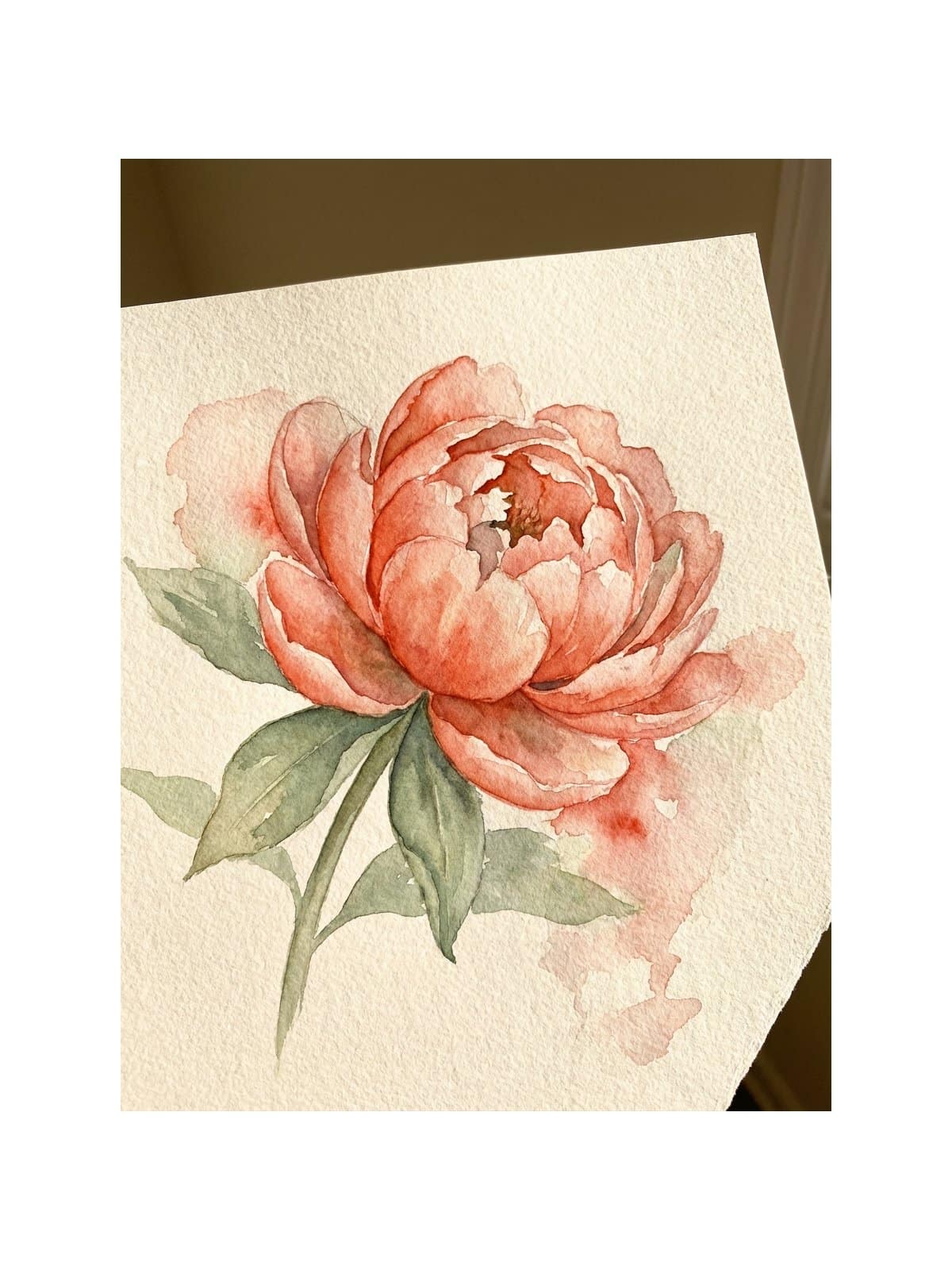
Basic Loose Petal Shapes to Practice
Before painting full flowers, spend a page or two just practising individual petal strokes. Think of these as your vocabulary — once you know a handful of petal shapes, you can combine them into any flower.
Essential petal strokes to master:
- The round petal: Press down, pull to the side, lift. Creates a fat, soft petal shape.
- The pointed petal: Start with the tip of your brush, press down as you pull, then lift to a point again. Teardrop shape.
- The ruffled petal: Wiggle your brush slightly as you pull. Creates that gorgeous peony-like ruffled edge.
- The thin petal: Use just the tip of your brush the whole time. Perfect for daisies and wildflowers.
- The leaf stroke: Press, pull, lift to a point. Same as a pointed petal but in green.
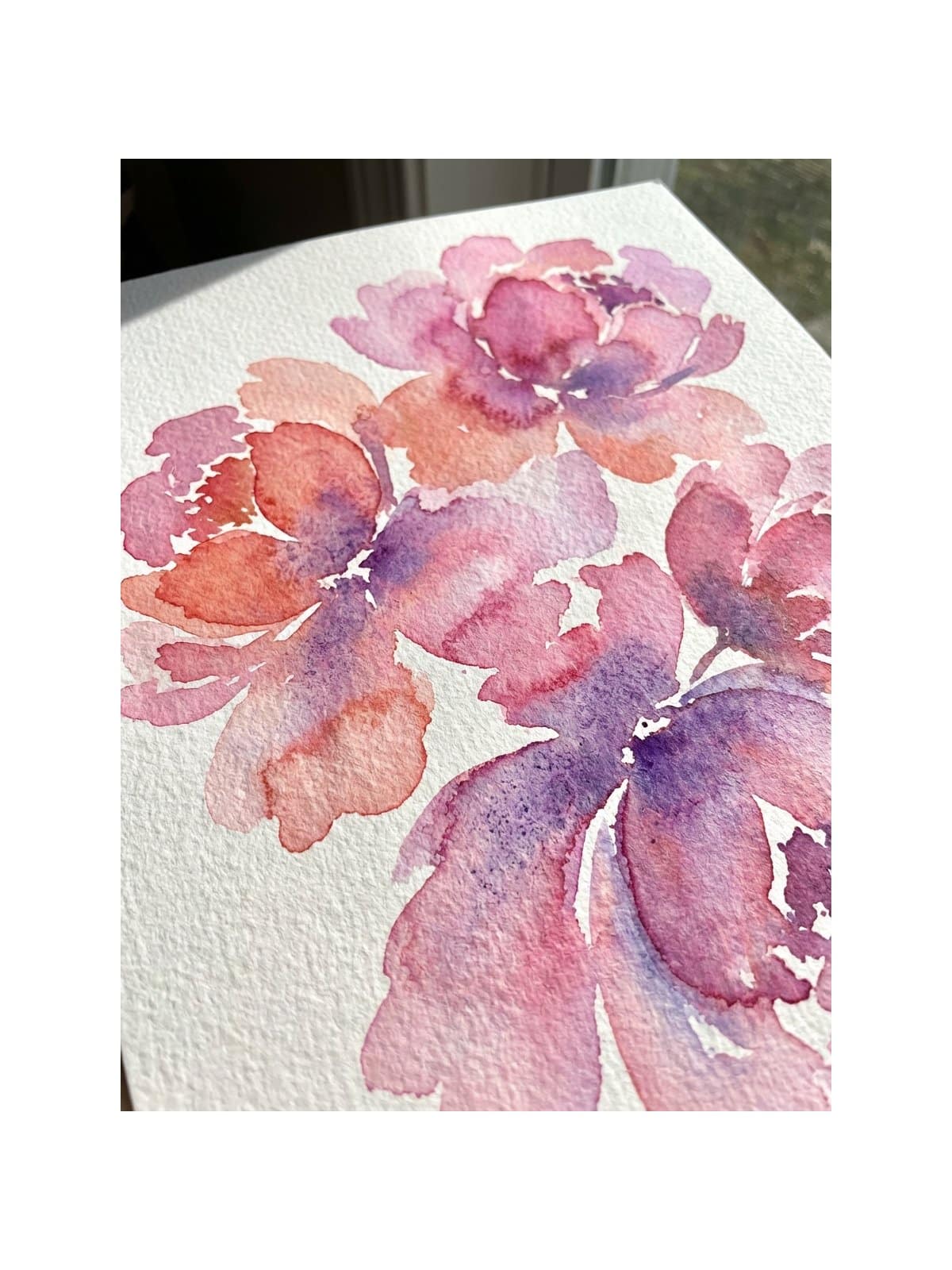
Practice each shape at least ten times. They won’t look identical — and that’s the point. Variation is what makes loose florals look natural and alive. If you enjoy this kind of focused practice, you might also love my sketch ideas for beginners post for more warm-up exercises.
How to Paint a Loose Watercolor Rose
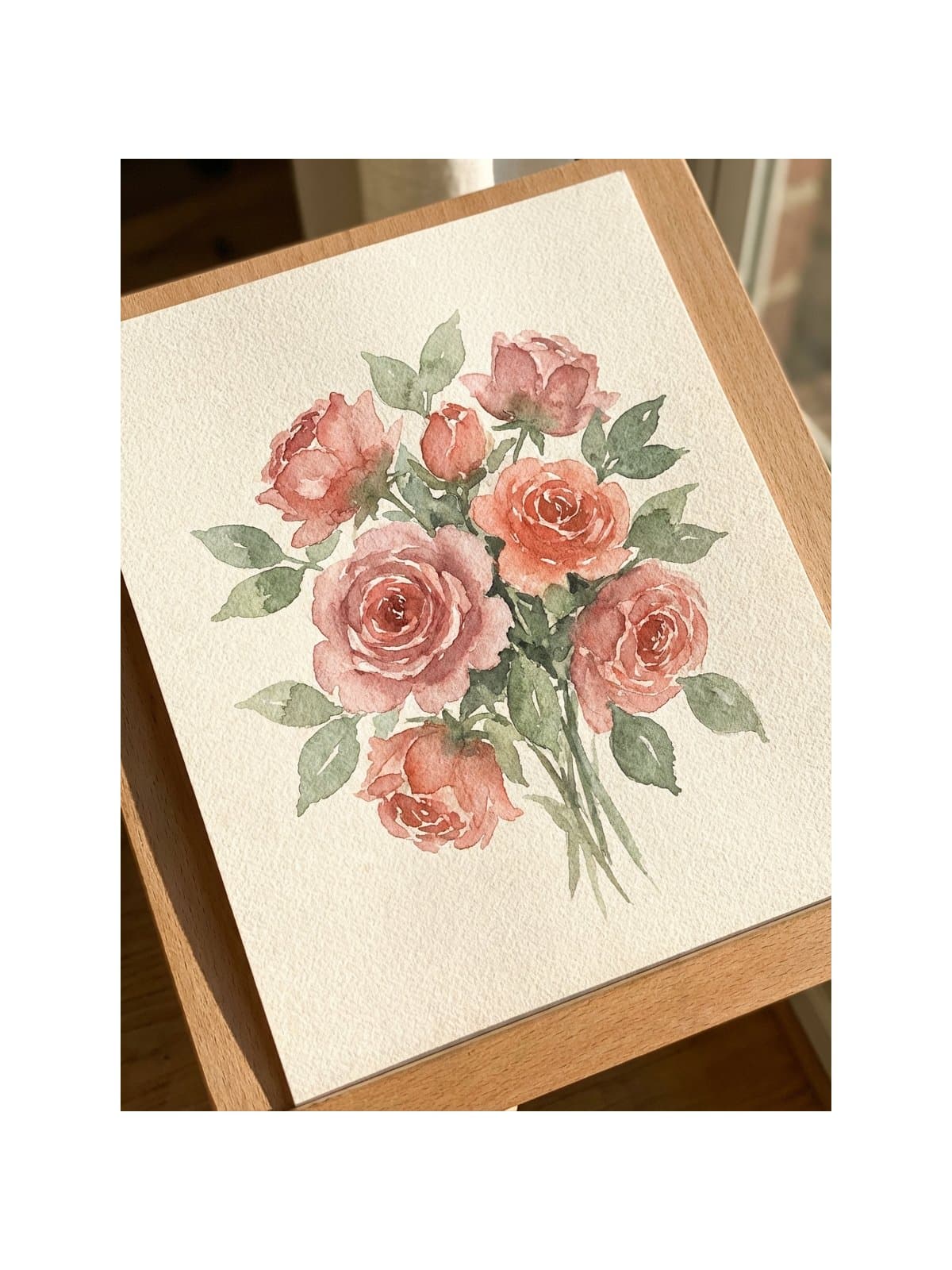
Roses are the queen of loose watercolour flowers. They look incredibly impressive but are actually built from just a few simple shapes repeated in a circle. Once you get the hang of it, you can paint one in under two minutes.
Step-by-step loose rose:
- Start with the centre: Paint a small, loose spiral or C-shape with concentrated pigment. This is the tight centre of the rose.
- Build outward: Paint larger C-shaped petals around the centre, leaving small gaps of white paper between them. These gaps are crucial — they create the illusion of depth.
- Go bigger: Add even larger, looser petals on the outside. These should be softer and more spread out.
- Drop in darker tones: While the paint is still wet, add a deeper shade near the centre and base of some petals. It’ll blend beautifully.
- Add leaves: Two or three simple leaf strokes in a complementary green. Keep them loose.
- Final details: Once dry, you can add a few fine lines for veins or tiny dots for pollen. But honestly? Most of the time, step 5 is enough.
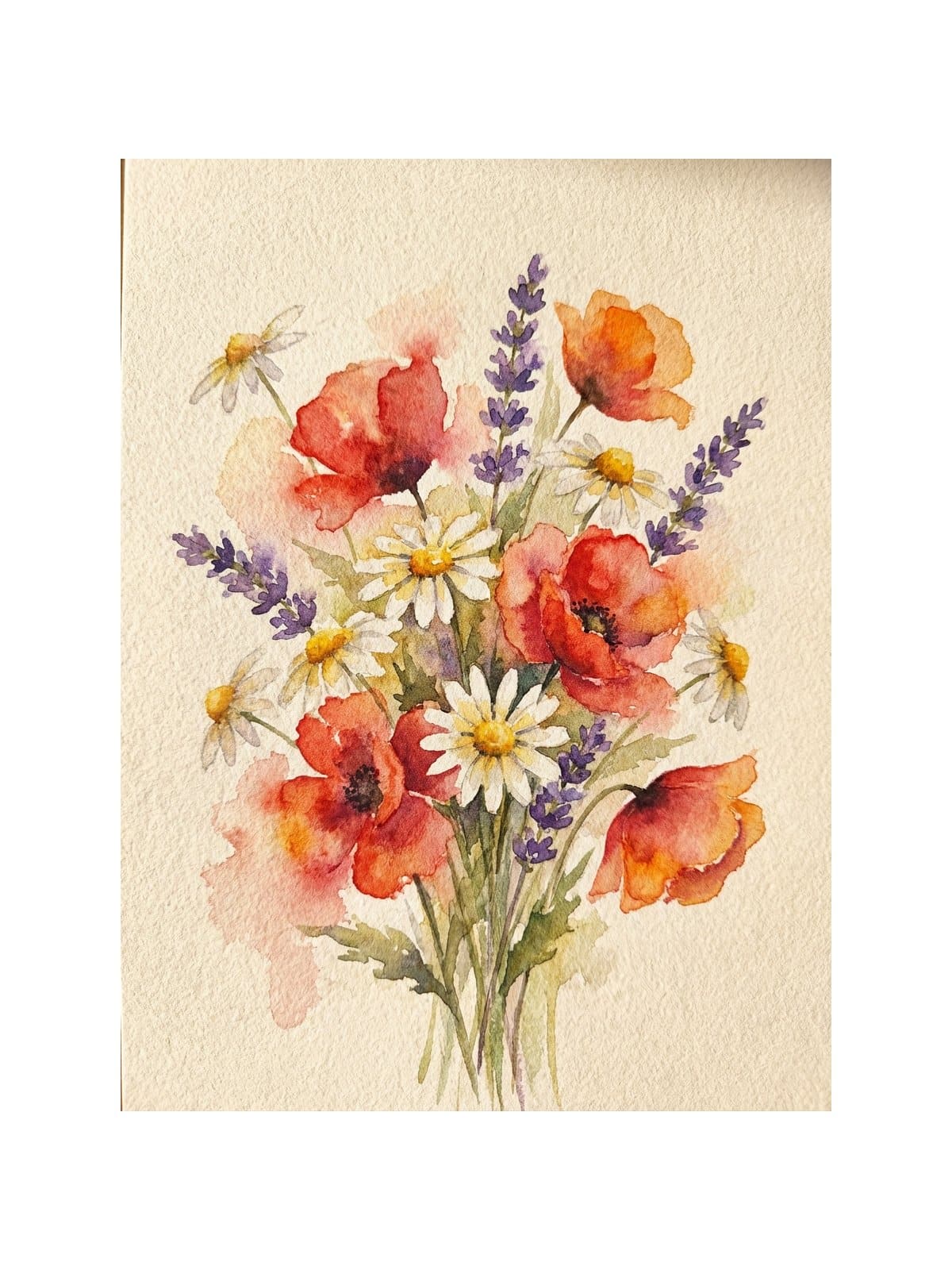
Easy Loose Wildflowers to Try
Roses get all the attention, but wildflowers are just as beautiful in the loose style — and often even easier. They’re naturally messy, naturally imperfect, and look stunning when you paint a whole bunch of different ones together.
Beginner-friendly loose wildflowers:
- Lavender: A single stem line with small purple dabs along the top. Ridiculously simple, incredibly effective.
- Daisies: Thin petal strokes radiating from a yellow dot centre. Keep them slightly irregular.
- Poppies: A blob of red/coral with a dark centre. That’s genuinely it. The simpler, the better.
- Cornflowers: Tiny blue petal strokes clustered together. Beautiful mixed with other wildflowers.
- Queen Anne’s Lace: Tiny dots of white/light purple on thin branching stems. Creates gorgeous texture in a bouquet.
- Chamomile: Like daisies but smaller, with more yellow-white petals. Paint them in clusters.
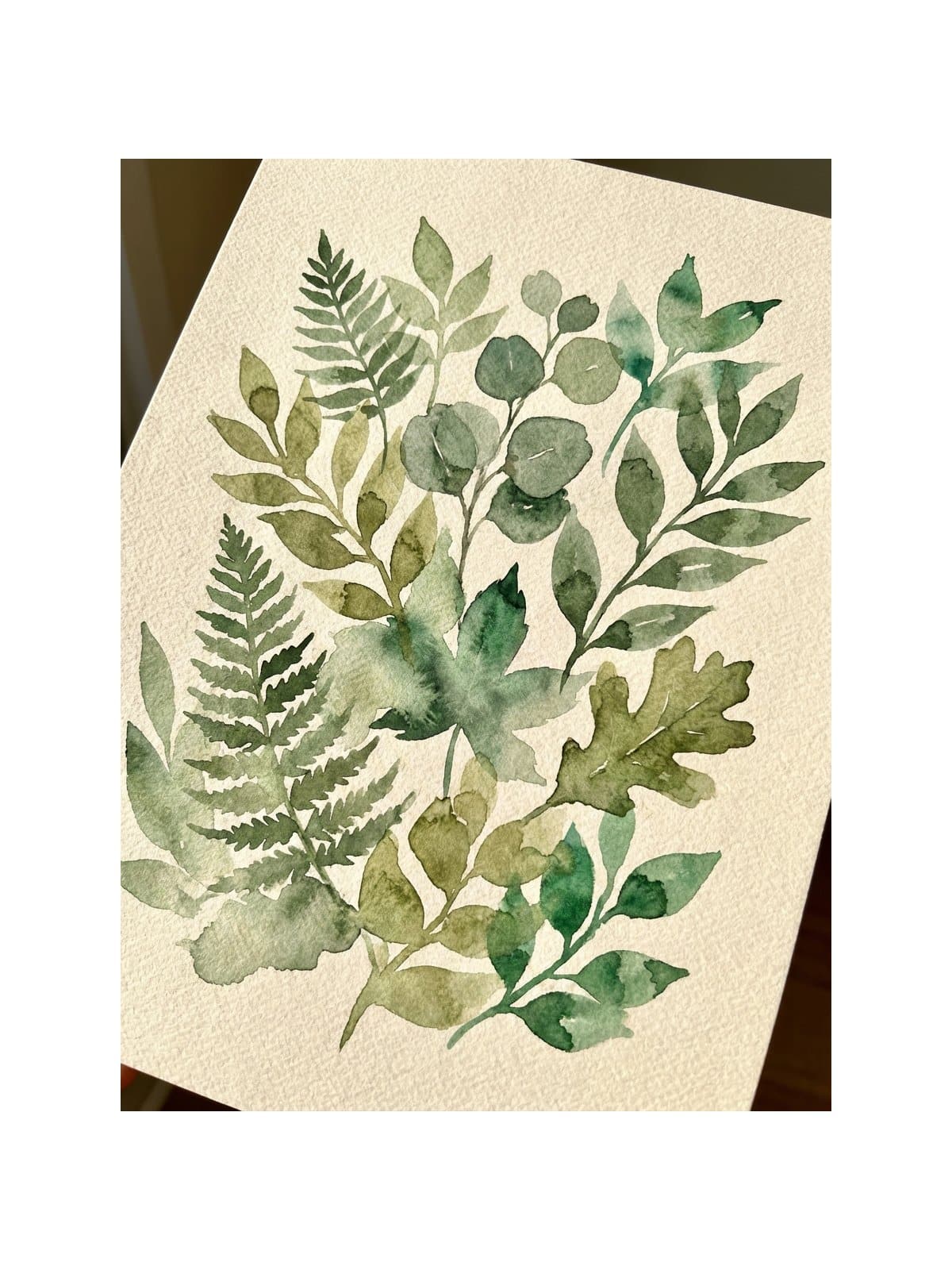
The Winsor & Newton Cotman Watercolor Set has all the colours you need for a gorgeous wildflower palette. The cadmium red, ultramarine blue, and sap green are particularly brilliant for loose florals.
Colour Palettes for Loose Florals
Colour choice can make or break a loose floral painting. The good news is that you don’t need many colours — three to five well-chosen shades create the most harmonious results. Too many colours and things start looking muddy.
My favourite floral palettes:
- Romantic Blush: Dusty pink + coral + sage green + warm cream. Classic and always beautiful.
- Garden Party: Magenta + peach + mint green + golden yellow. Bright and cheerful.
- Moody Botanical: Deep plum + burgundy + forest green + navy. Rich and dramatic.
- Cottage Garden: Soft blue + lavender + warm sage + ivory. Gentle and dreamy.
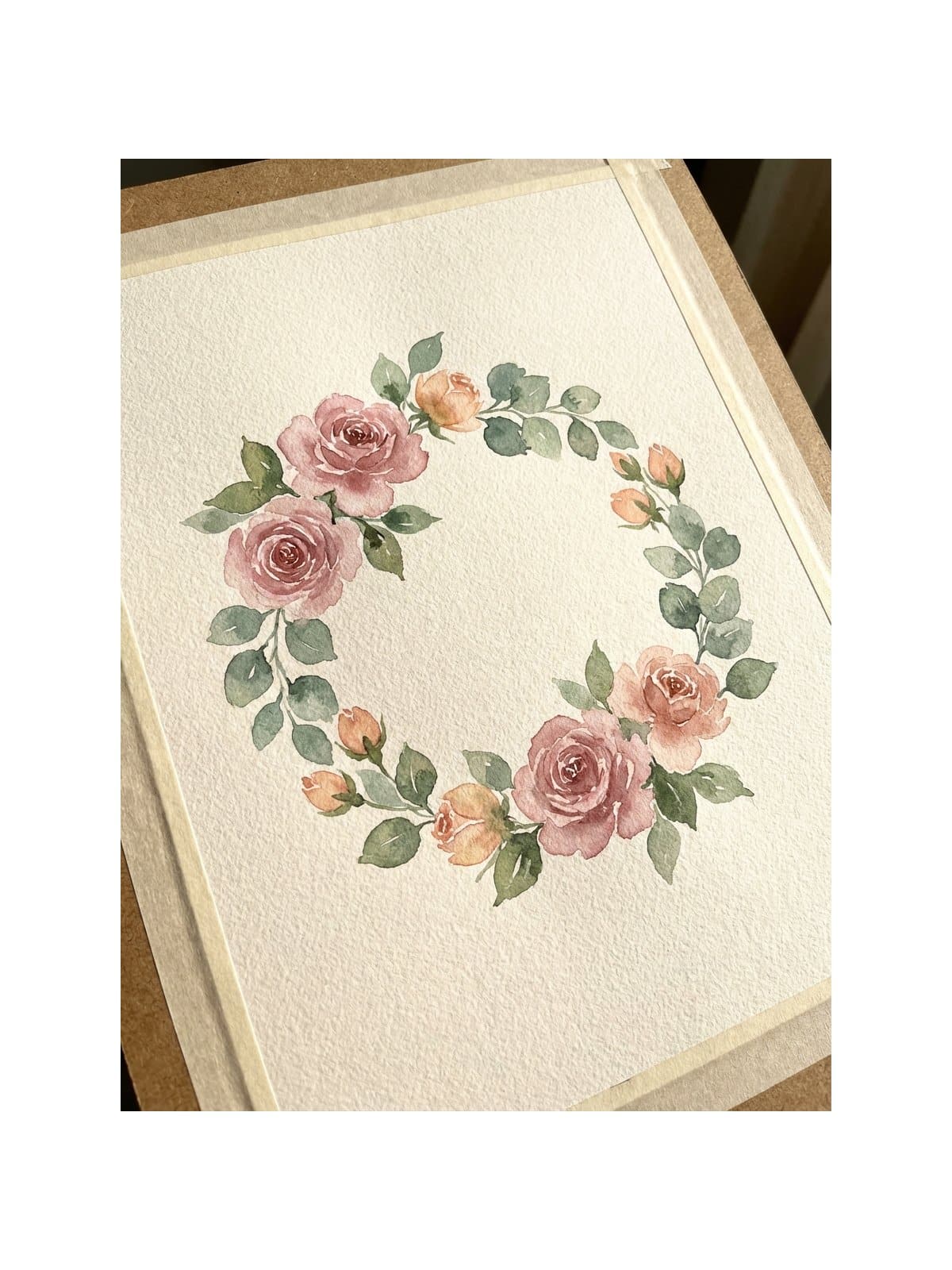
Mixing colours on the MEEDEN Ceramic Paint Palette is a dream. The wells are deep enough for generous washes, and the white ceramic lets you see your true colour mixes without the tint you get from plastic palettes.
Creating Loose Floral Bouquet Compositions
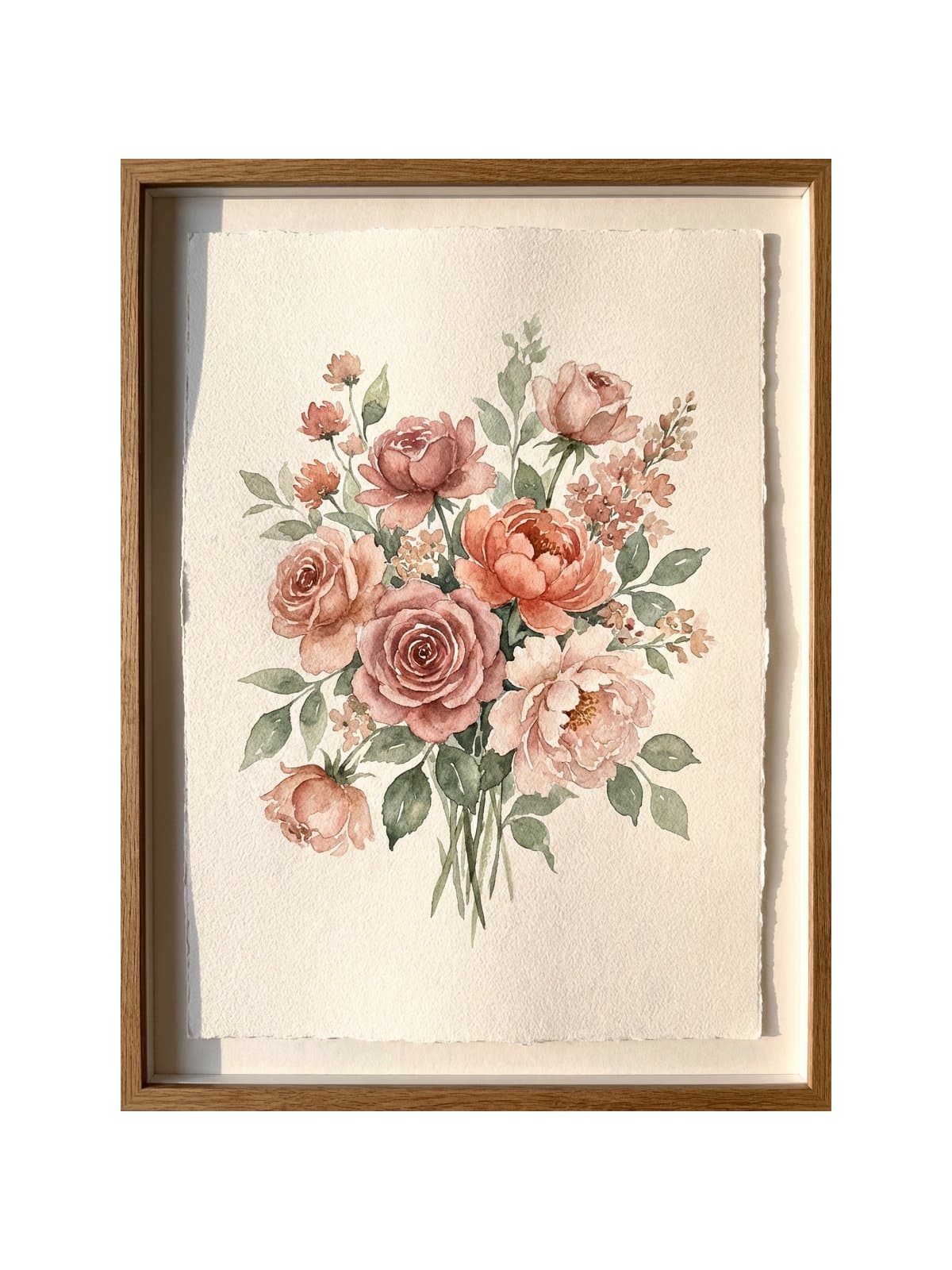
Once you can paint individual flowers, the next step is combining them into bouquets and compositions. This is where loose watercolour flowers really shine — a gathered bunch of different florals, greenery, and filler flowers creates something genuinely stunning.
Composition tips:
- Start with the hero flower: Paint your largest, most detailed flower first, slightly off-centre. This anchors the whole composition.
- Add supporting flowers: Smaller blooms around the main one. Vary the sizes and colours.
- Fill with greenery: Loose leaf strokes in different greens between the flowers. Leaves connect everything.
- Add filler: Tiny dots, berries, buds, or wispy stems fill gaps and add texture.
- Leave breathing room: Don’t fill every single space. White paper showing through keeps it airy and loose.
If you’re looking for fun subjects beyond florals, my cute food drawings post is a great palette cleanser — sometimes switching between styles keeps things fresh.
Get Your Free Loose Floral Bouquet Templates
Recommended Watercolor Supplies
Here are the supplies I use most for loose watercolour flowers. You don’t need all of them to start — a basic paint set, a decent brush, and proper watercolour paper will take you surprisingly far.


This post contains affiliate links, which means I may earn a small commission at no extra cost to you if you make a purchase. I only recommend products I genuinely love and use myself!
Looking for more printable resources? Check out my Payhip shop for premium watercolor templates and guides!
Frequently Asked Questions
Is loose watercolor easier than realistic watercolor?
In many ways, yes. Loose watercolor works with the natural properties of the medium rather than against them. You don’t need to worry about perfectly controlled edges or photorealistic details. The style celebrates happy accidents and natural paint flow. That said, it still takes practice to know when to stop and how to balance a composition.
What brushes are best for loose watercolor flowers?
Round brushes are essential for loose florals. A size 8 or 10 round brush handles most petal strokes, while a size 2 or 4 round is perfect for details and stems. Look for brushes with a good point and decent water-holding capacity. Natural hair brushes hold more water but synthetic rounds work well too, especially for beginners.
How do I stop overworking my watercolor flowers?
Set a timer. Seriously. Give yourself two minutes per flower and then put the brush down. Overworking usually happens when you keep adding strokes to something that was already beautiful three strokes ago. Another tip: step back regularly and look at the whole painting rather than focusing on one area. Most of the time, it’s already done.
Can I paint loose flowers in a regular sketchbook?
Regular paper will buckle badly with watercolour. Use a watercolour-specific sketchbook with at least 200gsm paper, or ideally 300gsm. The Canson XL Watercolor Sketchbook is great for practice. For pieces you want to keep or frame, use individual sheets of cold press watercolour paper.
Final Thoughts
Loose watercolor flowers are proof that less really can be more. Fewer brushstrokes. Less control. Less worrying about whether it looks “right.” And somehow, the result is more beautiful, more expressive, and more you than anything precise could ever be.
Start with one wet-on-wet petal stroke. Just one. Watch how the pigment blooms on the wet paper. Then try another. Before you know it, you’ll have a whole garden on your page.
Don’t forget your free Loose Floral Bouquet Templates above — they’ll give you structure while you find your own loose style.
Want to see these techniques in action? Head over to my YouTube channel where I share step-by-step watercolor tutorials every week. Hit subscribe so you don’t miss the next one!
You Might Also Like
- Cute Food Drawings: 50+ Adorable Food Sketches & Easy Drawing Ideas
- Sketch Ideas for Beginners: 60+ Easy Drawing Ideas to Fill Your Sketchbook
- Loose Watercolor Sketchbook Pages
- Watercolor Painting Ideas for Beginners
- Simple Watercolor Ideas for Beginners
🎨 Want more free printables? Browse my Free Printables Library — over 400 free templates, coloring pages, drawing guides, and creative resources all in one place!
Pin this for later!
Free-flowing florals get so much easier when you stop second-guessing your palette. My Patreon reference sets pair printable outlines with colour-recipe cards, so you know exactly which paints made that soft rose or wildflower wash.
See the reference sets →
Love all the great tips, thank you!