Last Updated on October 1, 2026 by Dee
👉 See our complete collection: Best Free Junk Journal Printables (90+ Pages, Tags & Ephemera)
There is something wonderfully freeing about a journal that has no rules. No pristine white pages waiting to be ruined. No pressure to make it perfect. Just layers and colour and texture and you. That is what a mixed media junk journal is — and honestly, once you try it, you will wonder why you ever kept your creative supplies separate.
If you have ever stared at a blank page feeling nervous to start, mixed media journaling is the antidote. The whole point is to layer, collage, paint and stamp until the page feels alive. Imperfection is not just allowed — it is the style. Wonky edges, paint bleed, wrinkled paper — it all becomes part of the story.
In this guide I am walking you through everything you need to know to get started: what mixed media junk journaling actually is, the beginner-friendly techniques that make it so accessible, how to build gorgeous layered pages, and the supplies you genuinely need (hint: not many). I have also put together a list of 30 page ideas so you will never be stuck wondering what to make next.
And before we dive in — I have two sets of free printables for you today. First, a 50 Vintage Botanical Printables collection — perfect for collaging into your journal pages. Second, a 12-page Celestial Junk Journal Kit with ready-to-use printable pages so you can start your first mixed media spread right away. Both are free to download below!
Table of Contents
Free Vintage Botanical Printables for Your Journal
Vintage botanical imagery is one of my absolute favourite things to collage into journal pages — those detailed illustrations of flowers, leaves and seeds have such a timeless, beautiful quality. I have put together a collection of 50 vintage botanical printables that you can cut up, layer and use any way you like in your mixed media spreads. They work beautifully with watercolour washes, over gesso textures, and alongside stamped backgrounds. Pop your email into the box below and I will send them straight over, along with the celestial pages further down this post.
Want 400+ Creative Resources?
If you love these free printables, you’d really enjoy the Artsydee Creations Club. Every week I add new resources — junk journal kits, digital papers, stickers, fussy cuts, and more. Plus you get instant access to a vault of 400+ creative resources the moment you join.
It’s just £8/month (or save with the annual plan) and it’s the best way to keep your creative practice stocked with fresh inspiration. Check out the Creations Club here →
What Is a Mixed Media Junk Journal?
A mixed media junk journal is a handmade or assembled journal where the pages are created using multiple art materials layered together — hence “mixed media.” Unlike a traditional scrapbook (which focuses on organising photos and mementos on a flat page) or a standard junk journal (which typically uses recycled paper and ephemera collaged together), a mixed media junk journal combines all of that with actual art-making techniques.
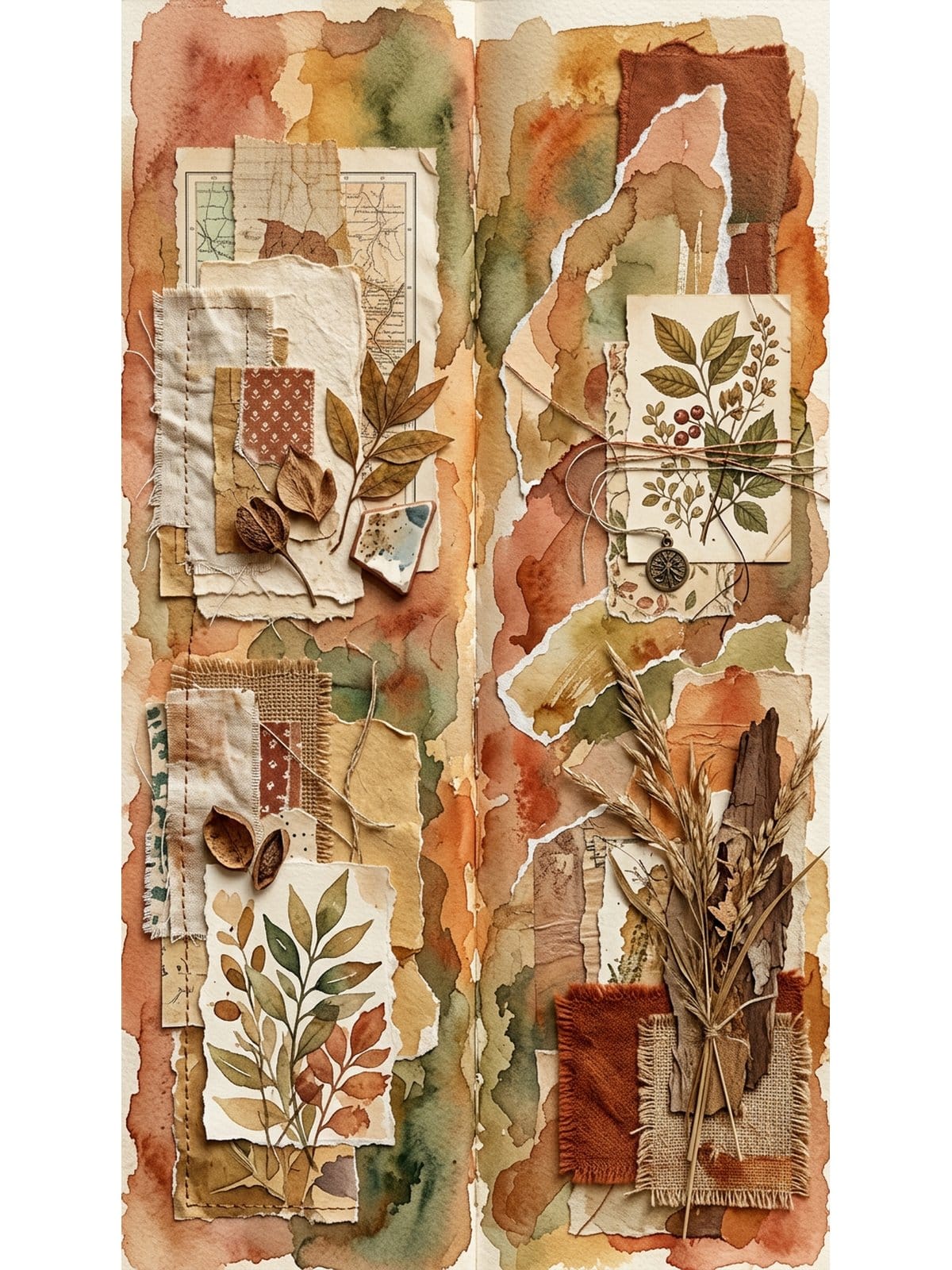
Think watercolour washes painted directly onto pages, gesso textures, stamped images, collaged paper scraps, pen and ink doodles, and washi tape accents — all on the same spread. The “junk” element means you are using recycled and found materials: old book pages, tea-stained papers, vintage ephemera, brown paper bags, fabric scraps, and anything else you have to hand. The mixed media element means you are not just sticking things down — you are also painting, layering and creating on top.
The result is pages that feel rich, textured and completely personal. No two spreads will ever look the same, and that is entirely the point. If you love junk journal background pages and want to take them a creative step further, mixed media is the natural next direction to explore.
Mixed Media Techniques for Beginners
One of the reasons mixed media journaling is so good for beginners is that you do not need to master any single technique — you just need to layer a few simple ones together. Here are the core techniques worth knowing:
- Watercolour washes — Brush a loose wash of watercolour or diluted acrylic paint across your page as a background colour. This does not need to be neat. Uneven edges and blooms are beautiful in mixed media work.
- Collage — Tear or cut pieces of decorative paper, vintage botanical printables, tissue paper or old book pages and glue them down using a gel medium or matte Mod Podge. Overlapping edges and visible tears add texture.
- Stamping — Rubber or foam stamps are one of the easiest ways to add pattern and imagery to a page. Stamp over collaged layers using an ink pad for a beautifully aged, eclectic look.
- Stenciling — Hold a stencil against your page and apply paint or ink over it with a sponge or brush. Remove the stencil to reveal a crisp pattern beneath. Great for adding subtle background texture.
- Pen and ink doodles — Once background layers are dry, go over everything with a fine liner or brush pen. Outline collaged shapes, add handwritten text, draw small botanical sketches or simple borders.
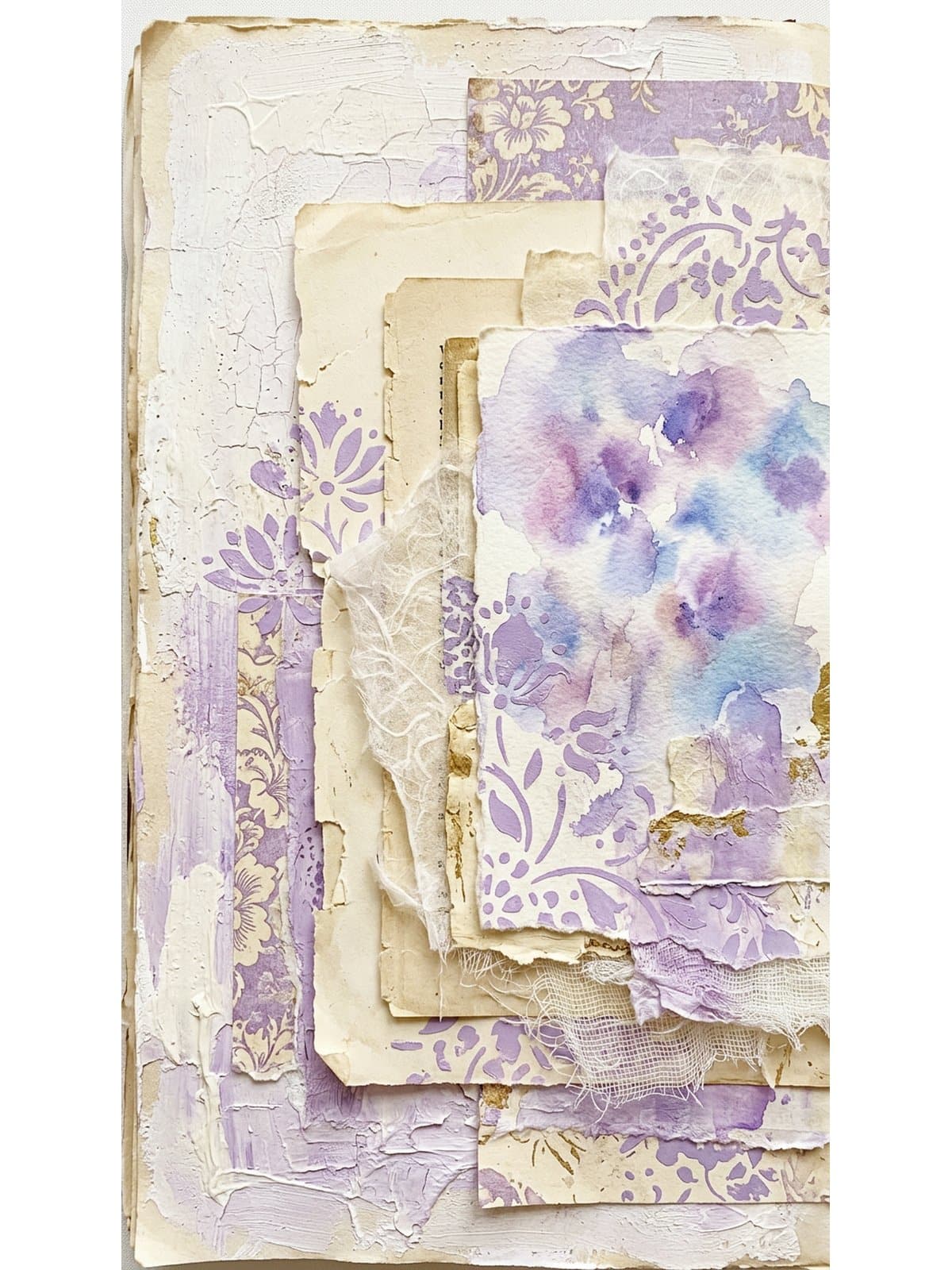
- Gesso — White gesso painted and partially wiped away creates a beautiful distressed, chalky texture over papers and collage. It also makes pages more robust for painting on top.
- Washi tape — Use as borders, to attach ephemera, or simply as decorative strips of colour and pattern. Washi can be layered, torn and painted over — endlessly versatile.
Building Layers: How to Collage on Journal Pages
The secret to a visually rich mixed media page is building up layers gradually. Think of it like a painting — you start with broad background strokes and work your way towards finer details. Here is a practical layering order to follow:
- Background layer — Start with a coloured wash (watercolour, diluted acrylic or even a tea wash) to knock back the bright white of the page. Let it dry fully.
- Texture layer — Apply gesso in patches, or glue down torn tissue paper, a piece of old music sheet, or a page from a vintage book. This gives the page depth before you add your “feature” collage pieces.
- Main collage — Now layer your key pieces: botanical prints, patterned paper scraps, a vintage image, fabric, or printed ephemera. Overlap edges and do not worry about gaps — they fill in beautifully later.
- Stamping + stenciling — Add stamps or stencils over the collage while everything is still relatively flat. This ties the layers together visually.
- Painted details — Use watercolour or acrylic to soften edges, add colour pops, or paint loose florals over and around your collage pieces.
- Ink and pen work — Once all paint layers are dry, go in with a fine liner. Outline things you want to stand out, add words or journaling, draw details.
- Final touches — Washi tape borders, white gel pen highlights, a few small stickers or an extra snippet of ephemera. These finishing layers are what make a page feel complete.
Do not try to plan the whole page before you start. Mixed media works best when you respond to what is in front of you — lay something down, see how it looks, add the next layer. Trust the process!
Mixed Media Junk Journal Supplies You’ll Need
You do not need a lot to get started, and you almost certainly have some of these already. Here is a straightforward list of supplies that will cover you for most mixed media junk journal pages:
- A journal — Any blank or dotted journal works, or make your own from recycled paper and card. Thicker pages (140gsm+) will cope better with wet media.
- Watercolours or acrylic paint — Either works beautifully. Watercolours give softer, more transparent washes; acrylics are more opaque and dry faster.
- Gesso — White gesso is inexpensive and endlessly useful for texturing and sealing pages.
- Mod Podge or gel medium — For gluing down collage pieces. Matte finish is most popular for mixed media work.
- Papers for collage — Old book pages, music sheets, tissue paper, magazine clippings, brown paper bags, printed digitals like these junk journal background pages.
- Stamps and ink pads — Even one or two stamps go a long way. Look for botanical, text and distress-style stamps.
- Fine liner pen — A Staedtler or Micron 0.5 is perfect for detail work over dried paint layers.
- Washi tape — Collect patterns and neutrals; both are useful.
- Scissors and a craft knife — For trimming collage pieces cleanly.
- White gel pen — For highlights, lettering and adding details on dark backgrounds.
This post contains affiliate links, which means I may earn a small commission at no extra cost to you if you make a purchase. I only recommend products I genuinely love and use myself!
30 Mixed Media Journal Page Ideas
Sometimes the hardest part is knowing what to make. Here are 30 ideas to spark your next mixed media journal spread:
- A botanical garden spread with layered floral collage and watercolour leaves
- A soft moonphase page with a gesso background and stamped celestial imagery
- A tea-stained pages spread using actual tea bags for texture
- A “summer notes” page with junk journal summer pages layered over a warm yellow wash
- A vintage map collage page with painted compass details
- A “favourite things” list page with illustrated borders
- A rainy day spread using blues and greys with dripped watercolour
- A wildflower meadow page with loose painted flowers over textured gesso
- A recipe page for a favourite meal, decorated with kitchen-themed collage
- A gratitude spread with handwritten words over a soft wash background
- A bird and branch page with stamped silhouettes and watercolour backgrounds
- A celestial page using starry printed papers and blue-black paint washes
- A letter-to-yourself page with vintage postal ephemera collage
- A colour study page — painting swatches and layering coordinating collage papers
- A garden sketchbook spread with botanical doodles and paint patches
- A travel memories page using maps, ticket stubs and loose painted borders
- A “favourite season” spread celebrating your most loved time of year
- A music-themed page using sheet music collage, stamps and ink washes
- A poetry page — handwrite a favourite poem over a dreamy painted background
- A nature journal page with leaf prints or rubbings as texture elements
- A zodiac page with constellation diagrams and celestial collage
- A “words I love” typography page with varied lettering styles over textured layers
- A soft vintage portrait page with aged paper, lace and muted watercolour tones
- A forest floor spread using earthy browns, greens and mushroom imagery
- A sunset gradient wash page with silhouette collage on top
- A coffee-stained page using actual coffee rings as the main design element
- A festive wreath page with botanical collage formed into a circular shape
- An ocean-inspired page with blue washes, wavy pen lines and shell imagery
- A “creative wishlist” spread — collage items that inspire you with notes alongside
- A seasonal nature walk page recording what you noticed and found
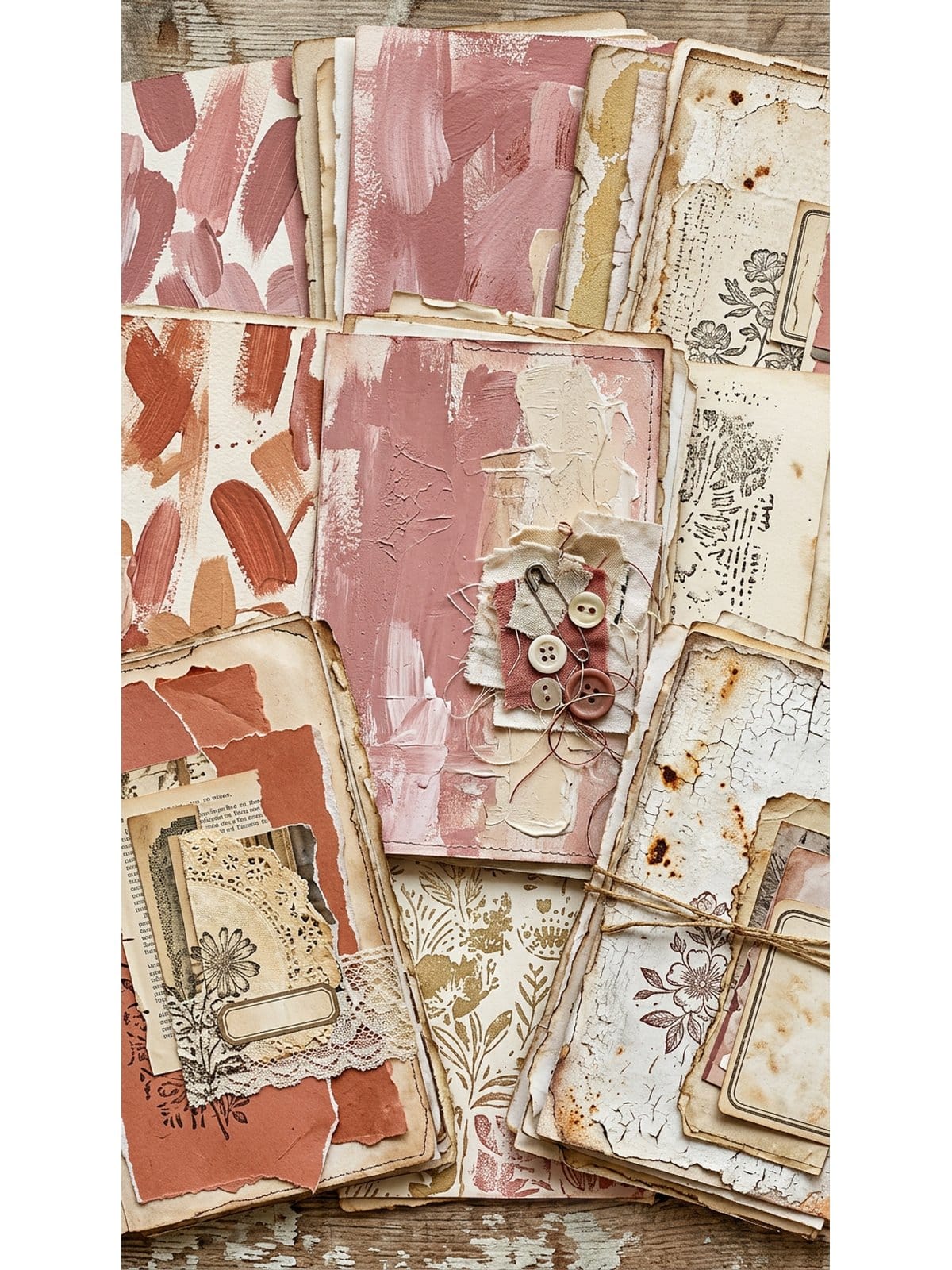
How to Start Your First Mixed Media Junk Journal
If you are ready to make your first mixed media journal, here is the simplest possible path to getting started without overthinking it:
- Gather your materials loosely — You do not need everything. Watercolours, a journal, some paper scraps and a glue stick will absolutely get you started. Add more supplies gradually as you discover what you enjoy.
- Choose a colour mood — Rather than planning an exact design, decide on a colour palette before you begin. “Soft greens and cream” or “deep blue and gold” gives you enough direction without over-planning.
- Start with your background — Paint a wash, brush on some gesso, or lay down a piece of tea-stained paper. Getting something on the page removes the blank-page fear immediately.
- Collect your papers — Pull out the printed sheets, magazine clippings or vintage paper scraps you want to use. Do not cut yet — just gather and lay them loosely on the page to audition placement.
- Glue, stamp, layer — Start gluing things down in layers, stamping over the top as you go. Do not worry about it looking unfinished mid-process — it always comes together in the later stages.
- Add your details last — Fine liner, white gel pen, a final strip of washi. These finishing touches are what transform a “work in progress” into a finished page.
And if you want a shortcut to beautiful pages right from the start — that is exactly what the free printable pages below are for. Grab the Celestial Junk Journal Kit and you will have 12 ready-to-use pages as your starting point.
Free Junk Journal Printable Pages
These 12 printable pages from the Celestial Junk Journal Kit are designed to be used exactly as they are or as a base to layer more mixed media work on top of. Print them out, tea-stain them if you fancy that aged look, and use them as ready-made journal pages or collage fodder. They pair beautifully with the vintage botanical printables above — together you have everything you need for a full mixed media spread.
These come in the same email as the botanical printables — one sign-up above and both packs land in your inbox together.
Shop Junk Journal Kits
If you want even more ready-to-use mixed media and junk journal resources, the Artsydee Creations Club is where I share new digital kits, papers, printables and creative resources every single week. It is the loveliest way to keep your journaling practice fully stocked without having to hunt for supplies. Browse the full shop and Creations Club here →
Mixed Media Junk Journal FAQs
Do I need any art experience to start a mixed media junk journal?
Not at all! Mixed media junk journaling is genuinely one of the most beginner-friendly art forms because there is no “correct” result to aim for. Every page is an experiment and every imperfect mark adds character. Start simple with a watercolour wash and some collage, and build your skills naturally as you go.
What paper works best for mixed media junk journals?
Thicker paper handles wet media better — look for 140gsm (90lb) watercolour paper or mixed media paper if you want to paint heavily. That said, many journalers use standard paper and simply work with lighter washes, or seal pages with gesso first to add strength. Recycled papers like old book pages and kraft paper also work wonderfully and are part of the junk journal aesthetic.
How do I stop pages from wrinkling when I paint on them?
Some wrinkling is expected and even embraced in mixed media journaling! To minimise it: work in thin layers and let each one dry fully before adding the next, use a light hand with water, and try applying gesso first to give the page more structure. You can also press finished pages flat under a heavy book overnight.
Can I use any type of glue for collage?
For mixed media work, Mod Podge (matte) or a gel medium gives the best results — they dry clear, hold well, and can be painted over once dry. PVA (white school glue) diluted slightly also works. Avoid standard glue sticks for larger pieces as they can lift over time, especially if you paint over the top.
Final Thoughts: Ready to Make Your Mixed Media Journal?
I hope this guide has shown you that mixed media junk journaling is far less intimidating than it might look on Instagram. You do not need a perfectly curated collection of supplies or years of art experience — you just need a little paper, some paint, a few scraps to collage, and the willingness to start. The pages get more interesting with every layer you add, and with every journal you fill, your confidence and your own unique style will grow naturally.
Download the free printables above to give yourself a wonderful head start, and remember: there are no mistakes in mixed media — only happy accidents waiting to be layered over. Go and make something beautiful!
Come and share your mixed media journal pages with me over on Instagram — I absolutely love seeing what you create. You can also find stacks of inspiration on the Artsydee Pinterest, and if you want to follow along with my own creative practice, subscribe over on YouTube. I share tutorials, junk journaling sessions and behind-the-scenes creative videos there every week.
You Might Also Like
- Free Vintage Botanical Printables
- Free Junk Journal Background Pages
- Travel Junk Journal Pages
- Zodiac Junk Journal
Pin this for later!