Last Updated on January 30, 2026 by Dee
Starting watercolor can feel overwhelming when you don’t know where to begin. What should you practice? How long should you practice? And what if you’re just… terrible at it?
Here’s the truth: everyone is terrible at the beginning. But the people who become skilled aren’t naturally talented—they just practiced the right things consistently. And “right things” doesn’t mean complicated paintings. It means simple exercises that build foundational skills.
These practice ideas are designed specifically for absolute beginners. No drawing ability required, no expensive supplies needed, just you, some paint, and 15-20 minutes a day.
Grab your free Watercolor Practice Sheets at the end of this post!
🎬 Love video tutorials? Subscribe to my YouTube channel for weekly watercolor tutorials!
What’s Inside
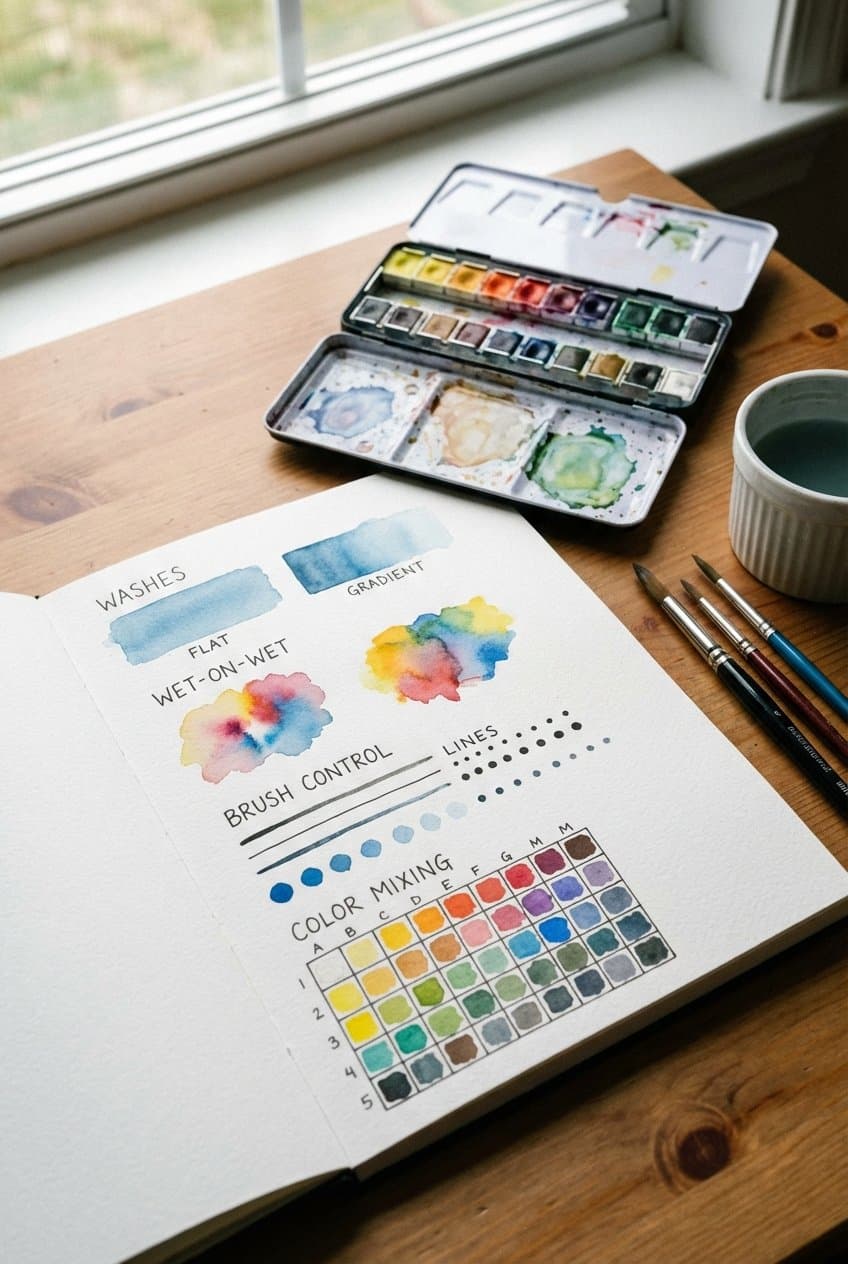
Brush Control Exercises
Quick Answer: Brush control is the foundation of all watercolor painting. Practice varying pressure to create thick and thin lines, and learn how different brush angles affect your marks.
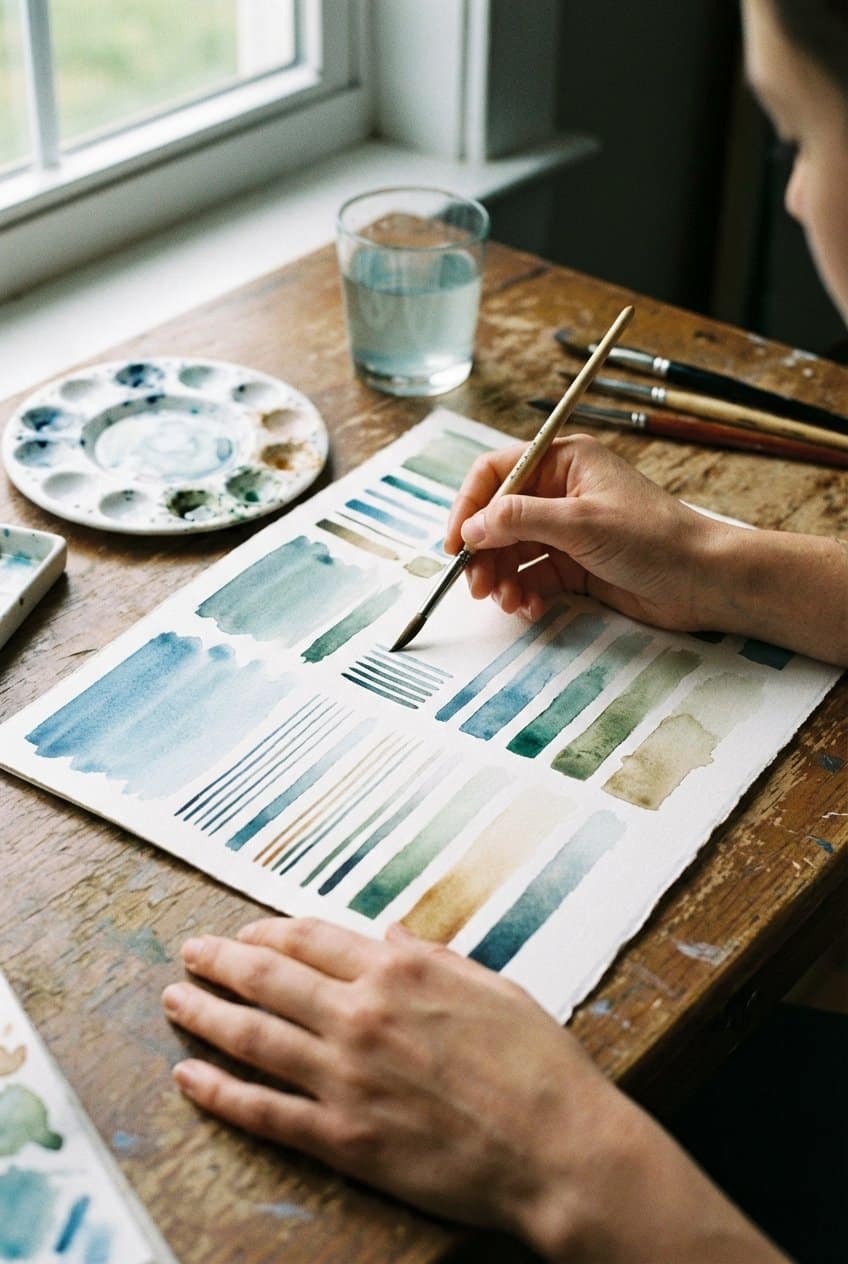
- Pressure practice – Paint lines starting with heavy pressure (thick) and lightening to a whisper (thin)
- Straight lines – Not ruler-straight, but controlled straight lines across the page
- Curved lines – S-curves, spirals, loops—practice continuous smooth movements
- Dots and dashes – Quick touch-and-lift motions build brush control
- Zigzags – Sharp direction changes teach brush responsiveness
I recommend Escoda round brushes for these exercises—their responsive tips make it easy to feel your brush control improving.
Water Control Practice
Understanding water is what makes watercolor either frustrating or magical. These exercises teach you how much water to use for different effects.
- Wet-on-wet circles – Paint a circle of water, then drop in pigment and watch it spread
- Wet-on-dry shapes – Paint on dry paper for crisp edges—compare to wet-on-wet
- Gradient washes – Start with full pigment, add water gradually for a smooth transition
- Blooms on purpose – Create those “cauliflower” effects intentionally to understand them
- Flat washes – Even color across a rectangle—harder than it sounds!
Color Mixing Exercises
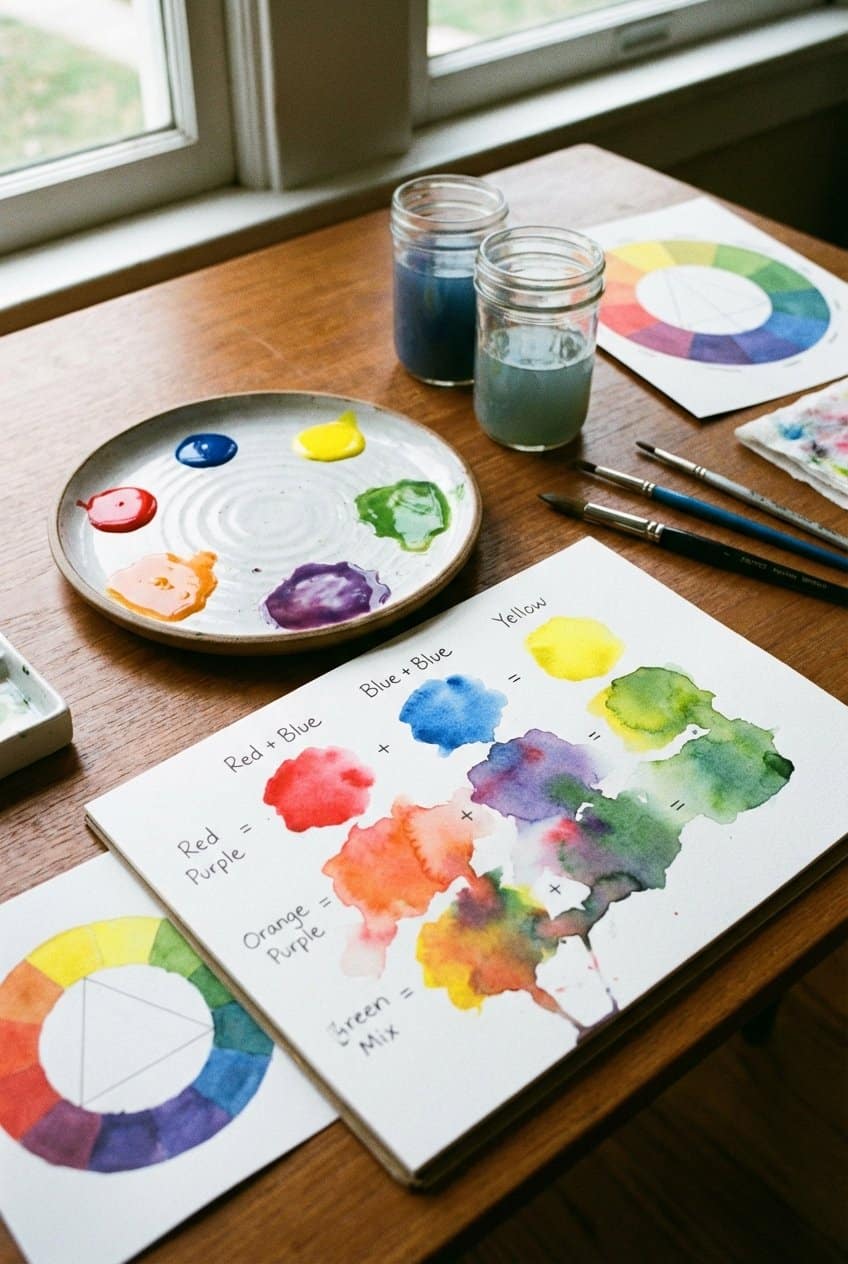
Mixing colors on your palette and paper is an essential skill that takes practice to master.
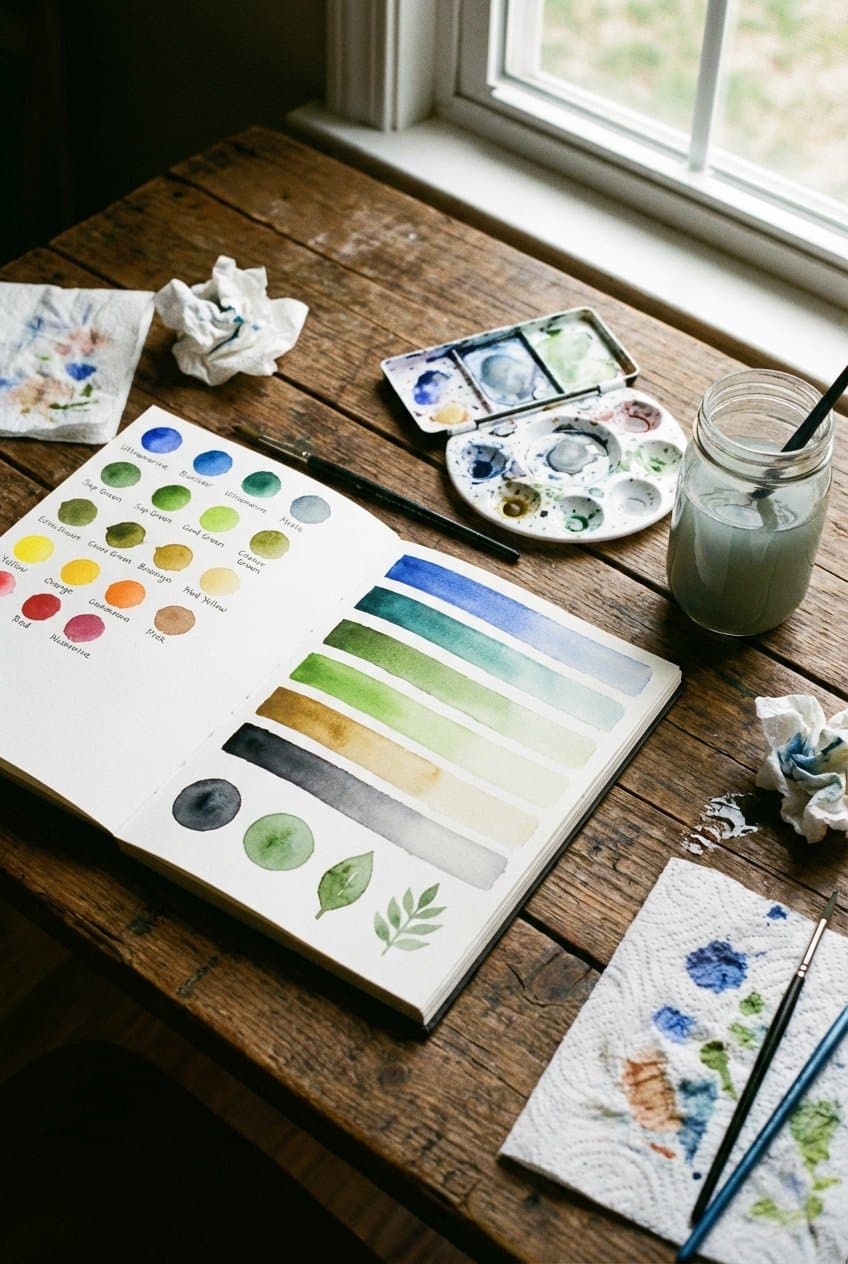
- Two-color charts – Pick two colors and create a gradient between them
- Primary to secondary – Mix your primaries to create oranges, greens, purples
- Neutrals from complements – Mix opposite colors for beautiful greys and browns
- Skin tone practice – Mix warm and cool tones for flesh colors
- Green mixing – Create 10 different greens from your existing palette
A good ceramic palette with deep wells helps keep your mixing areas clean and organized.
Value Scale Practice
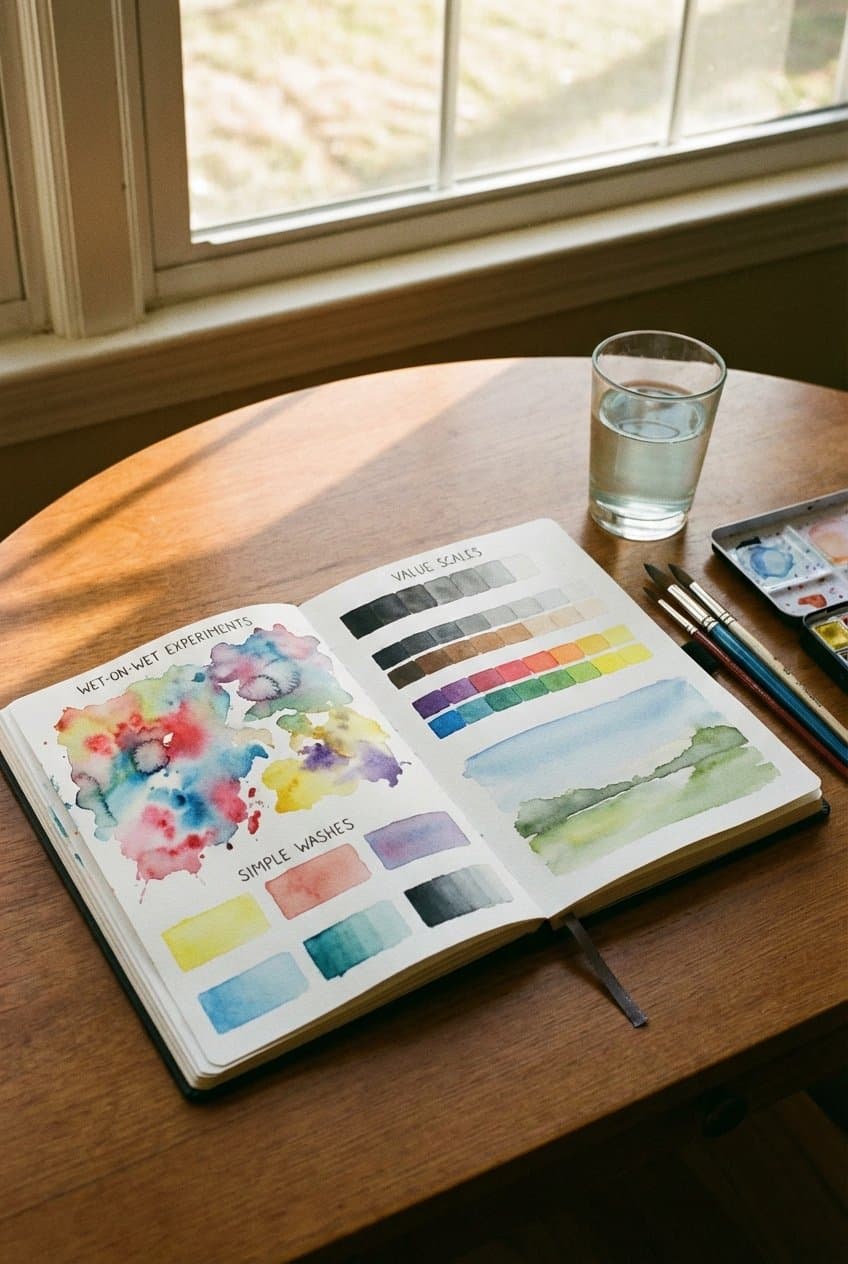
Quick Answer: Value (lightness/darkness) creates form and depth in paintings. Practice creating smooth gradients from your darkest dark to paper white.
- 5-step value scale – Create five distinct values from dark to light
- Smooth gradient – Blend seamlessly from dark to light
- Monochrome studies – Paint simple objects using only values of one color
- Sphere shading – Paint a circle with highlights, midtones, and shadows
Creating a Daily Practice Routine
Consistency beats intensity. A 15-minute daily practice builds skills faster than an occasional two-hour session.
- Warm up (3 min) – Quick brush strokes, loosen up
- Focused exercise (10 min) – Choose one technique from above
- Free play (2 min) – Paint anything you want, no pressure
Keep your supplies set up if possible—the friction of getting materials out stops many good intentions.
Supplies You’ll Need
Basic supplies work perfectly for practice. Don’t overthink it—just start.


This post contains affiliate links, which means I may earn a small commission at no extra cost to you if you make a purchase.
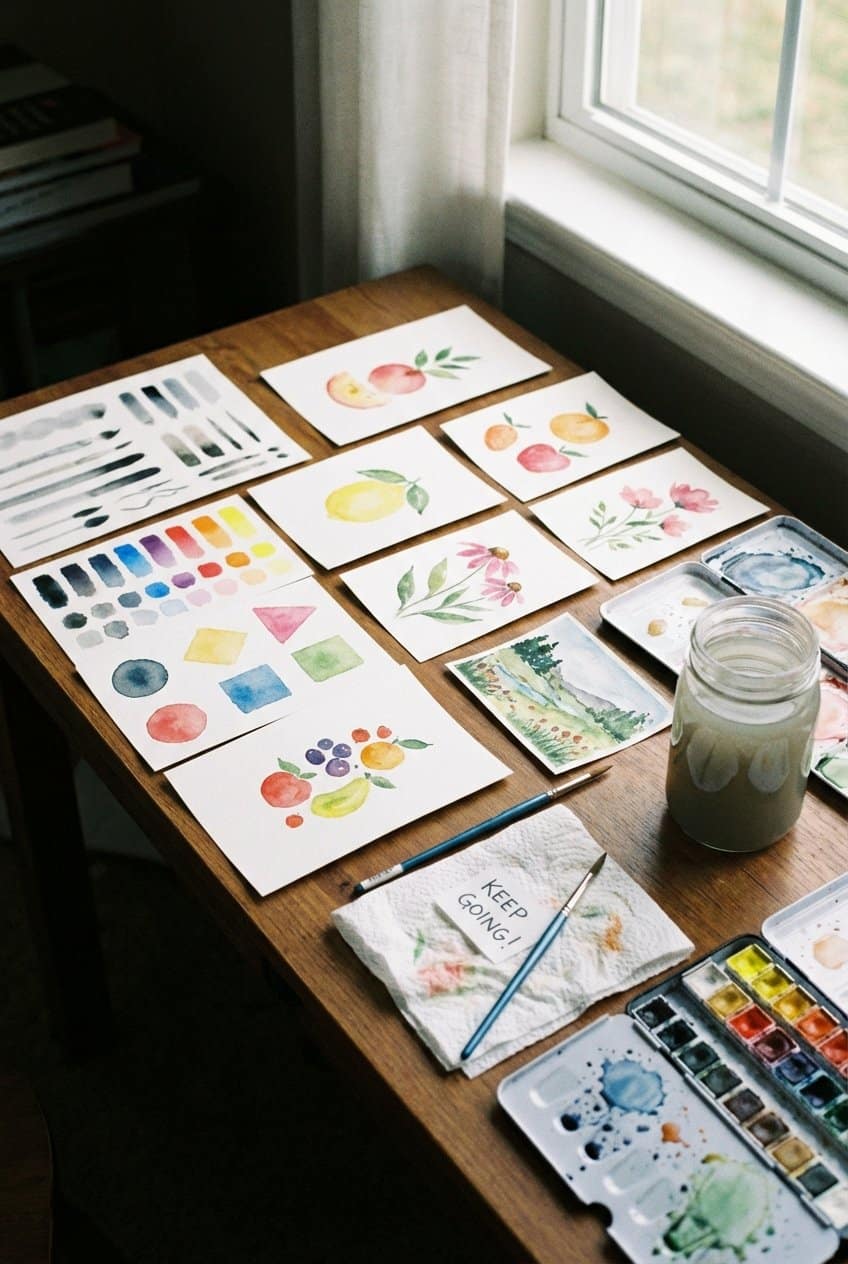
Free Practice Templates
Get started with structured practice using these printable templates.
Want more? Check out my Payhip shop for premium templates!
Frequently Asked Questions
How long should beginners practice watercolor each day?
15-20 minutes daily is more effective than longer sporadic sessions. Consistency builds muscle memory and technique recognition that can’t be rushed.
What’s the most important skill to practice first?
Water control is the foundational skill. Understanding how much water creates different effects unlocks everything else in watercolor painting.
Should I practice on good paper or cheap paper?
Use decent watercolor paper (at least 140lb) even for practice. Cheap paper buckles and behaves unpredictably, which teaches you bad habits and frustrates your learning.
Final Thoughts
Every skilled watercolor artist started exactly where you are now—completely new and wondering if they’d ever get the hang of it. The secret is consistent, focused practice on fundamentals.
Start with brush control tomorrow morning. Just 10 minutes of making marks, feeling how your brush responds to pressure. That’s all it takes to begin.
Head over to my YouTube channel for video tutorials every week!
Tag me on Instagram @artsydee with your practice pages!
You Might Also Like
- Tiny Watercolor Florals for Sketchbooks
- One-Page Watercolor Sketchbook Ideas
- Simple Watercolor Shapes to Practice Daily
- Mini Watercolor Landscapes for Beginners
- Easy Watercolor Ideas Using Circles and Lines
Pin this for later!