Last Updated on February 4, 2026 by Dee
Ever opened your sketchbook and wished the pages could do more than just… sit there? I get it. After years of teaching art and filling countless sketchbooks myself, I discovered that the most engaging pages aren’t flat at all — they fold, flip, hide secrets, and reveal surprises.
Interactive sketchbook ideas transform your art practice from a passive viewing experience into something you actually want to touch and explore. We’re talking fold-out panoramas, hidden pockets stuffed with memories, flip-up flaps that reveal before-and-after transformations, and tuck-in elements that make every page turn an adventure.
Whether you’re looking for creative sketchbook spreads to break out of a rut, sketchbook challenge ideas to push your skills, or mixed media sketchbook techniques that go beyond the basics — this guide covers 40+ ways to make your pages come alive.
Grab your free Interactive Sketchbook Starter Kit at the end of this post! It includes printable pocket templates, bookmarks, envelopes, and creative prompts to get you started.
🎬 Love video tutorials? Subscribe to my YouTube channel for weekly art tutorials and creative inspiration!
Table of Contents
What Are Interactive Sketchbook Ideas?
Quick Answer: Interactive sketchbook ideas are techniques that add physical dimension and movement to your pages — including fold-outs, pockets, flip flaps, and hidden elements that invite touch and exploration.
Think of your sketchbook as more than a collection of flat drawings. Interactive pages create an experience. They surprise you when you turn the page, reveal secrets when you lift a flap, or expand into panoramic scenes that couldn’t fit on a single spread.
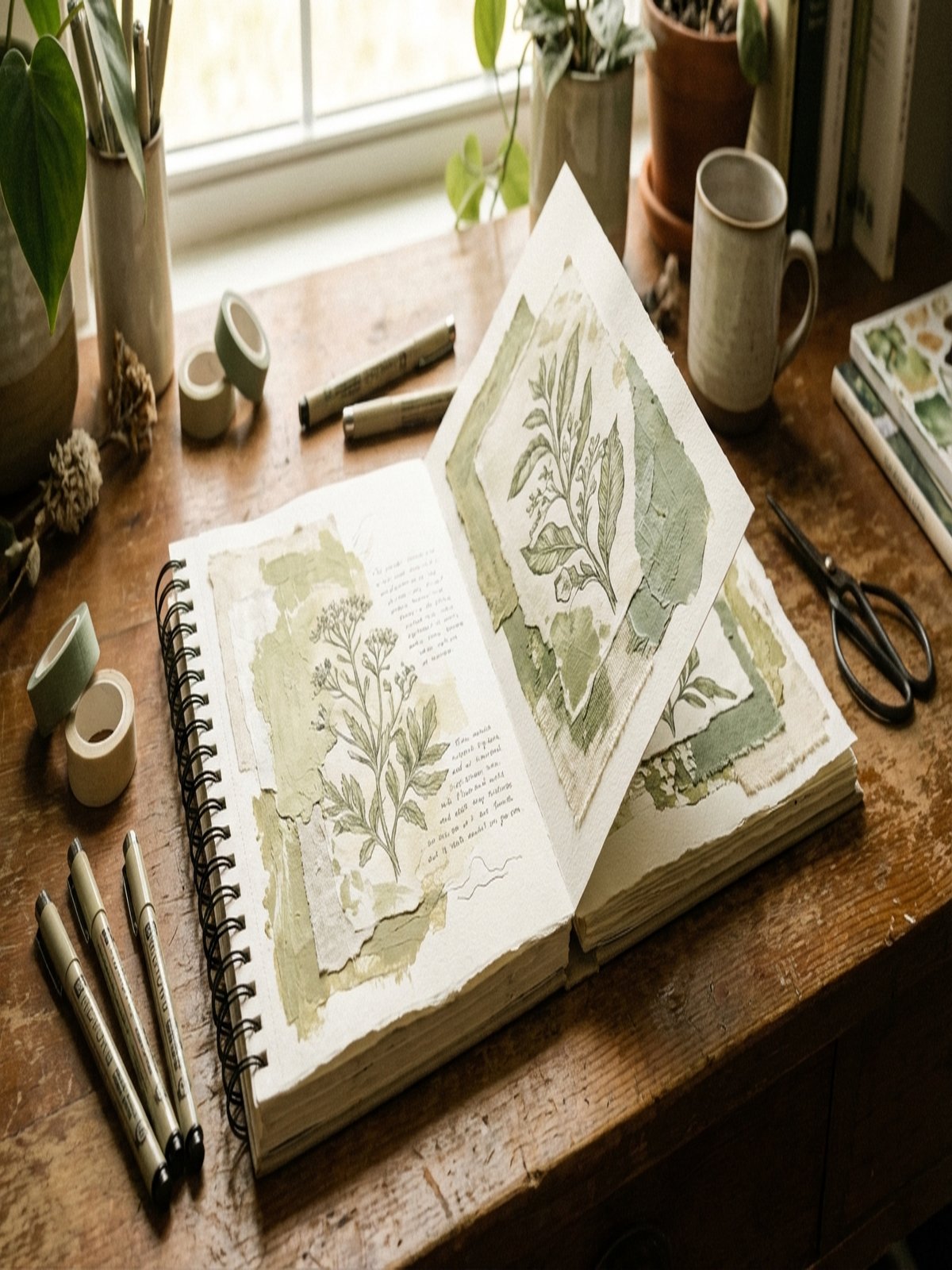
These techniques borrow from pop-up books, junk journals, and paper engineering — but adapted for everyday sketchbook practice. You don’t need fancy materials or engineering degrees. Just paper, glue, and a willingness to experiment.
The magic of interactive sketchbook spreads? They make you want to revisit your old pages. That fold-out you created six months ago still has the power to delight when you discover it again.
Fold-Out Sketchbook Spreads
Quick Answer: Fold-out spreads extend your drawing space by attaching extra paper that unfolds from the page, perfect for panoramic landscapes, story sequences, or artwork that refuses to fit standard proportions.
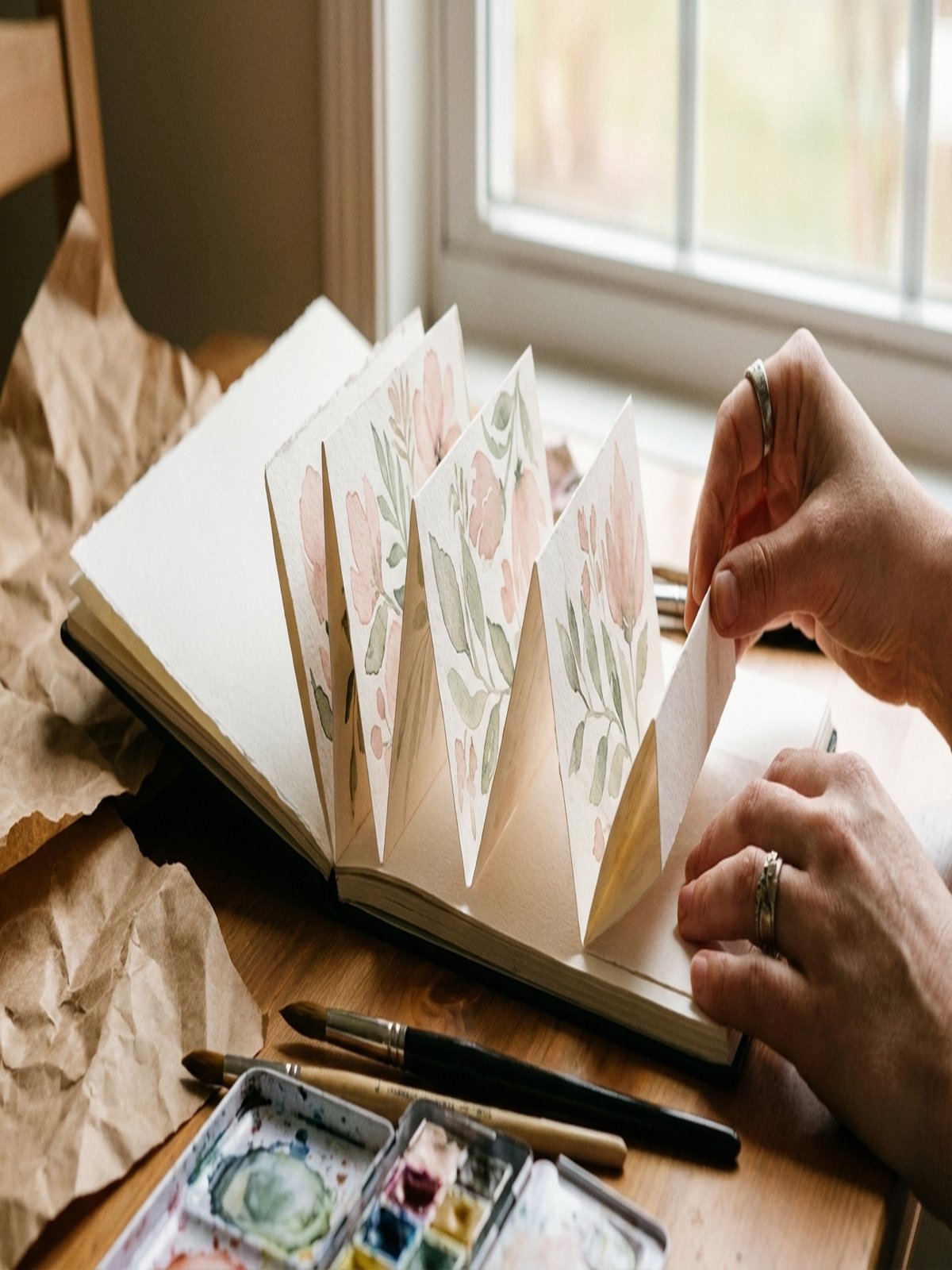
Fold-outs are probably my favourite interactive element because they’re so versatile. You can go subtle with a single flap, or dramatic with an accordion that unfolds into a three-foot panorama.
Types of Fold-Outs to Try
Simple tri-fold: Attach a piece of paper folded into thirds. The left third glues to your sketchbook page, and the remaining two-thirds fold over each other, then unfold to reveal your extended artwork.
Accordion fold: Multiple mountain and valley folds create a concertina effect. These work brilliantly for sequential storytelling, landscape panoramas, or a series of related sketches that flow into each other.
Gate fold: Two flaps that open from the center outward, like doors. Perfect for reveal moments — sketch something mysterious on the closed flaps, then open to show what’s actually inside.
Map fold: If you’ve ever wrestled with refolding a road map, you know this one. Complex but impressive when you want a large surface that collapses neatly.
I like using my Canson XL Watercolor Sketchbook for fold-outs because the heavier paper holds up well to the extra handling.
Fold-Out Project Ideas
- A cityscape that extends across four panels
- A “before and after” transformation scene
- Your morning routine illustrated in sequential panels
- A growing plant documented over weeks
- A room interior that reveals what’s behind the door
- A mountain range that just keeps going
- Character design turnarounds (front, side, back views)
- A recipe with fold-out ingredient illustrations
Need more sketchbook inspiration? Check out my 100 sketchbook prompts for ideas on what to actually draw on those fold-out pages.
Pocket Pages and Tuck-In Elements
Quick Answer: Pocket pages are paper pouches attached to your sketchbook that hold removable items like cards, photos, ephemera, or secret notes — adding a treasure-hunt element to your art practice.
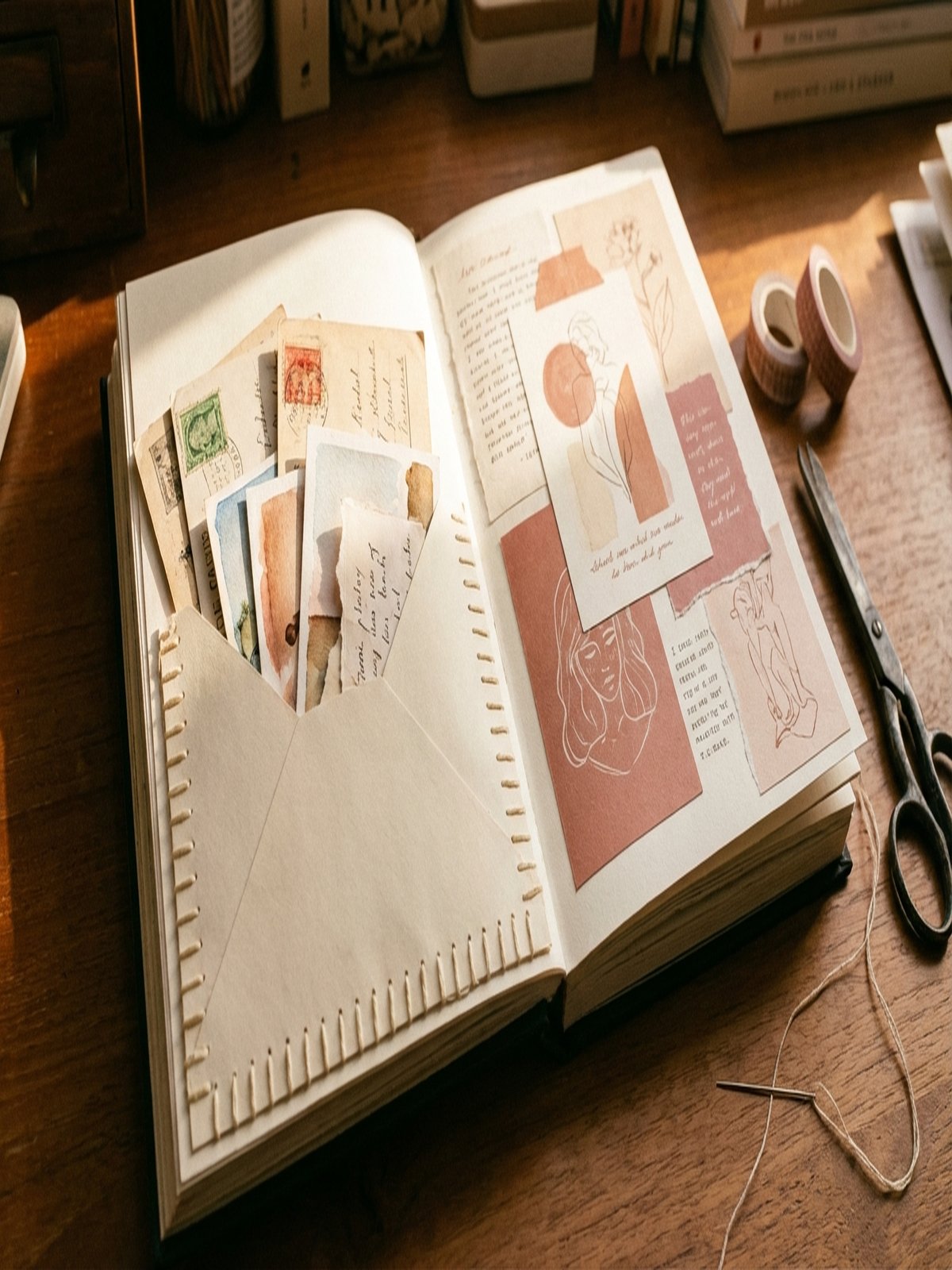
Pockets turn your sketchbook into a collection vessel. Suddenly you have a place for all those ticket stubs, pressed flowers, fabric swatches, and bits of inspiration that don’t fit anywhere else.
How to Create Pocket Pages
Basic glued pocket: Take a piece of paper slightly smaller than your sketchbook page. Fold up the bottom third and glue the sides to your page. That’s it — instant pocket.
Envelope pocket: An actual envelope (or a handmade one using the free template in your starter kit) glued to the page by its back only. The flap stays functional.
Sewn pocket: For durability, stitch the pocket edges using a simple running stitch. Washi tape over the stitching adds both strength and decoration.
Library card pocket: Those nostalgic paper pockets from old library books. You can buy reproduction ones or make your own. Perfect for holding index cards with notes or mini drawings.
What to Put in Your Pockets
- Mini drawings on index cards that you can swap out
- Color swatches and paint tests
- Pressed leaves or flowers from a specific location
- Tickets, receipts, and ephemera from memorable days
- Secret notes to your future self
- Reference photos for ongoing projects
- Business cards collected from inspiring people
- Fabric or paper samples for collage
The tuck-in cards from the free starter kit are perfect for this — small enough to fit most pockets, with decorative borders that make your hidden treasures feel special.
Flip and Reveal Pages
Quick Answer: Flip pages feature flaps that lift to reveal hidden artwork underneath — perfect for before/after transformations, peek-a-boo elements, or layered storytelling.
Remember lift-the-flap books from childhood? Same principle, but for grown-up art journals. There’s something deeply satisfying about peeling back a layer to discover what’s hidden beneath.
Flip Page Techniques
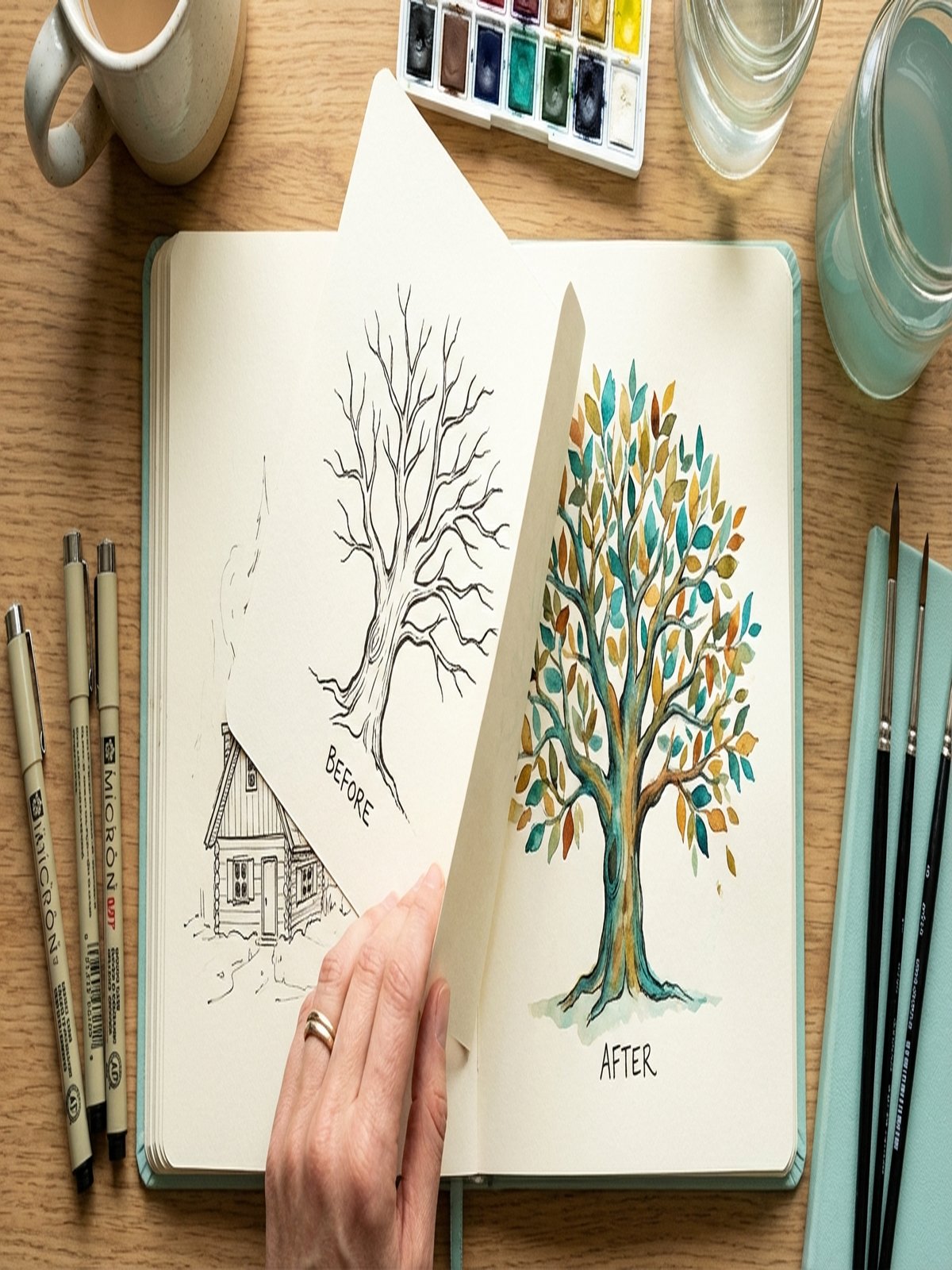
Single lift-up flap: Draw your “after” or “inside” image on the sketchbook page. Cut a piece of paper the same size, draw your “before” or “outside” image, and attach only the top edge so it lifts up.
Side-opening flap: Attach along the left or right edge instead. Works well for doors, windows, or anything that logically opens sideways.
Multiple flaps: Several small flaps on one page, each revealing different details. Think anatomy studies (lift the skin layer to see muscles), cross-sections of buildings, or emotional layers.
Window cutout: Cut a shape out of your flap so part of the underneath image peeks through even when closed. Creates intrigue about what the full reveal might show.
Flip Page Ideas
- Tree in winter (flap) → Tree in full bloom (underneath)
- Closed door → Room interior revealed
- Gift box → Present inside
- Sad face → Happy face (emotional transformation)
- Messy desk → Organized desk
- Caterpillar → Butterfly
- Empty plate → Meal served
- Nighttime scene → Same scene in daylight
For more creative sketchbook ideas with a watercolor twist, see my easy watercolor sketchbook ideas guide.
Mixed Media Interactive Spreads
Quick Answer: Mixed media interactive spreads combine collage, paint, paper layers, and dimensional elements to create tactile, richly textured pages that engage multiple senses.
This is where things get really fun (and admittedly messier). When you combine interactive elements with collage and paint, your sketchbook becomes something between art journal and sculpture.
Mixed Media Techniques
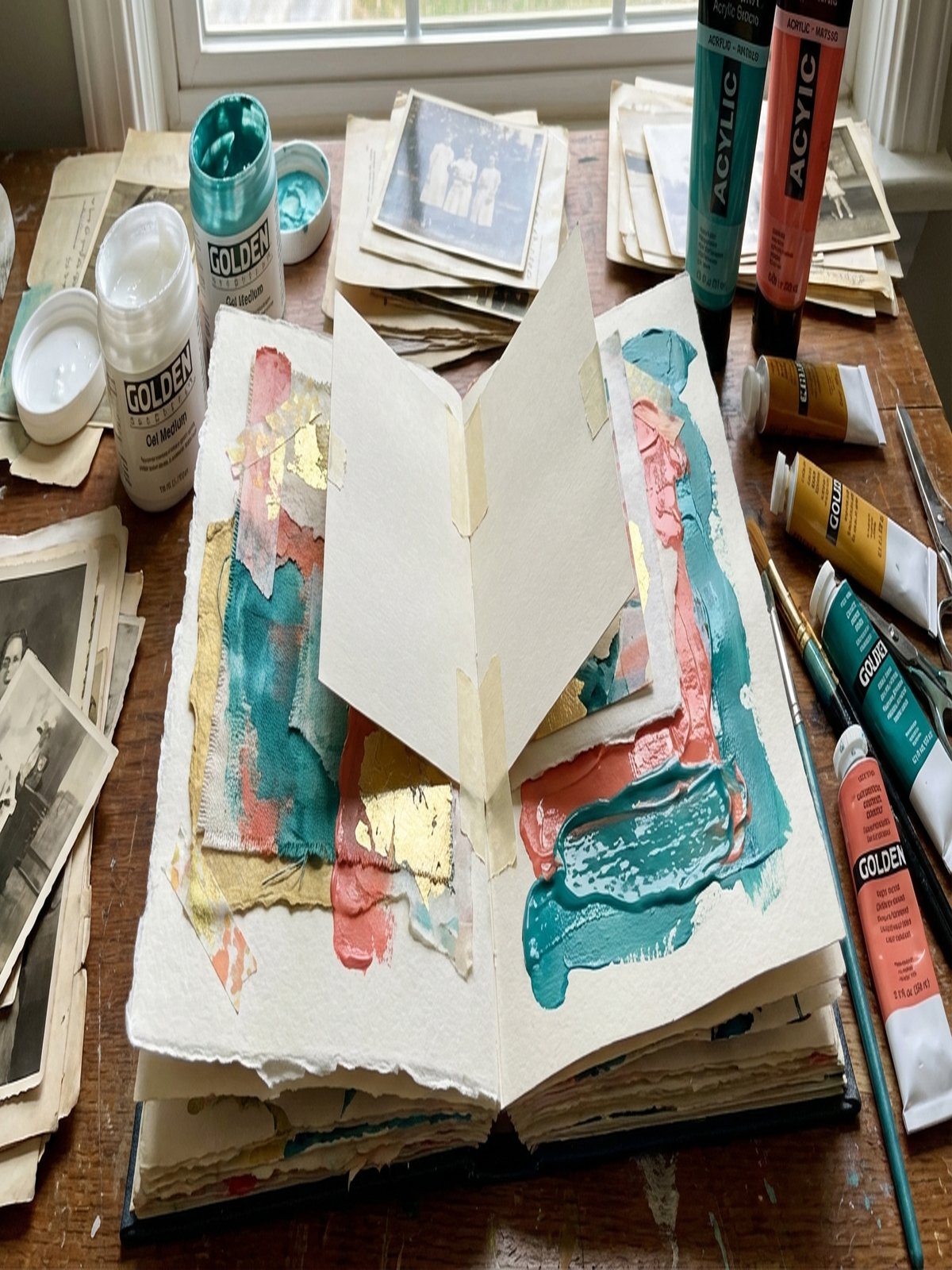
Layered collage with lift-able pieces: Instead of gluing collage elements flat, attach only one edge. The pieces can be lifted to reveal layers underneath or notes written behind them.
Washi tape hinges: Use decorative washi tape as both hinge and design element. It holds flaps securely while adding color and pattern.
Gel medium transfers with pockets: Create image transfers on top of hidden pockets. The texture of the transfer adds visual interest while disguising the pocket opening.
Painted backgrounds with fold-outs: Paint your base spread with watercolor or acrylic, let dry completely, then add paper fold-outs that complement the painted background.
I recommend ceramic mixing palettes for this kind of work — they clean up easily between wet media sessions and won’t stain like plastic.
Materials That Work Well
- Vintage book pages for collage and fold-outs
- Tissue paper for translucent layers
- Fabric scraps for texture
- Old maps for pocket linings
- Handmade paper for organic edges
- Tracing paper for ghostly overlays
- Kraft paper for rustic fold-outs
If you’re interested in the junk journal side of mixed media, check out my loose watercolor sketchbook pages tutorial for techniques that pair beautifully with interactive elements.
Getting Started: Tips for Beginners
Quick Answer: Start simple with one technique at a time, use cardstock for durability, always score fold lines before folding, and don’t worry about perfection — the handmade quality is part of the charm.
Feeling a bit overwhelmed by all these options? That’s completely normal. Here’s how to start without the pressure.
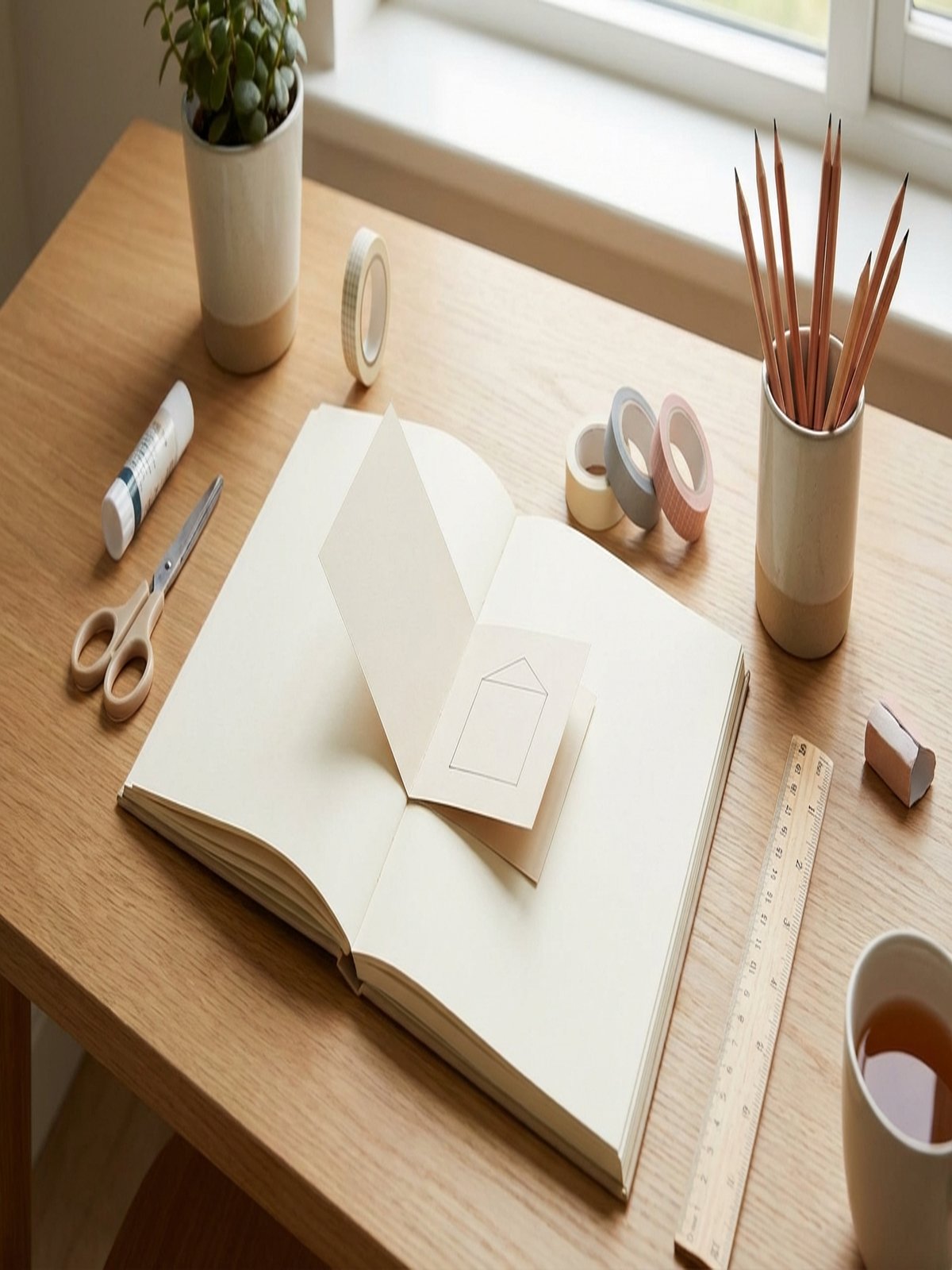
Start Simple
Pick ONE technique from this guide and try it on a single page. A simple pocket or basic tri-fold is perfect for your first attempt. Master that before adding complexity.
Use the Right Paper
Regular printer paper tears too easily for interactive elements. Use cardstock (65-110 lb) or mixed media paper for fold-outs and flaps. The investment in decent paper prevents frustration.
Score Before Folding
Run a bone folder (or the back of a butter knife) along your fold line before folding. This creates a crisp, professional crease instead of a bumpy, cracked fold. Trust me on this one.
Leave Glue Tabs
When designing your templates, always include a tab or margin for gluing. Trying to attach paper edge-to-edge rarely works well. A half-inch glue tab makes everything easier.
Test First
Before committing to your actual sketchbook, test your fold or pocket on scrap paper. Make sure everything fits, folds correctly, and doesn’t bulk up the spine too much.
Embrace Imperfection
Handmade interactive elements aren’t meant to look machine-perfect. Slightly wonky edges, visible glue marks, and irregular folds add character. This is an art journal, not a precision instrument.
Supplies for Interactive Sketchbooks
You don’t need much to get started, but having the right tools makes the process smoother. Here are my recommendations:

| 
| 
|
This post contains affiliate links, which means I may earn a small commission at no extra cost to you if you make a purchase. I only recommend products I genuinely love and use myself!
Free Interactive Sketchbook Starter Kit
Ready to try these techniques? I’ve created a free 18-page starter kit with everything you need to begin adding interactive elements to your sketchbook:
- Pocket templates — Simple pocket, mini pockets, and library card pocket designs
- Bookmark templates — Decorative bookmarks and corner bookmarks to mark your favorite pages
- Envelope templates — Simple envelope and mini envelope designs for tucking in notes
- Tuck-in cards — Decorative cards sized to fit your pockets
- Creative prompts — 10 ideas specifically designed for interactive pages
- Tips page — Pro tips for getting crisp folds and secure attachments
- Inspiration gallery — Visual examples of each technique
Looking for more printable resources? Check out my Payhip shop for premium sketchbook templates and creative guides!
Frequently Asked Questions
What kind of sketchbook works best for interactive pages?
Look for sketchbooks with heavier paper (at least 90 lb) and spiral or lay-flat binding. The spine needs to accommodate extra bulk from fold-outs and pockets without warping. Hardcover mixed media sketchbooks are ideal because they protect your dimensional elements.
Won’t adding fold-outs make my sketchbook too bulky?
A few interactive elements won’t cause problems, but if you go heavy on the fold-outs, yes, bulk happens. To manage it: use thinner paper for some elements, space interactive pages throughout rather than clustering them, and embrace the chunky aesthetic as part of your journal’s personality.
Can I add interactive elements to a sketchbook I’ve already started?
Absolutely! You can add pockets and flip flaps to existing pages. For fold-outs, you might need to tip in (glue a small strip of the fold-out paper to the existing page edge) rather than using a full glue tab. It works fine — I do this all the time when inspiration strikes mid-sketchbook.
What glue should I use?
Acid-free glue sticks work well for most applications — they dry quickly and don’t wrinkle thin paper. For heavier elements or permanent attachment, PVA glue (like Mod Podge) provides stronger adhesion. Avoid wet glues on watercolor paper as they can cause buckling.
How do I keep flip flaps from getting damaged?
Reinforce the fold line with washi tape on both sides. For frequently-lifted flaps, consider laminating them with clear packing tape or using cardstock. Some artists add a small paper tab to lift instead of grabbing the flap edge directly.
Final Thoughts
Interactive sketchbook ideas aren’t about making your art more complicated — they’re about making it more engaging. When you add a pocket, create a fold-out, or hide a surprise under a flap, you’re inviting yourself (and anyone who peeks at your sketchbook) to slow down and actually explore.
Start with one technique this week. Maybe a simple pocket to hold inspiration clippings, or a basic fold-out on a landscape you’re working on. See how it feels. Play with it.
And don’t forget to grab your free Interactive Sketchbook Starter Kit above — those templates will save you the measuring and planning so you can jump straight into creating.
Want to see these techniques in action? Head over to my YouTube channel where I share step-by-step art tutorials every week. Hit subscribe so you don’t miss the next one!
Tag me @artsydee_inspiring_creations on Instagram when you try any of these interactive sketchbook ideas — I love seeing what you create! You can also find me on Pinterest at @artsydee.
You Might Also Like
- 100 Sketchbook Prompts to Fill Your Pages
- Easy Watercolor Sketchbook Ideas
- Loose Watercolor Sketchbook Pages
- Free Watercolor Sketchbook Templates
- Watercolor Painting Ideas for Beginners
Pin this for later!