Last Updated on October 9, 2026 by Dee
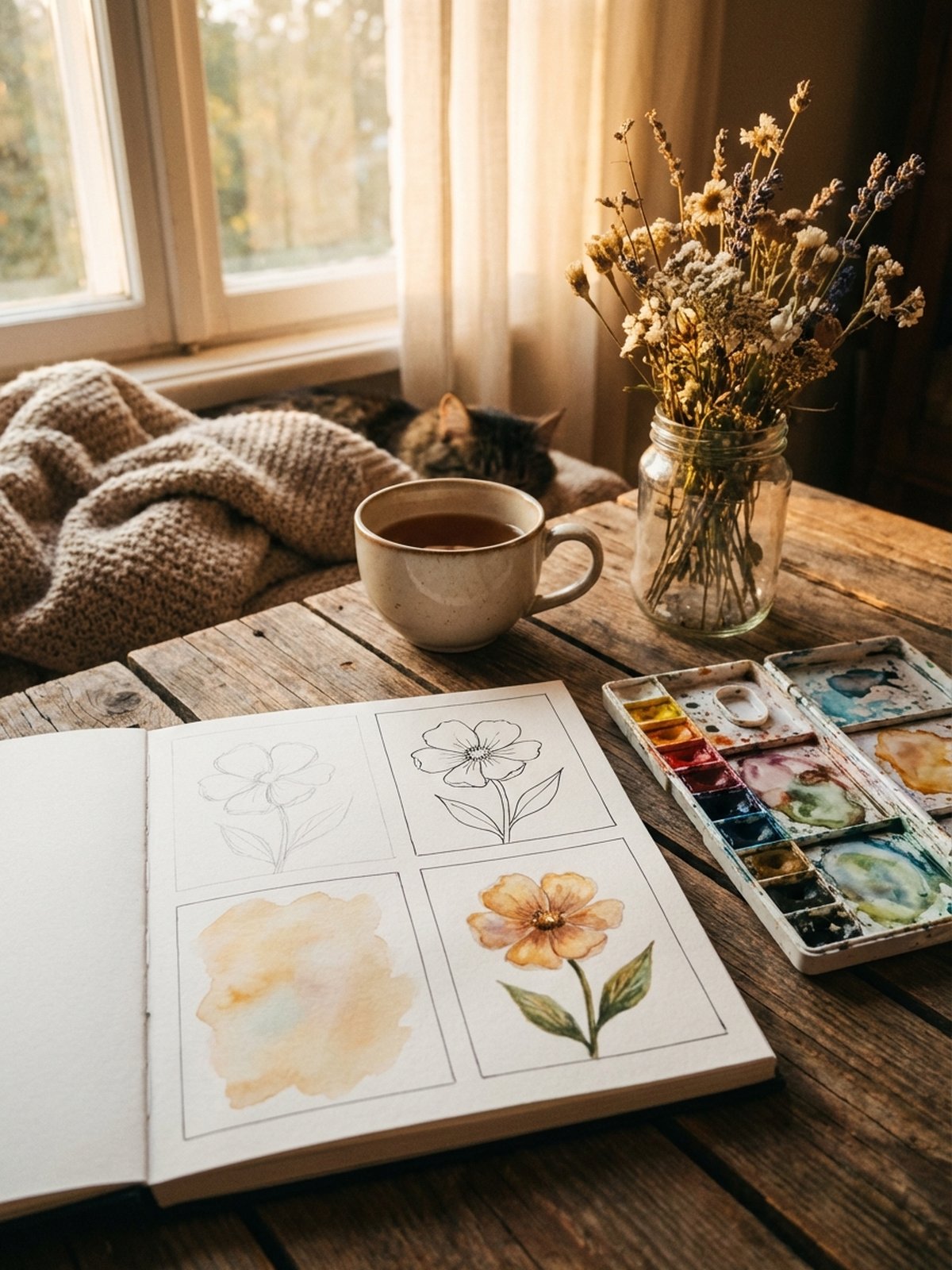
You’ve got a sketchbook full of drawings. Maybe some flowers, a few landscapes, some random doodles. And you’re wondering — could these actually become paintings?
Grab your free Sketch-to-Paint Templates just below! I’ve created 10 ready-to-paint line drawings you can print and use right away.
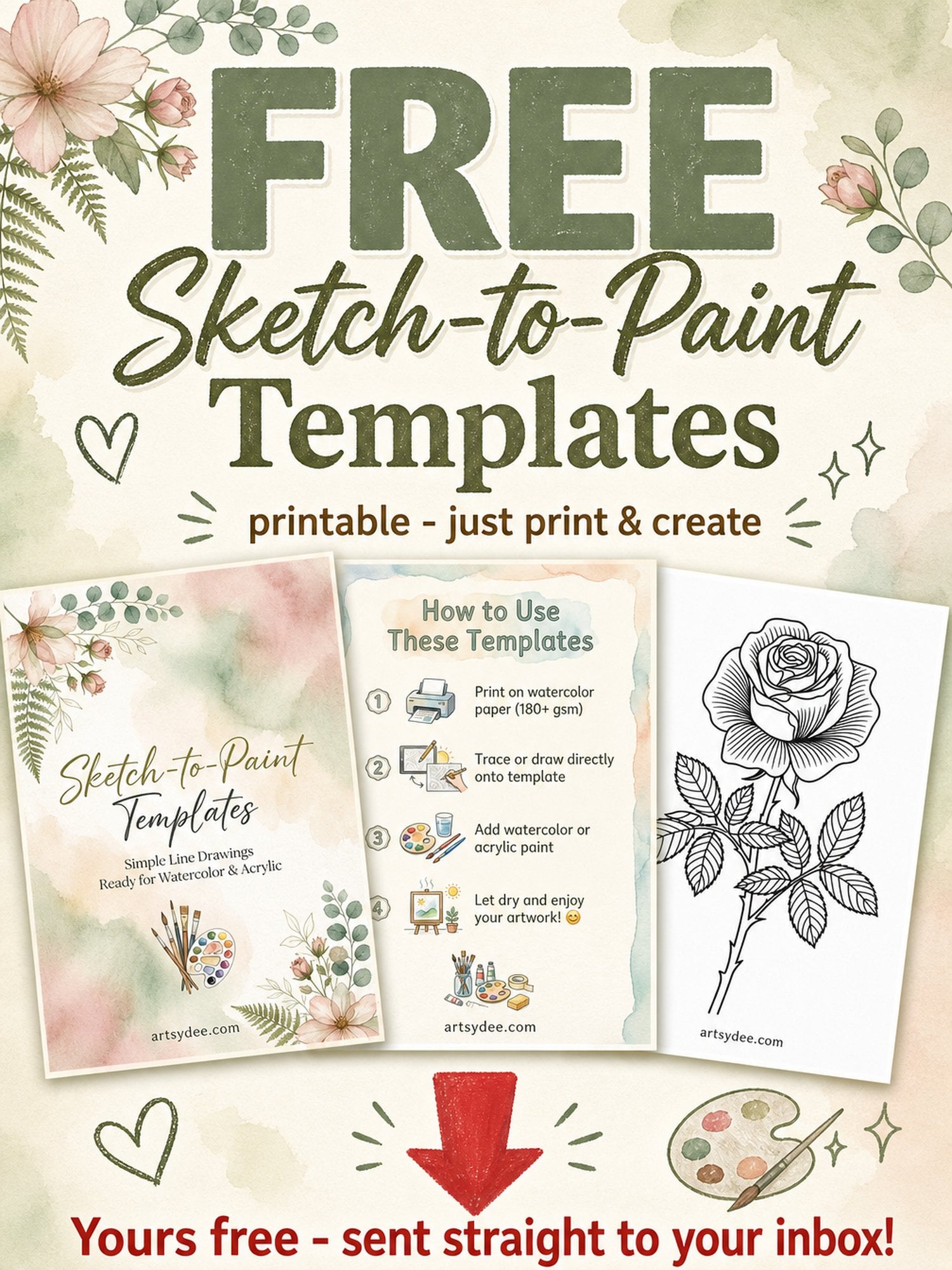
Short answer: absolutely. The secret that transformed my own art practice? Starting with simple line drawings before adding paint. It takes so much pressure off because you already know what you’re painting. No staring at a blank page wondering where to begin.
I’ve gathered over 45 drawing ideas that are specifically designed to become beautiful watercolor or acrylic paintings. These aren’t complicated compositions — they’re simple sketches that look stunning with just a few washes of colour. Perfect whether you’re just starting out or looking to build a consistent painting habit.
🎬 Love video tutorials? Subscribe to my YouTube channel for weekly watercolor tutorials and art inspiration!
Table of Contents
Why Start with a Drawing Before You Paint?
Quick Answer: Drawing first gives you a roadmap for your painting, reducing overwhelm and helping you focus on colour and technique rather than composition.
Here’s the thing — when you sit down to paint with no plan, your brain has to do everything at once. Figure out the composition, choose colours, manage your water, think about values… it’s a lot.
But when you start with a simple sketch? You’ve already solved half the puzzle. The drawing handles the “what” so you can focus entirely on the “how” of painting.
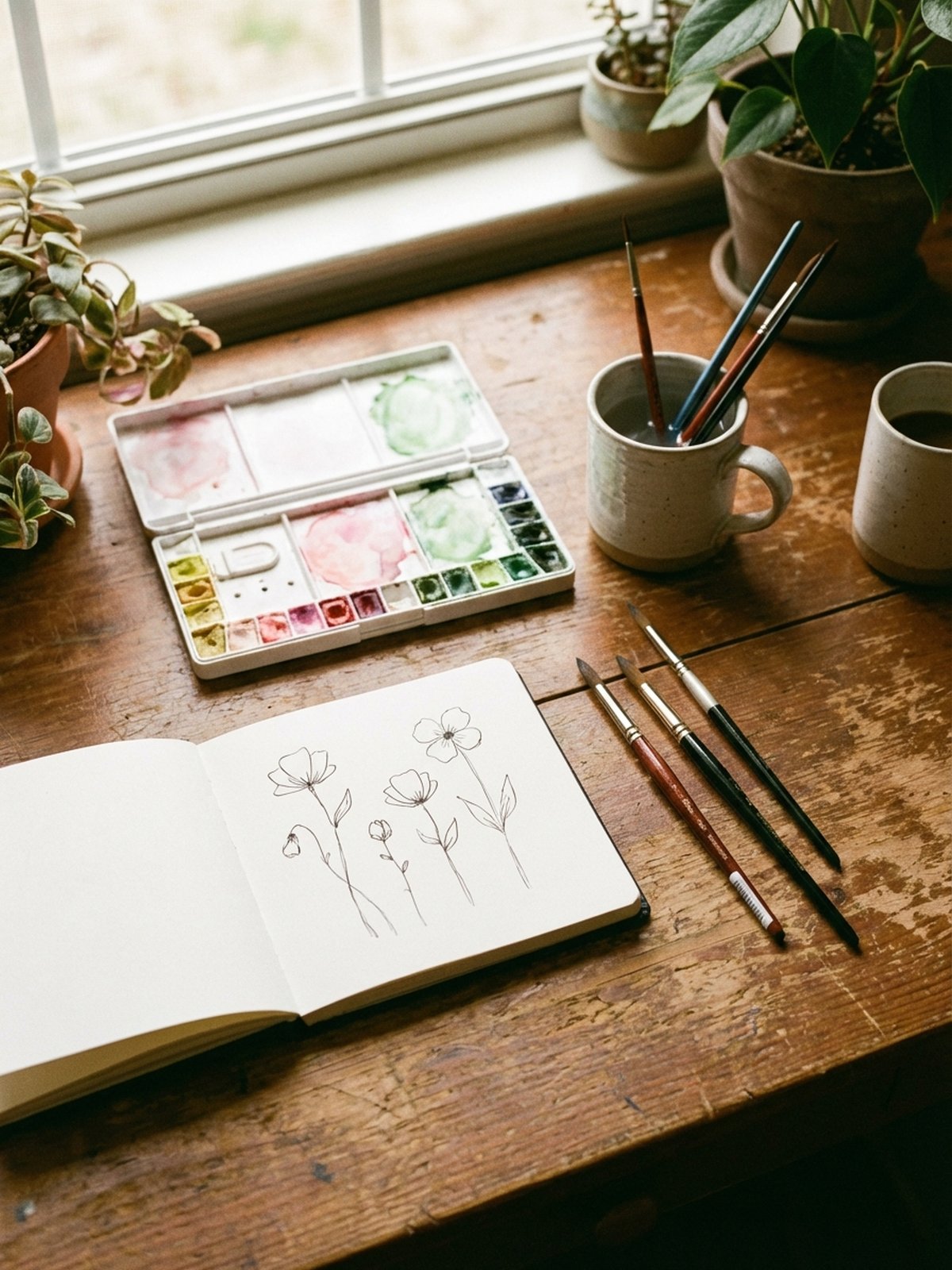
I discovered this approach years ago when I was struggling to finish paintings. I’d start with enthusiasm, get overwhelmed halfway through, and abandon the piece. Sound familiar? Once I began sketching first — really simple line drawings, nothing fancy — suddenly my completion rate skyrocketed.
The best part? You don’t need to be a “good” drawer. These ideas are intentionally simple. We’re talking basic shapes and outlines that anyone can manage. The paint is what brings them to life.
Turned a few sketches into paintings? My Patreon members get fresh watercolour templates and lessons landing every month.
See what’s on Patreon →Easy Floral Drawing Ideas to Paint
Quick Answer: Flowers are the perfect beginner subject because they’re forgiving — petals don’t need to be perfectly symmetrical, and loose, organic shapes actually look better in watercolor.
Florals are my go-to recommendation for anyone wanting to bridge drawing and painting. Why? Because flowers are naturally imperfect. Those wobbly lines in your sketch? They become charming, organic petals when you add paint.
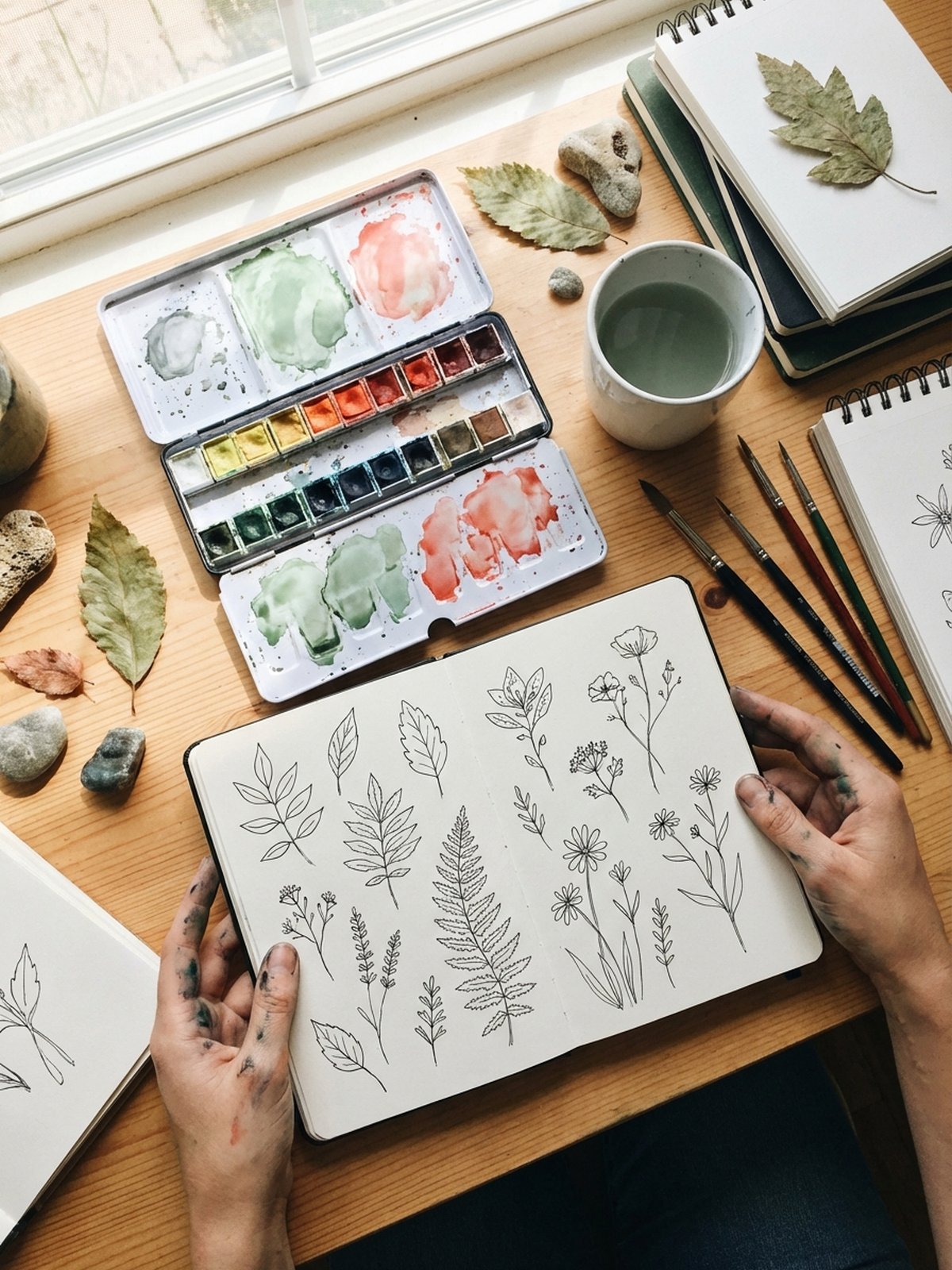
Simple floral drawings to try:
- Single rose — Start with a spiral centre and add loose petals radiating outward
- Daisy cluster — Simple circles with radiating lines for petals
- Wildflower bunch — Mix different heights and shapes for natural look
- Sunflower — Large centre circle with broad petals around it
- Tulips in a row — Cup shapes on long stems, lovely in spring colours
- Cherry blossoms on a branch — Small five-petal flowers clustered together
- Poppies — Crinkled petals with dark centres, beautiful in reds and oranges
- Lavender stems — Simple vertical lines with tiny marks for flower buds
For watercolour florals, I recommend working on paper that can handle water without buckling. My Canson XL Watercolor Sketchbook is perfect for practice sessions — the paper holds up well and it’s affordable enough that you won’t feel precious about making mistakes.
Simple Nature & Landscape Sketches
Quick Answer: Landscape drawings can be as simple as a horizon line with a few shapes — hills, trees, and sky are all you need for a satisfying painting.
Landscapes might seem intimidating, but they’re actually perfect for the sketch-to-paint approach. You’re not trying to recreate a photograph — you’re capturing a mood with simple shapes.
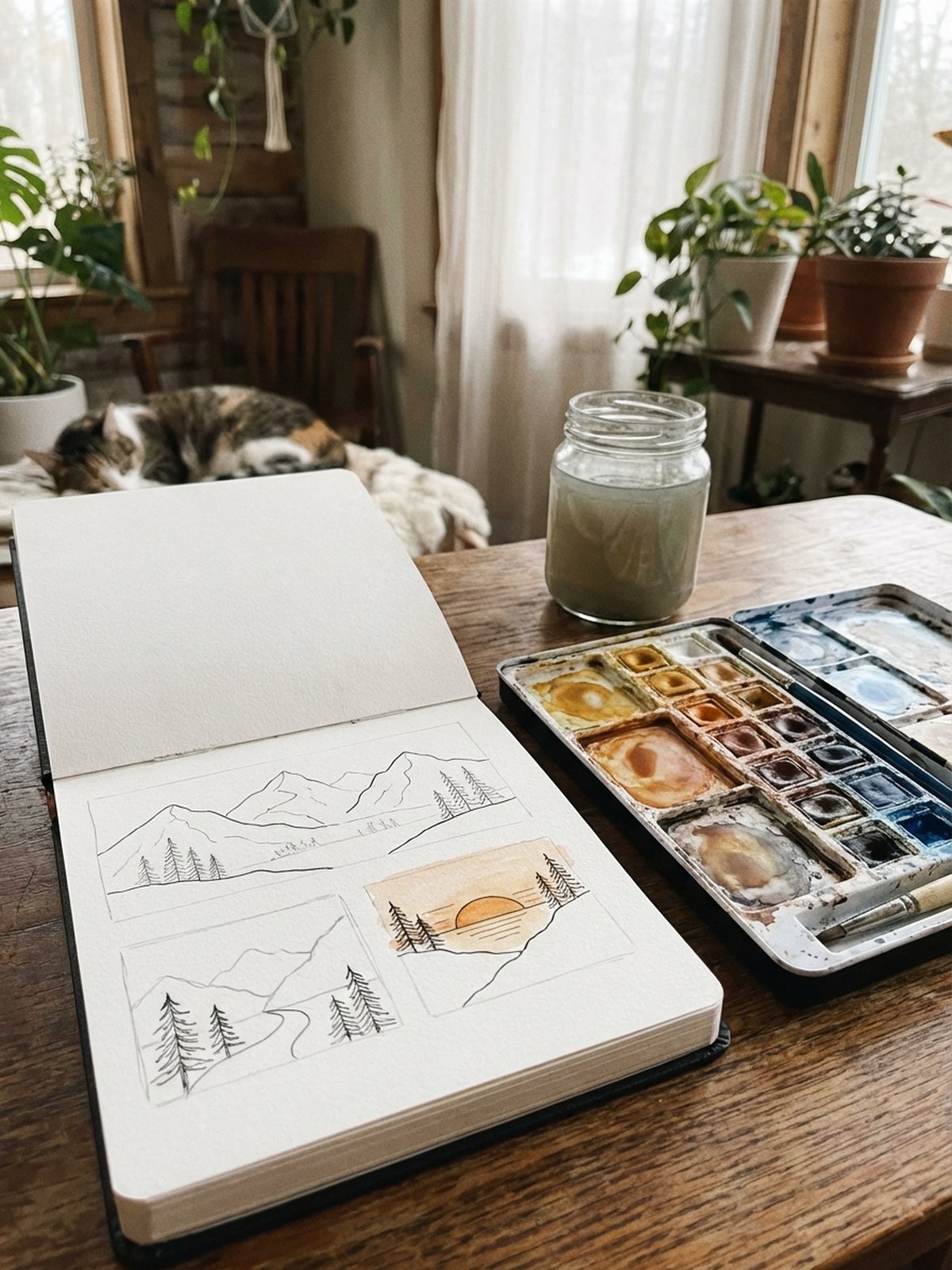
Nature and landscape ideas:
- Rolling hills — Just curved horizontal lines with a simple tree or two
- Single tree silhouette — One strong tree shape against a wash of sky
- Mountain range — Triangular peaks with valleys, perfect for gradient washes
- Sunset over water — Horizontal lines for reflection, simple sun circle
- Forest path — Two converging lines with tree trunks on either side
- Beach scene — Curved shoreline, simple waves, maybe a shell or two
- Clouds in the sky — Fluffy shapes that are perfect for wet-on-wet technique
- Moon and stars — Simple night sky that’s beautiful in dark washes
The trick with landscapes is keeping them simple. Resist the urge to add every detail you see. Three elements maximum: foreground, middle ground, background. That’s it.
Everyday Objects & Still Life Ideas
Quick Answer: Everyday objects make excellent painting subjects because you can set them up right in front of you and they don’t move — perfect for beginners learning to observe and paint.
Still life might sound old-fashioned, but it’s honestly the best way to practice. You control the setup, the lighting doesn’t change, and you can take your time.
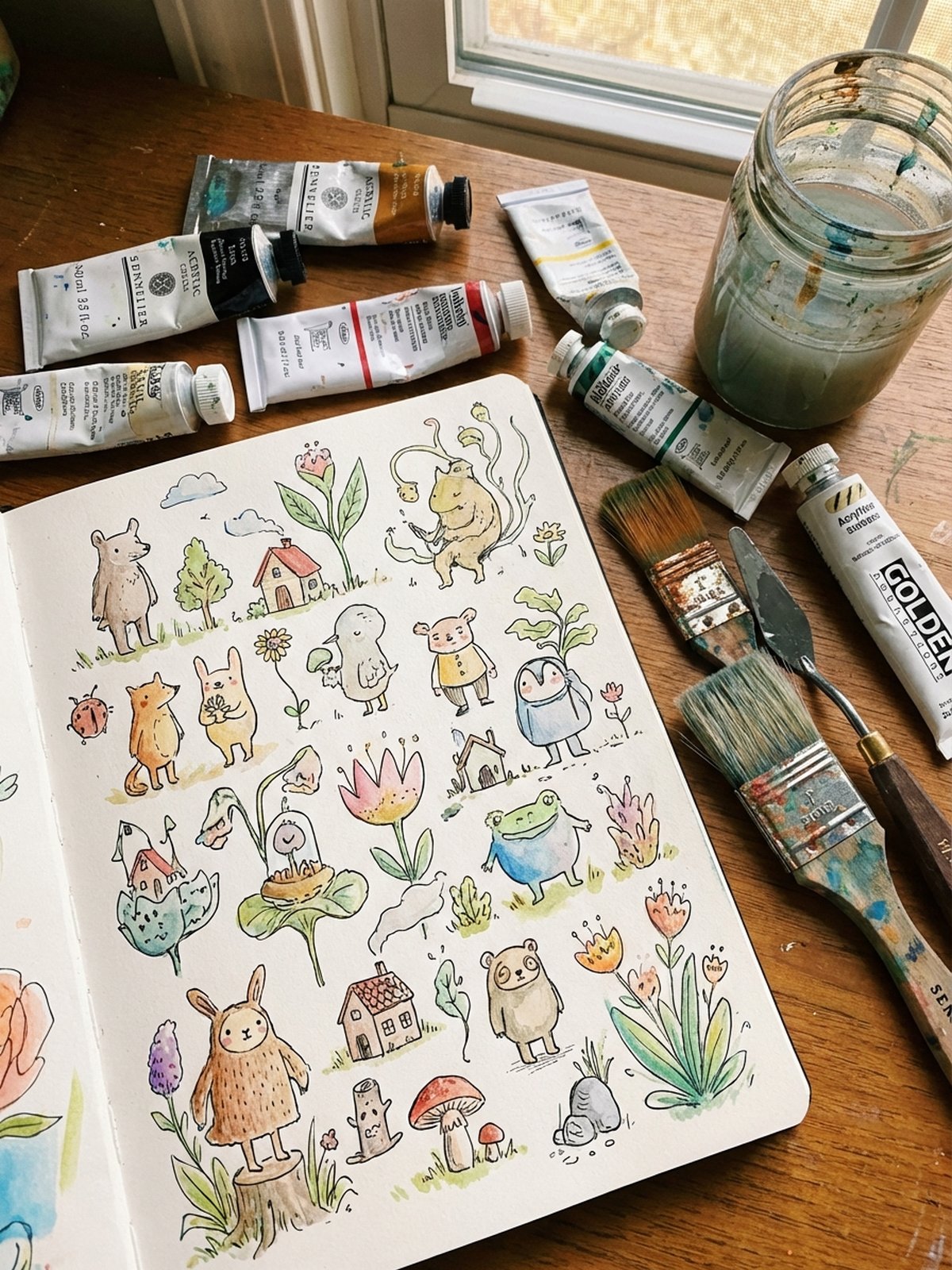
Still life drawing ideas:
- Cup of tea or coffee — Simple mug shape, maybe with steam rising
- Single piece of fruit — An apple, pear, or orange with its shadow
- Vase with flowers — Combines container shape with organic blooms
- Stack of books — Rectangular shapes with interesting angles
- Candle in a jar — Great for practicing transparency in watercolor
- Teapot — Classic shape with lovely curves
- Wine bottle and glass — Elegant shapes, beautiful with loose washes
- Fruit bowl arrangement — Multiple items for more complex composition
For still life work, I like using a ceramic palette because you can really see your colour mixes clearly. It makes a big difference when you’re trying to match the subtle tones in everyday objects.
Whimsical & Fun Drawing Prompts
Quick Answer: Whimsical subjects free you from perfectionism — nobody knows exactly what a fairy house or magical mushroom should look like, so you can’t get it “wrong.”
Sometimes you need to paint something purely for fun. No rules, no reference photos to match, just imagination and colour. These whimsical ideas are perfect for those days.
Whimsical drawing prompts:
- Mushroom village — Cluster of mushrooms with doors and windows
- Hot air balloon — Colourful balloon floating in clouds
- Fairy house in a tree — Tiny door in a trunk with lantern lights
- Magical crystal cluster — Geometric shapes in dreamy colours
- Butterfly collection — Several butterflies in different positions
- Whimsical cottage — Cozy house with smoke from chimney
- Galaxy in a jar — Mason jar containing swirling cosmos
- Koi fish — Flowing fish with beautiful orange and white patterns
These subjects are great for experimenting with colour. Since they’re imaginary, you can use any palette you want. Try unusual colour combinations you wouldn’t normally choose.
Botanical & Plant Drawings
Quick Answer: Botanical drawings focus on single plants or leaves, which makes them perfect for detailed watercolor studies without overwhelming complexity.
Botanical art has seen a huge resurgence, and for good reason. There’s something deeply satisfying about capturing a single leaf or plant in detail. And the sketch-to-paint approach works beautifully here.
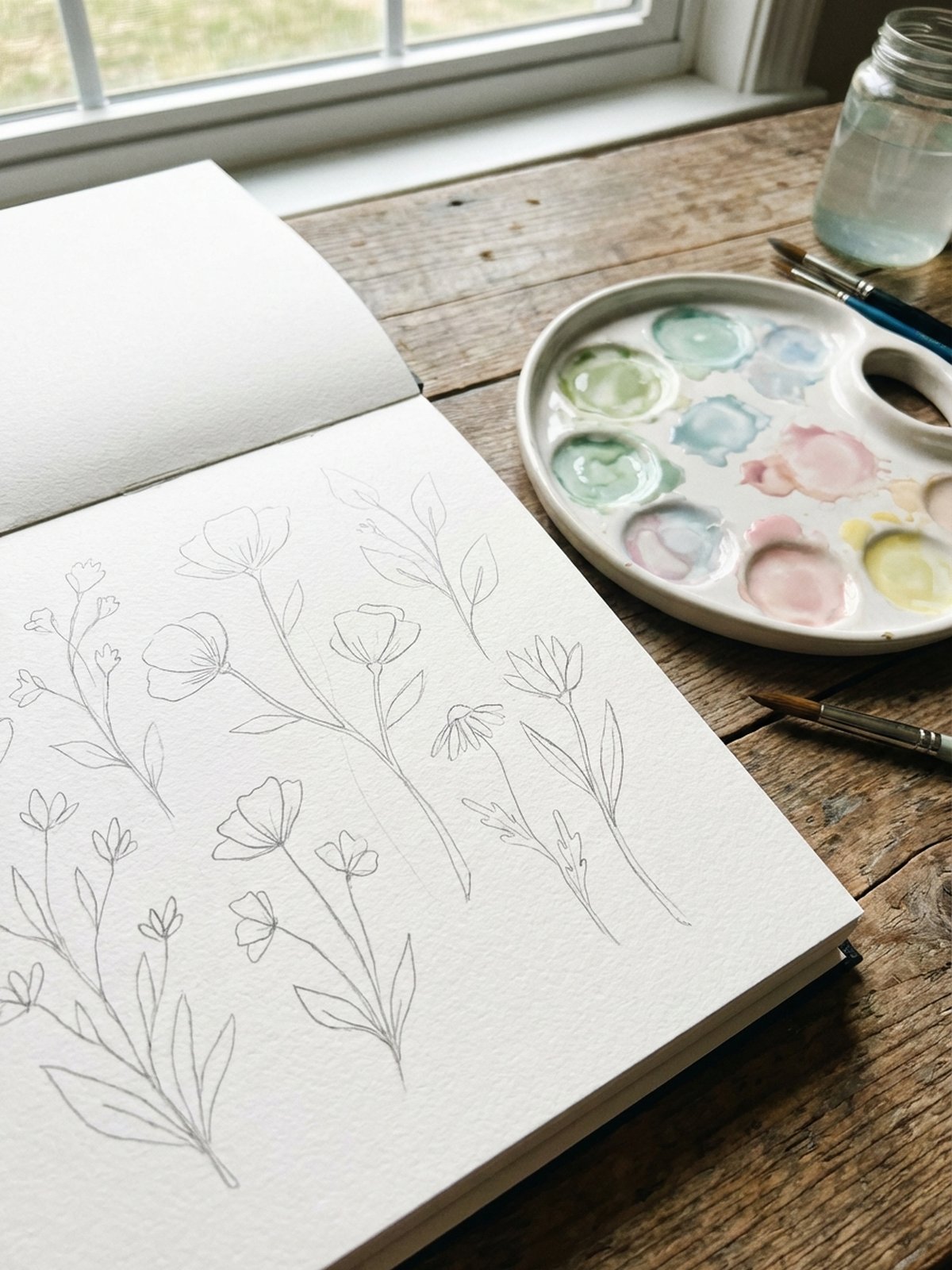
Botanical subjects to sketch and paint:
- Eucalyptus branch — Round leaves on a curved stem
- Monstera leaf — One large leaf with characteristic holes
- Fern frond — Delicate repeating pattern of leaves
- Succulent rosette — Layered leaves in a spiral pattern
- Herb sprigs — Rosemary, thyme, or basil are simple and charming
- Potted plant — Any houseplant in a simple container
- Seed pods — Interesting shapes like lotus pods or dried poppy heads
- Pine cone — Overlapping scales create beautiful texture
For botanical work, you’ll want good quality brushes that hold a point. I’ve been using Escoda round brushes for years — they’re an investment but they last forever and give you that precise control you need for detailed leaf work.
Tips for Turning Your Sketches into Paintings
Quick Answer: The key to successful sketch-to-paint work is keeping your lines light, working from light to dark values, and not being afraid to let paint go beyond your lines.
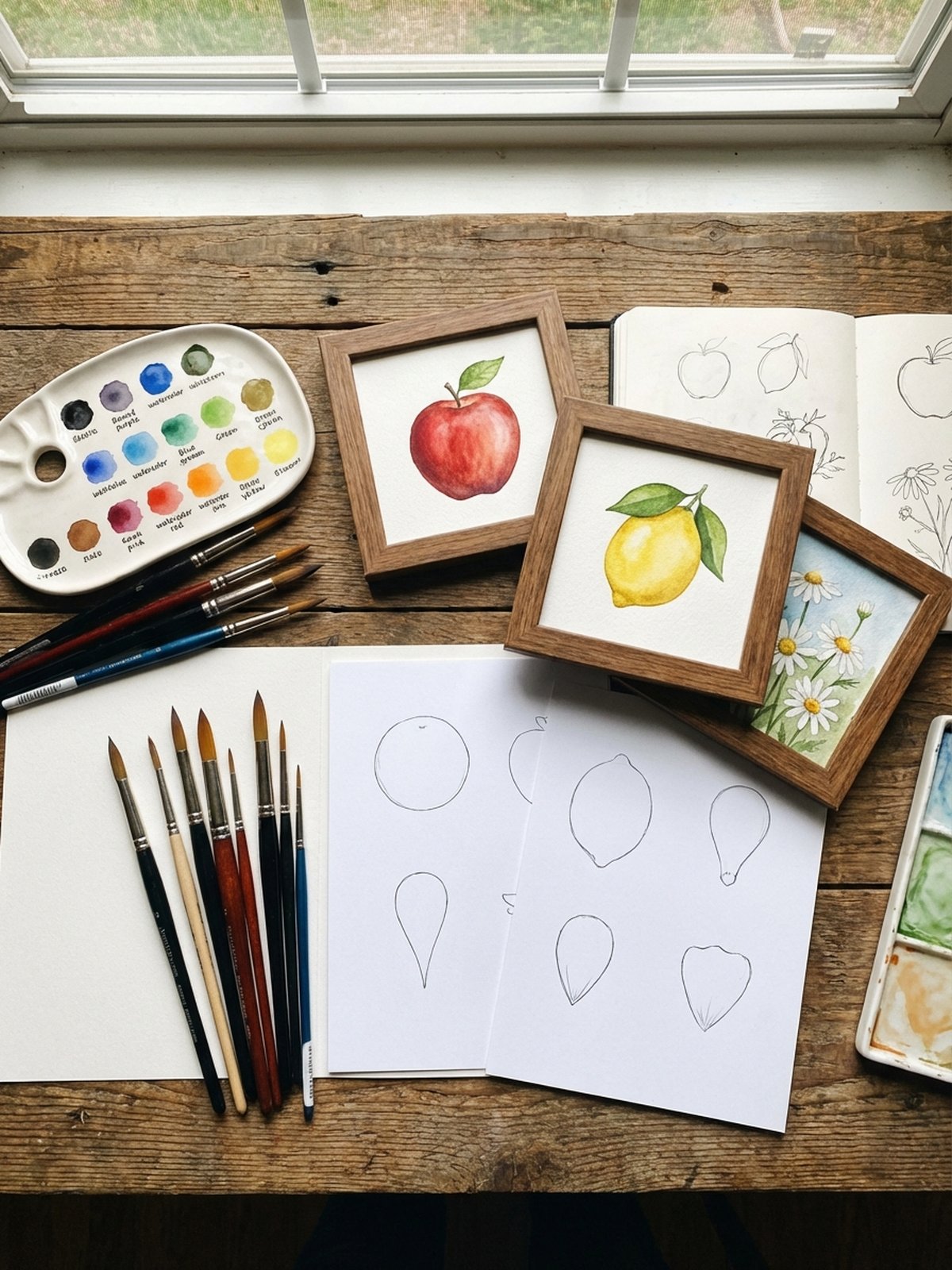
Now that you’ve got plenty of drawing ideas, here’s how to actually make the transition from sketch to finished painting:
1. Keep your pencil lines light
You want guidelines, not dark outlines. Use a light touch with an HB or 2H pencil. The paint should cover most of your sketch marks.
2. Work light to dark
Start with your lightest washes and build up to darker values. With watercolour especially, you can’t go backwards — once it’s dark, it’s dark.
3. Let the paint breathe
Don’t feel confined by your sketch lines. Some of the most beautiful effects happen when paint flows just a bit outside where you planned. Embrace it.
4. Leave white space
Especially with watercolour, those unpainted areas create highlights and give your painting room to breathe. Plan for them in your sketch.
5. Don’t overwork it
Know when to stop. More layers don’t always mean a better painting. Sometimes that first loose wash is exactly right.
Supplies You’ll Need
You don’t need expensive materials to get started with sketch-to-paint practice. Here are my recommendations for beginners:

|

|

|

|
This post contains affiliate links, which means I may earn a small commission at no extra cost to you if you make a purchase. I only recommend products I genuinely love and use myself!
Download Your Free Sketch-to-Paint Templates
I’ve created a set of 10 ready-to-paint line drawings specifically for this post. Just print them on watercolour paper and start painting — no sketching required!
Your free templates include:
- Simple rose template
- Daisy cluster
- Rolling hills landscape
- Whimsical mushroom scene
- Fruit still life
- Butterfly template
- Sunflower design
- Coastal lighthouse scene
- Succulent arrangement
- Hot air balloon
👉 Pop your email into the box near the top of this post and I’ll send these straight to your inbox — free!
Looking for more printable resources? Check out my Payhip shop for premium watercolor templates and guides!
Prefer bold, opaque colour? These acrylic marker drawing ideas work beautifully on paper, wood and rocks.
Frequently Asked Questions
Can I paint over pencil lines?
Yes! Light pencil lines are fine to paint over — the paint will cover most of them. Just avoid pressing too hard with your pencil, as deep grooves can show through watercolour washes. If you want to erase your pencil marks, wait until the painting is completely dry.
Do I need to be good at drawing to paint?
Not at all. These drawing ideas are intentionally simple — basic shapes and outlines that anyone can manage. The paint is what transforms them. And honestly, “imperfect” sketchy lines often look better in loose watercolour styles than precise technical drawings.
What’s the best paper for sketch-to-paint practice?
For watercolour, use paper that’s at least 140lb (300gsm) weight so it won’t buckle with water. Cold press paper has a nice texture that’s forgiving for beginners. For acrylics, you can use canvas paper or even regular canvas panels.
Should I trace or freehand my sketches?
Either works! Tracing from templates (like the free ones in this post) is a great way to practice painting without worrying about drawing. Freehand sketching builds your observation skills. Do whatever helps you actually pick up the brush and paint.
How do I prevent my watercolour from looking muddy?
Muddy colours usually happen from overworking the paint or mixing too many colours together. Let each layer dry before adding more, clean your brush between colours, and try to use no more than 2-3 colours in any mix.
Final Thoughts
The sketch-to-paint approach has genuinely changed how I create art. It takes the pressure off, makes painting more approachable, and leads to more finished pieces (which is half the battle, let’s be honest).
Pick one of these drawing ideas that calls to you. Just one. Grab a pencil, make a simple sketch, and see what happens when you add paint. You might be surprised how satisfying it feels.
And don’t forget to grab your free Sketch-to-Paint Templates above — they’re ready to print and paint whenever inspiration strikes.
Want to see these techniques in action? Head over to my YouTube channel where I share step-by-step watercolour tutorials every week. Hit subscribe so you don’t miss the next one!
Tag me @artsydee_inspiring_creations on Instagram if you try any of these drawing ideas — I’d love to see your paintings!
You Might Also Like
- Easy Watercolor Sketchbook Ideas
- Watercolor Painting Ideas for Beginners
- Simple Watercolor Ideas for Beginners
- 100 Sketchbook Prompts
- Free Watercolor Sketchbook Templates
🎨 Want more free printables? Browse my Free Printables Library — over 400 free templates, coloring pages, drawing guides, and creative resources all in one place!
Pin this for later!
Where to buy the full paid set
Enjoying these free resources? When you’re ready to keep going, my The Spring Cutting Garden Watercolour Templates gives you 20 ready-to-paint watercolour outlines in the same paint-inside-the-lines style — just more of them, and all in one tidy download. It’s £8 over on Payhip. It’s on Etsy too, priced the same. Or browse the whole watercolour template collection and pick your favourites. Everything is made and tested by me — a real art teacher.
The free Sketch-to-Paint Templates give you 10 ready-to-paint line drawings so you can skip the sketching and go straight to colour. When you want more, my Patreon community gets monthly watercolour lessons and printables, plus premium reference sets with colour-recipe cards from £14 (~$18).
Browse the reference sets →
I’m excited to try