Last Updated on January 30, 2026 by Dee
I used to think landscapes required sprawling canvases and hours of meticulous work. Then I discovered the joy of mini watercolor landscapes—complete paintings that fit in a 4-inch square and take less time than my morning coffee.
These tiny landscapes are perfect for beginners because they strip away the overwhelming details and focus on what really matters: capturing light, creating depth, and suggesting rather than spelling out every leaf and blade of grass.
With just a few brushstrokes and some water magic, you can create moody mountains, peaceful meadows, and dreamy sunsets that look far more impressive than they are difficult to paint.
Grab your free Mini Watercolor Landscapes Templates at the end of this post!
🎬 Love video tutorials? Subscribe to my YouTube channel for weekly watercolor tutorials and art inspiration!
What’s Inside
Why Start with Mini Landscapes
Quick Answer: Mini landscapes force you to simplify, which is actually the key to painting convincing scenes. With limited space, you learn to suggest elements rather than render every detail.

Working small has practical benefits too. You use less paint, need less drying time, and can complete satisfying paintings even when you only have 15 minutes. The small scale also makes mistakes less precious—if one doesn’t work, just start another.
Most importantly, mini landscapes build your confidence fast. Each completed painting is a small win, and those wins add up to genuine skill growth.
Simple Mountain Landscapes
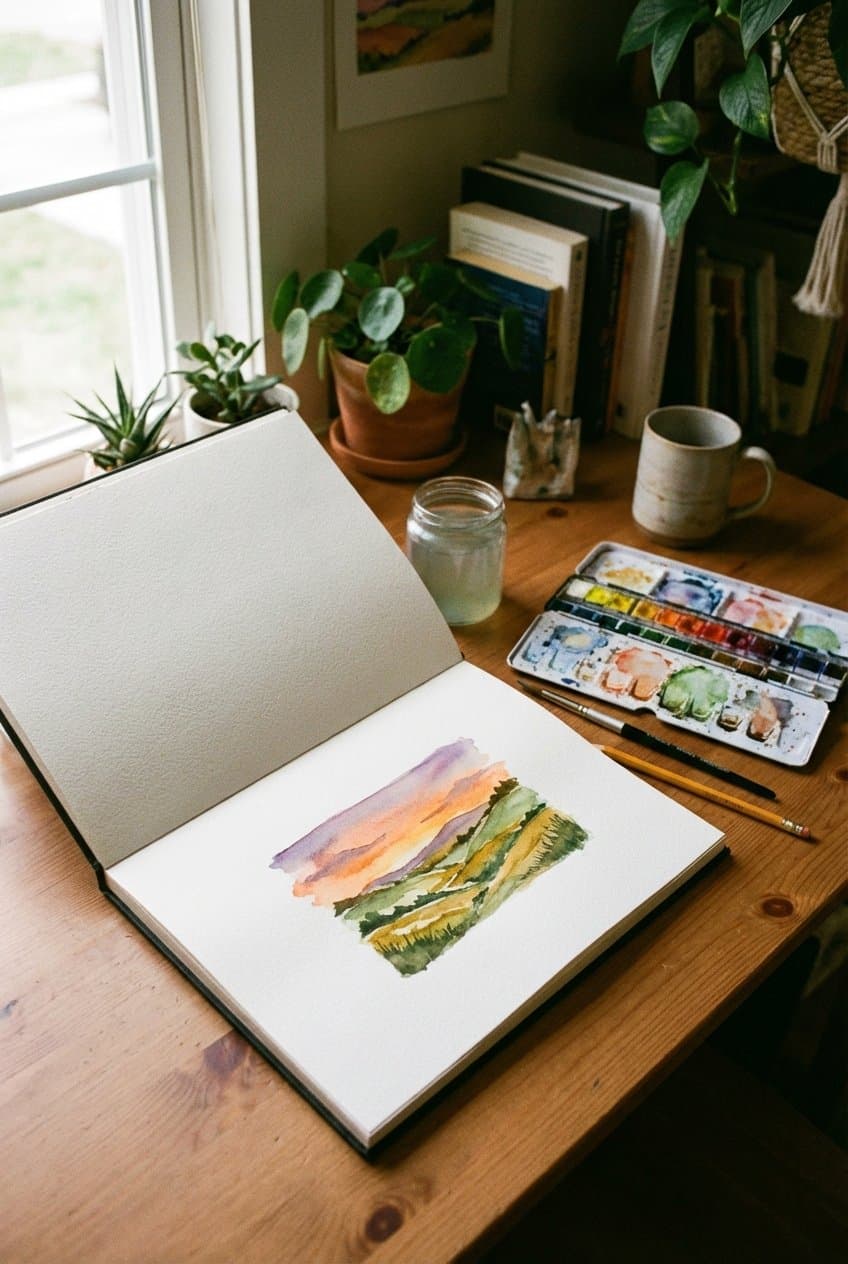
Mountains are surprisingly beginner-friendly because they’re essentially triangles with texture. The key is layering—light distant mountains first, darker foreground peaks last.
Step-by-Step Mountain Scene
- Paint the sky – Wet-on-wet with blue at top, fading to pale near horizon
- Distant mountains – Light purple-grey while sky is still damp for soft edges
- Middle mountains – Slightly darker, let sky dry first for crisp edges
- Foreground hills – Darkest values, maybe with some green
- Optional details – A few pine tree silhouettes, snow caps
The secret to atmospheric depth is keeping your distant mountains cool and pale, then gradually warming and darkening as elements come forward.
I like using my Winsor & Newton Cotman set for landscapes—the French Ultramarine and Burnt Sienna mix creates beautiful mountain greys.
Easy Sunset Seascapes
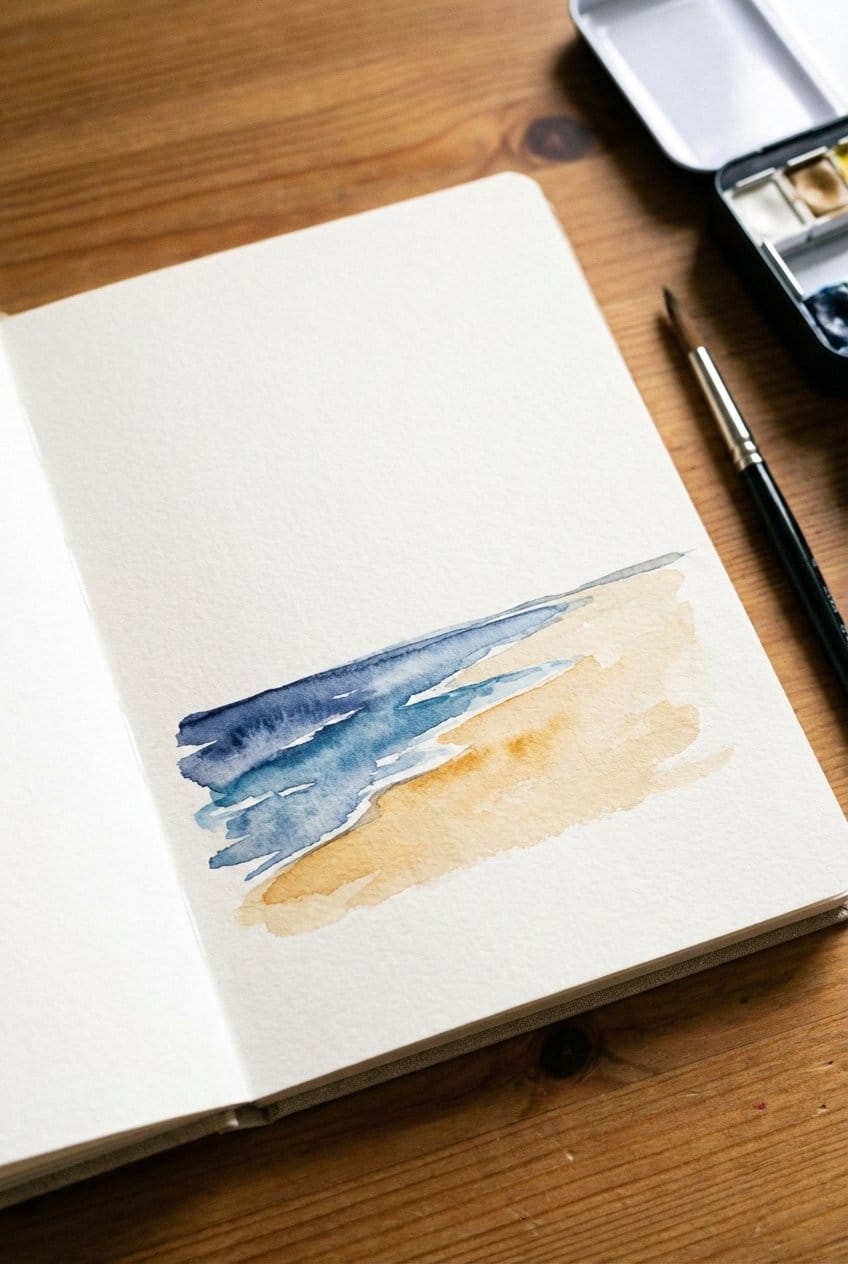
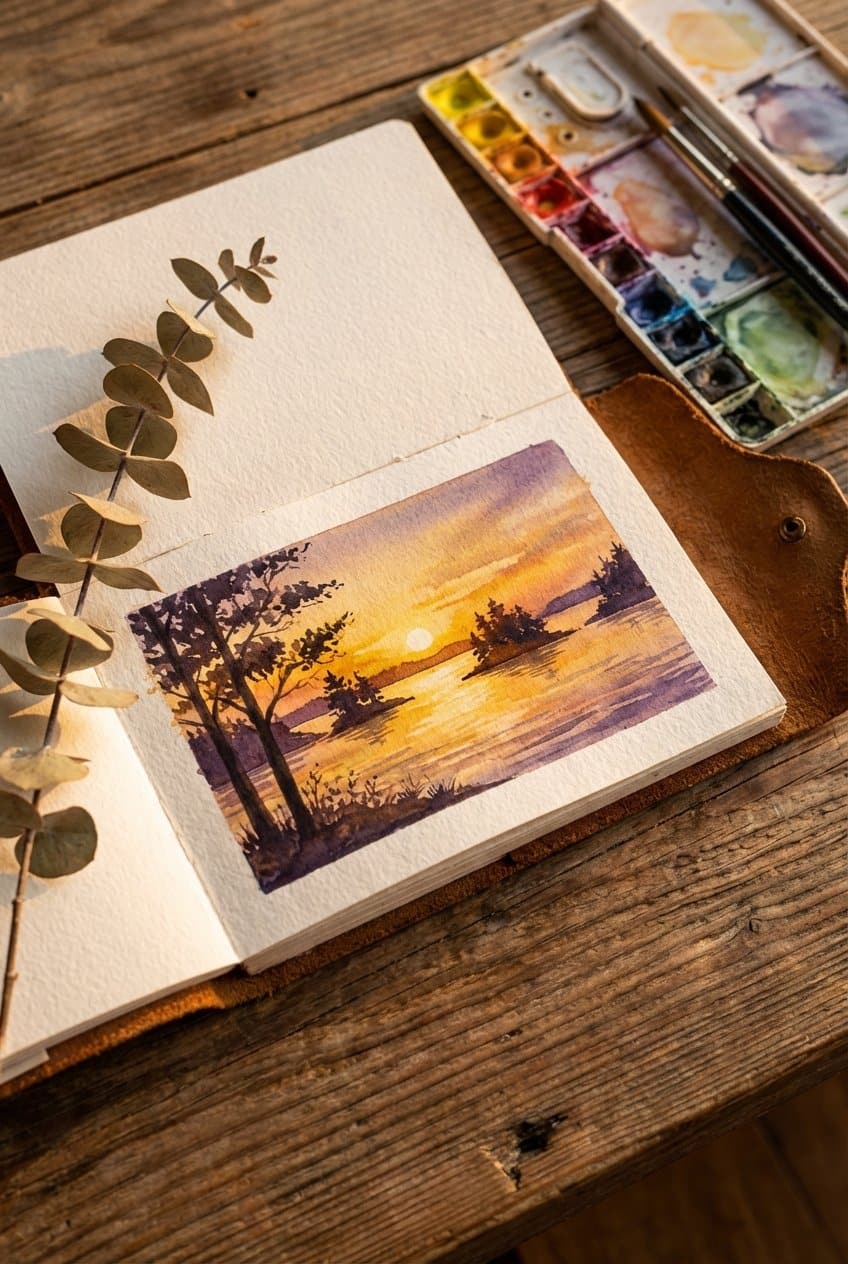
Sunsets over water are magical to paint because watercolor naturally creates those soft, glowing color transitions. Work wet-on-wet and let the colors blend themselves.
Simple Sunset Steps
- Wet the sky area – All the way down to where the water begins
- Drop in yellow – Near the horizon where the sun would be
- Add orange – Above the yellow, let it bloom
- Touch in pink/purple – At the top of the sky
- Let dry completely
- Paint the water – Reflect sky colors with horizontal strokes
- Add horizon line – A thin dark line where sky meets water
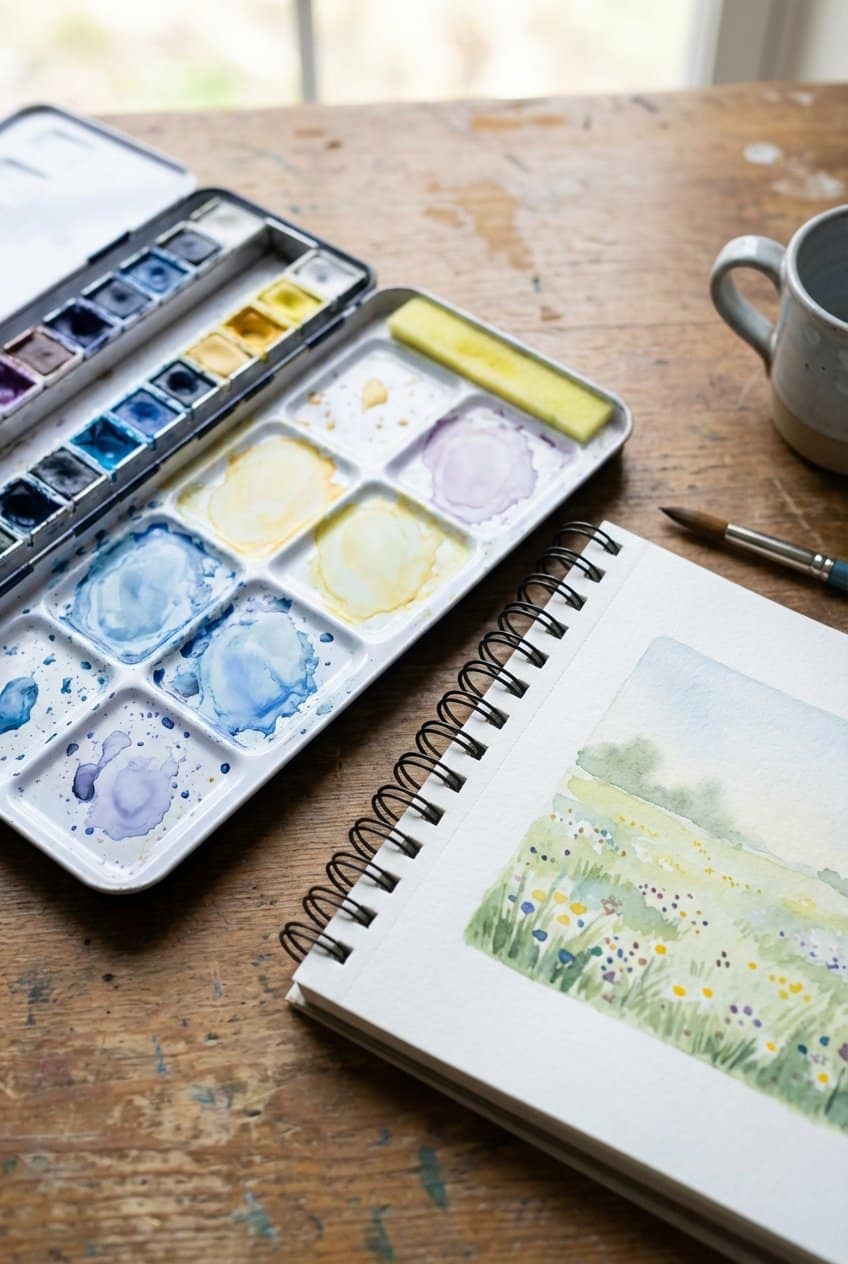
Peaceful Meadow Scenes
Meadow landscapes are wonderfully loose and forgiving. Grass, wildflowers, and rolling hills don’t require precision—in fact, they look better with spontaneous brushwork.
- Start with the sky – Pale blue with a few soft clouds
- Paint distant hills – Soft blue-green, very pale
- Middle ground – Variegated greens, let colors blend
- Foreground grasses – Darker greens with upward flicking strokes
- Wildflowers – Dots of color scattered through the grass
The trick to convincing grass is varying your greens. Mix different ratios of yellow and blue, add touches of brown or purple. Real grass is never one solid color.
Misty Forest Silhouettes
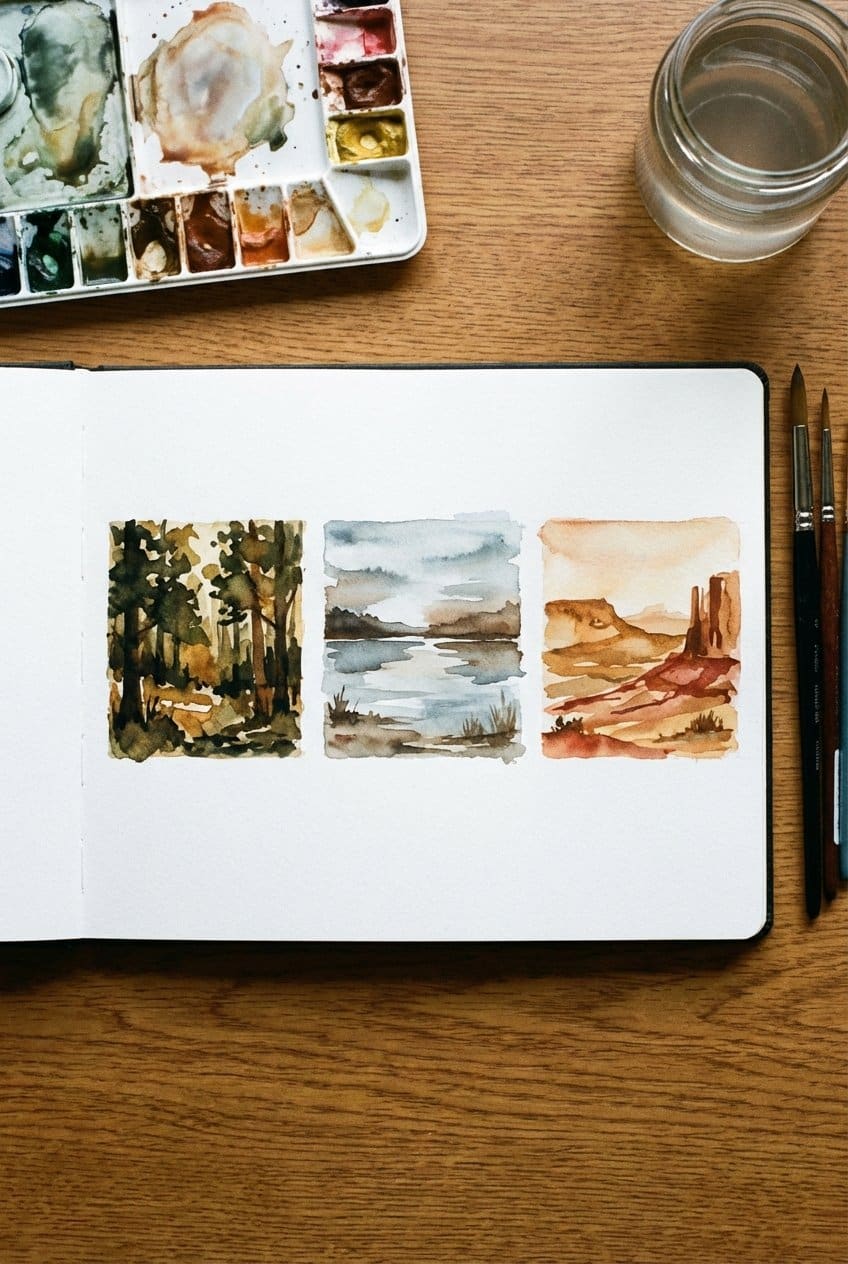
Quick Answer: Misty forest scenes use atmospheric perspective—trees get lighter and cooler as they recede into fog, creating easy depth with minimal detail.
This might be the most impressive-looking mini landscape you can paint, and it’s actually quite simple:
- Paint a graded wash – Light grey at top, fading to white at bottom
- Distant trees – Very pale, simple triangle shapes while paper is damp
- Middle trees – Slightly darker, more defined edges
- Foreground trees – Dark silhouettes with visible trunk and branches
Keep your distant trees simple and pale. The contrast between those ghostly far trees and your detailed foreground creates instant atmosphere.
A quality round brush helps with those tree silhouettes. My Escoda round brushes keep a perfect point for delicate branch work.
Supplies You’ll Need
Mini landscapes don’t require much—in fact, a limited palette often produces more harmonious results than having too many color choices.


This post contains affiliate links, which means I may earn a small commission at no extra cost to you if you make a purchase. I only recommend products I genuinely love and use myself!
Free Landscape Templates
Ready to try mini landscapes? Download these printable templates with simple horizon lines and composition guides to get you started.
Looking for more printable resources? Check out my Payhip shop for premium watercolor templates and guides!
Frequently Asked Questions
What size should mini watercolor landscapes be?
Anywhere from 2×3 inches to 4×6 inches works great for mini landscapes. The smaller size forces simplification and keeps projects quick and achievable for beginners.
How do I create depth in a small landscape painting?
Use atmospheric perspective: distant objects are lighter, cooler, and less detailed. Foreground elements are darker, warmer, and more defined. Even in a tiny painting, this creates convincing depth.
Do I need to sketch landscapes before painting?
For simple mini landscapes, a very light pencil line for the horizon is often enough. Part of the charm is the loose, spontaneous quality—too much sketching can make the result feel stiff.
What colors do I need for landscapes?
A minimal landscape palette includes: Ultramarine Blue, Burnt Sienna (these two mix beautiful greys), Yellow Ochre, and Sap Green. You can paint virtually any landscape with these four colors.
Final Thoughts
Mini landscapes have taught me more about watercolor than any other practice. The small scale removes pressure, the quick completion builds confidence, and the forced simplification teaches you what really matters in a scene.
Start with a simple sunset tonight—just a few wet-on-wet washes blending from yellow to orange to purple. Let the watercolor do most of the work. I think you’ll be surprised how beautiful it turns out.
Want to see these techniques in action? Head over to my YouTube channel where I share step-by-step watercolor tutorials every week. Hit subscribe so you don’t miss the next one!
Tag me on Instagram @artsydee or Pinterest when you try these mini landscapes—I love seeing your creations!
You Might Also Like
- Tiny Watercolor Florals for Sketchbooks
- One-Page Watercolor Sketchbook Ideas
- Simple Watercolor Shapes to Practice Daily
- Easy Watercolor Ideas Using Circles and Lines
- What to Paint First When You’re New to Watercolor
Pin this for later!