Last Updated on January 28, 2026 by Dee
Staring at a blank art journal page can feel paralyzing. You’ve got your pens ready, maybe some watercolors, and… nothing. Your mind goes completely blank.
I’ve been there more times than I can count. After years of teaching art and keeping my own creative journals, I’ve learned that simple drawing prompts are the antidote to that dreaded blank page syndrome. The key isn’t coming up with something profound—it’s just starting with something achievable.
These 50 simple drawing prompts for art journals are designed to get your pen moving without overthinking. They work whether you prefer ink drawings, pencil sketches, or watercolor illustrations. Most can be finished in 10-15 minutes, making them perfect for daily practice.
Grab your free Drawing-to-Watercolor Journal Templates at the end of this post! These printable outlines work beautifully with pen or paint.
🎬 Love video tutorials? Subscribe to my YouTube channel for weekly watercolor tutorials and art inspiration!
Table of Contents
Why Simple Drawing Prompts Work for Art Journals
Simple drawing prompts work because they remove the pressure of being original. When someone hands you a subject—”draw your coffee cup”—your brain can focus on observation and mark-making instead of scrambling for ideas.
Art journals thrive on consistency rather than perfection. A page filled with quick sketches of ordinary objects tells a more interesting story than a blank page you were “saving” for the right inspiration. These everyday subjects also build genuine drawing skills—understanding form, shadow, and proportion—without the intimidation of complex subjects.
The prompts below are organized into categories so you can pick based on your mood or what’s around you. Some days you’ll want to draw from your kitchen; other days you’ll crave something seasonal or cozy. Having options makes it easier to show up consistently.

Everyday Objects Drawing Prompts (1-10)
Everyday objects make the best drawing subjects because they’re always available and surprisingly interesting when you really look at them. These prompts focus on things you can find around your home right now.
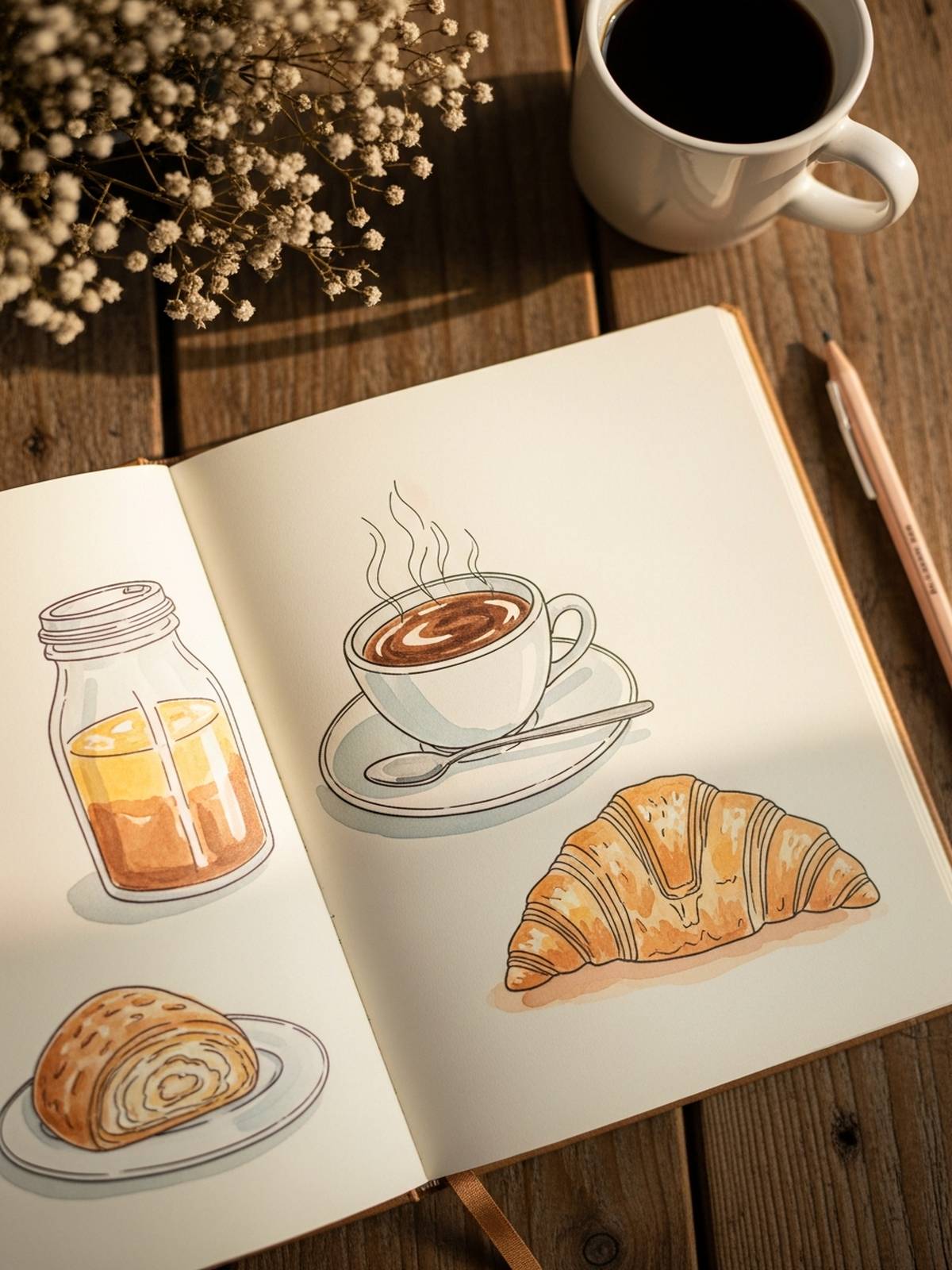
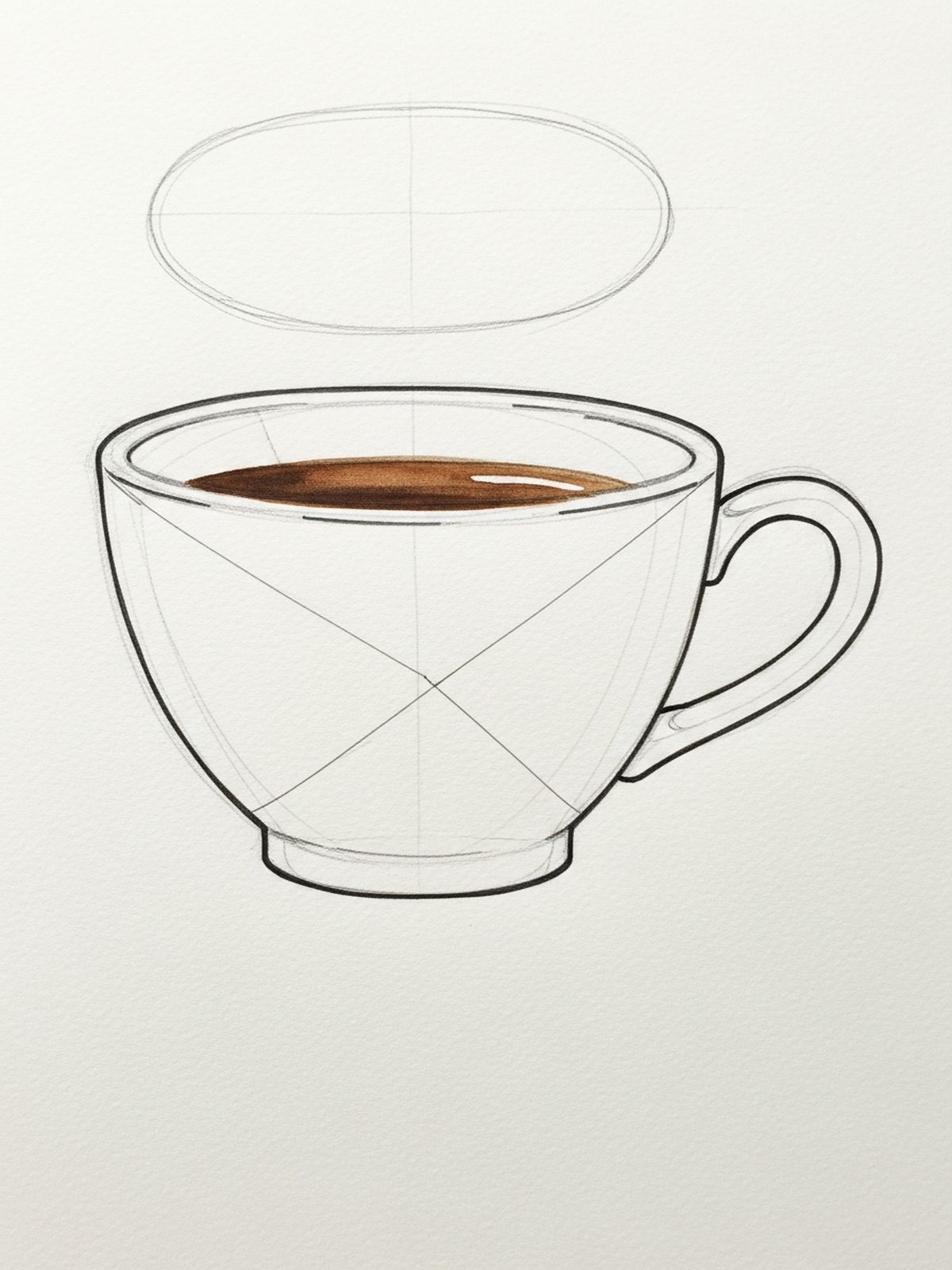
- Your coffee or tea mug – Draw it from the side, then from above looking down into it
- A pair of scissors – Focus on where the handles meet and the negative space between the blades
- Your keys – Arrange them overlapping and sketch the different shapes
- A houseplant – Just one section of leaves, not the whole plant
- Your water bottle – Pay attention to the transparency and reflections
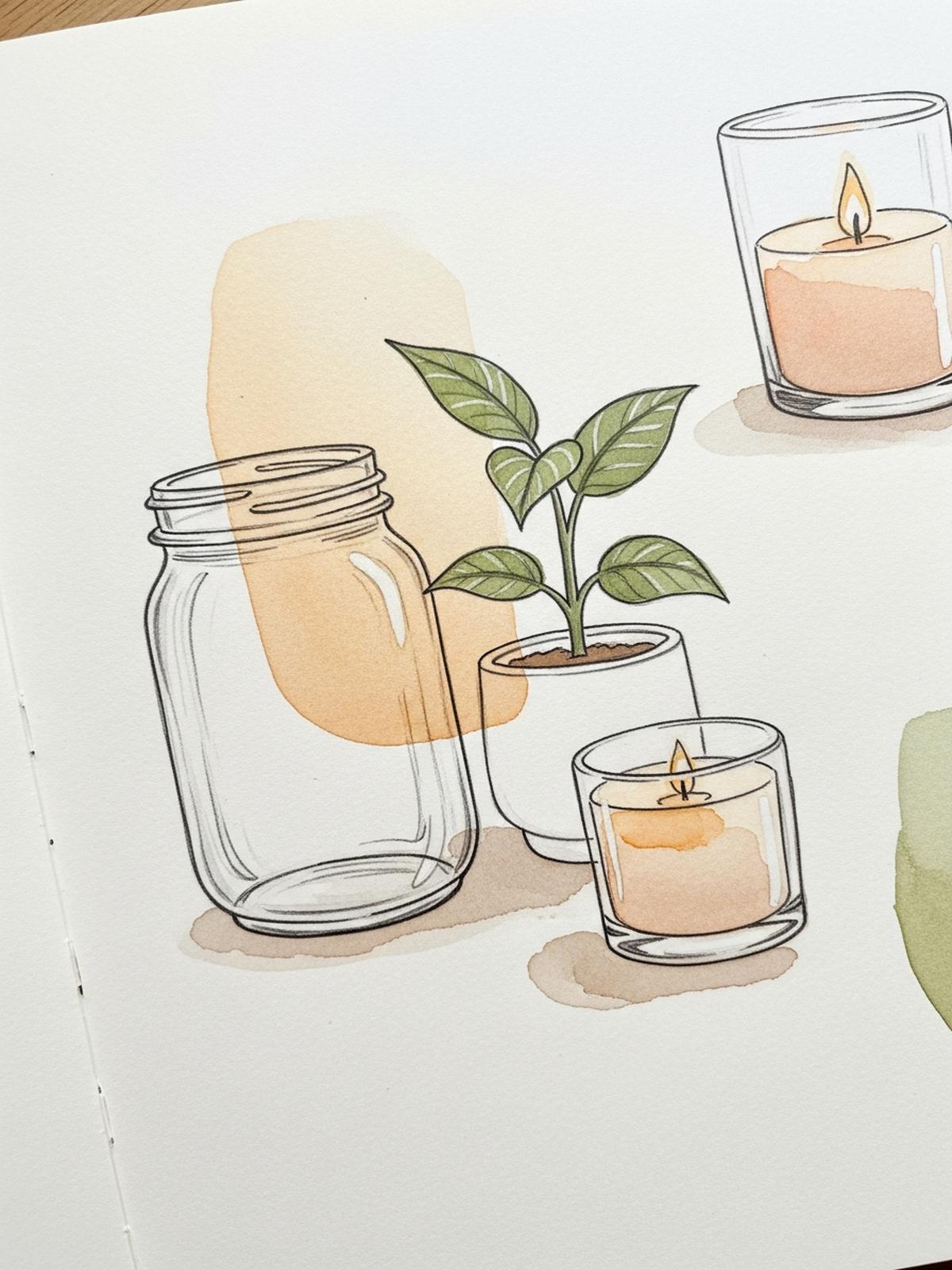
- A candle – Try it both lit and unlit for different challenges
- Your favorite pen or pencil – Include any wear marks or chew marks (we don’t judge)
- A stack of books – Draw them from the spine side, focusing on varied heights
- Your phone – Sketch the basic shape, then add the case details
- A jar of something – Honey, jam, or pickles—anything with an interesting label
When I’m drawing everyday objects, I love using my Winsor & Newton Cotman Watercolors to add a quick wash of color after my initial sketch. It takes these simple drawings from nice to genuinely eye-catching.
Nature and Botanical Drawing Prompts (11-20)
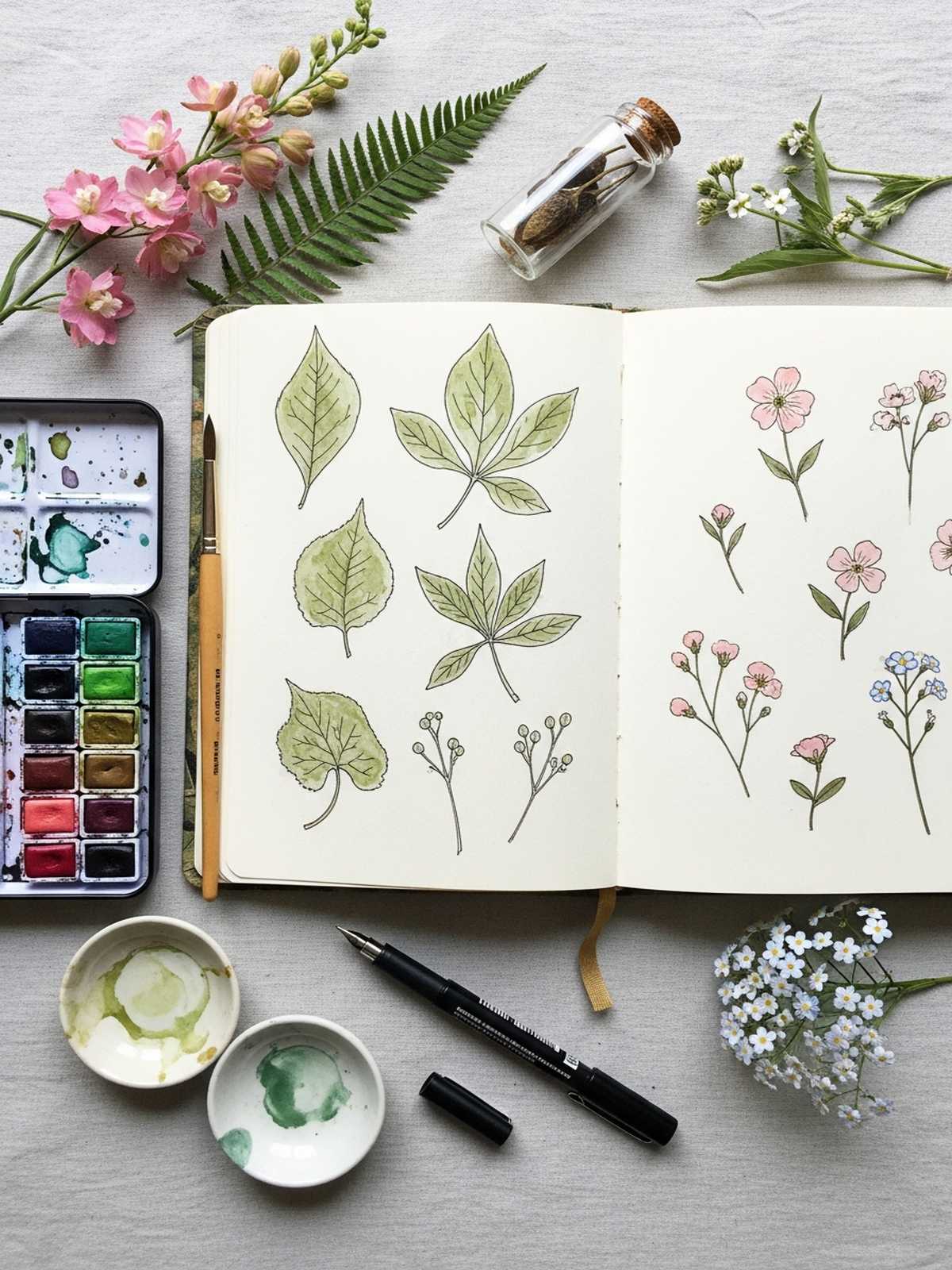
Nature and botanical subjects are endlessly forgiving. A leaf doesn’t need to be perfect—organic shapes have natural variation, which means your “mistakes” often look intentional.
- A single leaf – Study the vein patterns and draw them carefully
- Three different leaves from the same tree – Notice how they vary in size and shape
- A flower from your garden or a bouquet – Start with the center and work outward
- A mushroom – Real or imagined, focus on the gills underneath
- A pinecone – Draw just half of it to practice the pattern
- A feather – Pay attention to the direction of the barbs
- A small branch with buds – Great for practicing gesture and natural curves
- Succulents from above – The spiral patterns are mesmerizing to draw
- A seashell – Focus on the spiral and texture
- Seed pods or dried flowers – These have beautiful delicate structures
Botanical drawings look stunning in a Canson XL Watercolor Sketchbook because the paper handles both ink and water beautifully. You can add washes without worrying about the page buckling.
Food and Kitchen Drawing Prompts (21-30)
Food and kitchen items offer wonderful variety—from the smooth curves of fruits to the geometric shapes of containers. Plus, you can eat your subjects afterward.
- A croissant or pastry – All those flaky layers are satisfying to sketch
- An apple cut in half – Draw the star pattern of seeds in the center
- Your breakfast – Quick sketch before you eat, no pressure for perfection
- A teapot or kettle – Focus on the spout and handle proportions
- Eggs in a bowl – Simple forms with subtle shadows
- A lemon (whole and sliced) – The segments and texture make it interesting
- Kitchen utensils in a jar – Wooden spoons, whisks, spatulas overlapping
- A loaf of bread – Focus on the crust texture and shape
- Your spice jars – A row of different shapes and labels
- A bowl of fruit – Classic still life that never gets old
👆 Enjoyed this? Subscribe to Artsydee on YouTube for more like this!
Cozy and Lifestyle Drawing Prompts (31-40)
These cozy drawing prompts capture the quiet moments of daily life. They’re perfect for when you want your art journal to feel like a visual diary.
- Your slippers or favorite shoes – Well-worn items have character
- A cozy sweater or cardigan – Focus on the texture and folds
- Your reading corner – Sketch a chair, lamp, and stack of books
- A burning candle with its holder – Try to capture the warm glow
- Your nightstand setup – The objects that live there tell your story
- A knitted blanket – Just a corner showing the pattern
- Your morning routine items – Toothbrush, skincare, hairbrush together
- Headphones or earbuds – The cord tangles make interesting compositions
- Your journal and pen – A meta-moment of drawing your drawing tools
- A window with curtains – Include what you see through it, simplified
I find that having a proper mixing palette like the MEEDEN Ceramic Paint Palette makes a difference when adding color to lifestyle sketches. The wells are deep enough to mix washes without them running together.

Seasonal Drawing Prompts (41-50)
Seasonal prompts help your art journal become a record of the year. Looking back at autumn leaves or summer fruits brings those moments alive again.
Spring (41-42)
- Cherry blossoms or spring flowers – Focus on the delicate petals
- A bird’s nest – Real or imagined, with tiny eggs inside
Summer (43-44)
- Sunglasses – Include reflections in the lenses
- A slice of watermelon – The seeds and gradient of color are fun
Autumn (45-47)
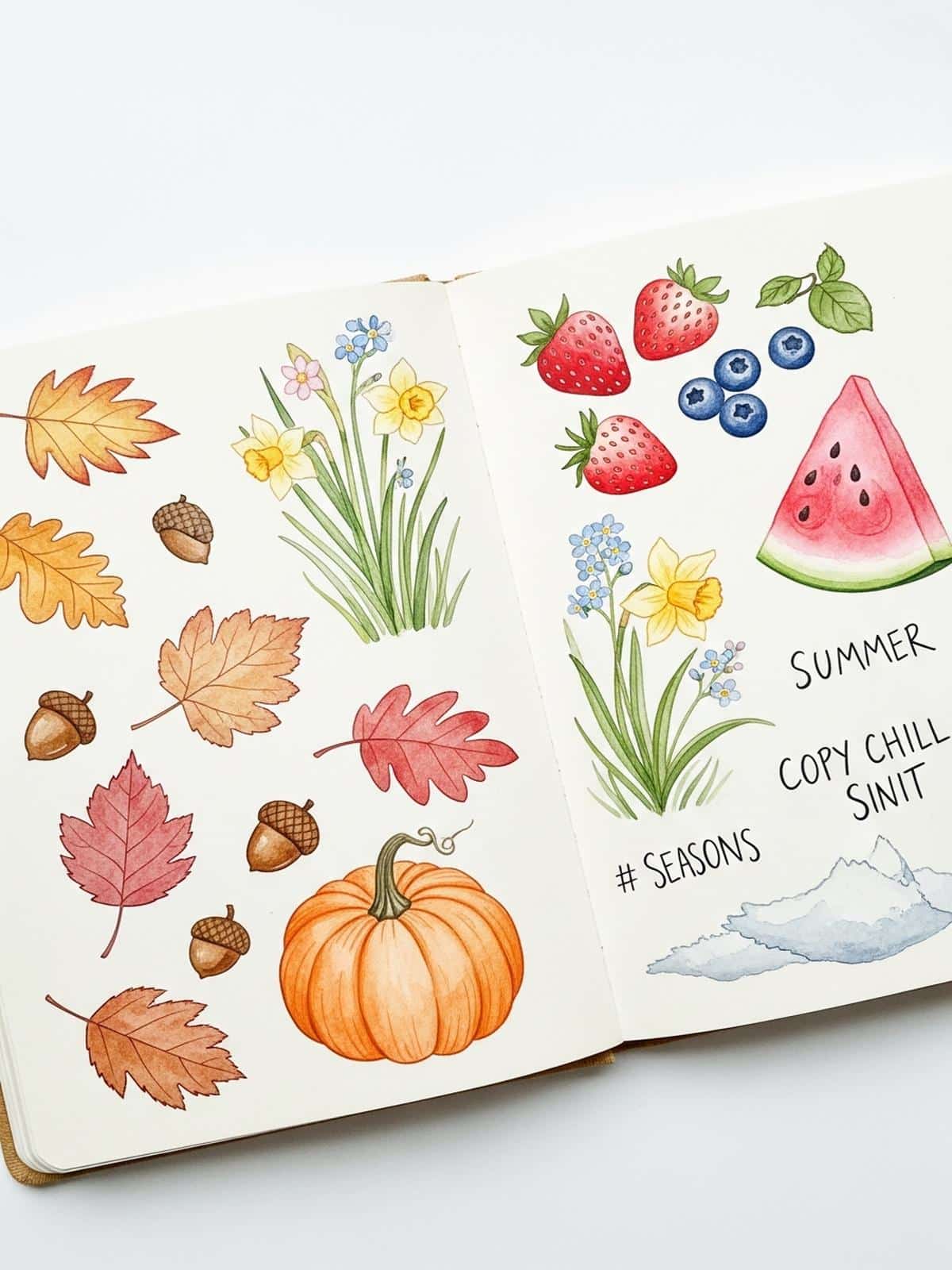
- Fallen leaves in different colors – Arrange three overlapping
- A pumpkin or gourd – Focus on the ribbed texture
- Acorns or chestnuts – Include their caps and varying sizes
Winter (48-50)
- Mittens or gloves – Pairs make nice compositions
- A mug of hot cocoa – Add marshmallows and steam
- Pinecones and evergreen sprigs – A classic winter arrangement
How to Use These Drawing Prompts in Your Art Journal
Getting the most from simple drawing prompts means having a system that works for you. Here’s how I approach them in my own practice:
Start with observation
Before drawing, spend 30 seconds just looking at your subject. Notice where the light hits, where shadows fall, and what shapes make up the whole. This brief pause makes your drawings stronger.
Set a timer
I like 10-15 minute sessions. The time limit removes perfectionism—you don’t have time to overwork things. Quick drawings often have more energy than labored ones.
Mix techniques
Draw the same prompt three different ways: pencil only, ink only, then ink with watercolor. You’ll learn which approaches you enjoy most and build versatility.
Add words
Write the date, a brief note about your day, or why you chose that subject. These notes transform your journal from a sketchbook into a meaningful record.
For more sketchbook inspiration, check out my easy watercolor sketchbook ideas post.
Supplies for Art Journal Drawing
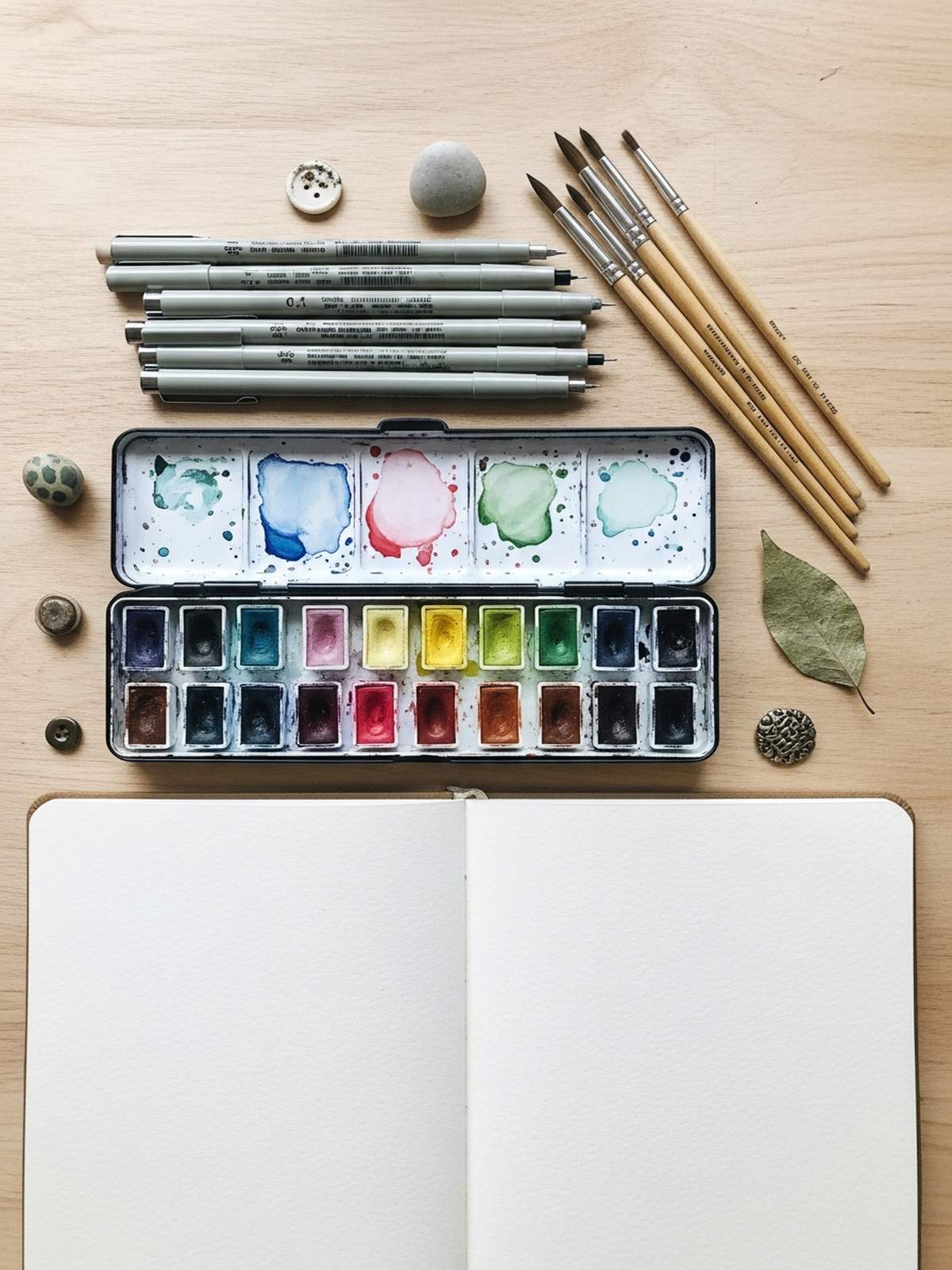
You don’t need fancy supplies to start drawing in your art journal. That said, quality materials do make the experience more enjoyable. Here are my tried-and-true recommendations:


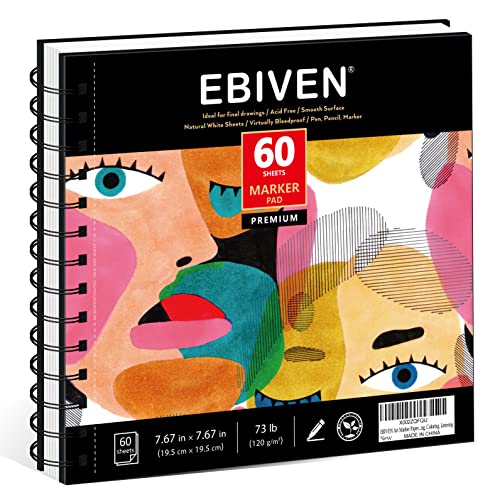
This post contains affiliate links, which means I may earn a small commission at no extra cost to you if you make a purchase. I only recommend products I genuinely love and use myself!
The most important thing is paper that can handle your chosen medium. If you plan to add watercolor, get paper at least 140lb (300gsm). For dry media only, thinner paper works fine.
My Escoda Watercolour Brushes are worth mentioning—they hold water well and come to a fine point for detailed work, which matters when drawing small everyday objects.
Free Drawing-to-Watercolor Templates
I’ve created a set of printable drawing templates featuring everyday objects—perfect for tracing or using as reference. Each template works as a simple line drawing or can be painted with watercolors.
The templates include a coffee cup, mason jar with flowers, houseplant, books with candle, teapot set, and more. Print them on watercolor paper for the best results.
Looking for more printable resources? Check out my Payhip shop for premium watercolor templates and guides!
Frequently Asked Questions
What should a beginner draw in an art journal?
Beginners should start with simple everyday objects around them—a coffee mug, houseplant, or piece of fruit. These subjects are forgiving because slight imperfections look natural, and you can observe them directly rather than working from imagination.
How do I get ideas for my art journal?
Keep a list of drawing prompts handy (like the 50 prompts in this post) and choose randomly when you sit down to draw. You can also look around your immediate environment—the objects on your desk, the view from your window, or what you’re eating for breakfast all make excellent subjects.
What paper is best for art journal drawing?
For mixed media art journals, look for paper that’s at least 140lb (300gsm) if you plan to use watercolor or wet media. For dry media like pencil and ink only, lighter weight paper around 90lb works fine. The key is choosing paper that suits your preferred materials.
How long should an art journal drawing take?
Most simple drawing prompts can be completed in 10-15 minutes. Setting a timer helps prevent overworking and keeps your practice sustainable. Quick sketches often have more life and energy than drawings you labor over for hours.
Can I use these prompts with watercolor?
Absolutely. These prompts work with any medium—pencil, ink, watercolor, or combinations. Many artists sketch lightly in pencil, go over lines with ink, then add watercolor washes. The downloadable templates are specifically designed to work with both pen and paint.
Final Thoughts
The secret to a thriving art journal practice isn’t talent or fancy supplies—it’s just showing up with something to draw. These 50 simple drawing prompts give you a starting point whenever inspiration runs dry.
Pick one prompt today and give it 10 minutes. Don’t worry about making it perfect; worry about making it done. The pages you fill with imperfect sketches are infinitely more valuable than the blank ones you’re saving for someday.
Want to see these techniques in action? Head over to my YouTube channel where I share step-by-step watercolor tutorials every week. Hit subscribe so you don’t miss the next one!
Tag me @artsydee on Instagram or Pinterest when you try these prompts—I love seeing what you create!
You Might Also Like
- Easy Watercolor Sketchbook Ideas
- Watercolor Painting Ideas for Beginners
- 100 Sketchbook Prompts
- Mushroom Drawing Tutorial
- Loose Watercolor Sketchbook Pages
Pin this for later!