Last Updated on July 26, 2026 by Dee
There’s something deeply grounding about sitting outside with a simple watercolor palette and painting whatever catches your eye. A curled autumn leaf. The way light filters through spring blossoms. Mushrooms hiding in the shadows of a forest floor.
These nature watercolor prompts are designed to slow you down, sharpen your observation skills, and help you connect with the natural world through your paintbrush. They’re not about creating perfect botanical illustrations — they’re about the gentle practice of looking closely and translating what you see onto paper.
Whether you’re brand new to watercolor or you’ve been painting for years, these prompts offer fresh ways to engage with nature through your art practice.
Grab your free Nature Watercolor Prompt Cards at the end of this post! These printable cards organize all 35+ prompts by season, perfect for keeping in your art bag.
🎬 Love video tutorials? Subscribe to my YouTube channel for weekly watercolor tutorials and nature painting inspiration!
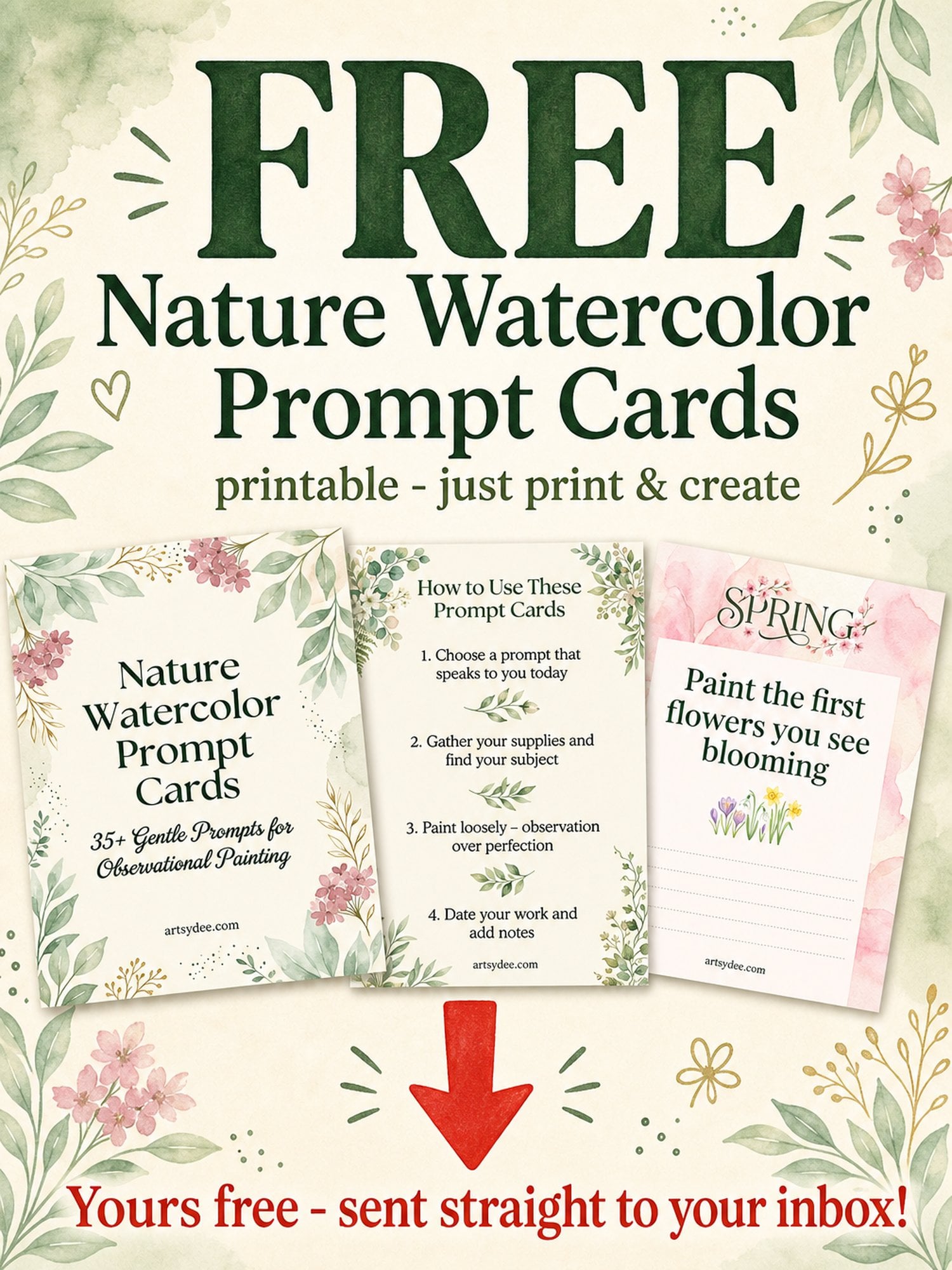
Table of Contents
Why Paint from Nature?
Quick Answer: Painting from nature trains your eye to see subtle colors, shapes, and details you’d otherwise miss, while creating a meditative practice that connects you to the world around you.
Nature watercolor studies aren’t about producing gallery-worthy art (though sometimes that happens). They’re about the act of really seeing. When you sit down to paint a single leaf, you notice things you’ve walked past a thousand times — the tiny veins branching like rivers, the way green shifts to yellow at the edges, the unexpected spots and imperfections that make it real.
This kind of observational painting builds skills that transfer to every other subject you might want to paint. You learn to mix colors by matching what you actually see rather than what you think something should look like. You develop patience. You get comfortable with imperfection, because nature itself is beautifully imperfect.
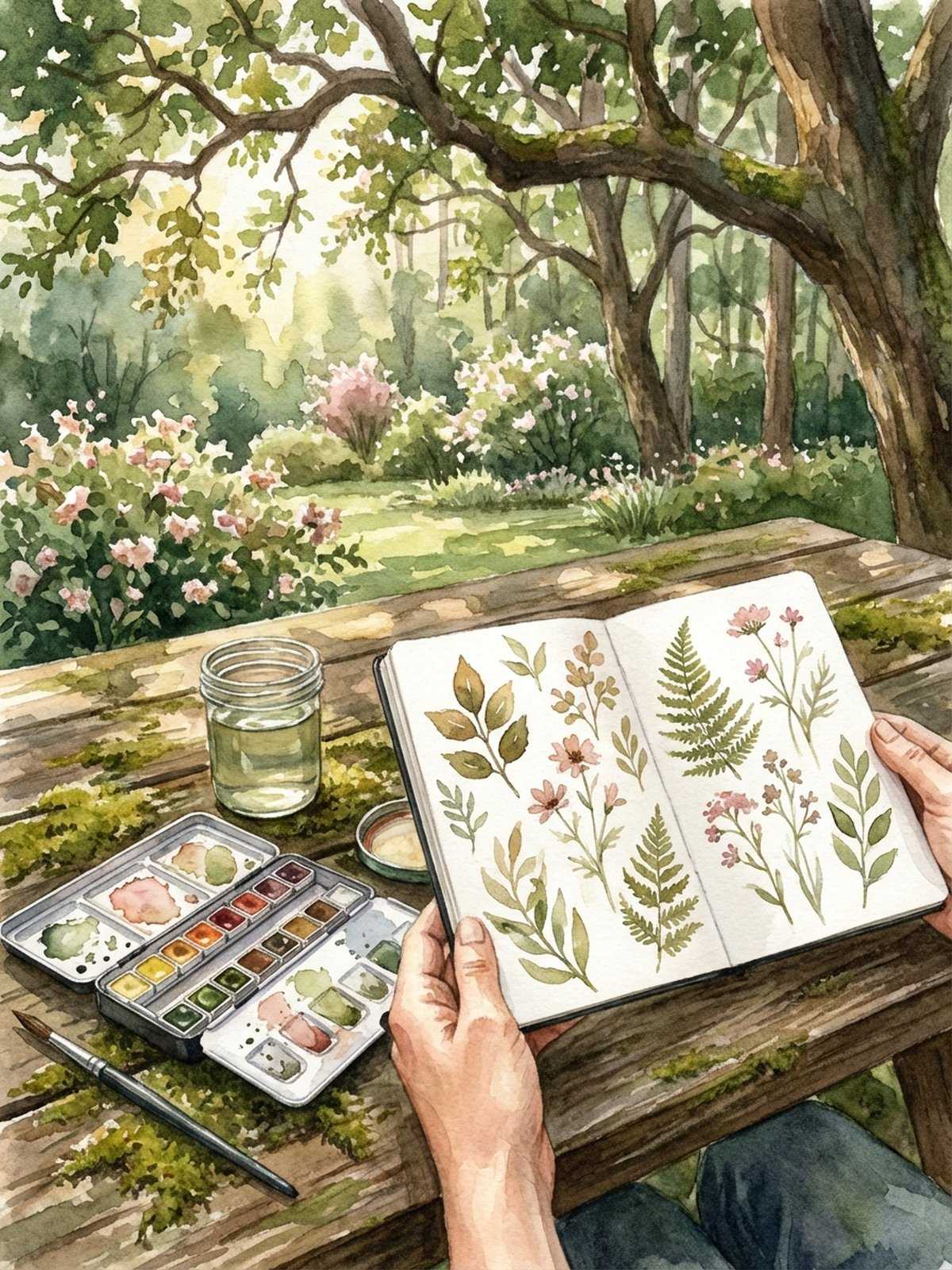
There’s also something genuinely restorative about taking your paints outside. Studies show that time in nature reduces stress and improves mood. Combine that with the focused, meditative state of painting, and you’ve got a powerful self-care practice wrapped in creative expression.
I started doing regular nature studies after years of feeling disconnected from my art practice. It brought the joy back. No pressure to produce anything “good” — just me, my sketchbook, and whatever caught my attention that day.
Once you’ve worked through a few of these seasonal nature prompts, my Patreon members get fresh watercolour reference sheets and painting lessons every month to keep the practice going.
See what’s on Patreon →Essential Supplies for Outdoor Watercolor
Quick Answer: You need surprisingly little — a portable palette, a watercolor sketchbook, a few brushes, water container, and something to sit on. Keep it simple so you’ll actually take it outside.
The key to a sustainable outdoor painting practice is keeping your supplies minimal and portable. If packing up feels like a production, you won’t do it. Here’s what I actually bring:
- A compact watercolor palette — I love my Winsor & Newton Cotman travel set because it fits in my bag and has a decent color range
- Watercolor sketchbook — The Canson XL Watercolor pad handles water well and is affordable enough that I don’t feel precious about it
- 2-3 brushes — A round brush in size 6 or 8 handles most things. I also bring a smaller detail brush and sometimes a flat for washes
- Water container — A small jar with a lid, or a collapsible water brush for really minimal setups
- Something to sit on — A small folding stool or even a plastic bag to protect your clothes from damp ground
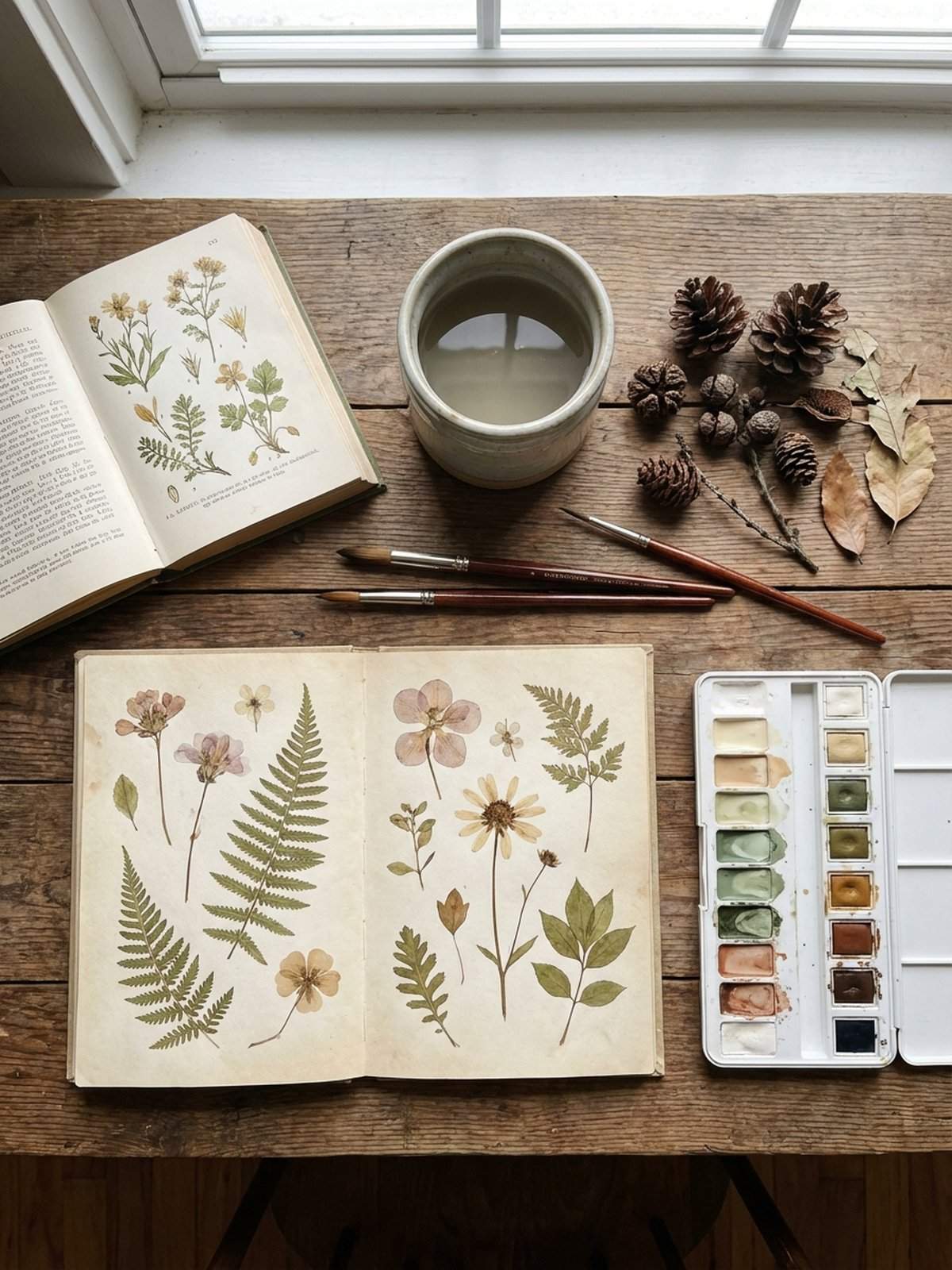
I keep everything in a small tote bag that’s always ready to go. When I spot something beautiful on a walk, I can set up in minutes.

|

|

|

|
This post contains affiliate links, which means I may earn a small commission at no extra cost to you if you make a purchase. I only recommend products I genuinely love and use myself!
Spring Nature Watercolor Prompts
Quick Answer: Spring offers some of the most exciting subjects for nature watercolor — emerging blossoms, unfurling leaves, bird nests, and the fresh greens that only last a few weeks each year.
Spring is magic for nature painters. Everything is waking up, and there’s an urgency to capture things before they change. Here are prompts to guide your spring observations:
- Paint the first flowers you see blooming — Crocuses, snowdrops, daffodils. Don’t worry about botanical accuracy; capture the feeling of that first burst of color.
- Study the unfurling of a new leaf — Find a branch where leaves are just emerging and paint the stages from tight bud to open leaf.
- Capture rain drops on petals or leaves — Spring showers leave beautiful water droplets that catch light in interesting ways.
- Paint a bird’s nest or eggs you discover — Look carefully but don’t disturb active nests. Even an abandoned nest makes a fascinating subject.
- Study cherry or apple blossoms — These fleeting blooms are worth rushing outside to paint before the petals fall.
- Paint the yellow-green of new grass — This specific color only exists for a few weeks. Mix it while you can see it.
- Capture flowering tree branches against the sky — The contrast of delicate blossoms against blue sky is stunning in watercolor.
- Study catkins, pussy willows, or other early blooms — These fuzzy, subtle subjects are perfect for soft watercolor techniques.
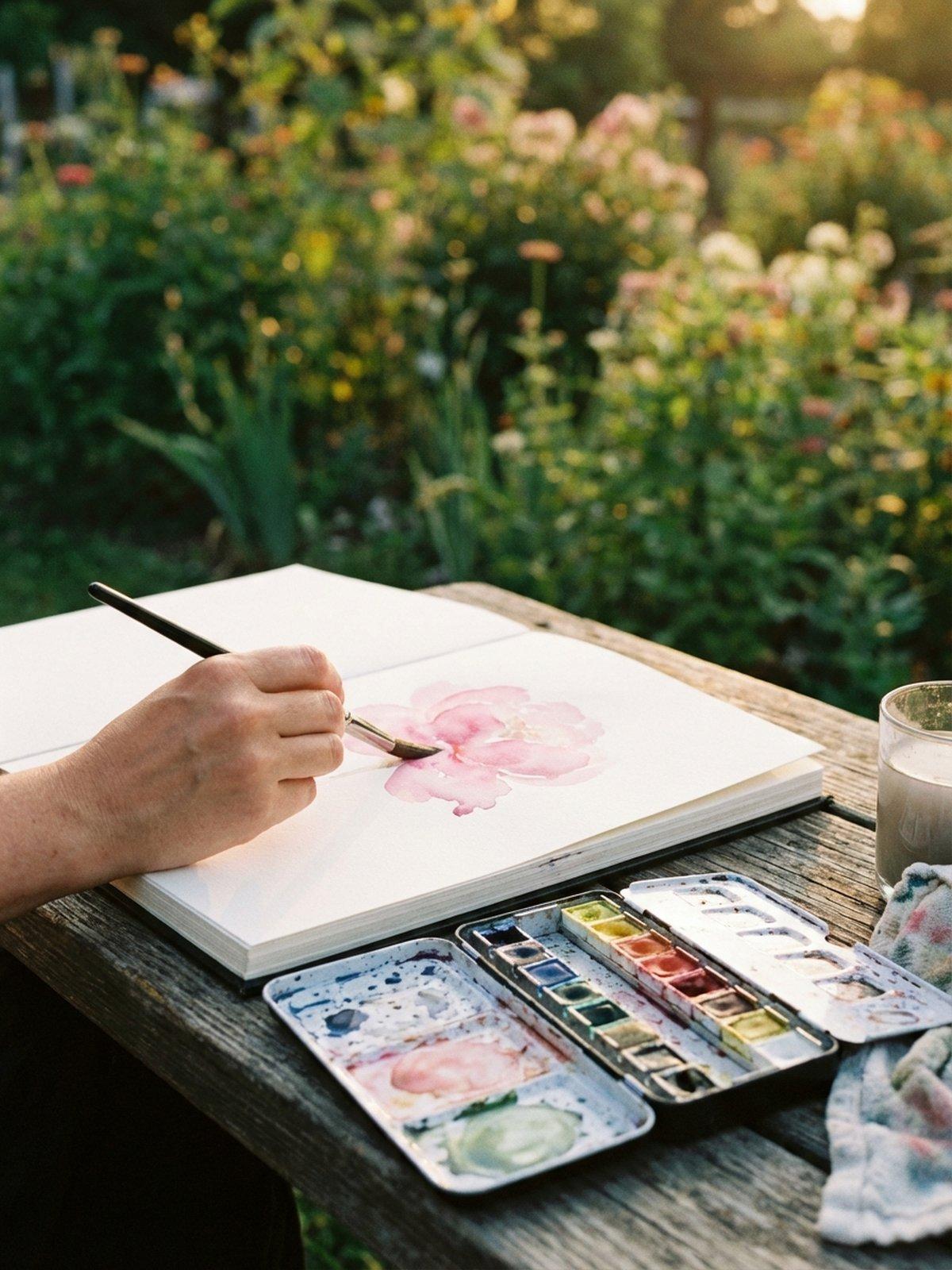
Don’t miss our easy watercolor sketchbook ideas for more beginner-friendly painting prompts.
Summer Nature Watercolor Prompts
Quick Answer: Summer brings bold colors, dramatic light, and abundant subjects — from wildflower meadows to water reflections, ripening fruits, and the play of shadows on hot afternoons.
Summer painting can be challenging with strong sunlight and fast-drying paint, but the subjects are worth it. Try these prompts:
- Study the patterns in a wildflower meadow — Don’t try to paint every flower. Capture the overall impression of colors and shapes.
- Paint clouds and their shadows on the landscape — Summer clouds are dramatic. Watch how shadows move across fields.
- Capture the shimmer of water in sunlight — Streams, ponds, puddles after rain. Water is challenging but rewarding.
- Study ripe berries or summer fruits — Blackberries, strawberries, tomatoes in the garden. Paint them before you eat them!
- Paint a garden vegetable or herb — Basil leaves, zucchini flowers, the curl of a pea tendril.
- Capture the deep shadows of midday sun — Summer light creates dramatic contrast between bright highlights and cool shadows.
- Study insects on flowers — Bees, butterflies, dragonflies. Quick sketches capture their essence.
- Paint a tree’s silhouette at sunset — Summer sunsets provide spectacular backdrops for tree shapes.
- Capture water droplets on a spider web — Early morning dew creates natural jewels perfect for detailed study.
For more floral inspiration, check out my watercolor painting ideas for beginners.
Autumn Nature Watercolor Prompts
Quick Answer: Autumn is a watercolorist’s dream season — the warm palette of changing leaves, mushrooms emerging, and the poignant beauty of plants preparing for winter create endless painting opportunities.
The colors of autumn practically paint themselves. Here’s what to look for:
- Paint the color gradient on a single leaf — Find a leaf that’s mid-transition and study how colors blend into each other.
- Study mushrooms on the forest floor — Autumn brings fascinating fungi in all shapes and colors. Take a forest walk and see what you find.
- Capture seeds and seed pods before they scatter — Milkweed pods, maple helicopters, acorns, conkers. Collect a few to paint indoors if weather turns.
- Paint bare branches against the sky — As leaves fall, branch structures become visible. These make beautiful studies.
- Study the texture of bark — Different trees have dramatically different bark patterns. Get close and really look.
- Paint fallen leaves on water — The combination of floating leaves on a dark pond creates stunning compositions.
- Capture morning mist in the landscape — Autumn mornings often bring atmospheric conditions perfect for soft watercolor washes.
- Study dried flowers and seed heads — The muted colors and interesting shapes of dying plants are beautiful in their own way.
- Paint pumpkins, gourds, or autumn harvest — These classic autumn subjects offer wonderful color and form studies.
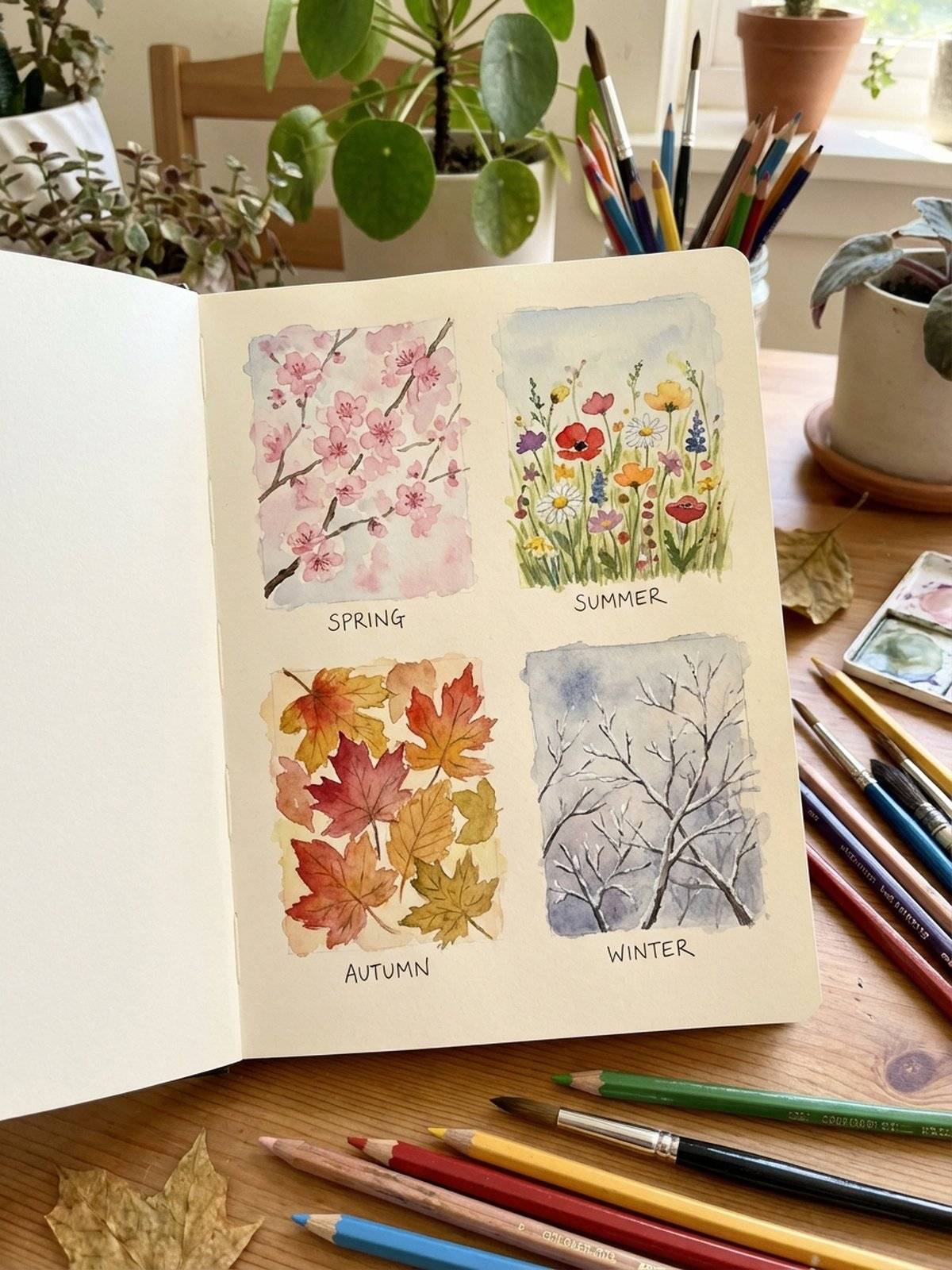
Love botanical subjects? See my vintage botanical printables for more floral inspiration.
Winter Nature Watercolor Prompts
Quick Answer: Winter reveals the bones of the landscape — bare trees, frost patterns, evergreen textures, and the subtle colors that emerge when the bold hues of other seasons fade away.
Winter might seem sparse, but there’s quiet beauty everywhere if you look. Try these prompts:
- Study the texture of evergreen needles — Pine, spruce, fir — each has distinct needle arrangements worth close observation.
- Capture frost patterns on glass or leaves — Nature’s own abstract art. The crystalline structures are mesmerizing.
- Paint dried flowers or seed heads in winter light — The muted palette of winter transforms familiar plants into sculptural subjects.
- Study the structure of bare tree branches — Without leaves, you can really see how trees grow. Paint the branching patterns.
- Capture snow shadows — Snow isn’t white. It reflects the sky and creates beautiful blue and purple shadows.
- Paint winter berries — Holly, hawthorn, rose hips. These pops of red against grey days are striking.
- Study icicles and frozen water — The transparency and shapes of ice create interesting painting challenges.
- Paint a winter sunset — Winter skies often have the most dramatic colors.
- Capture the texture of moss on stones or bark — One of the few green things in winter, moss rewards close study.
For more sketchbook ideas year-round, visit my 100 sketchbook prompts page.
Tips for Painting Nature Outdoors
Quick Answer: Work small and fast, embrace imperfection, and don’t fight changing light — capture your first impression before conditions shift too much.
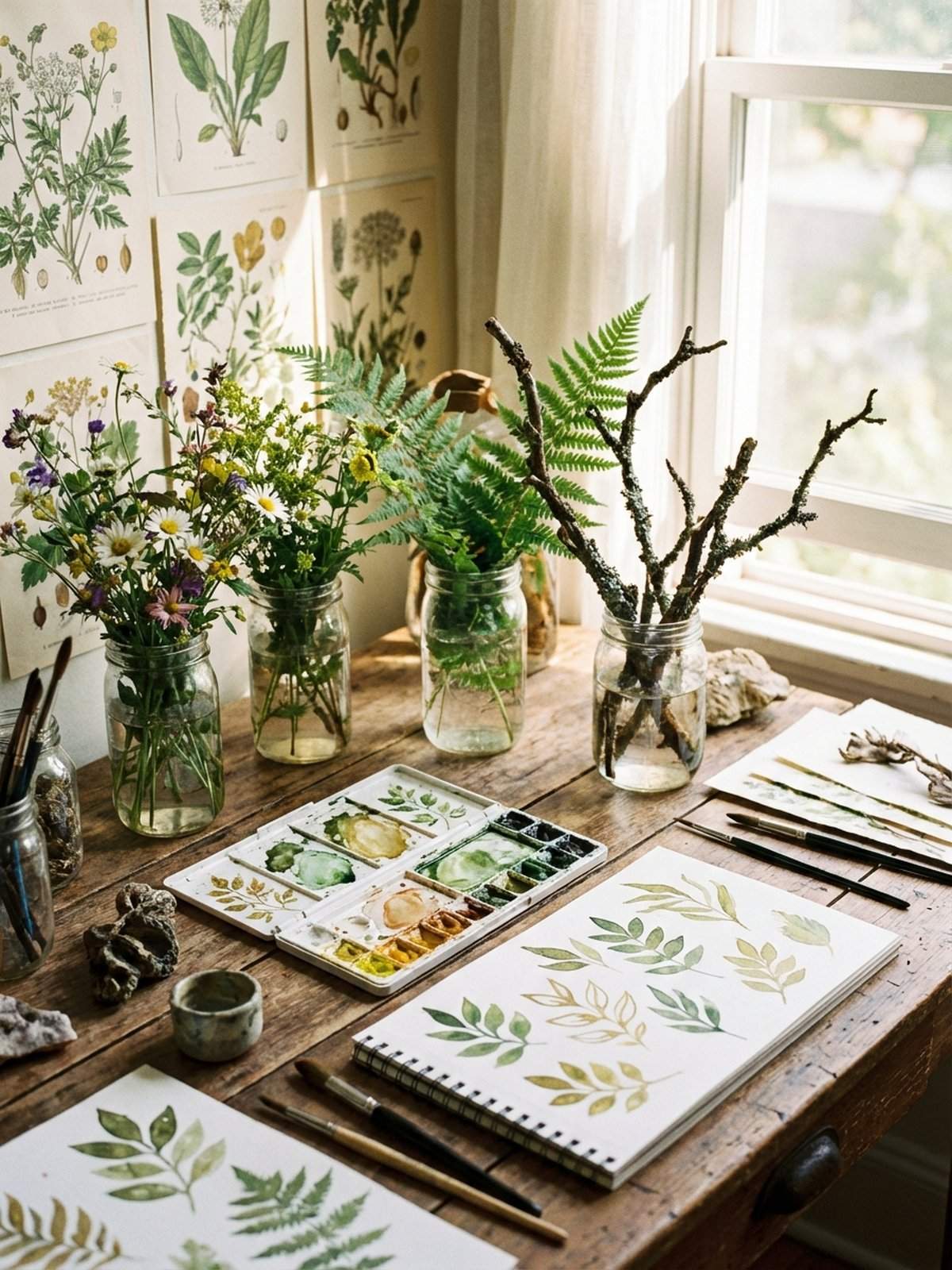
Painting outdoors (plein air) comes with unique challenges. Here’s what I’ve learned:
Start Small
A 5×7 inch painting is plenty when you’re working with changing light and weather. Smaller studies also feel less precious, which frees you up to experiment.
Work Fast
Light changes quickly. Get your main shapes and shadows down in the first 15-20 minutes, then refine. If you’re too careful at the start, you’ll lose the light before you capture it.
Embrace the Imperfect
Outdoor studies are supposed to be loose and lively. A wonky leaf or slightly wrong color is fine — you’re capturing an impression, not creating a botanical illustration.
Bring Reference Photos
Take a quick photo before you start painting. Light will change, flowers might close, clouds will move. The photo helps you remember what initially caught your eye.
Protect Your Work
Wind is your enemy. Secure your paper and keep your palette sheltered. A large binder clip on your sketchbook pages prevents disasters.
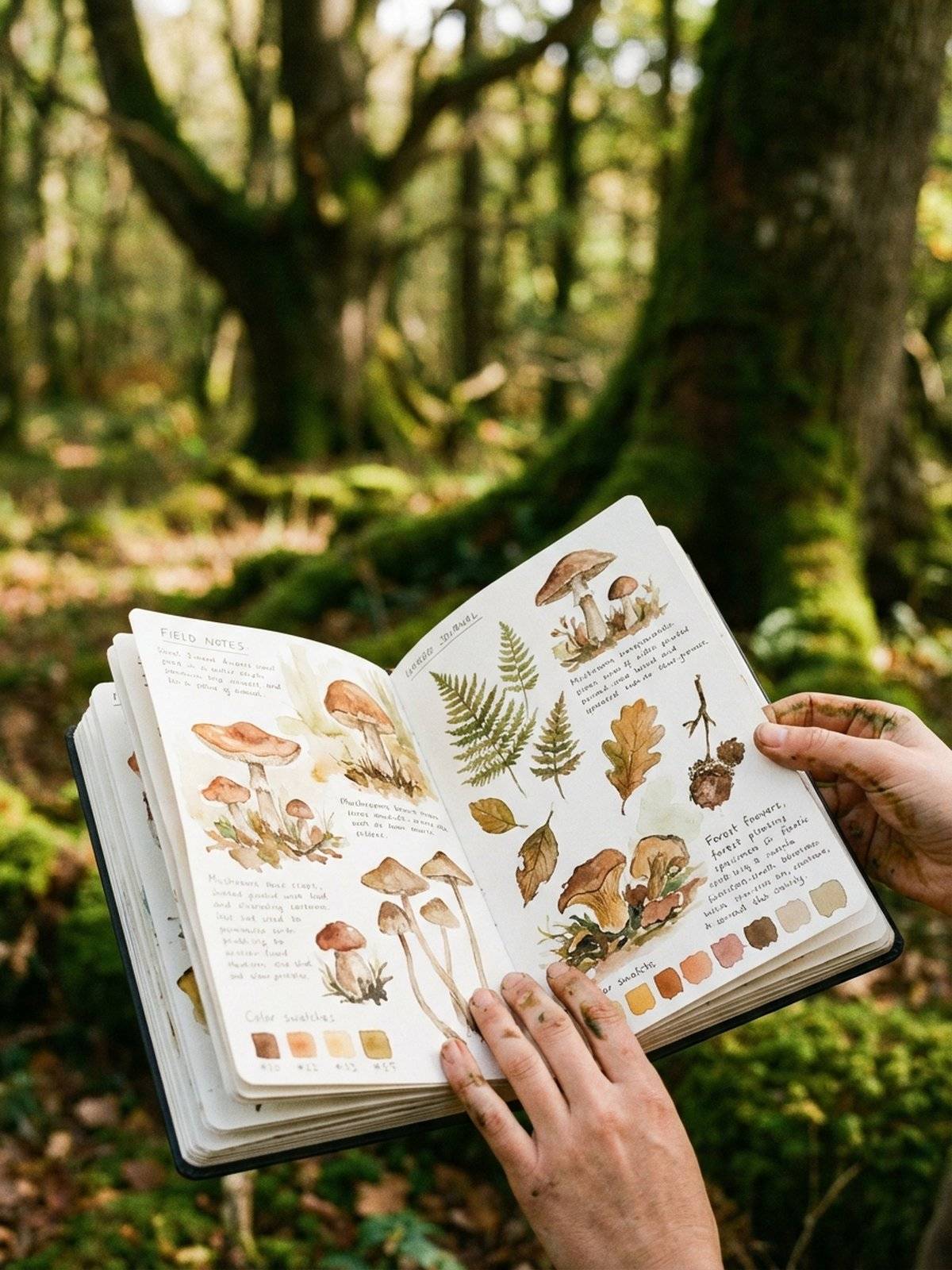
Download Your Free Nature Watercolor Prompt Cards
I’ve compiled all these prompts (and a few extras) into printable prompt cards you can take with you on your nature walks. The PDF includes:
- 35+ nature watercolor prompts organized by season
- Beautiful watercolor-style prompt card designs
- A “how to use” guide with tips for outdoor painting
- Encouragement to get outside and paint!
Print them out, cut them up if you like, and keep them in your art bag. Pull one out when you need inspiration.
👉 Pop your email into the box near the top of this post and I’ll send these straight to your inbox — free!
Looking for more printable resources? Check out my Payhip shop for premium watercolor templates, prompt collections, and nature journaling guides!
Frequently Asked Questions
What watercolors are best for painting outdoors?
A compact pan set is ideal for outdoor painting because there’s no risk of spills. Look for travel sets with a built-in palette and a good range of colors. I use the Winsor & Newton Cotman travel set, but any artist-quality pan set works well. Tube watercolors can work too if you squeeze colors into an empty palette ahead of time.
How do I keep watercolors from drying too fast outside?
Work in the shade when possible, and keep a spray bottle handy to mist your palette. Working on smaller pieces helps because you can complete them before conditions change too much. On very hot or windy days, add a tiny bit more water to your mixes than you normally would.
Do I need to paint everything I see?
Absolutely not. Part of nature painting is choosing what to focus on. A single leaf, one flower, or a small corner of a scene often makes a stronger painting than trying to capture an entire landscape. Give yourself permission to zoom in on the details that interest you most.
What if I can’t paint outside?
Bring nature inside! Collect leaves, flowers, seed pods, or branches and arrange them near a window. You can also use photos as reference — just try to add something from direct observation when you can. Even a potted plant or cut flowers from the grocery store count as nature studies.
How do I improve my nature observation skills?
Before you paint, spend a few minutes just looking. Notice shapes, colors, shadows, textures. Ask yourself: What color is this really? Where is the light coming from? What makes this subject interesting to me? The more you observe before painting, the better your paintings become.
Final Thoughts
Nature watercolor prompts aren’t about producing perfect paintings — they’re about building a practice that connects you to the world around you. Every time you sit down to paint a leaf or a cloud or a mushroom, you’re training yourself to see more deeply.
Start with whatever season you’re in right now. Pick one prompt that appeals to you. Grab your sketchbook and go outside. The perfect subject is already waiting — you just have to look for it.
Want to see these techniques in action? Head over to my YouTube channel where I share step-by-step watercolor tutorials every week. Hit subscribe so you don’t miss the next one!
Tag me @artsydee_inspiring_creations on Instagram or @artsydee on Pinterest — I’d love to see your nature studies!
You Might Also Like
- Easy Watercolor Sketchbook Ideas
- Watercolor Painting Ideas for Beginners
- Simple Watercolor Ideas for Beginners
- 100 Sketchbook Prompts
- Vintage Botanical Printables
🎨 Want more free printables? Browse my Free Printables Library — over 400 free templates, coloring pages, drawing guides, and creative resources all in one place!
Pin this for later!
The free prompt cards give you 35+ ideas to paint — but if you’d like guidance on how to mix the greens, greys and earthy tones nature keeps throwing at you, that’s what my Patreon is for. Members get premium reference sets with colour-recipe cards, from £14 (~$18).
Browse the reference sets →