Last Updated on October 13, 2026 by Dee
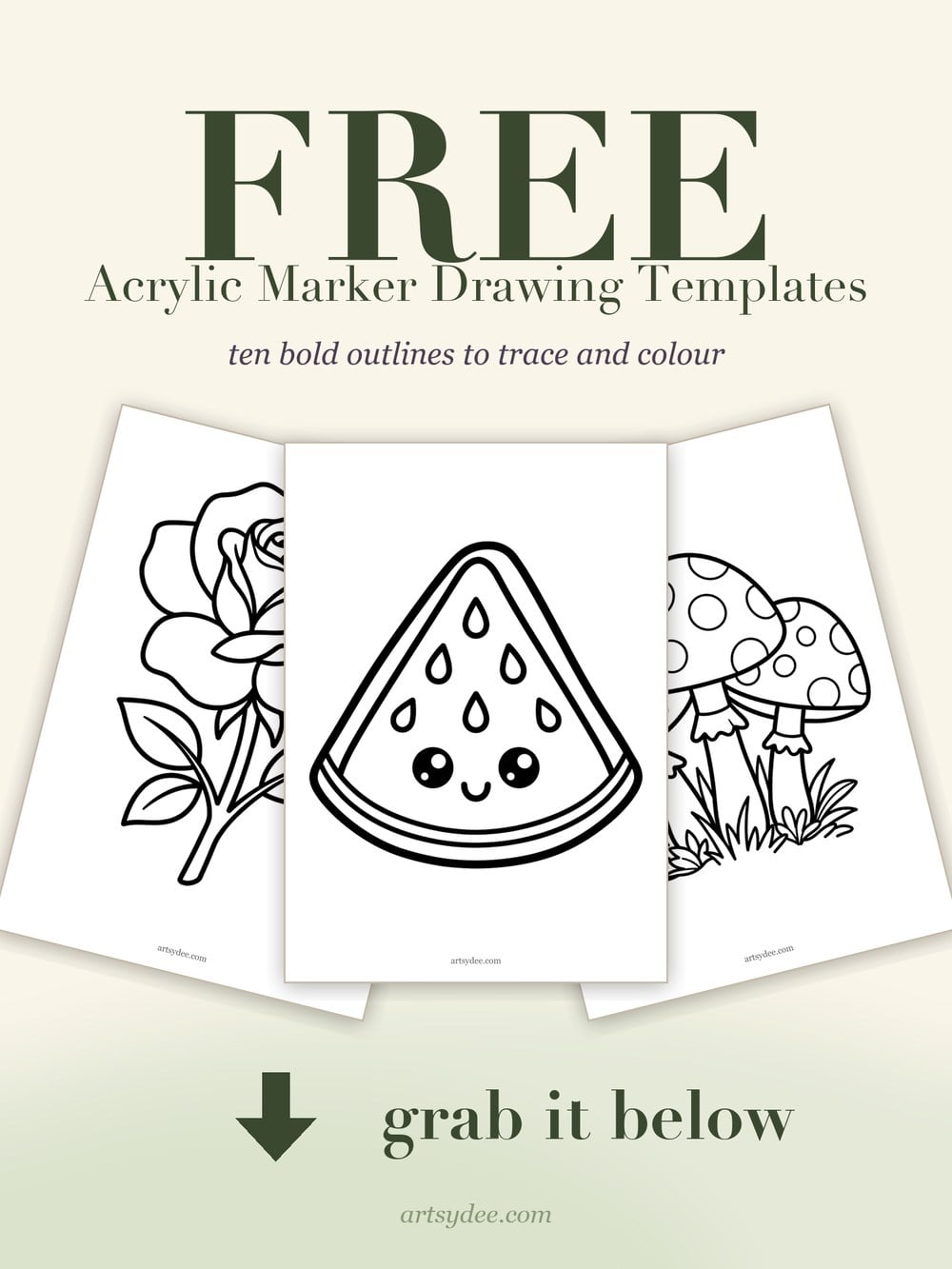
Here are 30 easy acrylic marker drawings, plus 10 free Acrylic Marker Drawing Templates: bold outlines to trace, paint and make your own.
Grab your free 10 Acrylic Marker Drawing Templates in the signup box just below — they’re bold outline guides you can trace or use as reference for the projects in this post!
Acrylic markers are one of those art supplies that feel like cheating in the best possible way. Vibrant colours, smooth application, and that satisfying opaque coverage that makes everything look instantly polished. If you’ve been wanting to try them but aren’t sure where to start, you’re in the right place.
I’ve rounded up 30 easy acrylic marker drawing ideas that range from absolute beginner to “I’ve done this a few times” level. Nothing intimidating, just fun projects that actually look good when you’re done.
🎨 Love art tutorials? Subscribe to my YouTube channel for weekly creative inspiration!
Table of Contents
Free 10 Acrylic Marker Drawing Templates
These templates give you bold outline guides for the most-loved drawing ideas in this post. Print them on mixed media paper, trace the outlines lightly in pencil, then fill in with your acrylic markers. Perfect for building confidence when you’re just starting out.
👉 Pop your email into the box near the top of this post and I’ll send these straight to your inbox — free!
If those ten marker templates went quickly, there are bigger printable template packs in the Artsydee shop.
Browse the shop →Want 400+ Creative Resources?
If you love these free templates, come and join me on Patreon. It’s where my weekly watercolor template sets go out to members: printed outlines with painted references, so you can see where the color goes, plus Procreate stamps and palettes.
What Are Acrylic Markers
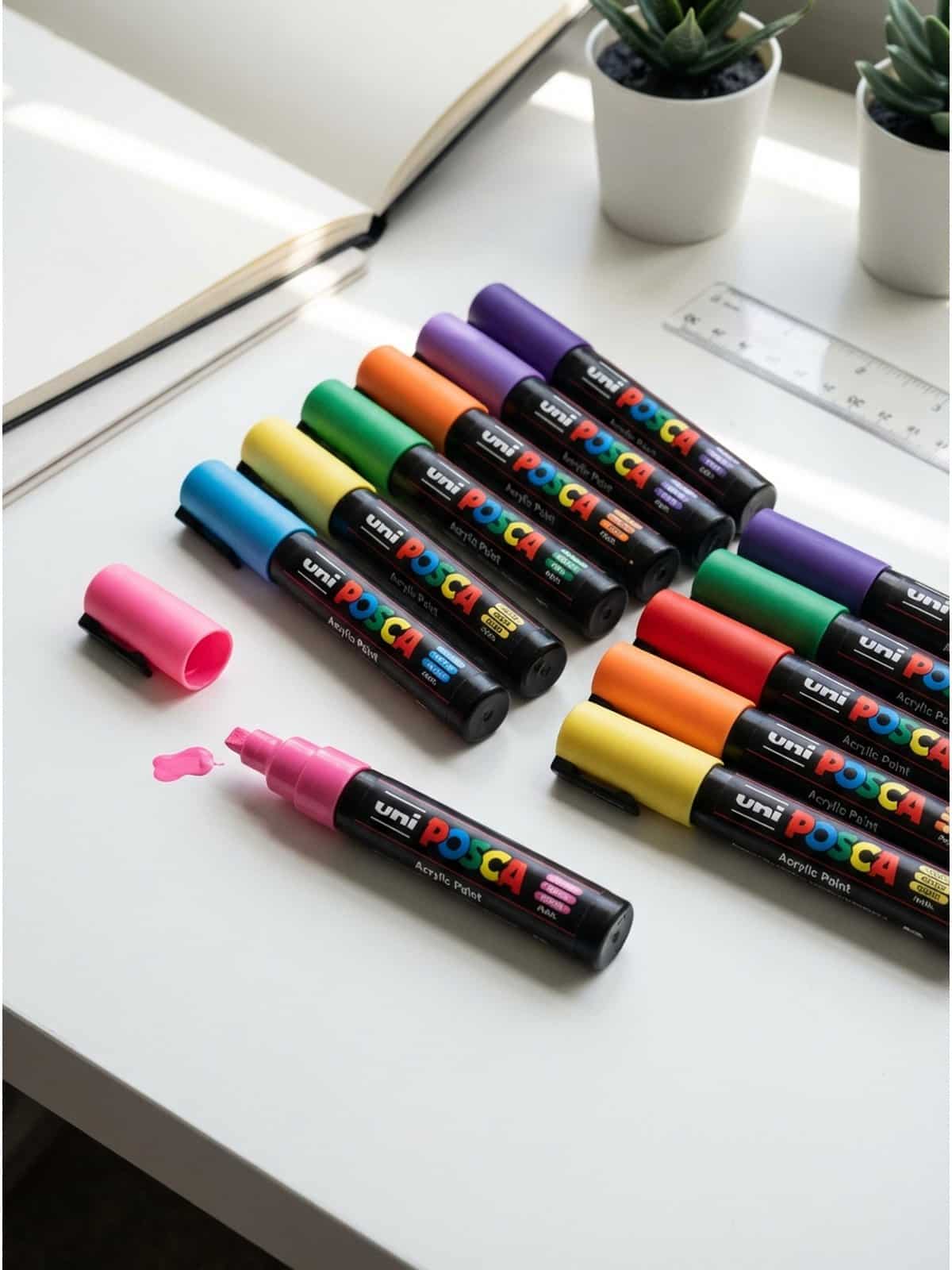
Quick Answer: Acrylic markers are paint pens filled with acrylic paint that deliver vibrant, opaque colour through a felt or valve-action tip. They work on paper, canvas, wood, glass, and virtually any surface.
Think of them as the love child of paint and markers. You get the colour intensity and permanence of acrylic paint with the precision and ease of a marker. No palette, no brushes, no water cup to knock over. Just uncap and create.
They come in different tip sizes — fine tips for detail work, medium tips for general drawing, and broad chisel tips for filling in large areas. Most brands offer both water-based and solvent-based options, but water-based are easier to work with for beginners.
Simple Floral Drawings
Quick Answer: Simple floral drawings with acrylic markers include daisy chains, single roses, wildflower bunches, and botanical leaf studies — all achievable with basic shapes and layering techniques.
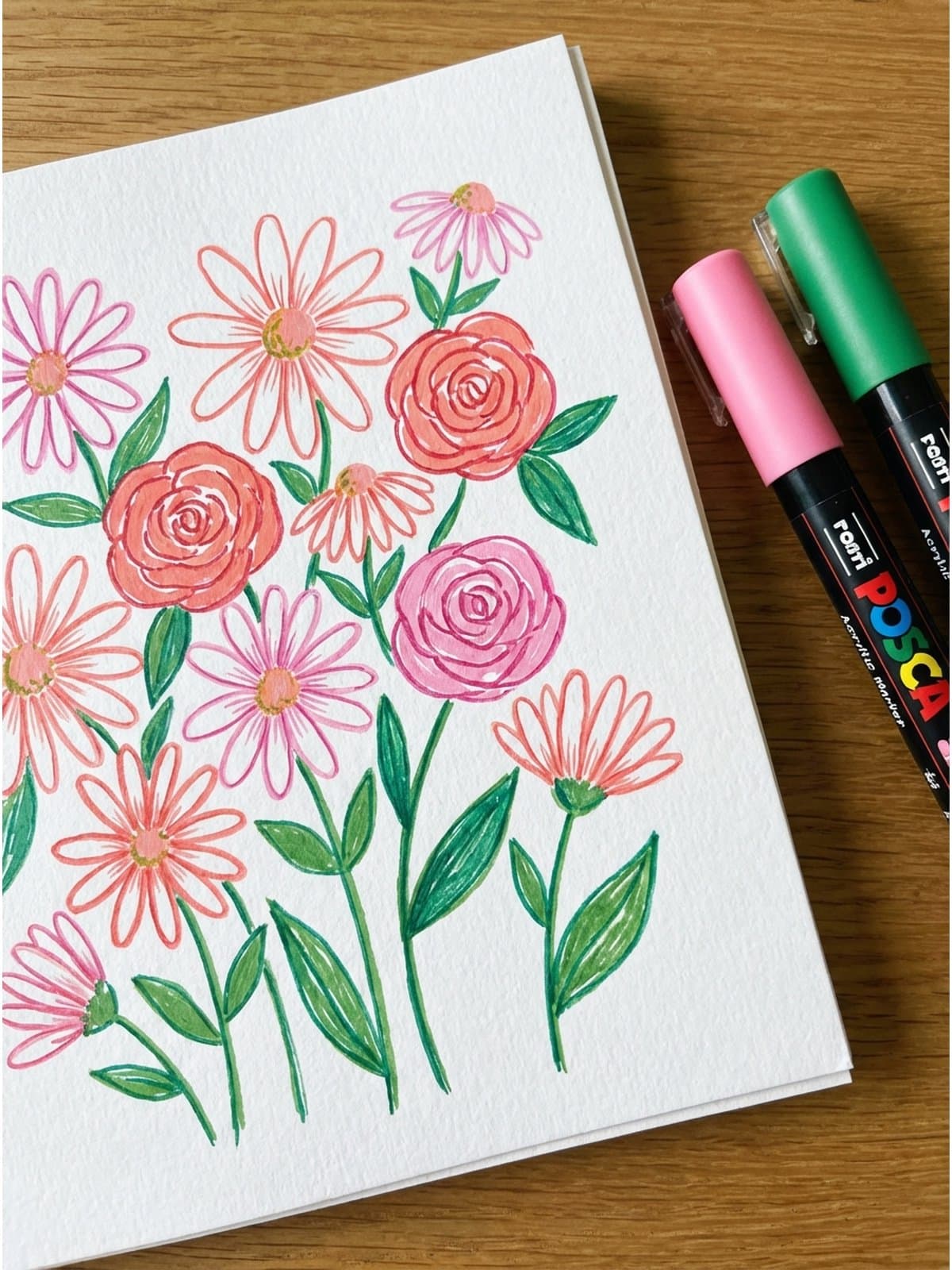
Flowers are genuinely the best starting point for acrylic markers. The opaque pigment means you can layer light colours over dark and fix mistakes easily. Start with simple shapes — five-petal daisies, round peonies made from overlapping circles, or loose wildflower stems.
My favourite approach is drawing the main flower shape in a medium tone, adding darker shadows while it’s still slightly wet for soft blending, then popping highlights on top once it dries. The coverage is so satisfying.
If you enjoy floral drawing, check out my loose watercolor flowers tutorial for a complementary technique.
Cute Food and Drink Drawings
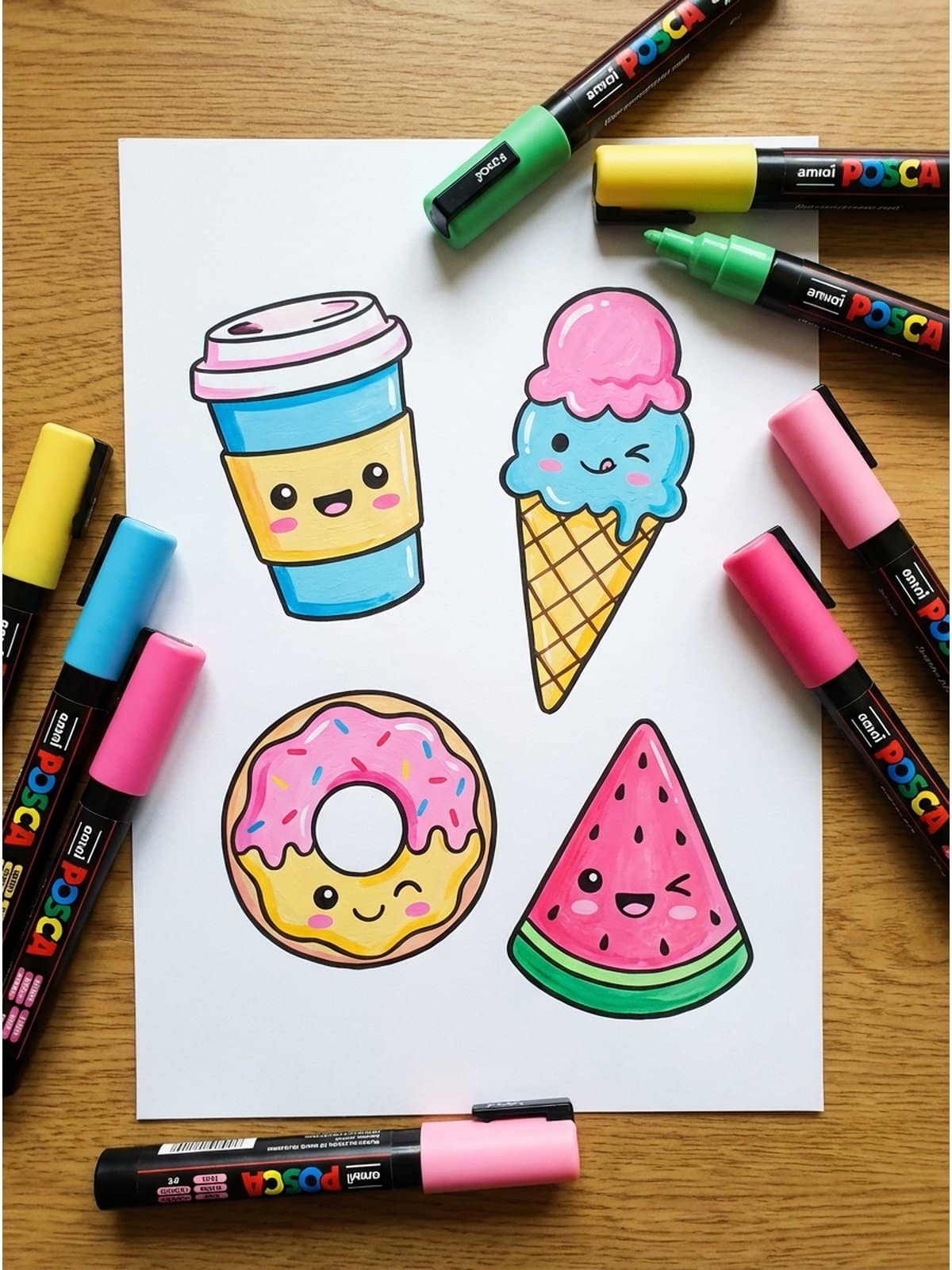
Quick Answer: Cute food drawings with acrylic markers include kawaii-style coffee cups, fruit slices, ice cream cones, and baked goods — all using simple shapes and bright, cheerful colours.
Food drawings are ridiculously satisfying with acrylic markers because the bold, opaque colours make everything look like a sticker. Draw a simple coffee cup shape, fill it with a warm brown, add a white foam detail on top, and suddenly you’ve got a cute little illustration that looks way more impressive than it was to create.
Try a slice of watermelon (green rind, pink flesh, black seeds), a stack of macarons in pastel colours, or a bubble tea with individually dotted tapioca pearls. If you want more food drawing ideas, my cute food drawings post has loads more inspiration.
Nature and Landscape Doodles
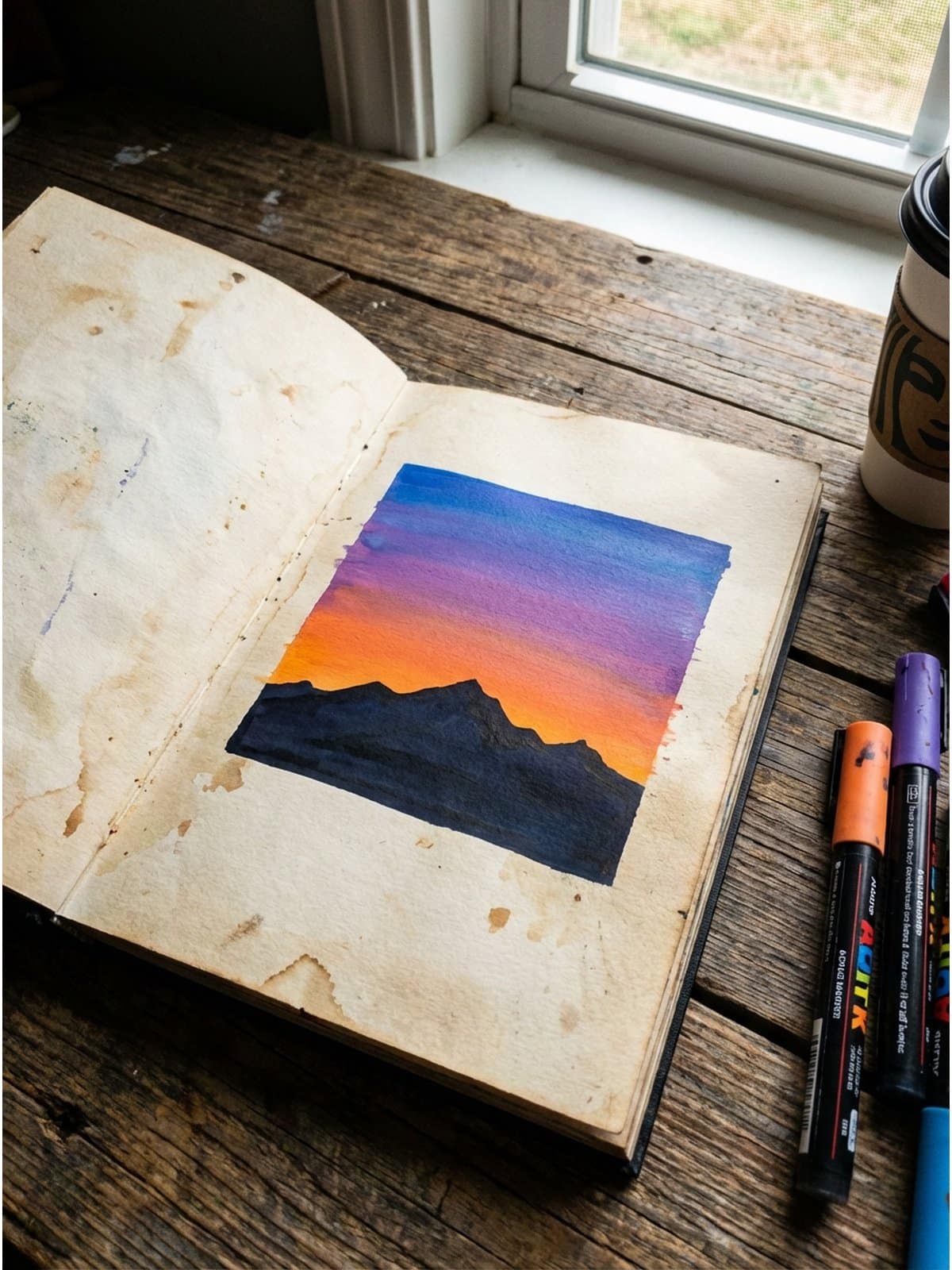
Quick Answer: Nature drawings with acrylic markers include simple mountain scenes, sunset skies, cactus gardens, mushroom clusters, and leaf studies — all perfect for building layering skills.
Nature subjects let you practice colour blending and layering, which are the two skills that will take your acrylic marker work from beginner to impressive. Start with a simple sunset — stripes of orange, pink, and purple blended where they meet — and add a silhouette of trees or mountains in black on top.
Mushrooms are fantastic for acrylic markers. The rounded caps look beautiful with smooth colour gradients, and you can add white spots for that classic toadstool look. Check out my mushroom drawing tutorial for step-by-step guidance.

Abstract and Pattern Ideas
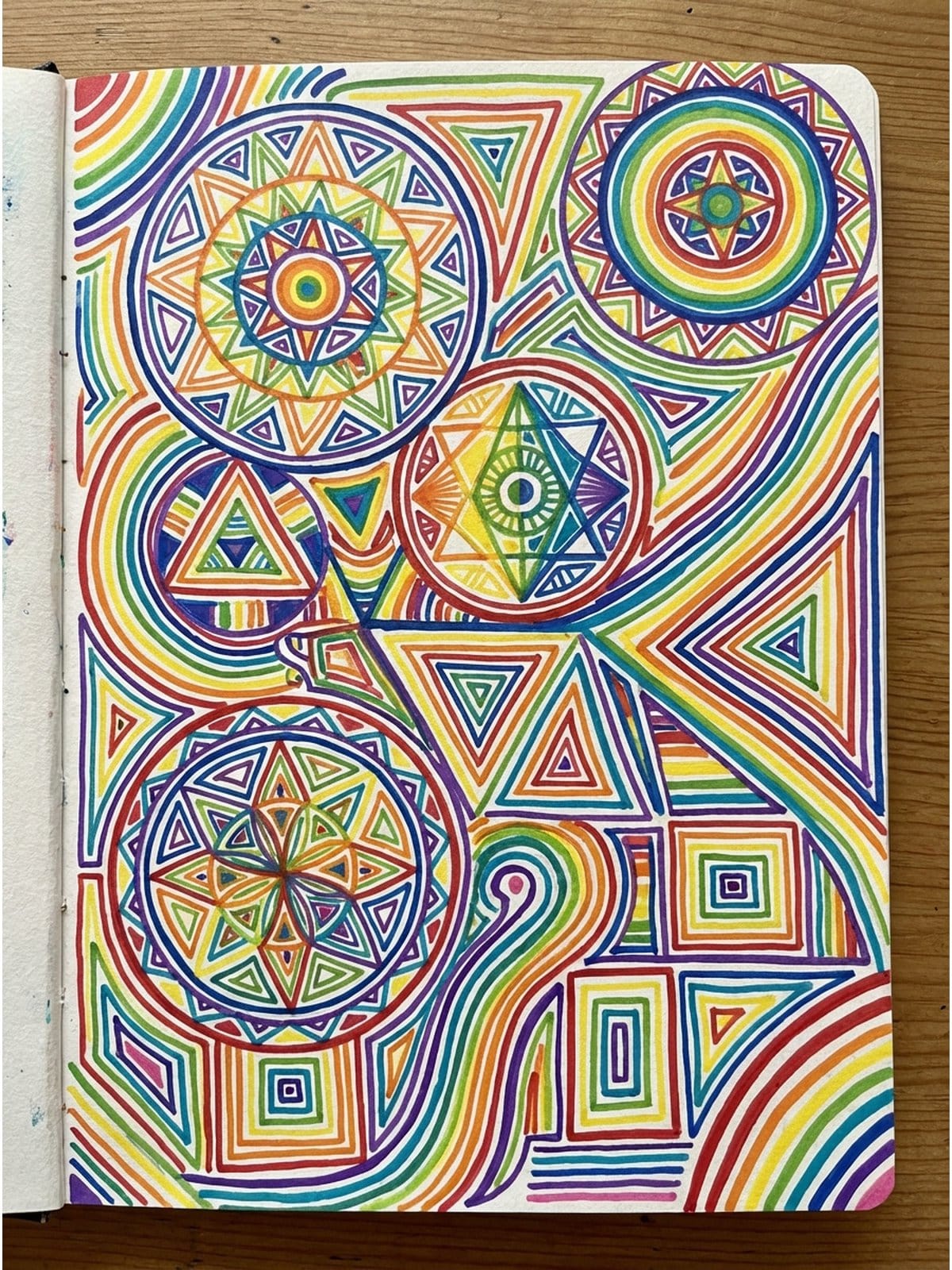
Quick Answer: Abstract acrylic marker patterns include geometric tessellations, mandala designs, gradient swatches, colour block compositions, and doodle-inspired doodles.
If drawing recognisable objects feels intimidating, abstract patterns are your best friend. You literally cannot get them wrong. Fill a page with geometric shapes in complementary colours, create gradient strips from light to dark, or draw concentric circles in rainbow order.
Pattern work is also excellent practice for marker control — you’ll learn how the ink flows, how to get clean edges, and how colours interact when layered. All skills that transfer to everything else you draw.
Lettering and Quote Art
Quick Answer: Acrylic marker lettering creates bold, eye-catching quote art on paper, canvas, or wood. Start with block letters for the easiest results, then progress to faux calligraphy and decorative lettering styles.
The opaque nature of acrylic markers makes them brilliant for lettering — the colours pop on any background, and you can layer white or metallic lettering over dark surfaces for stunning contrast. Write your favourite quote in block letters, add a shadow in a darker shade, and frame it.
For beginners, start with simple block capitals. Once you’re comfortable, try faux calligraphy by drawing thin lines on upstrokes and thick lines on downstrokes, then filling them in.
Tips for Using Acrylic Markers
Quick Answer: Key tips for acrylic markers include shaking well before use, priming the tip on scrap paper, working on mixed media or watercolour paper, storing horizontally, and building colour in thin layers rather than one thick coat.
- Shake before every use — the paint settles in the barrel and needs mixing for consistent flow
- Prime on scrap paper first — the first few strokes may be uneven as the paint reaches the tip
- Use mixed media or watercolour paper — regular printer paper buckles under the moisture and bleeds
- Build in thin layers — two thin coats look smoother than one thick one
- Let layers dry before adding more — acrylic dries fast, but impatient layering creates muddy results
- Store horizontally — prevents paint from pooling at one end
- Cap tightly when done — acrylic paint dries permanently; an uncapped marker is a dead marker
Best Acrylic Markers for Beginners
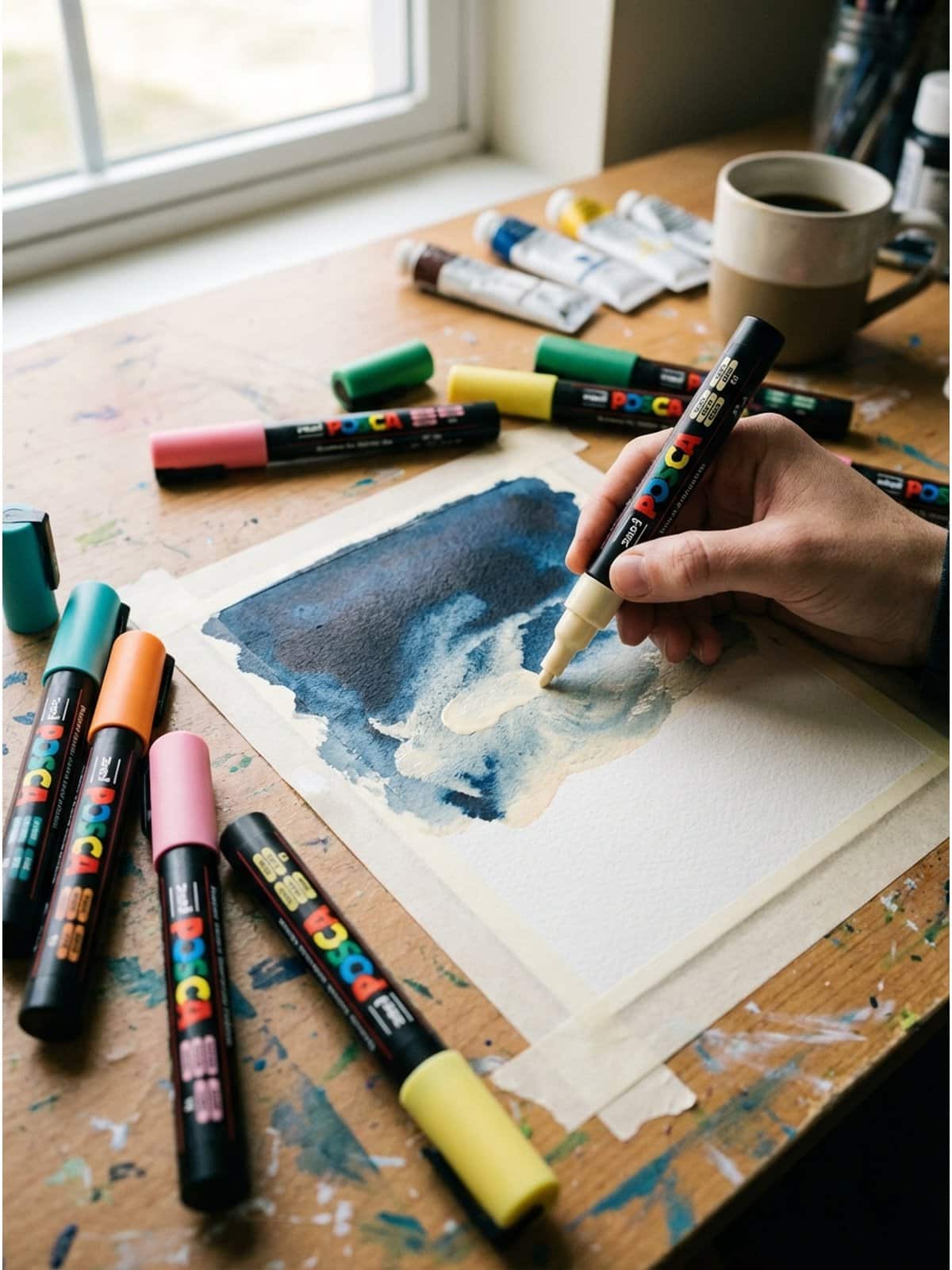
For beginners, I recommend starting with a set that has a good range of colours and medium-sized tips. POSCA markers are the gold standard — smooth flow, consistent coverage, and they work on virtually any surface. For a more budget-friendly option, Artistro acrylic markers are surprisingly good quality.

This post contains affiliate links, which means I may earn a small commission at no extra cost to you if you make a purchase. I only recommend products I genuinely love and use myself!
Looking for more drawing templates? Browse my Payhip shop for premium creative resource kits!
Frequently Asked Questions
What paper is best for acrylic markers?
Mixed media paper or watercolour paper (200gsm+) works best. The heavier weight prevents buckling and the slight texture gives the paint something to grip. Avoid regular printer paper — it bleeds and warps. Black paper is also gorgeous with light and metallic acrylic markers.
Can you blend acrylic markers?
Yes! Blend by working wet-into-wet — apply your first colour, then immediately lay the second colour next to it and gently overlap where they meet. Work quickly before the acrylic dries. Some brands blend more easily than others; POSCA markers are particularly good for blending.
Are POSCA markers worth the price?
If you plan to use acrylic markers regularly, absolutely. The paint quality, consistency, and tip durability are noticeably better than budget brands. For occasional use, more affordable options work fine. But POSCA’s smooth flow and vibrant pigment make the creative process much more enjoyable.
Do acrylic markers work on canvas?
Yes — they work beautifully on canvas. You can create entire paintings with acrylic markers, or use them to add details and lettering on top of traditional acrylic paintings. Prime your canvas with gesso first for the smoothest application.
Final Thoughts
Acrylic markers make drawing feel instantly rewarding — the colours are bold, the coverage is smooth, and even simple subjects look impressive. Grab the free templates, pick up a set of markers, and give yourself permission to just play. That’s where the best art happens.
Head over to my YouTube channel for more art tutorials and supply reviews. Hit subscribe so you don’t miss the next one!
You Might Also Like
- Sketch Ideas for Beginners
- Cute Food Drawings
- Mushroom Drawing Tutorial
- 100 Sketchbook Prompts
- Loose Watercolor Flowers Tutorial
🎨 Want more free printables? Browse my Free Printables Library — over 400 free templates, coloring pages, drawing guides, and creative resources all in one place!
Pin this for later!

Thirty ideas and ten bold outline templates will fill a good few marker sessions, and then you’ll be after fresh shapes. The Artsydee shop on Payhip has fuller printable template packs ready to download and trace.
See the printable packs →