Last Updated on January 23, 2026 by Dee
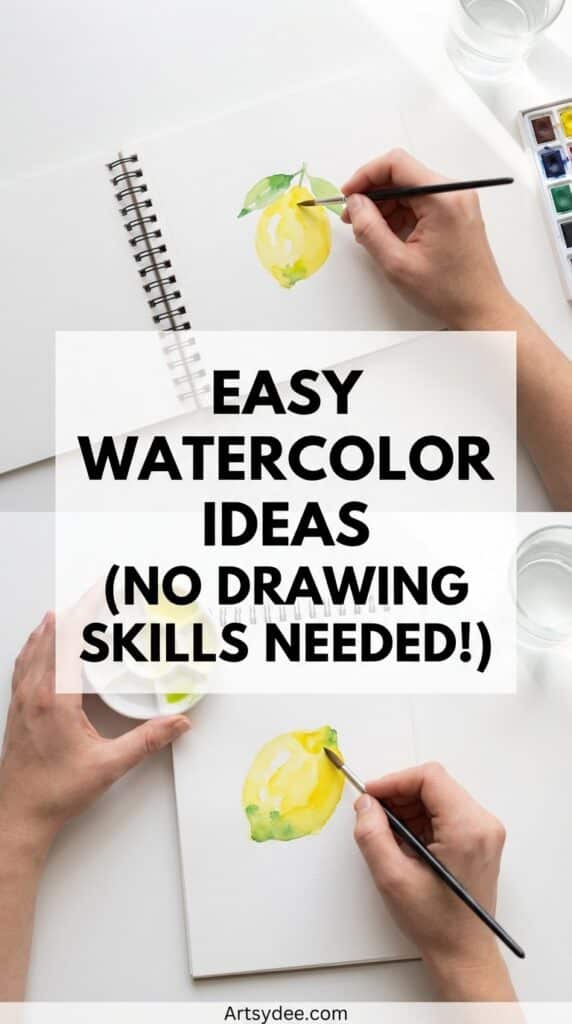
Here’s a secret that took me years to learn: you don’t need to be good at drawing to create beautiful watercolor paintings.
Seriously. Some of the most stunning watercolor work relies on loose washes, happy accidents, and letting the paint do its own thing. The medium is inherently forgiving — colours blend and bloom in ways you couldn’t plan if you tried. And that’s exactly what makes it perfect for beginners.

| 
| 
| 
|
If you’ve been putting off watercolor because you’re convinced you’ll “mess it up” or because your stick figures look wonky, this post is for you. I’m sharing easy watercolor sketchbook ideas specifically designed for people who are just starting out. No fancy techniques. No intimidating subjects. Just simple, achievable paintings that will build your confidence and fill your sketchbook with pages you’re genuinely proud of.
Plus, I’ve created 8 FREE printable watercolor templates with outlines ready to paint over — so you can skip the drawing step entirely and jump straight into the fun part.
Why Watercolor Is Actually Perfect for Beginners
I know it might not feel that way. Watercolor has a reputation for being “difficult” and “unforgiving.” But here’s what nobody tells you: that reputation comes from people trying to control the medium instead of working with it.
When you embrace the unpredictable nature of watercolor — the way colours merge, the soft edges, the organic shapes — suddenly everything becomes easier. You’re not fighting the paint anymore. You’re collaborating with it.
Watercolor for beginners works beautifully because: mistakes often turn into happy accidents, loose paintings look intentionally artistic rather than “wrong,” you need very few supplies to get started, and the learning curve is actually gentler than you’d think when you choose the right subjects.
The key is starting with simple watercolor paintings that don’t require precise control. And that’s exactly what we’re covering today.
If you want even more beginner-friendly inspiration, my post on simple watercolor paintings has 21 ideas with free templates to get you started.
Setting Up Your Beginner Watercolor Sketchbook
Before we dive into the painting ideas, let’s talk supplies. You don’t need expensive materials to create beautiful work — in fact, I’d argue that beginners should start with affordable supplies so there’s no pressure to “waste” anything.
What you need:
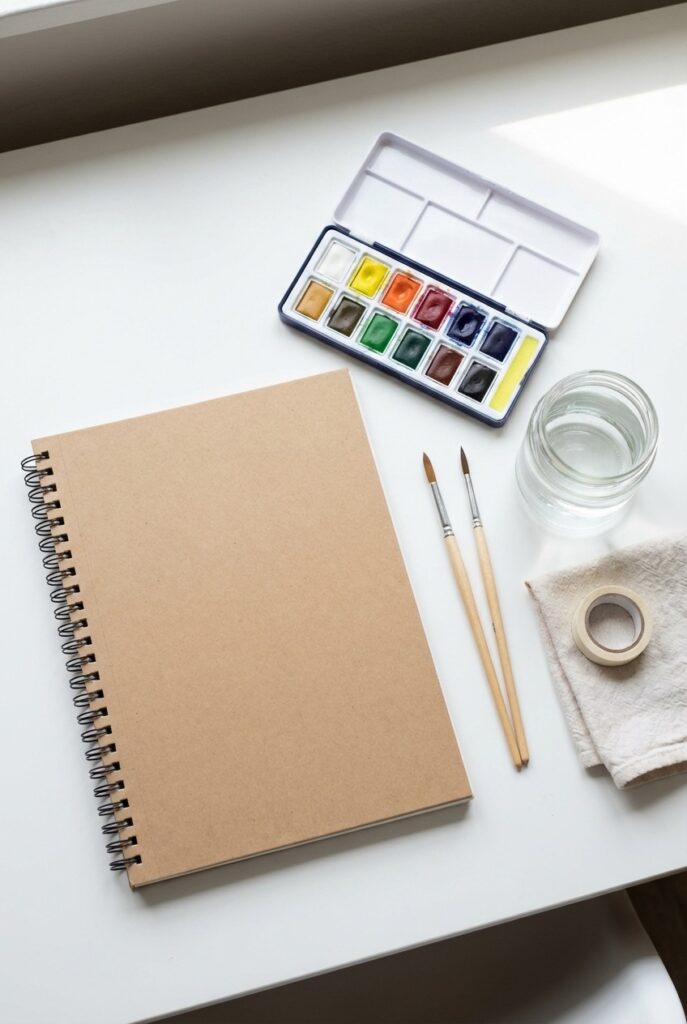
A watercolor sketchbook with decent paper weight (140lb or 300gsm) so the pages don’t buckle. I recommend the tumuarta Watercolor Journal — affordable with paper that handles water well. I may earn a small commission from this link.
A basic watercolor set with primary colours. The Winsor & Newton Cotman set is perfect for beginners — good pigment without the premium price tag. Affiliate link.
|
|
|
|
|
Two or three round brushes in different sizes. You can start with just one medium round brush if you’re on a budget.
A jar of clean water and something to mix colours on — even a white plate works perfectly.
That’s it. No fancy equipment required. For more guidance on materials, check out my watercolor painting ideas for beginners post where I cover supplies in more detail.
Simple Shapes: Where Every Beginner Should Start
The best beginner watercolor sketchbook subjects are simple shapes that look beautiful even when they’re imperfect. Here’s where to begin:
Circles and dots. Load your brush with colour and practice making circles of different sizes. Let some touch and blend together. This teaches you brush control without any pressure to create something “recognisable.”
Organic blobs. Watercolor loves organic, irregular shapes. Paint blob-like forms and watch how the pigment settles. These become the foundation for flowers, leaves, clouds, and so much more.
Graduated washes. Paint a stripe of colour, then rinse your brush and pull the pigment down, adding water as you go. This creates a beautiful gradient from dark to light — a fundamental watercolor technique that looks impressive with minimal skill.
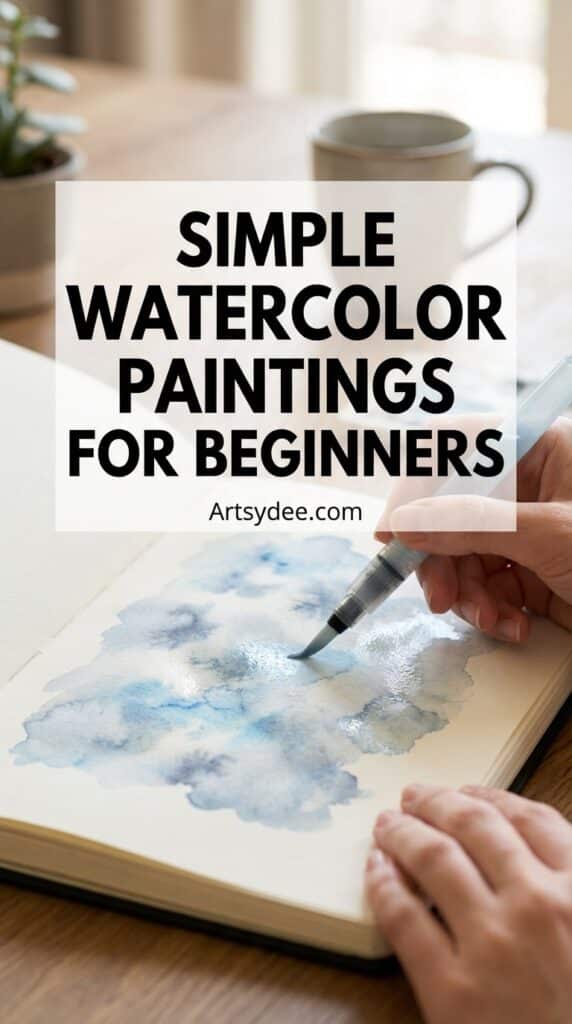
Wet-on-wet experiments. Wet your paper with clean water first, then drop in colour and watch it bloom. This technique does most of the work for you — the results are always interesting and often magical.
These exercises might seem basic, but they’re genuinely useful. Every painting you’ll ever do builds on these foundations.
Easy Floral Paintings for Beginners
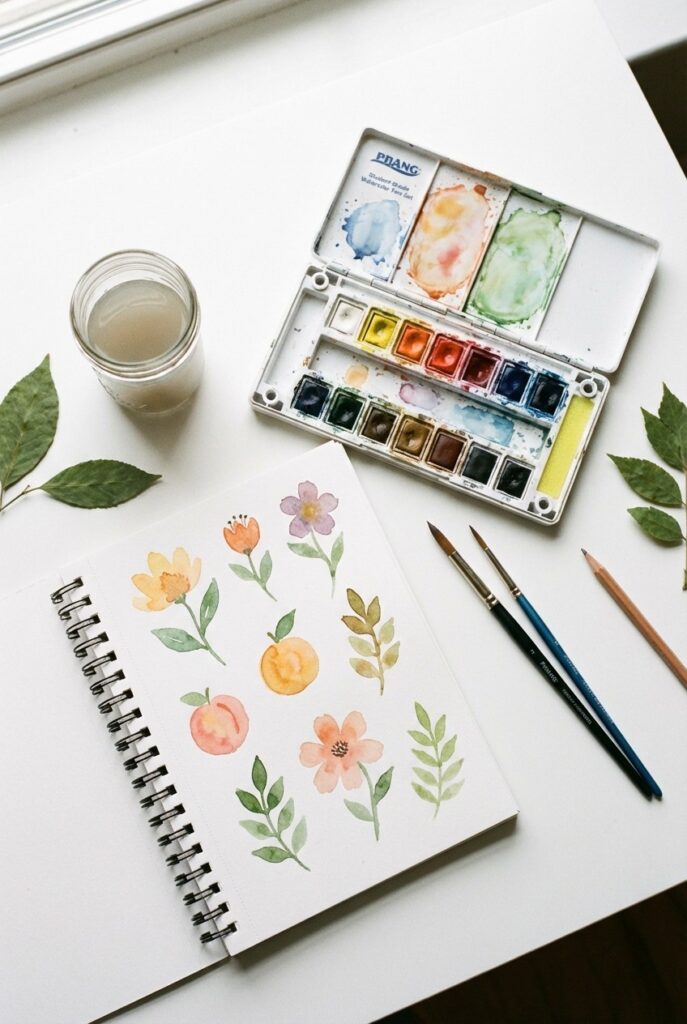
Flowers are the ultimate beginner-friendly subject. Why? Because real flowers are imperfect. Petals curve in unexpected ways. Colours vary. Nothing is symmetrical. This means your loose, wobbly attempts will look charmingly realistic rather than “wrong.”
Start with these:
Simple five-petal flowers. Paint five rounded blobs in a circle, leaving the centre empty. Add a dot of yellow for the middle. Done! These look like cheerful wildflowers and take about thirty seconds each.
Loose roses. Start with a small curved shape in the centre, then add larger curved petals around it, working outward. The messier, the better — tight, controlled roses look stiff, while loose ones look painterly and professional.
Lavender sprigs. Paint a thin stem line, then add small dabs of purple along one side. That’s it. Group three sprigs together for a lovely little arrangement.
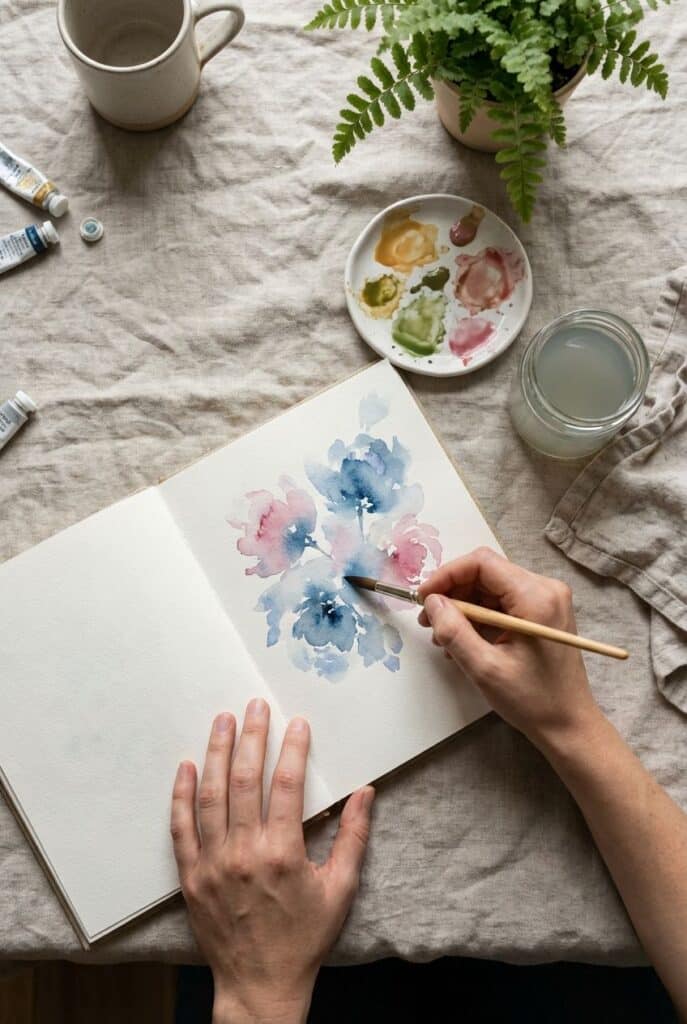
Abstract florals. Wet your paper, drop in pink or purple paint, and let it bloom into soft petal shapes. Add a darker centre while still wet. The water does the blending for you.
For step-by-step guidance, my watercolor flowers tutorial walks you through painting beautiful blooms even if you’ve never tried before.
Fruit and Food: Forgiving Beginner Subjects
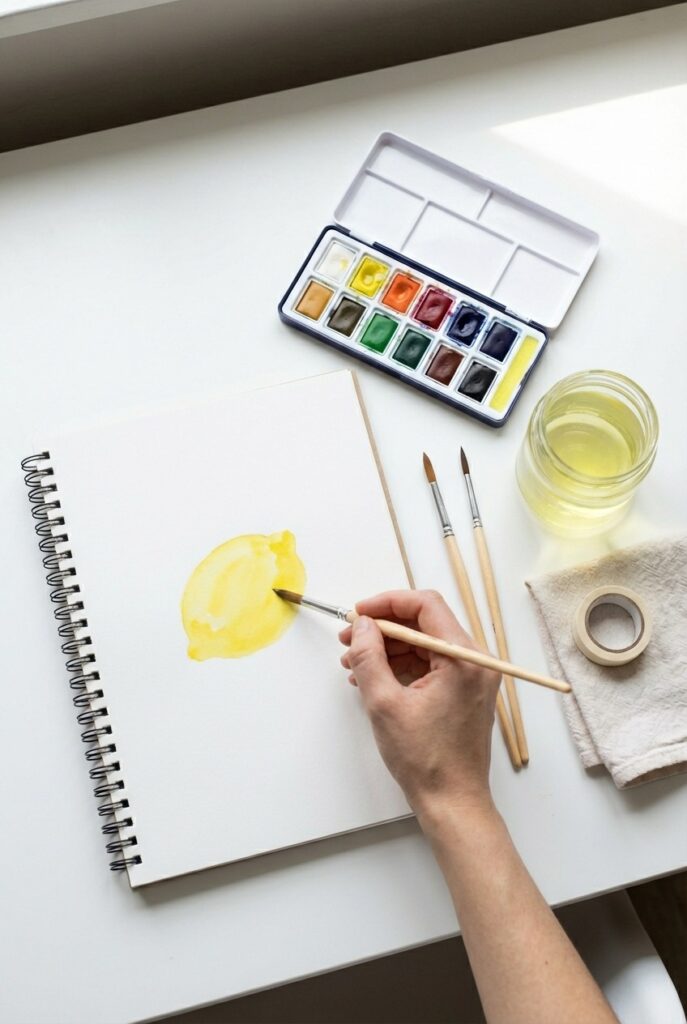
Food is brilliant for easy watercolor practice because the shapes are familiar and the colours are fun. Even a lopsided lemon still looks like a lemon.
Beginner-friendly food subjects:
Citrus slices. Paint a circle, add triangle segments radiating from the centre, and leave some white space between each section. Instant lemon or orange slice.
Apples and pears. These are essentially circles and ovals with a small indent at the top. Add a brown stem, maybe a leaf, and you’re done. Practice leaving a white highlight for a more three-dimensional look.
Berries. Small circles clustered together make perfect blueberries, raspberries, or grapes. Group them in threes or fives for a natural arrangement.
A steaming mug. Paint a simple rectangle shape with a curved handle. Add some wispy grey lines above for steam. This cosy subject is wonderfully forgiving.
Cake or cupcake. A trapezoid shape for the base, a fluffy cloud on top for frosting, and maybe a cherry. Sweet and simple.
The beauty of painting food is that slight imperfections add character. Your wonky strawberry looks hand-painted and charming, not “badly drawn.”
Nature Subjects That Don’t Require Drawing Skills
Nature is endlessly inspiring and surprisingly easy to paint when you know which subjects to choose.
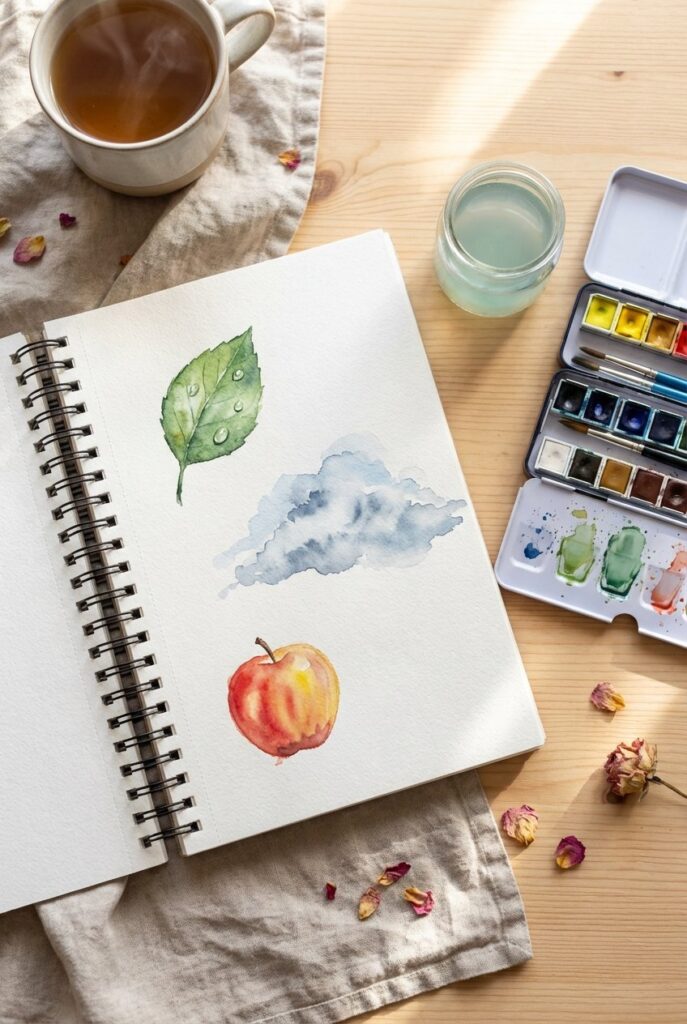
Leaves. Single leaves are perfect for beginners. Paint an oval or teardrop shape, add a line down the middle for the vein, and you’re done. Try different colours — green, autumn orange, burgundy, or even blue for variety.
Simple trees. A vertical line for the trunk, a fluffy cloud shape on top for the foliage. You can paint dozens of these to create a tiny forest. My how to paint watercolor trees tutorial has more techniques for different tree styles.
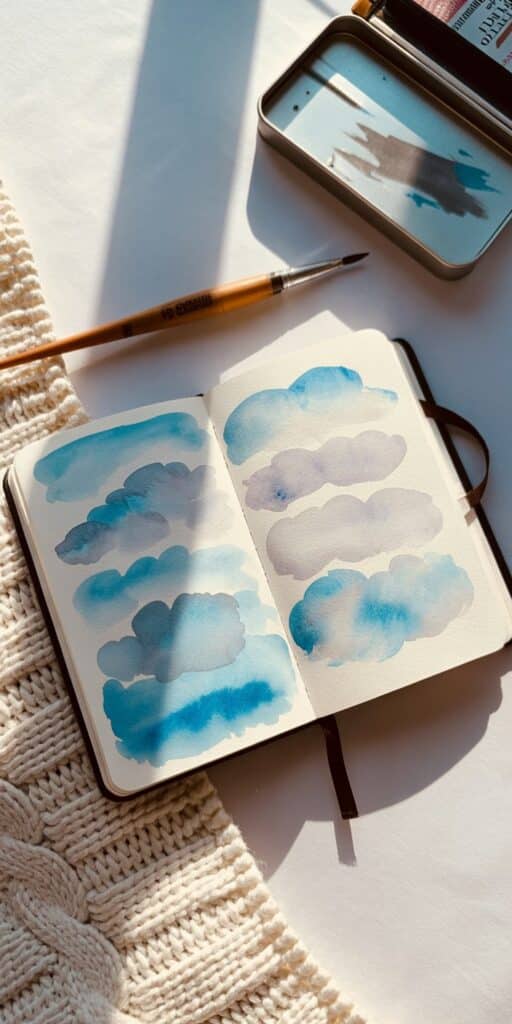
Clouds. Wet your paper, drop in soft grey and blue tones, and let them blend. Leave white spaces for the fluffy parts. Clouds are impossible to get “wrong” because they come in every shape imaginable. See my watercolor clouds post for more dreamy sky inspiration.
Mountains. Simple triangle shapes with varying heights. Paint them in overlapping layers — darker tones in front, lighter tones behind — for instant depth.
Sunset skies. Wet your paper, then apply horizontal stripes of yellow, orange, pink, and purple. Let them blend together. The wet-on-wet technique creates that gorgeous gradient for you.
Everyday Objects: Practice Without Pressure
Look around your home — you’re surrounded by painting subjects. Everyday objects are wonderful for beginner watercolor sketchbook pages because there’s no pressure to make them “perfect.” It’s just a coffee cup, after all.
Try painting:
Your morning coffee or tea cup. A candle with a small flame. Your favourite houseplant. A stack of books. A vase (empty or with simple flowers). Your glasses or sunglasses. A jar filled with something — buttons, paintbrushes, dried flowers. Fruit in a bowl. A cosy blanket draped over a chair.
These simple subjects teach you to really see shapes, shadows, and colours in ordinary things. Plus, they make for lovely sketchbook pages that feel personal and meaningful.
Abstract Ideas for Zero-Pressure Practice
When you’re not trying to paint “something,” you can focus entirely on enjoying the process. Abstract watercolor is brilliant for easy watercolor practice because there’s genuinely no way to fail.
Abstract experiments to try:
Colour mixing studies. Paint two colours next to each other and watch them blend where they meet. Try different combinations and fill a whole page with these little experiments.
Shape exploration. Fill a page with circles, squares, triangles, and organic blobs in various colours. No meaning, no plan — just shapes.
Mood paintings. Choose colours that match how you’re feeling and make marks on the page. Angry? Bold red slashes. Peaceful? Soft blue washes. Excited? Bright, energetic splatters.
Gradient strips. Paint a row of squares, each one a slightly different shade of the same colour family. This teaches colour mixing while creating something visually pleasing.
For more inspiration on different techniques, explore my easy watercolor tutorials collection.
Building Your Confidence: A Weekly Practice Plan
Consistency matters more than talent. Here’s a gentle weekly practice plan for building your beginner watercolor sketchbook:
Day 1: Paint three simple circles with different colours. Practice brush control.
Day 2: Create a wet-on-wet experiment. Wet the paper, drop in colours, see what happens.
Day 3: Paint a simple flower using the five-petal technique.
Day 4: Try a piece of fruit — an apple, lemon, or orange.
Day 5: Paint something from your home — a mug, candle, or plant.
Day 6: Create an abstract colour study. Mix and blend with no subject in mind.
Day 7: Rest, or revisit a favourite subject from the week.
After one month of this gentle practice, you’ll have filled pages of your sketchbook and built genuine skill. The improvement happens almost without you noticing — until you flip back to your first paintings and see how far you’ve come.
My fun drawing prompts can help keep your practice fresh week after week.
Common Beginner Mistakes (And How to Avoid Them)
Using too little water. Watercolor needs water to flow beautifully. If your paint feels sticky or won’t blend, add more water.
Overworking the paint. Once you’ve put colour down, resist the urge to keep fiddling with it. Let it dry. You can always add another layer later.
Starting too detailed. Begin with loose, simple shapes. Details can come later as your confidence grows.
Comparing yourself to experts. Everyone starts as a beginner. The artists you admire have thousands of hours of practice behind their polished work.
Using bad paper. Cheap, thin paper buckles and doesn’t let the paint flow properly. Invest in decent watercolor paper — it makes a genuine difference. The Canson XL Watercolor Pad is affordable and works beautifully.
Recommended Supplies for Beginner Watercolor Practice
You don’t need much to start, but quality basics make learning more enjoyable.
Paints: Arteza Watercolor Paint Set — budget-friendly with surprisingly good pigment.
Brushes: A Pentel Aquash Water Brush is perfect for beginners because the water is built into the handle — one less thing to worry about.
Palette: A simple folding watercolor palette gives you space to mix colours.
For more supply recommendations, browse my watercolor pencils guide — watercolor pencils are another wonderfully beginner-friendly option.
Download Your FREE Watercolor Templates
Ready to start painting but want to skip the drawing? I’ve created 8 FREE printable watercolor templates with simple outlines ready for you to paint over.
What’s included:
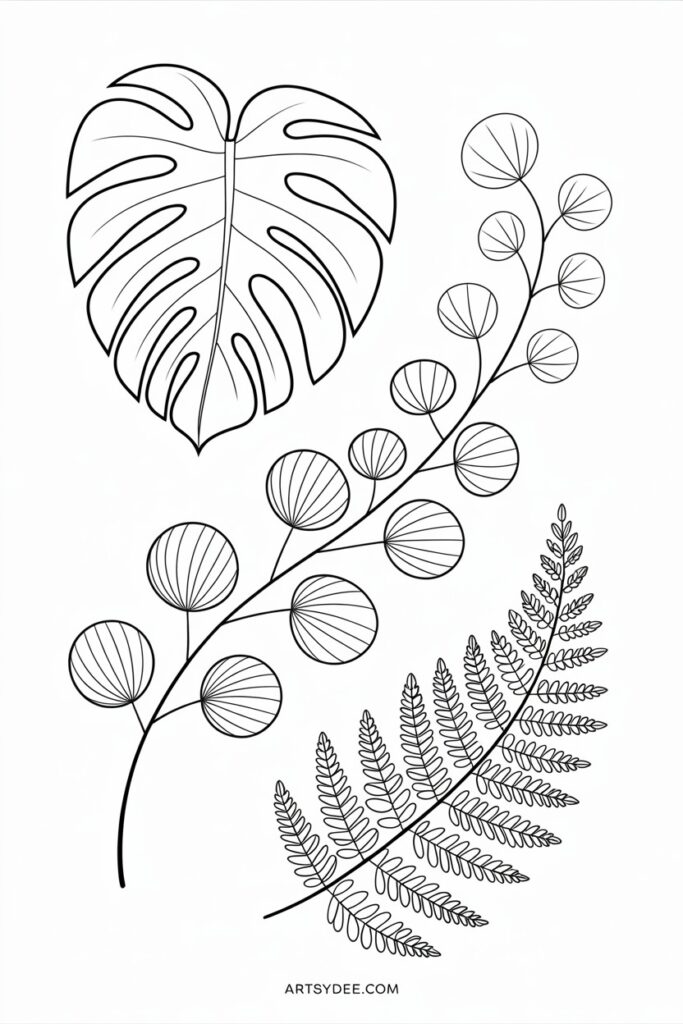
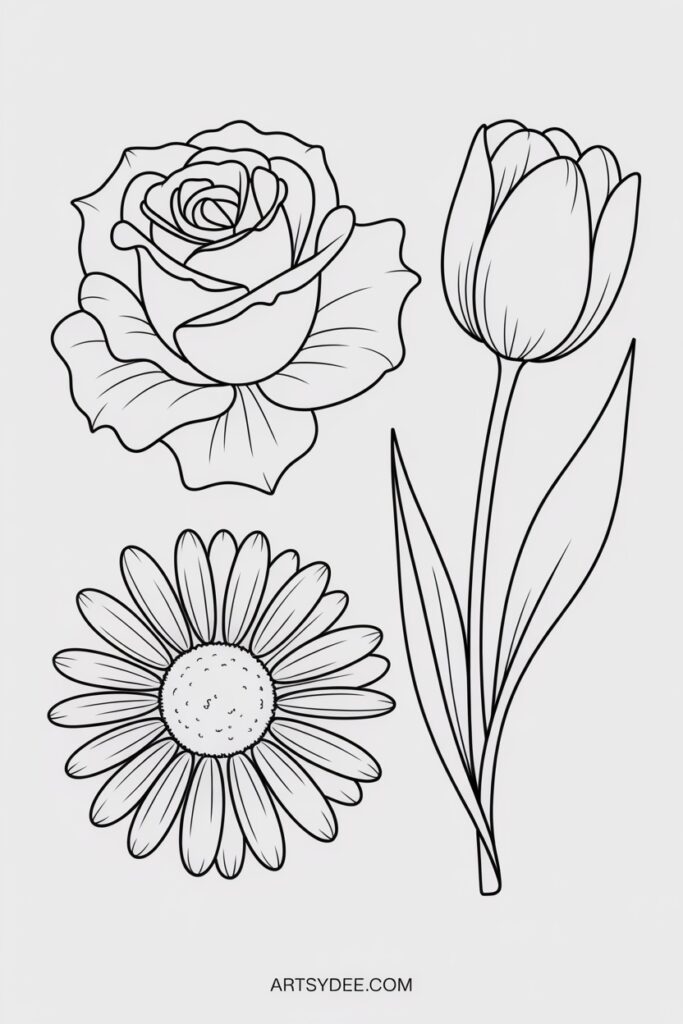
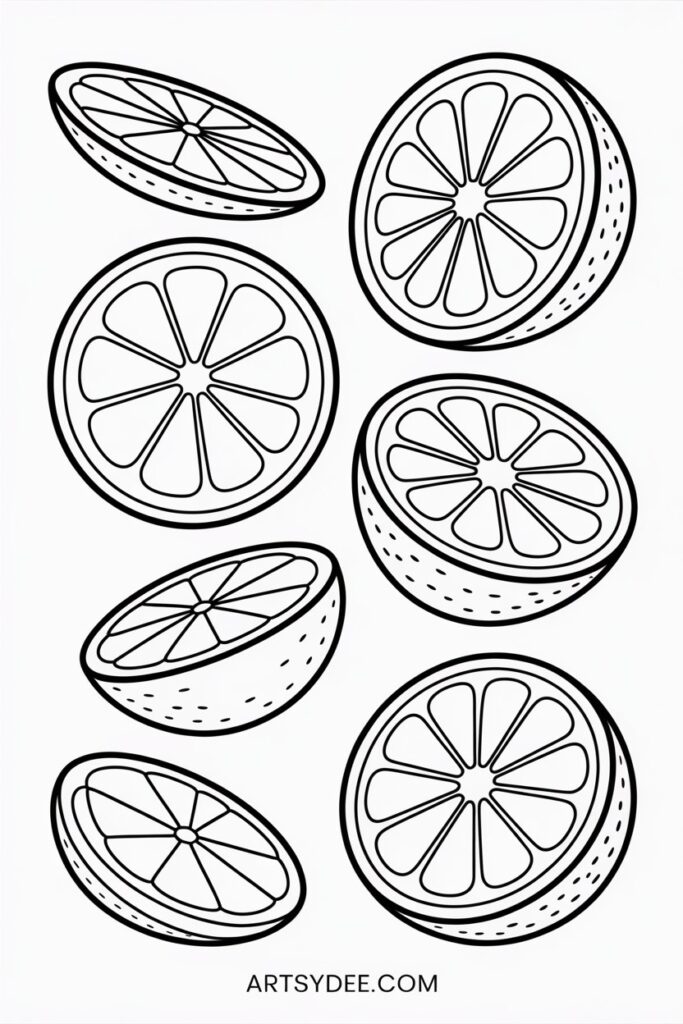
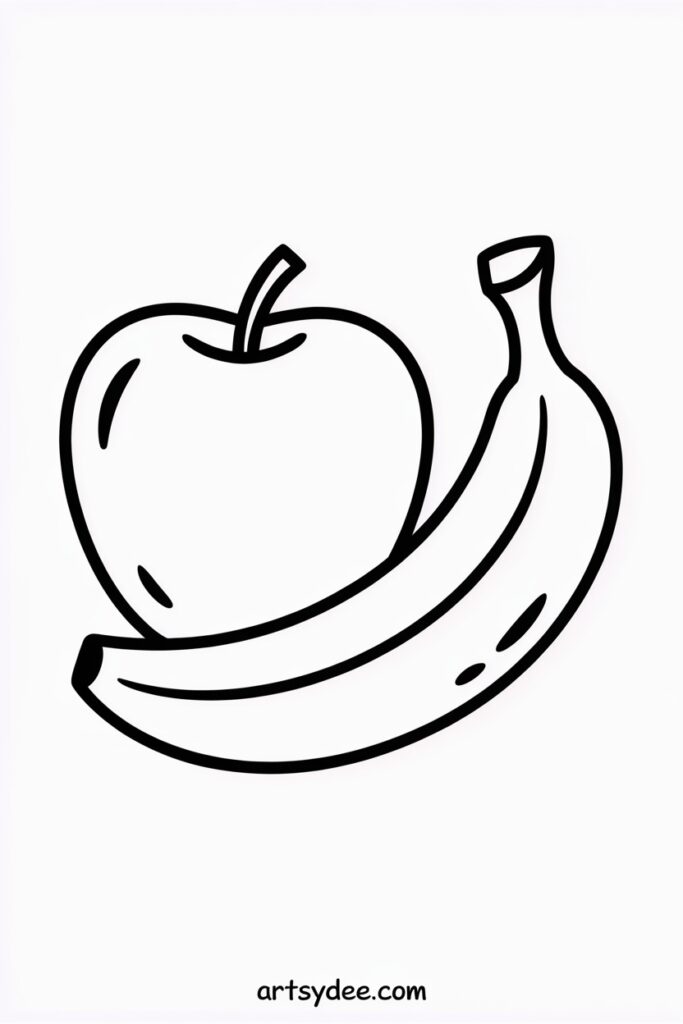
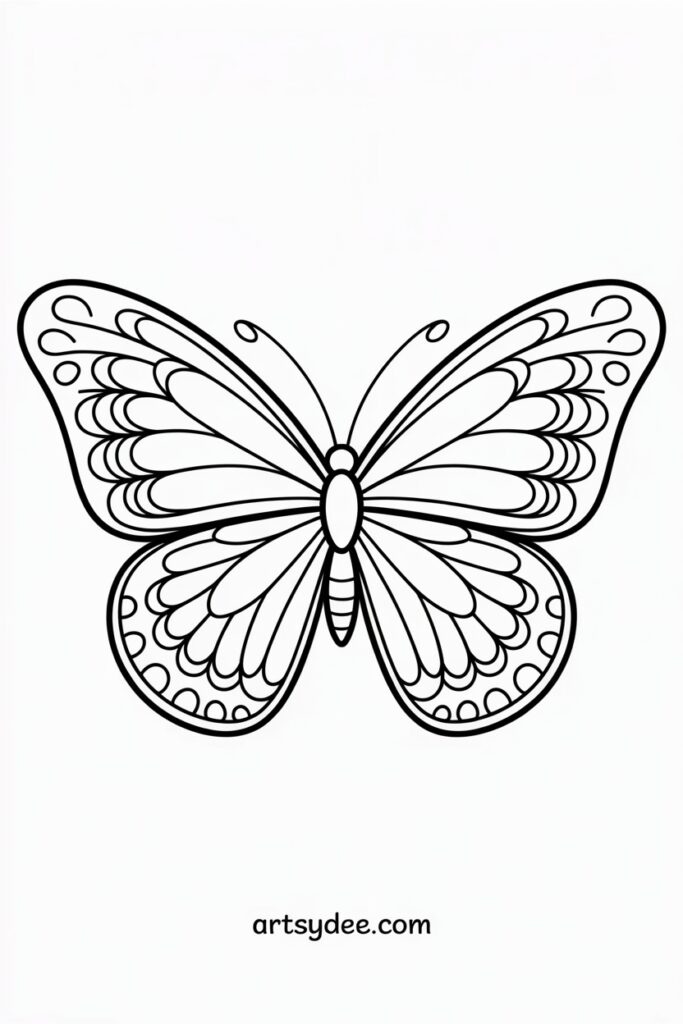
Three flowers: a rose, daisy, and tulip. Three fruits: an apple, lemon, and pear. Three botanical leaves: monstera, eucalyptus, and fern. A cosy coffee mug with steam. Soft clouds and a rainbow. A detailed butterfly. A simple landscape with hills, tree, and sun. A cute cupcake with frosting.
Print them on watercolor paper or regular printer paper, and paint right over the lines. Perfect for beginners who want to practice brushwork without worrying about drawing.
Grab the Free Printable Watercolour Painting Templates HERE (below)!
Every freebie and tutorial on Artsydee is made with love (and plenty of coffee☕ If you’d like to say thanks, you can buy me a coffee here → ko-fi.com/artsydee
Final Thoughts
Every artist you admire started exactly where you are now — staring at a blank page, wondering if they could do it.
The answer is yes. You absolutely can.
Watercolor is more forgiving than it looks, especially when you choose beginner-friendly subjects that embrace looseness and imperfection. Your wobbly flowers, blobby fruit, and experimental washes aren’t failures — they’re exactly what learning looks like.
Start simple. Be patient with yourself. And most importantly, enjoy the process of watching colour flow across the page.
Which beginner watercolor idea will you try first? I’d love to see your sketchbook pages — tag me on social media or drop a comment below!
Happy painting! 🎨
You might also enjoy: