Last Updated on February 4, 2026 by Dee
Pop art is one of the most fun and accessible art movements for kids to explore. With its bold colors, comic book vibes, and everyday objects turned into art, it’s basically made for creative young minds who aren’t afraid to go big and bright.
I remember introducing pop art to my students and watching their eyes light up when they realized art could be fun, loud, and a little bit rebellious. No delicate brushwork required — just pure creative energy and the boldest colors you can find.
Whether you’re a teacher looking for art history projects, a homeschool parent wanting hands-on activities, or just someone who wants to do something creative with kids this weekend, these pop art projects deliver. They’re approachable enough for beginners but engaging enough to keep older kids interested too.
Grab your FREE Pop Art Activity Pack at the end of this post! It includes Warhol-style templates, comic art pages, bold pattern coloring sheets, and pop art word bubbles — everything you need to get started right away.
🎬 Love video tutorials? Subscribe to my YouTube channel for weekly art tutorials and creative inspiration!
Table of Contents
What is Pop Art? A Quick Intro for Kids
Quick Answer: Pop art is an art movement from the 1950s and 60s that turned everyday objects like soup cans, comic books, and celebrities into bold, colorful artwork. It celebrated popular culture and made art feel fun and accessible to everyone.
Pop art emerged as a rebellion against traditional “serious” art. Artists like Andy Warhol and Roy Lichtenstein looked at the world around them — advertisements, packaging, comic strips, movie stars — and said “that’s art too.”
For kids, this is a liberating concept. You don’t need to paint landscapes or portraits of important people. You can paint a hamburger. Or a banana. Or your favorite cartoon character. Pop art gives permission to find beauty and meaning in the ordinary stuff of everyday life.
The key characteristics that make pop art recognizable:
- Bold, bright colors — think primary colors cranked up to maximum
- Strong outlines — black lines that make shapes pop
- Repetition — the same image repeated in different colors
- Everyday subjects — food, products, celebrities, comics
- Ben-Day dots — those little dots you see in comic book printing
Famous Pop Artists Kids Should Know
Before diving into projects, it helps to introduce kids to the artists who started it all. Understanding the “why” behind the art makes the creating part more meaningful.
Andy Warhol (1928-1987)
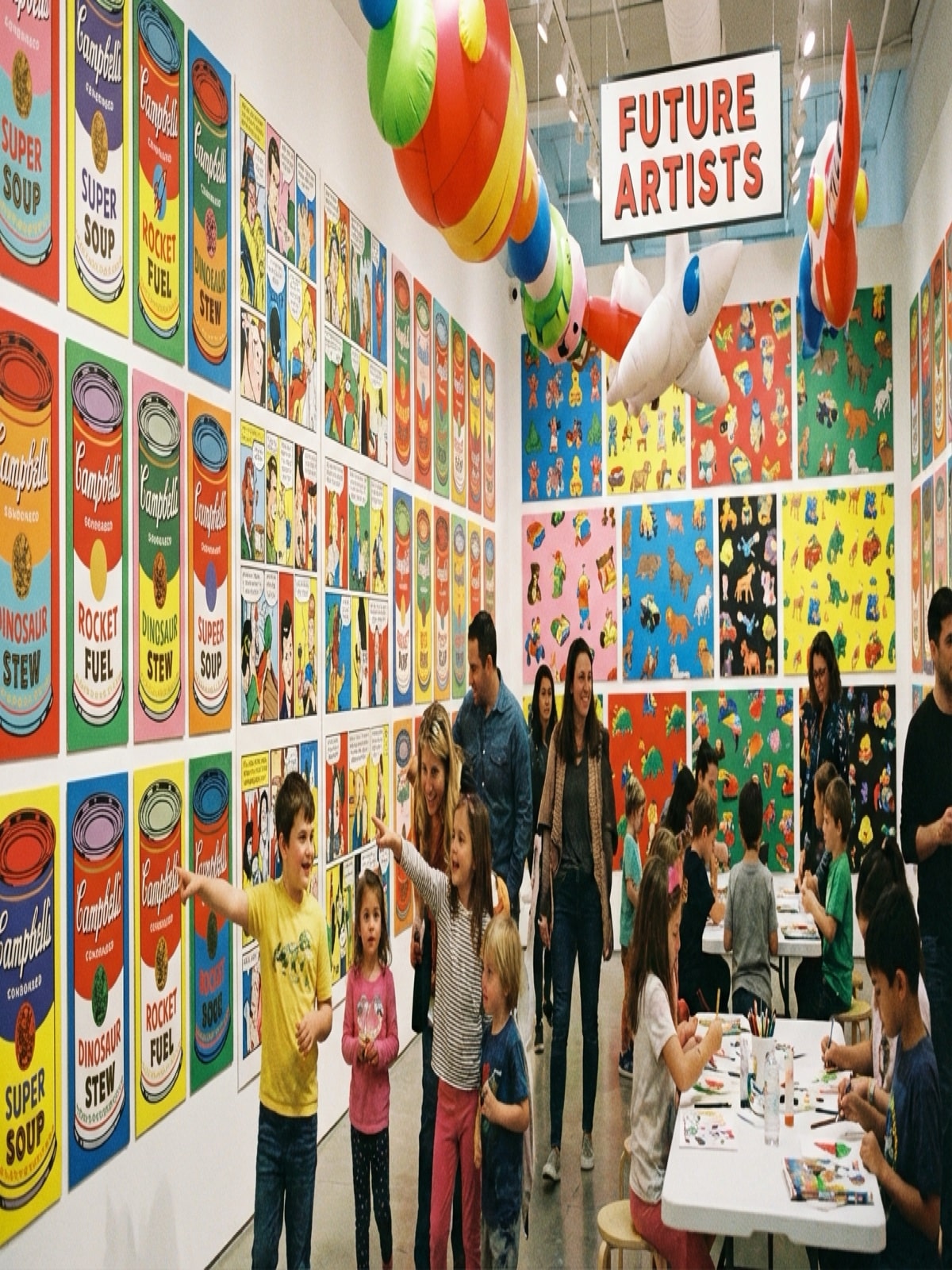
The king of pop art. Warhol famously painted Campbell’s soup cans, Coca-Cola bottles, and portraits of Marilyn Monroe. His technique of repeating the same image in different color combinations is perfect for kids to replicate — it’s simple but visually striking.
Fun fact for kids: Warhol’s studio was called “The Factory” and was covered in silver foil and paint. He wanted to make art like a factory makes products — lots of it, accessible to everyone.
Roy Lichtenstein (1923-1997)
Lichtenstein made giant paintings that looked like comic book panels, complete with speech bubbles and those distinctive Ben-Day dots. His work is fantastic for teaching kids about graphic design elements and how printed images work.
Keith Haring (1958-1990)
While slightly later than the original pop artists, Haring’s bold outlined figures and energetic style appeals strongly to kids. His simple shapes — dancing figures, barking dogs, radiant babies — are achievable for young artists while still being genuinely cool.
Andy Warhol Inspired Art Projects for Kids
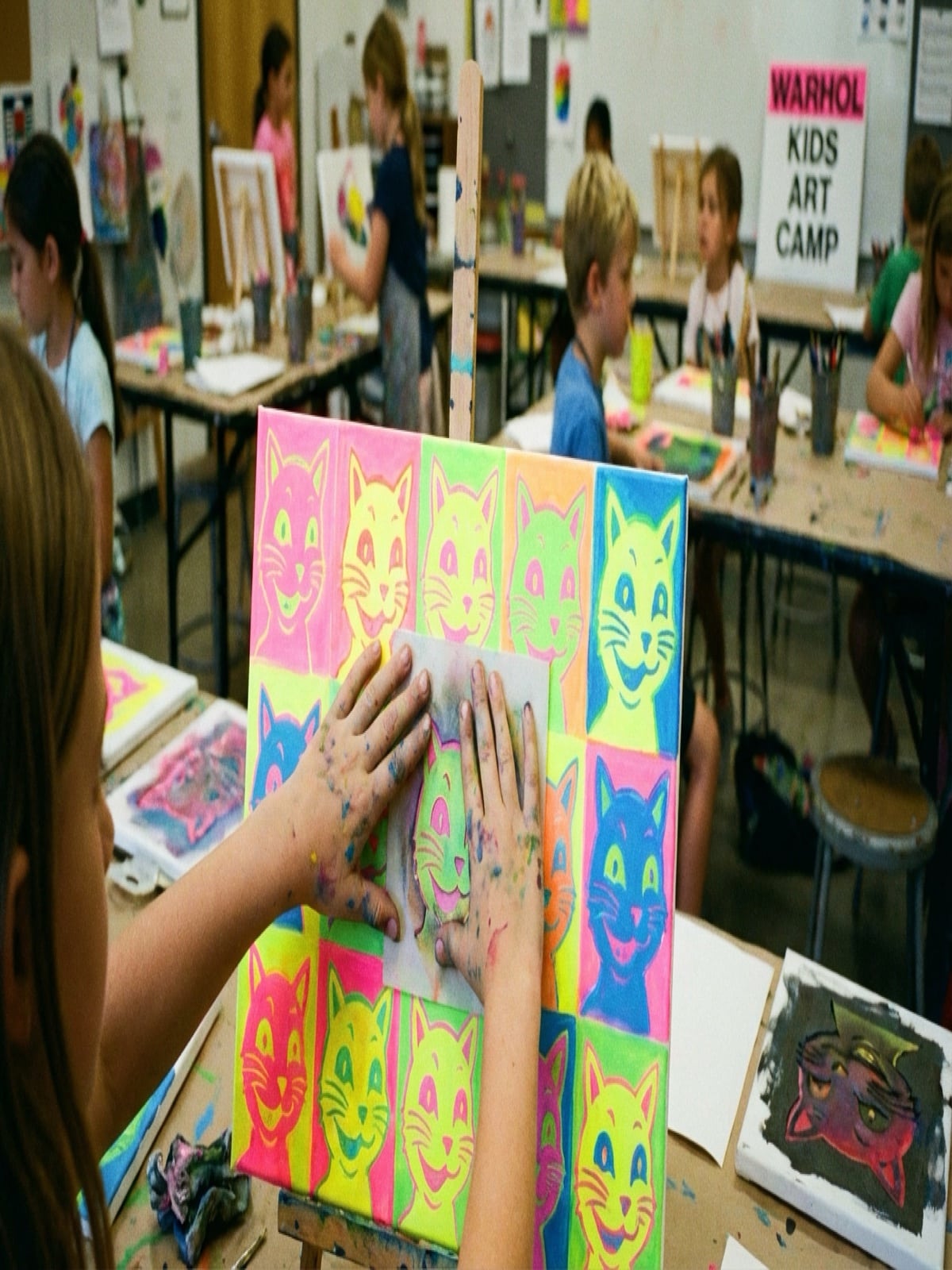
Warhol’s repeating image technique is brilliantly simple and works for any age or skill level. The magic is in the color choices, not drawing ability.
1. Four-Panel Self Portraits
This is the classic Warhol project that never fails. Kids take one photo or drawing of themselves and recreate it four times in completely different color schemes.
How to do it:
- Take a simple photo of the child’s face or have them draw a basic self-portrait
- Divide paper into four equal sections
- Trace or draw the same image in each section
- Color each version with a completely different, bold color scheme
Encourage wild color choices — purple skin with yellow hair, green face with pink background. The weirder, the more Warhol.
2. Soup Can Art
Pay homage to Warhol’s most famous work by designing your own soup can labels. Kids can create “flavors” based on their interests — “Dinosaur Soup,” “Rainbow Unicorn Soup,” whatever sparks joy.
Use a good set of markers for bold, saturated colors that really pop on white paper.
3. Banana Art
Warhol’s banana design (famous from The Velvet Underground album cover) is wonderfully simple. Kids draw the same banana shape multiple times and experiment with unexpected colors — blue bananas, pink bananas, polka-dotted bananas.
4. Celebrity Pop Portraits
For older kids, creating pop art portraits of their favorite celebrities, athletes, or even fictional characters connects the art form to their interests. Print a simple reference photo and use it as a base for bold, graphic reinterpretation.
Roy Lichtenstein Comic Art Projects
Lichtenstein’s comic book style is irresistible to kids who love graphic novels, superheroes, or just the idea of making their art look like it came from a professional printer.
5. Ben-Day Dot Portraits
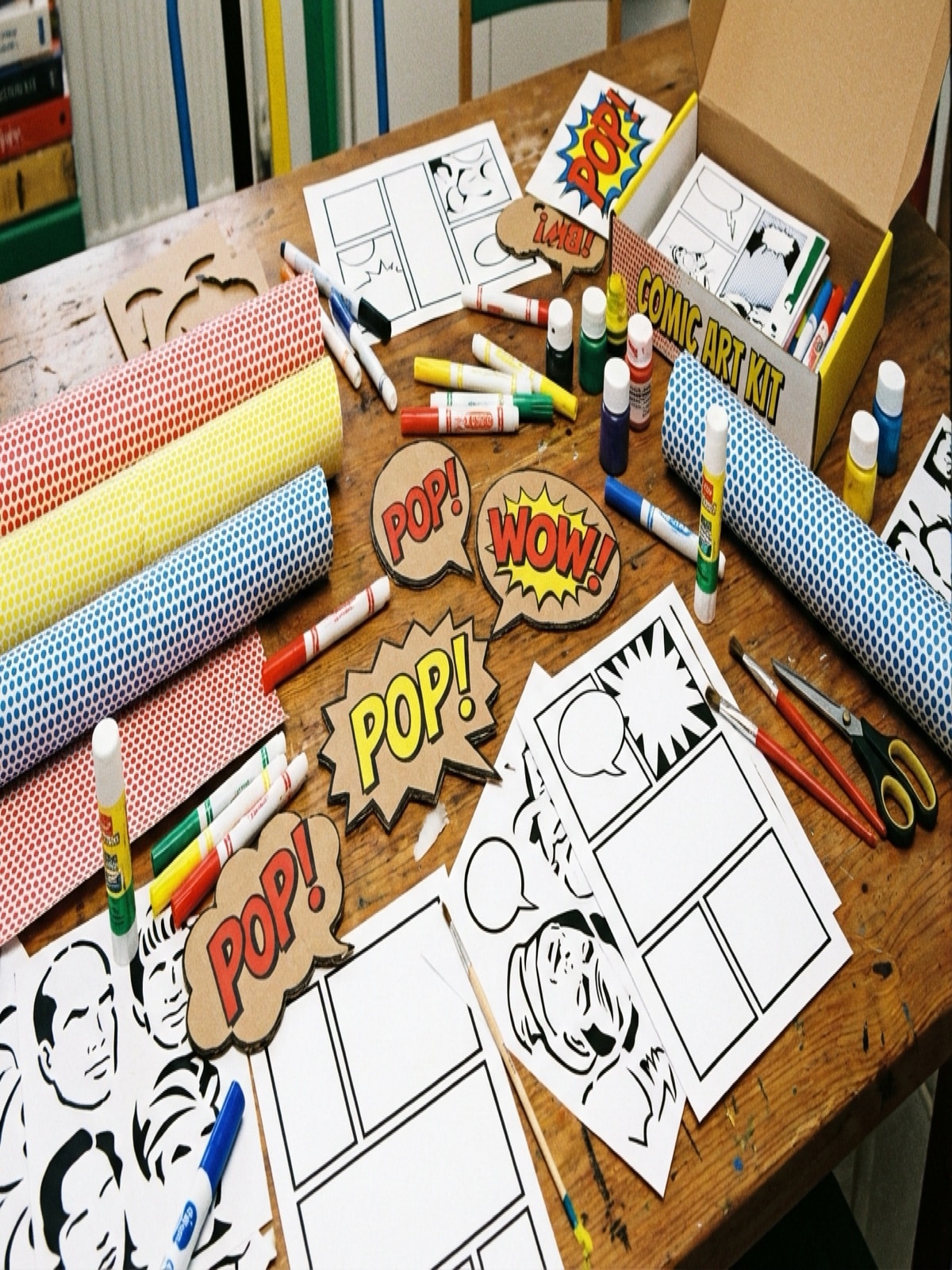
Those signature dots are easier to create than you might think. Use the eraser end of a pencil dipped in paint, or cotton swabs, to create dot patterns. The key is consistency — keep the dots evenly spaced.
Pro tip: Draw the portrait outline first with black marker, then fill sections with dots in primary colors (red, yellow, blue) plus skin tone areas.
6. Action Word Explosions
POW! BAM! WHAM! Kids love creating comic-style action words with bold outlines, starburst backgrounds, and dramatic shadowing. Great for practicing lettering skills while feeling like a comic book artist.
7. Comic Strip Panels
Create a simple comic strip using Lichtenstein’s style — bold outlines, primary colors, speech bubbles, and dot shading. Kids can tell a short story in 3-4 panels while learning about visual storytelling.
8. Speech Bubble Art
Focus just on speech bubbles as art objects. Design oversized bubbles with dramatic phrases, decorate with dots and bold colors. These make great wall art for bedrooms.
Easy Pop Art Painting Ideas for Beginners
Not every pop art project needs to reference a specific artist. These general pop art painting ideas capture the spirit of the movement while being totally doable for beginners.
9. Food Art
Paint everyday food items in bold, unrealistic colors. A bright pink hamburger. A purple ice cream cone. Blue french fries. Pop art celebrates consumer culture, and nothing’s more relatable to kids than food.
10. Lips and Eyes
Oversized lips and eyes are pop art staples. Kids can practice these simple shapes while experimenting with dramatic color combinations. Red lips on yellow background, blue eyes with pink highlights — go bold or go home.
11. Hearts and Stars
Simple shapes, repeated and colored boldly, create instant pop art. A grid of hearts in different neon colors. Stars in red, yellow, and blue. Perfect for younger kids who are still developing drawing skills.
12. Pet Portraits
Turn a photo of the family pet into pop art. Simplify the shapes, pump up the colors, add bold outlines. Kids get to paint something meaningful while learning pop art techniques.
For this project, acrylic paint sets work great because the colors are vibrant and opaque enough to really pop.
13. Sneaker Art
Shoes are everywhere in pop art. Have kids design their dream sneakers in pop art style — bold colors, graphic patterns, maybe some dots or stripes. Great for sneaker-obsessed tweens.
14. Flower Power
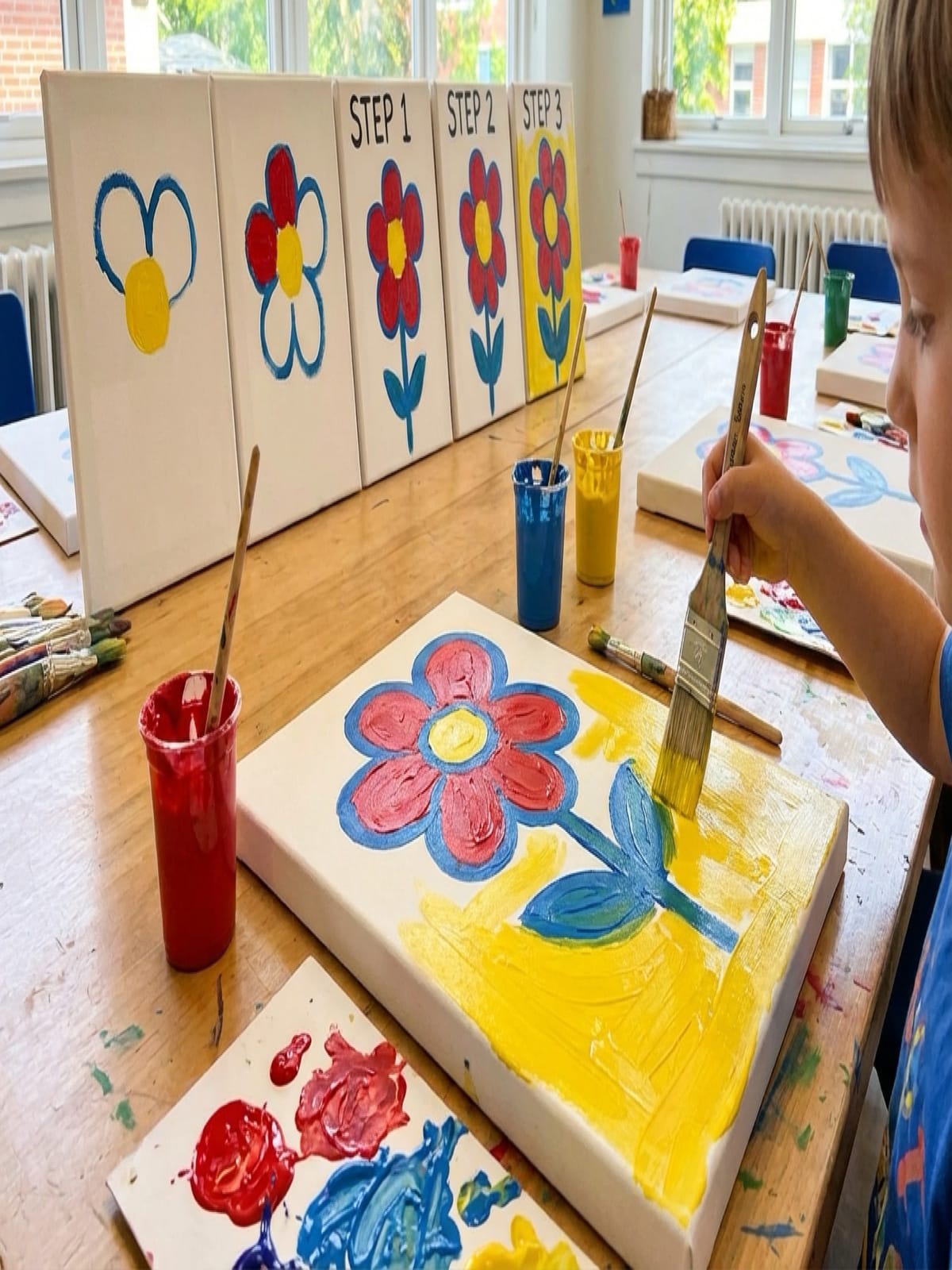
Warhol’s flower paintings are surprisingly simple — basic flower shapes in bright, flat colors. Kids can create a whole garden of pop art flowers with minimal drawing ability required.
Pop Art Collage Projects Kids Love
Pop art and collage are natural partners. Many pop artists incorporated magazine images, advertisements, and found materials into their work.
15. Magazine Collage Portraits
Cut faces and features from magazines and combine them into new portraits. One person’s eyes, another’s nose, a third’s mouth. The results are always surprising and often hilarious.
16. Product Label Art
Collect product labels, candy wrappers, and packaging. Arrange them into compositions that celebrate (or critique) consumer culture. Very Warhol, very accessible.
17. Color Block Collage
Cut shapes from solid-colored paper and arrange them into bold graphic compositions. No drawing required — just an eye for color and composition.
18. Mixed Media Pop Art
Combine painting, collage, and drawing in one piece. Paint a background, add collaged elements, draw bold outlines over everything. The layered approach creates visual interest.
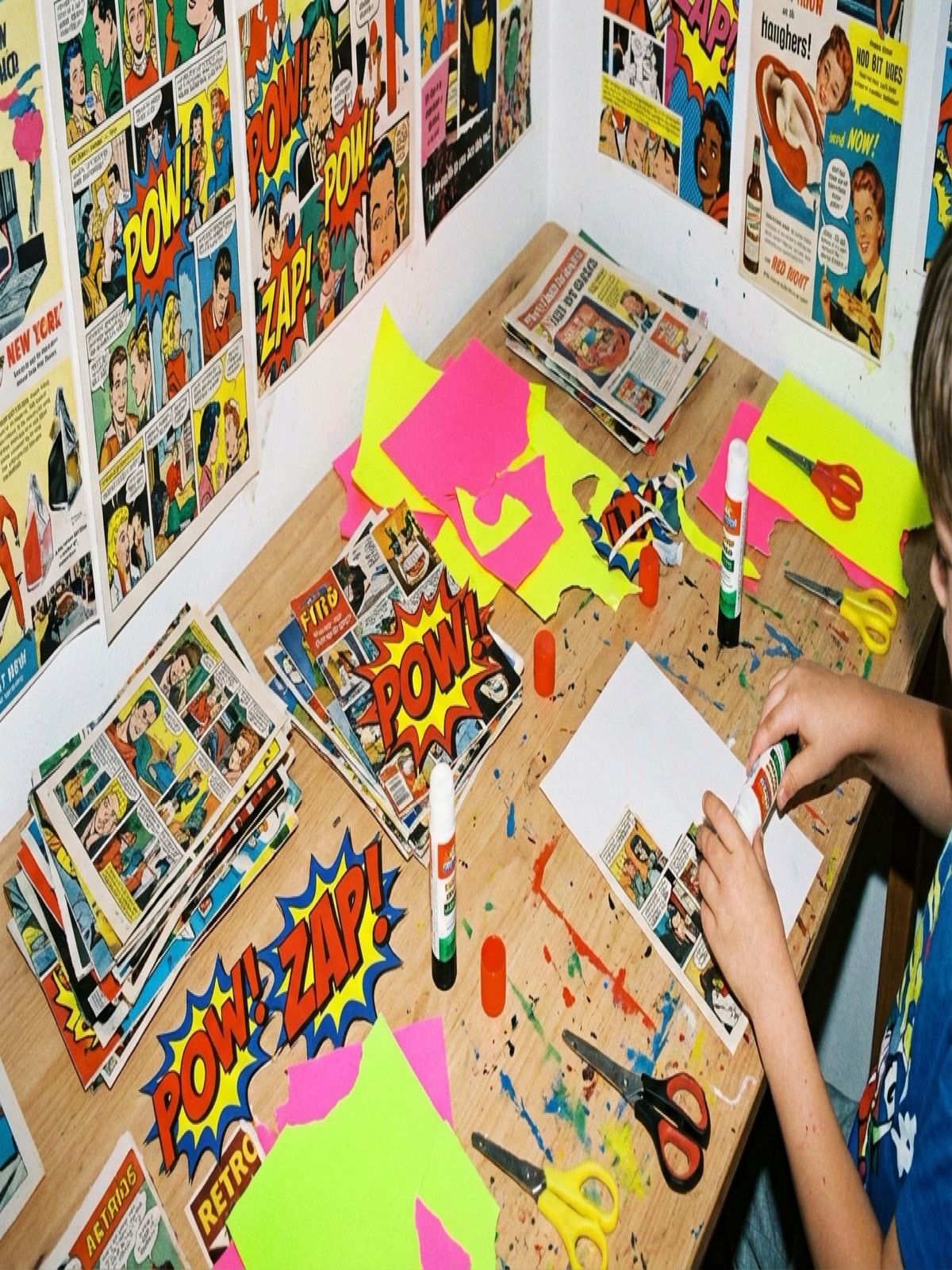
Supplies You’ll Need for Pop Art Projects
Pop art doesn’t require fancy supplies. The bold, graphic nature of the style means basic materials work perfectly fine. Here’s what I recommend having on hand:
Essential supplies:
- White paper or cardstock (the brighter white, the better)
- Black markers — various thicknesses for outlines
- Bright markers or paints in primary colors plus pink, orange, and green
- Pencils for sketching
- Scissors and glue for collage projects
- Old magazines for cutting
Nice to have:
- Acrylic paints for richer colors
- Cotton swabs or pencil erasers for Ben-Day dots
- Colored paper for collage
- A good sketchbook for practicing


This post contains affiliate links, which means I may earn a small commission at no extra cost to you if you make a purchase. I only recommend products I genuinely love and use myself!
Free Pop Art Activity Pack Download
I’ve put together a printable activity pack to make getting started even easier. It includes:
- Warhol-style grid templates — Ready-to-color four-panel layouts
- Comic art templates — Panels with Ben-Day dot areas and speech bubbles
- Action word pages — POW, BAM, and ZAP designs to color
- Pop art coloring pages — Soup cans, bananas, bold patterns
- Blank speech bubble templates — For creating your own comic art
Looking for more printable art resources? Check out my Payhip shop for premium art activity packs and templates!
Pop Art for Kids FAQ
What age is pop art appropriate for?
Pop art projects work for ages 5 and up. Younger children can do simple projects like coloring bold shapes in bright colors, while older kids can tackle more complex techniques like Ben-Day dots and multi-panel compositions. The bold, graphic nature of pop art makes it forgiving for beginners of any age.
What colors are used in pop art?
Pop art typically features bold primary colors (red, yellow, blue) plus bright secondary colors (orange, green, purple) and hot pink. Black is essential for strong outlines. The key is saturation — pop art colors are never muted or pastel. Think of the brightest, most eye-catching colors possible.
How do you explain pop art to a child?
Pop art is art that celebrates everyday things — things you see in stores, in comics, on TV. Artists like Andy Warhol thought a soup can could be just as interesting as a fancy painting. Pop artists use really bright colors and bold lines to make ordinary things look exciting and fun.
What are the 5 characteristics of pop art?
The five main characteristics are: (1) bold, bright colors, (2) strong black outlines, (3) everyday objects as subjects, (4) repetition of images, and (5) influence from advertising and commercial art. Pop art often includes Ben-Day dots (those little printing dots) and speech bubbles from comics.
Can you do pop art without painting?
Absolutely! Markers, colored pencils, and collage all work beautifully for pop art projects. Collage is especially appropriate since many pop artists incorporated cut paper and found images into their work. Digital tools also work great for older kids interested in graphic design.
Final Thoughts
Pop art remains one of my favorite movements to teach because it immediately makes kids feel like “real” artists. There’s something empowering about creating bold, graphic work that looks professional even when you’re just getting started.
The best part? Pop art teaches kids that art doesn’t have to be precious or perfect. It can be fun, bold, and even a little silly. A painting of a hamburger counts. A comic book panel counts. Your favorite sneakers definitely count.
Grab those bright markers, download the free activity pack below, and let your kids channel their inner Warhol. I’d love to see what they create!
Tag me @artsydee_inspiring_creations on Instagram or @artsydee on Pinterest to share your pop art projects — I love seeing kids’ creative work!
Want to see these techniques in action? Head over to my YouTube channel where I share art tutorials every week. Hit subscribe so you don’t miss the next one!
You Might Also Like
- Easy Watercolor Sketchbook Ideas
- 100 Sketchbook Prompts for Creative Inspiration
- Simple Watercolor Ideas for Beginners
- Watercolor Painting Ideas for Beginners
- How to Draw Mushrooms Step by Step
Pin this for later!