Last Updated on October 8, 2026 by Dee
Abstract art for kids is one of my favorite ways to introduce children to creative expression. There’s something magical about watching a child discover that art doesn’t have to look like anything specific — it can just be colors, shapes, and feelings splashed onto paper.
When I taught art, I noticed that kids who struggled with “realistic” drawing absolutely thrived with abstract projects. No pressure to make it look right. Just pure, joyful creativity.
These 25+ abstract art projects are perfect for kids ages 3 and up, and most require supplies you probably already have at home. Whether you’re a parent looking for rainy day activities, a teacher planning art lessons, or a homeschool family exploring creativity — you’ll find something here that works.
Grab your free Abstract Art Templates for Kids at the end of this post! It includes splatter painting templates, a color mixing guide, abstract coloring pages, and activity sheets to get your little artists started.
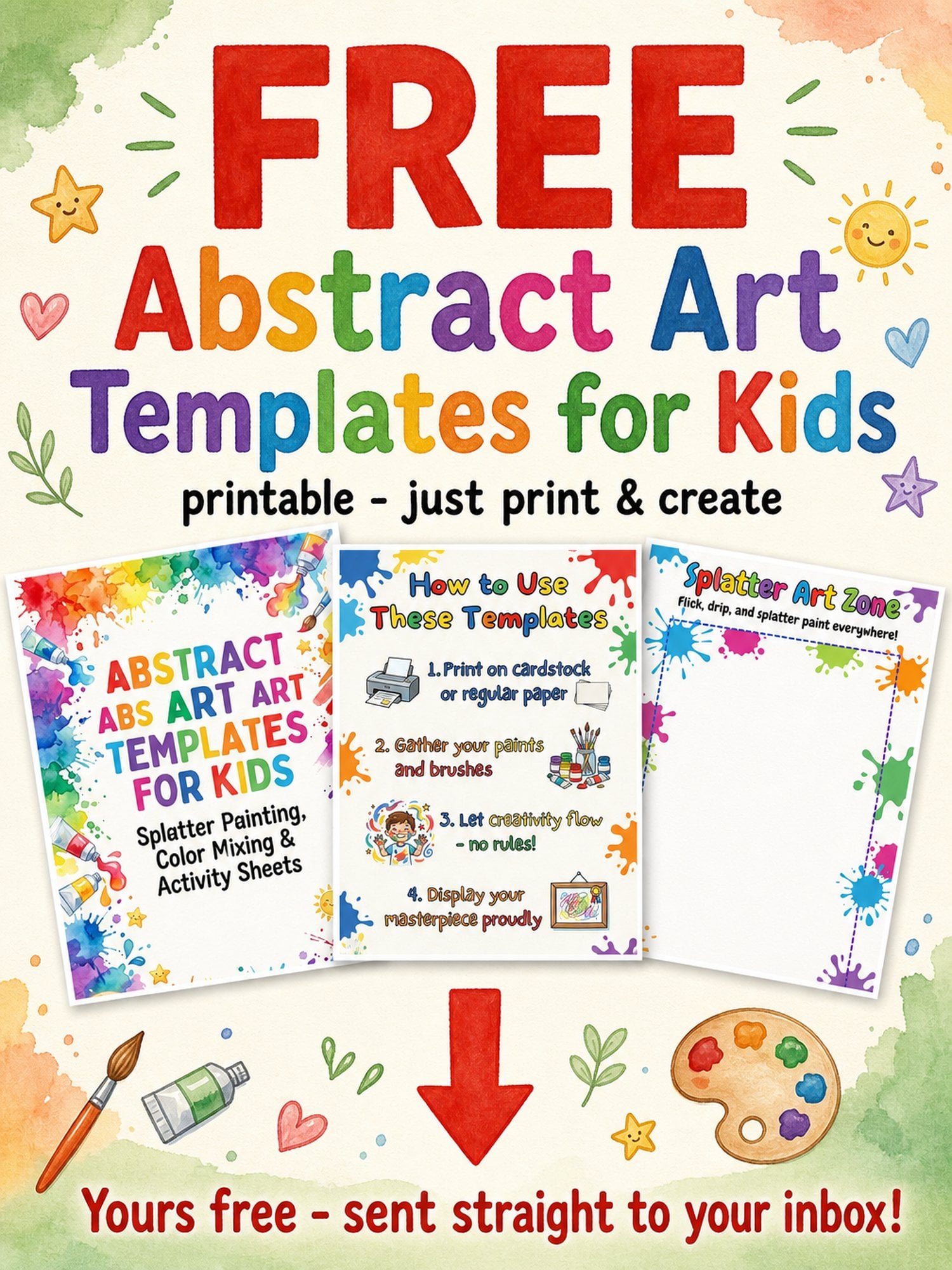
Table of Contents

What Is Abstract Art (And Why Kids Love It)
Quick Answer: Abstract art is artwork that doesn’t try to represent reality. Instead, it uses colors, shapes, lines, and textures to express ideas and emotions — making it perfect for children who aren’t ready for realistic drawing.
Think Kandinsky, Mondrian, or Pollock. These artists showed the world that art doesn’t need to look like something to be beautiful and meaningful.
Kids naturally gravitate toward abstract art because:
- No wrong answers — Every mark they make is valid
- Freedom to experiment — They can mix colors, try new techniques, make a mess
- Builds confidence — Success is guaranteed when there’s no “correct” way to do it
- Focuses on process over product — The fun is in the making, not the final result

Little artists loving these projects? My Payhip shop is full of printable art templates and creative activity bundles to keep the colour coming.
Browse the Shop →Easy Abstract Art Projects for Kids
These beginner-friendly projects require minimal setup and work beautifully for kids of all ages. I’ve organized them from simplest to slightly more involved.
1. Tape Resist Painting
Stick strips of painter’s tape on paper in any pattern — straight lines, zigzags, random shapes. Paint over everything with bright colors. Once dry, peel off the tape to reveal crisp white lines underneath. The geometric results look surprisingly sophisticated.
2. Marble Painting
Place paper in a shallow box or tray. Drop a few marbles in different paint colors, then tilt and shake the box to roll the marbles around. The intersecting lines create beautiful abstract patterns. Kids absolutely love the movement aspect of this one.
3. Blow Painting
Water down some tempera paint, drop blobs onto paper, then use a straw to blow the paint in different directions. The organic, branching patterns look like trees or coral. This technique builds breath control while creating art.
4. Spin Art
If you have a salad spinner, you have a spin art machine. Cut paper to fit inside, drop some paint, close the lid, and spin. The centrifugal force creates swirling, psychedelic patterns. Every single one turns out amazing.
5. Bubble Painting
Mix dish soap, water, and paint in a shallow container. Blow bubbles with a straw until they rise above the rim, then gently press paper onto the bubbles. The circular prints layer beautifully.

6. Scrape Painting
Drop blobs of paint on paper, then drag a piece of cardboard, an old gift card, or a plastic ruler across the surface. The scraping action blends colors and creates interesting textures. Try using different scrapers for varied effects.
7. String Painting
Dip a piece of string or yarn in paint, lay it on paper with one end hanging off the edge, fold the paper in half, press down, and pull the string out. Open to reveal symmetrical abstract designs.
8. Dot Art (Pointillism for Kids)
Use cotton swabs, pencil erasers, or fingertips to create dot patterns. Kids can fill entire pages with dots in different colors, or create simple shapes using only dots. It’s meditative and the results are gorgeous.
Colorful Abstract Art Ideas
These projects are all about exploring color — mixing, layering, and discovering what happens when different hues interact.
9. Color Mixing Exploration
Start with just the primary colors (red, yellow, blue) and let kids discover secondary colors through painting. The “aha!” moment when yellow and blue make green never gets old. I like to use a ceramic palette with separate wells so kids can see each color clearly.
10. Warm vs. Cool Colors
Divide a page in half. Paint one side using only warm colors (reds, oranges, yellows) and the other with cool colors (blues, greens, purples). This teaches color theory while creating a striking visual contrast.
11. Monochromatic Painting
Pick one color and mix it with white to create different tints and with black to create shades. Paint an abstract piece using only these variations. The results are surprisingly elegant and teach kids about value.

12. Rainbow Pour Painting
Layer different paint colors in a cup (don’t mix!), then pour onto a canvas or thick paper in one fluid motion. Tilt to spread. The colors swirl and blend in mesmerizing ways. Use washable paints to keep cleanup manageable.
13. Wet-on-Wet Watercolor
Wet the paper first, then drop watercolors and watch them bloom and blend. The unpredictable spreading is pure magic for kids. A good watercolor paper makes a big difference here — it handles the water without buckling.
14. Color Wheel Art
Draw a large circle divided into sections and have kids fill each section with a different color in rainbow order. They can paint abstract designs within each section or just fill them with solid color.
Abstract Painting Techniques for Beginners
These techniques introduce kids to different ways of applying paint beyond traditional brushwork.
15. Splatter Painting (Pollock Style)
Lay paper on the ground (outside is best), dip brushes in paint, and flick, drip, and splatter. Channel Jackson Pollock’s action painting style. This is gloriously messy and incredibly satisfying. Wear old clothes and embrace the chaos.
16. Sponge Painting
Cut sponges into different shapes or use them as-is for organic textures. Dab, drag, and stamp to create layered abstract backgrounds. Natural sea sponges create especially interesting patterns.
17. Fork Painting
Drag forks through paint on paper to create textured lines and patterns. Different fork sizes give different effects. Kids love finding household items that can become art tools.

18. Roller Painting
Small foam rollers from the hardware store are perfect for creating smooth, blended backgrounds. Kids can layer colors or use multiple rollers at once. Wrap rubber bands around the roller for striped effects.
19. Finger Painting
The classic for a reason. Direct contact with paint engages multiple senses and gives kids complete control over their marks. Finger painting isn’t just for toddlers — older kids create sophisticated abstract work this way too.
20. Palette Knife Painting
Plastic palette knives (or old credit cards) let kids apply thick paint and create bold, textured strokes. This technique introduces them to impasto style without expensive supplies.
21. Tissue Paper Collage
Tear or cut tissue paper into shapes, arrange on paper, then brush with watered-down glue. The translucent layers create beautiful color mixing effects. When the tissue paper bleeds, even more interesting things happen.
22. Print Making with Found Objects
Gather items from around the house — bottle caps, leaves, bubble wrap, legos, toy car wheels — dip in paint and stamp onto paper. The repeated patterns create rhythmic abstract compositions.
23. Symmetry Painting (Fold Art)
Drop paint on one half of the paper, fold in half, press, and open to reveal a symmetrical design. Kids can see their random marks transformed into something that looks intentional and often resembles butterflies or faces.
24. Resist Art with Crayons
Draw shapes or patterns with white crayon (or any light color), then paint over with watercolors. The wax resists the paint, revealing hidden designs. It feels like magic.
25. Ice Painting
Freeze paint in ice cube trays with popsicle sticks. Once frozen, kids can “paint” by sliding the ice cubes across paper. As the ice melts, it leaves trails of color that blend in unpredictable ways.
Supplies You’ll Need
You don’t need expensive art supplies for amazing abstract art. Here’s what works well:

Basic Supplies
- Washable tempera or acrylic paints — Crayola and Arteza make great options
- Watercolors — A basic pan set works perfectly
- Thick paper or cardstock — Regular printer paper gets too soggy
- Variety of brushes — Different sizes for different effects
- Paper plates or palettes — For mixing colors
- Water cups — One for rinsing, one for clean water
- Smocks or old shirts — Because mess happens
- Drop cloth or newspaper — Protect your surfaces
My Recommended Supplies


This post contains affiliate links, which means I may earn a small commission at no extra cost to you if you make a purchase. I only recommend products I genuinely love and use myself!
Tips for Successful Abstract Art Sessions
After years of art sessions with kids, here’s what I’ve learned actually works:
Set Up for Success
- Prepare everything beforehand — Fill paint cups, lay out paper, cover surfaces
- Limit the color palette — 3-5 colors prevents muddy brown messes
- Have more paper ready — Kids often want to try again
- Keep water and paper towels within reach
During the Session
- Resist the urge to direct — Let them explore freely
- Ask open-ended questions — “Tell me about your painting” instead of “What is that?”
- Avoid saying “good job” constantly — Try “I notice you used a lot of blue” instead
- Let them stop when they’re done — Not every painting needs to be finished
Displaying Artwork
Frame favorites in inexpensive frames. Rotate a gallery wall. Let kids choose which pieces to display. Taking their art seriously builds confidence and pride.

Free Abstract Art Templates for Kids
I’ve created a free printable pack to help you get started with abstract art projects. It includes:
- Splatter painting templates with guided frames
- Color mixing guide for kids
- Abstract coloring pages
- Modern art activity sheets
- Supply checklist
👉 Pop your email into the box near the top of this post and I’ll send these straight to your inbox — free!
Looking for more printable resources? Check out my Payhip shop for premium art templates and creative activity bundles!
Frequently Asked Questions
What age is abstract art good for?
Abstract art works wonderfully for all ages, starting as young as 2-3 years old. Toddlers can do simple splatter and finger painting, while older kids (6+) can explore more complex techniques like tape resist and pour painting. The beauty of abstract art is that it meets kids where they are developmentally.
How do I explain abstract art to a child?
Keep it simple: “Abstract art doesn’t try to look like real things. Instead, artists use colors and shapes to show feelings or ideas. There’s no right or wrong way to make it — it’s all about what you want to create.”
What if my child says their abstract art is “bad”?
Redirect the conversation: “In abstract art, there’s no such thing as bad. Tell me what you were thinking about while you painted.” Focus on the process and their experience rather than judging the final product.
Can I do these projects in a classroom setting?
Absolutely! Most of these projects work well for groups. Set up stations for different techniques, prep materials in advance, and allow plenty of time for cleanup. Tape resist and dot art are especially classroom-friendly with minimal mess.
What’s the best paint for kids’ abstract art?
Washable tempera paint is ideal for most projects — it’s affordable, vibrant, and cleans up easily. For watercolor techniques, basic pan watercolors work great. Save acrylics for older kids who understand they don’t wash out of clothes.
Final Thoughts
Abstract art gives kids permission to be messy, experimental, and free. There’s no erasing, no “that doesn’t look right,” no pressure to perform. Just colors, movement, and the pure joy of making marks on paper.
Start with one project from this list and see what happens. You might be surprised by what your little artists create — and how much fun you have making art alongside them.
For more creative inspiration, check out my easy watercolor sketchbook ideas and 100 sketchbook prompts for all ages.
Want to see these techniques in action? Head over to my YouTube channel where I share art tutorials every week. Hit subscribe so you don’t miss the next one!
Tag me @artsydee_inspiring_creations on Instagram or @artsydee on Pinterest if you try any of these projects — I’d love to see what you and your kids create!
You Might Also Like
- Watercolor Painting Ideas for Beginners
- Simple Watercolor Ideas for Beginners
- Easy Watercolor Sketchbook Ideas
- 100 Sketchbook Prompts for Creative Inspiration
- How to Draw Mushrooms
🎨 Want more free printables? Browse my Free Printables Library — over 400 free templates, coloring pages, drawing guides, and creative resources all in one place!
Pin this for later!

Once your kids have splattered, dotted and swirled their way through the free templates, you might want something new for the next rainy afternoon. My Payhip shop has premium art templates and creative activity bundles, ready to print at home or in the classroom.
Explore the Payhip Shop →