Last Updated on September 27, 2026 by Dee
Ever stared at a blank page, wanting to draw something that actually means something? You’re not alone. Most of us learned to draw apples and stick figures in school, but nobody taught us how to use art as a way to process our feelings, tell our stories, or simply connect with ourselves on a deeper level.
That’s exactly what meaningful drawing is all about. It’s not about technical perfection or impressing anyone — it’s about using simple marks on paper to express what words sometimes can’t capture. Whether you’re working through a tough day, celebrating a win, or just trying to understand yourself better, these drawing ideas give you a starting point.
I’ve gathered over 50 meaningful drawing ideas that range from emotion-based prompts to symbolic sketches to therapeutic exercises. Some are simple enough for complete beginners, while others will challenge you to dig deeper into your creative practice.
Grab your free Meaningful Art Prompts Pack at the end of this post! It includes printable prompt cards, a symbol reference sheet, and expressive sketch templates to get you started.
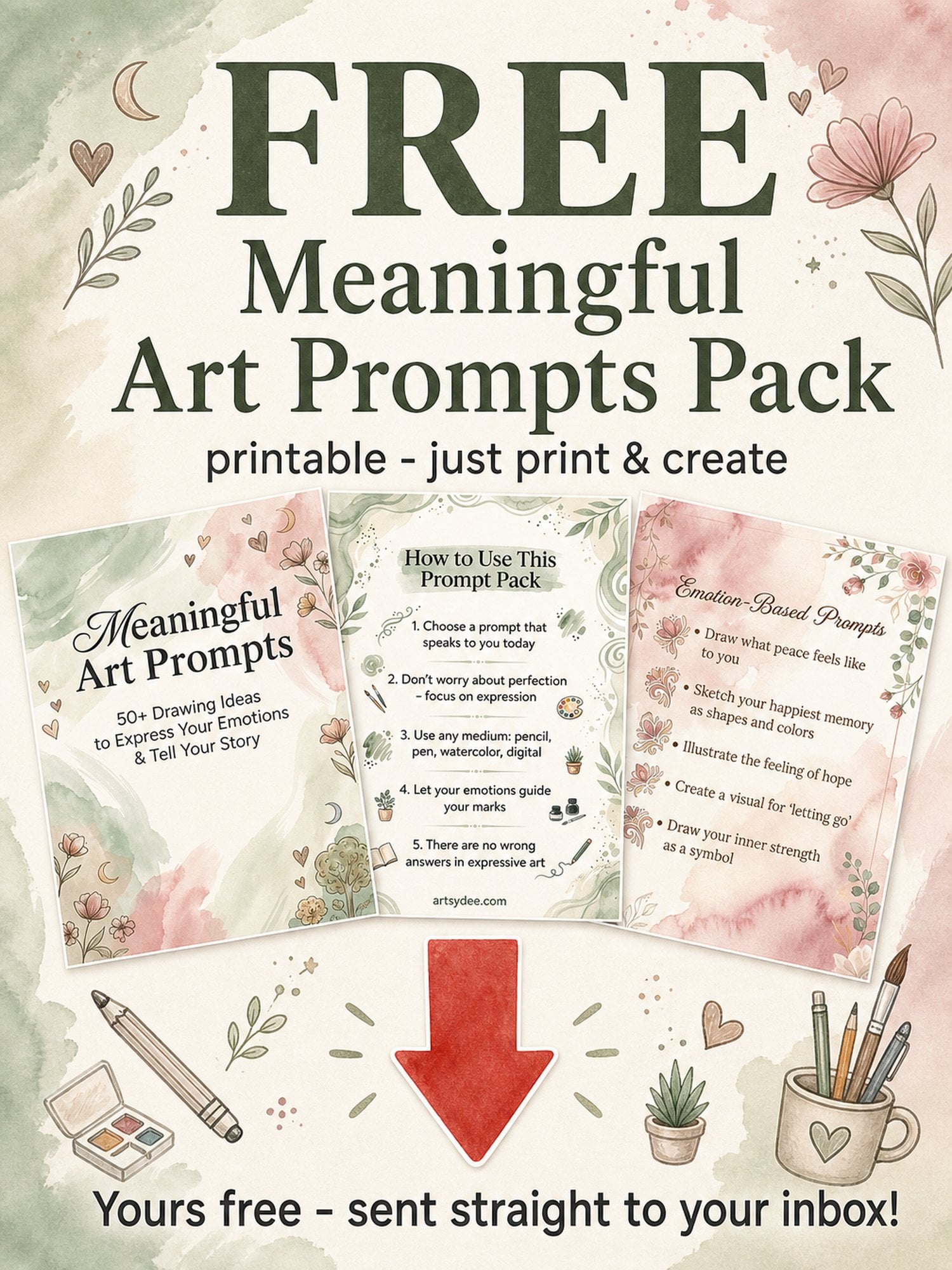
Table of Contents
What Makes a Drawing Meaningful?
Quick Answer: A meaningful drawing is one that expresses something personal — an emotion, a memory, a hope, or a story that matters to you. It’s not about skill level; it’s about intention and connection.
The difference between a random doodle and a meaningful drawing isn’t technique — it’s purpose. When you draw with intention, even the simplest shapes carry weight. A wobbly circle can represent wholeness. A single line can show a journey. What transforms marks into meaning is the “why” behind them.
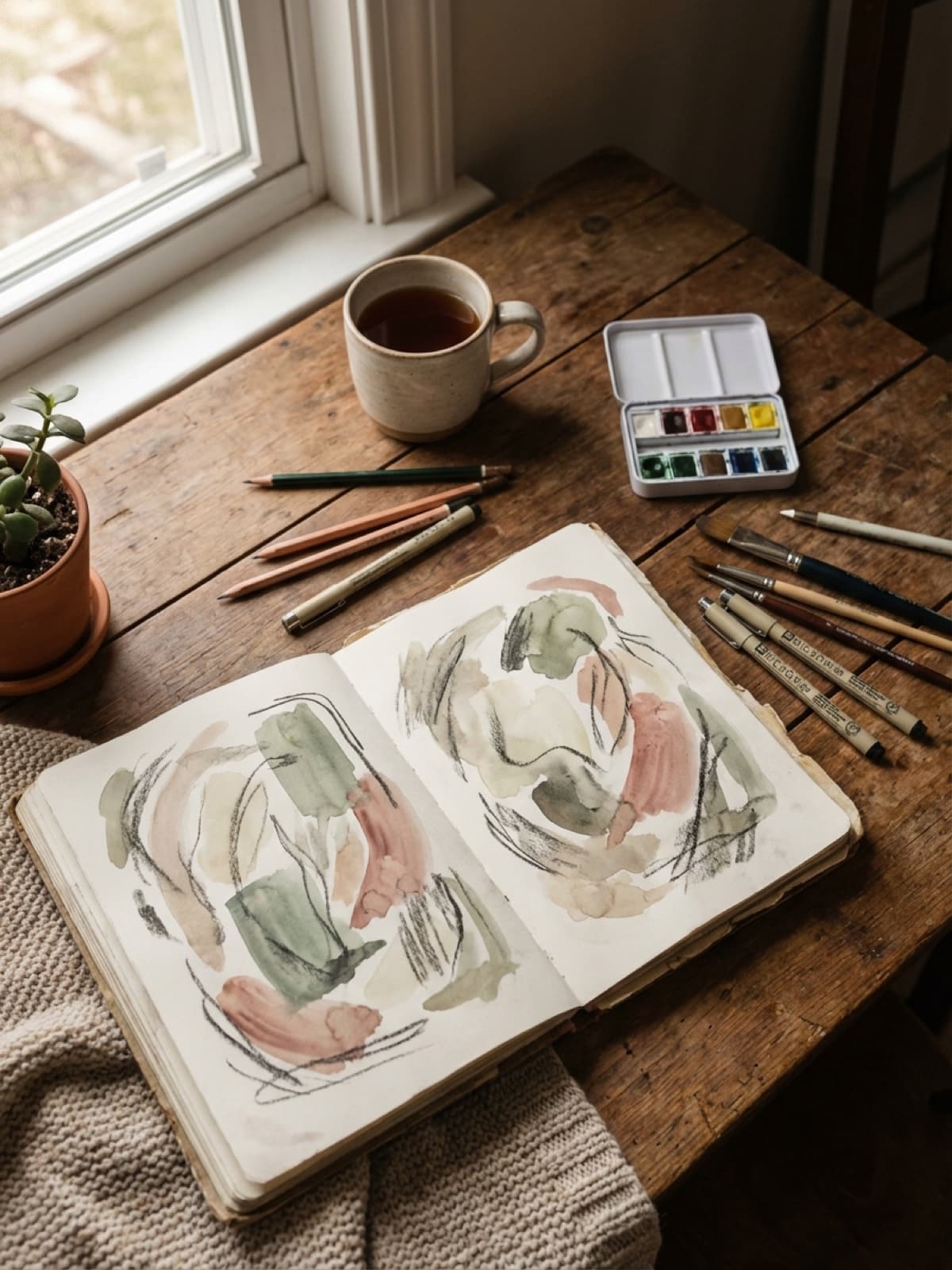
Think about it this way: a photograph of a sunset is just a sunset. But if that sunset was the last one you watched with your grandmother, suddenly it holds your entire heart. The same principle applies to drawing. The meaning comes from you, not from the paper.
This is why expressive art is so powerful for processing emotions. You don’t need to be “good” at drawing. You just need to be honest with your marks. Let go of what it should look like and focus on what it should feel like.
Feeling inspired to draw something that matters to you? My shop has printable art resources and Procreate brushes to help you bring those ideas to life.
Browse the Artsydee shop →Emotion-Based Drawing Ideas
Quick Answer: Emotion-based drawing prompts help you visualize feelings that are hard to put into words. They’re perfect for art journaling, therapy, or simply understanding yourself better.
These prompts aren’t about drawing emotions literally (no need to sketch a cartoon sad face). Instead, they invite you to explore what feelings look like as abstract shapes, colors, and textures. There’s no right answer — just your answer.

Try these emotion-based drawing ideas:
- Draw what peace feels like to you (maybe soft curves? open space? a particular color?)
- Sketch your happiest memory using only shapes and colors — no recognizable objects
- Illustrate the feeling of hope as a landscape
- Create a visual for “letting go” — what does release look like on paper?
- Draw your inner strength as a symbol you could carry with you
- Sketch anxiety as weather — is it a storm? Fog? Static electricity?
- Illustrate the feeling of being truly seen by someone who loves you
- Draw comfort as a texture
- Create a visual representation of your favorite song
- Sketch the space between two breaths
I love using my Canson XL Watercolor Sketchbook for these kinds of emotional explorations — the paper handles both dry media and light washes beautifully, so you can layer pencil with watercolor if the mood strikes.
Symbolic Drawing Ideas
Quick Answer: Symbolic drawings use universal images (hearts, trees, paths, doors) to represent deeper meanings. They’re a powerful way to tell your story without words.
Humans have used symbols to communicate meaning for thousands of years. There’s something deeply satisfying about taking a universal image and filling it with your personal significance. A door isn’t just a door — it’s opportunity, change, the unknown, invitation.
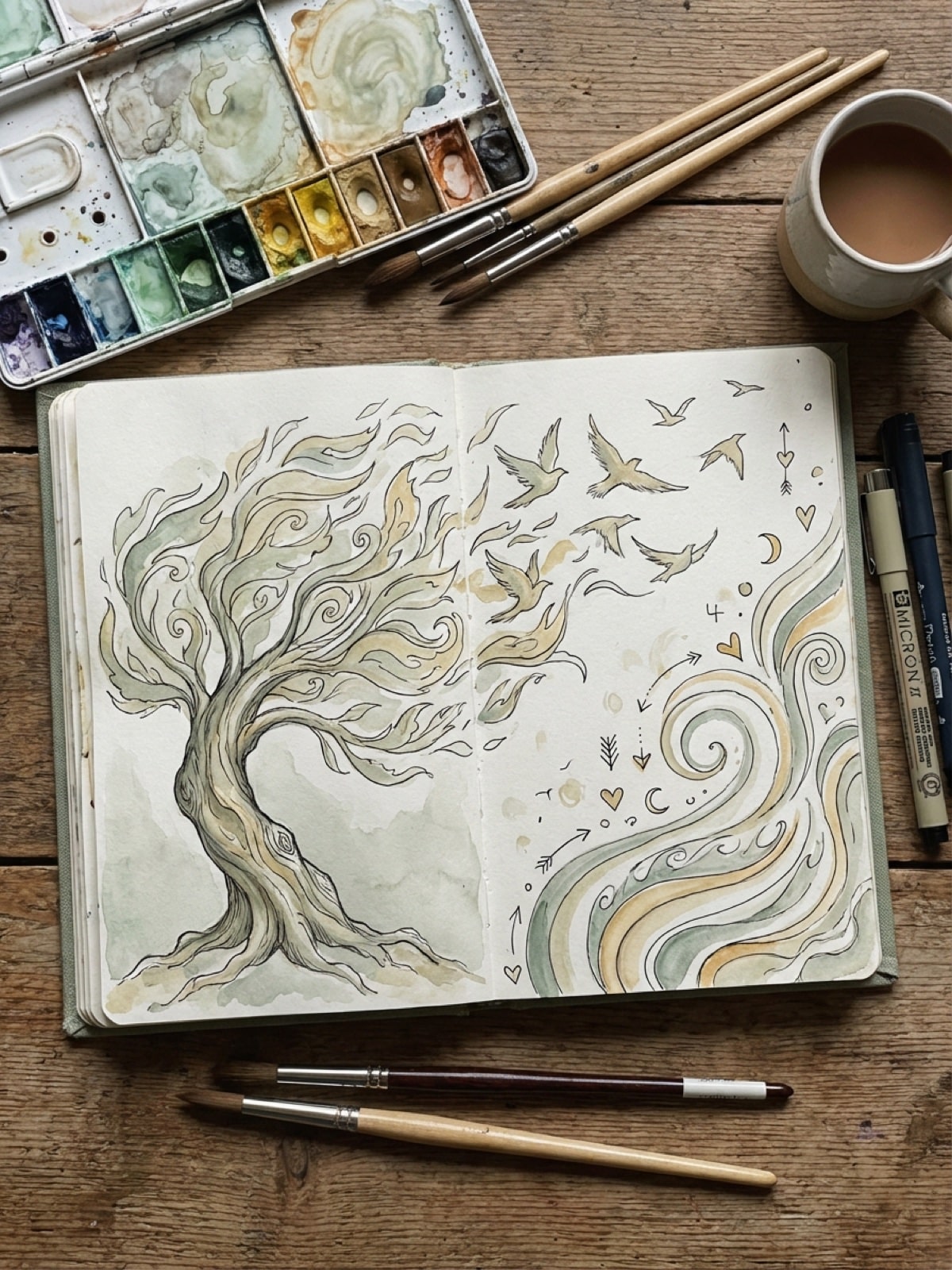
Symbolic drawing prompts to try:
- Draw a key that unlocks something important to you — what does it look like?
- Sketch a bridge between where you are and where you want to be
- Illustrate your heart as a house — what rooms does it have?
- Create a tree where each branch represents a different aspect of your life
- Draw a door you’re afraid to open
- Sketch a path through a forest that represents your current journey
- Illustrate your boundaries as a garden fence — what grows inside?
- Draw an anchor and what it represents in your life
- Create a compass that points toward what matters most to you
- Sketch a window and what you see through it
The beauty of symbolic drawing is that it gives you a structure to work within while still being deeply personal. Two people can draw a tree and end up with completely different meanings.
Nature-Inspired Meaningful Sketches
Quick Answer: Nature offers endless metaphors for human experience — growth, seasons, cycles, resilience. These prompts use natural imagery to explore your inner landscape.
There’s a reason we say things like “weathering the storm” or “putting down roots.” Nature speaks the language of transformation and survival that our hearts understand intuitively. When you draw yourself as a mountain or your emotions as weather patterns, you tap into something ancient and true.
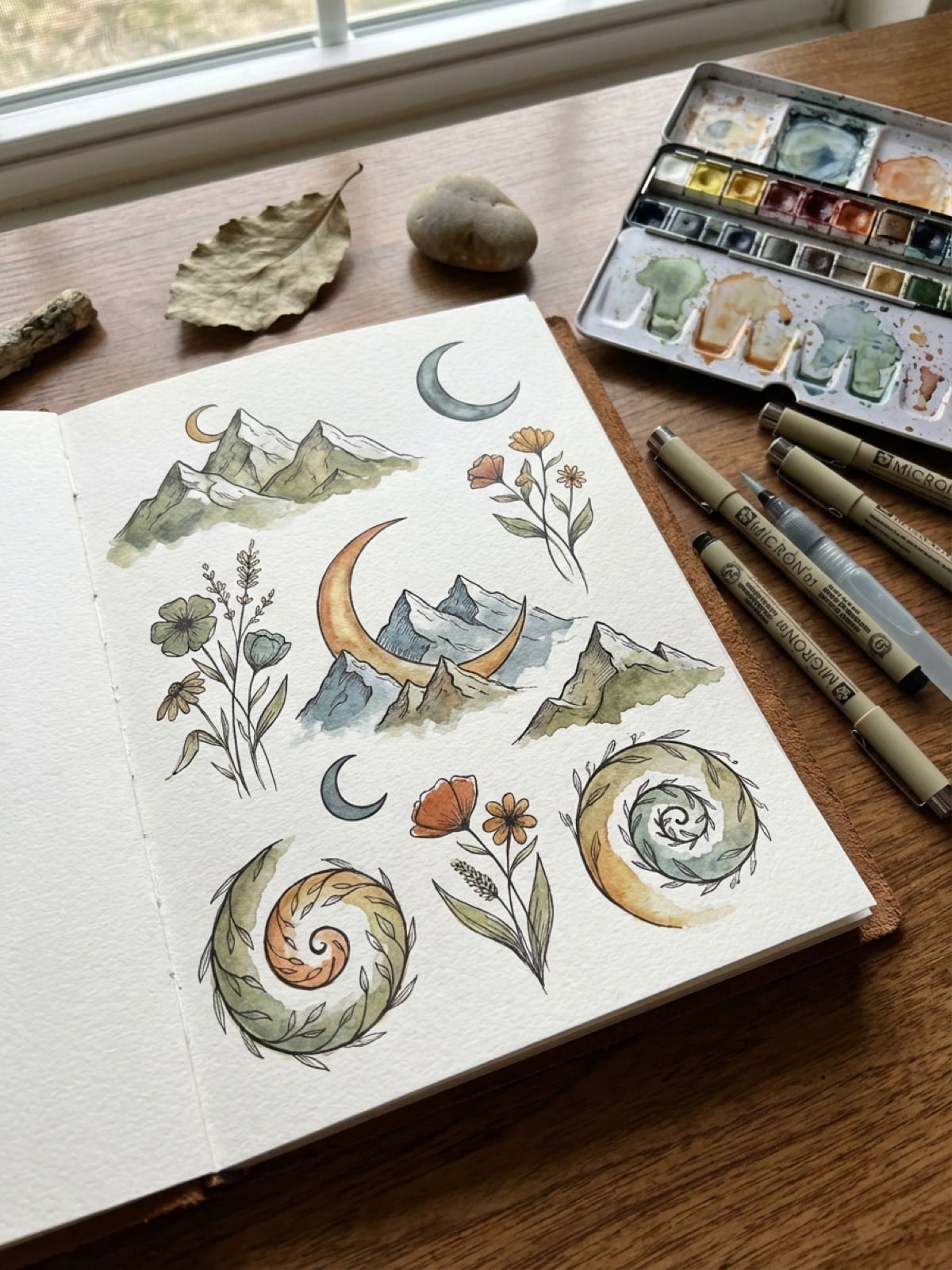
Nature-inspired meaningful drawing ideas:
- Draw yourself as a tree in your current season of life
- Sketch the moon phases that represent your emotional cycles
- Illustrate yourself as a mountain — what’s at the summit? The base?
- Create flowers that represent different people you love
- Draw water in different states to show different emotions (calm lake, rushing river, frozen ice)
- Sketch a seed becoming something beautiful
- Illustrate your growth as a plant reaching toward light
- Draw the weather inside you right now
- Create a landscape that represents your mental state today
- Sketch roots that show where you come from and branches that show where you’re going
If you enjoy working with nature imagery, you might also love these easy watercolor sketchbook ideas that combine loose painting with meaningful subjects.
Self-Portrait Prompts With Depth
Quick Answer: These aren’t about drawing your face accurately — they’re about capturing who you really are through symbolic, abstract, or metaphorical self-portraits.
Traditional self-portraits focus on external appearance. Meaningful self-portraits focus on internal truth. You might draw yourself as a constellation, a garden, a storm, or a song. The goal isn’t recognition — it’s revelation.
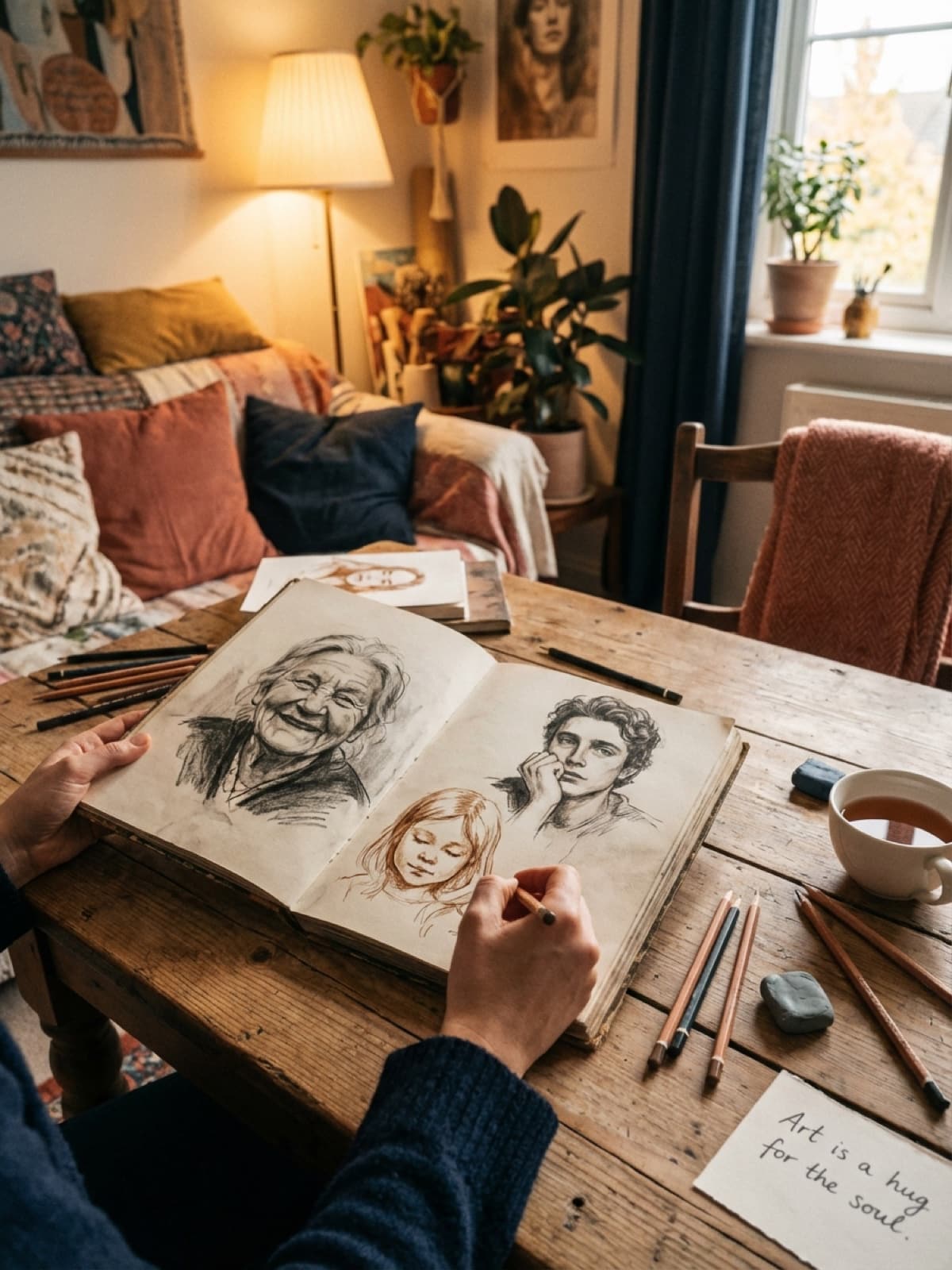
Deep self-portrait prompts:
- Draw yourself as you feel inside, not as you look outside
- Sketch your inner child — what do they need right now?
- Illustrate your dreams and aspirations as a landscape you’re walking toward
- Create a self-portrait using only symbols — no human features
- Draw the version of yourself you’re becoming
- Sketch your shadow self — the parts you hide
- Illustrate what you look like when you’re completely at peace
- Draw yourself as others see you vs. how you see yourself
- Create a portrait of your creative spirit
- Sketch the armor you wear and what’s underneath
For these kinds of introspective drawings, I recommend having a dedicated sketchbook for personal prompts that you keep private. There’s freedom in knowing no one else will see your work.
Healing and Release Drawing Exercises
Quick Answer: These therapeutic drawing exercises help you process difficult emotions, release what no longer serves you, and create space for healing through art.
Art therapy has been used for decades to help people work through trauma, grief, anxiety, and depression. You don’t need a therapist to benefit from expressive art (though professional support is valuable for serious struggles). These prompts offer a gentle way to explore and release heavy feelings.
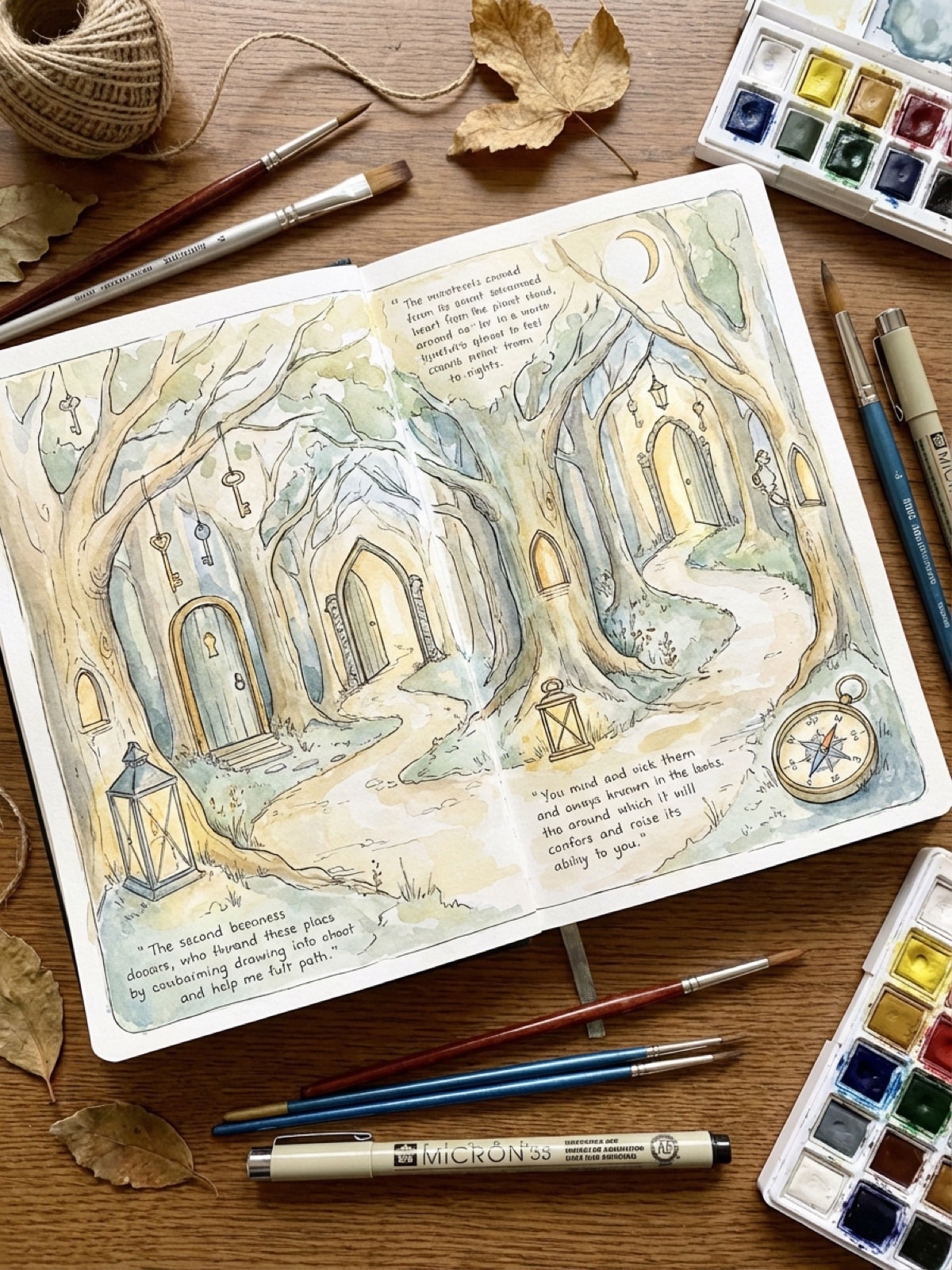
Healing and release drawing prompts:
- Draw what you need to let go of — then consider tearing up or burning the page
- Sketch anxiety leaving your body — what does it look like departing?
- Illustrate your safe place in as much detail as possible
- Create a visual for self-compassion — what would you draw for a friend who needed kindness?
- Draw your worries floating away like balloons or clouds
- Sketch the weight you’ve been carrying, then draw yourself setting it down
- Illustrate forgiveness — of yourself or someone else
- Draw the wall around your heart, then draw what’s behind it
- Create a visual goodbye to something or someone you’ve lost
- Sketch what healing looks like for you — is it stitches? New growth? Light breaking through?
These exercises can bring up strong emotions. That’s the point — and it’s also why it’s important to be gentle with yourself. Have a cup of tea nearby. Take breaks. Let yourself feel what comes up without judgment.
Supplies for Expressive Art
You don’t need fancy supplies for meaningful drawing — a pencil and paper work beautifully. But if you want to expand your toolkit, here are my favorites for expressive art:


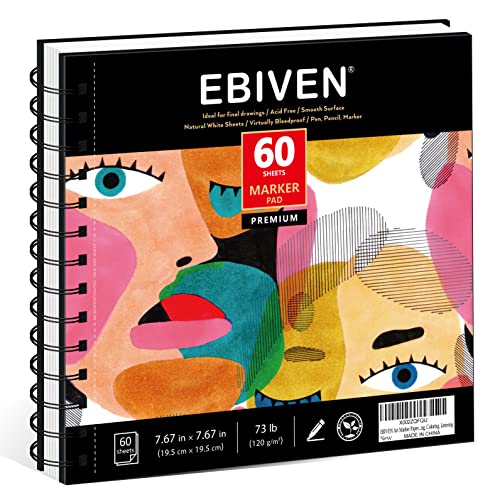
This post contains affiliate links, which means I may earn a small commission at no extra cost to you if you make a purchase. I only recommend products I genuinely love and use myself!
For emotional art, I especially love working with Winsor & Newton Cotman watercolors — there’s something about the fluid, unpredictable nature of watercolor that mirrors how emotions actually feel.
Download Your Free Meaningful Art Prompts Pack
Ready to start your expressive art journey? I’ve created a free 14-page Meaningful Art Prompts Pack just for you. It includes:
- Emotion-based drawing prompt cards
- Symbol reference sheet with meanings
- Expressive sketch templates (emotion wheel, journey map, symbol story)
- Growth and healing prompts
- Daily reflection drawing ideas
👉 Pop your email into the box near the top of this post and I’ll send these straight to your inbox — free!
Looking for more printable resources? Check out my Payhip shop for premium art journaling templates and prompt collections!
FAQ
Do I need to be good at drawing to try these prompts?
Absolutely not. Meaningful drawing is about expression, not perfection. Stick figures, abstract shapes, and “messy” marks are all valid. The point is to get your feelings onto paper, not to create museum-worthy art. If you can hold a pencil, you can do this.
What if I don’t know what to draw?
Start with a simple prompt from this list and just begin making marks. Don’t overthink it. Put pencil to paper and see what happens. Often the meaning emerges as you draw, not before. Trust the process.
Can meaningful drawing help with anxiety or stress?
Yes — research shows that expressive art can reduce cortisol levels and help regulate emotions. The act of externalizing feelings through drawing creates distance and perspective. It’s not a replacement for professional mental health care, but it’s a powerful complement to it.
What supplies work best for emotional art?
Whatever you have! A basic pencil and paper work perfectly. If you want to expand, try watercolors (their unpredictability mirrors emotions well), soft pastels (great for blending and releasing tension), or fine-tip markers (satisfying for detailed symbolic work).
Should I keep my meaningful drawings private?
That’s entirely up to you. Some people find freedom in knowing no one will see their work. Others find healing in sharing. There’s no right answer — do what feels safe and supportive for your process.
Final Thoughts
Meaningful drawing isn’t about creating pretty pictures — it’s about creating honest ones. Every mark you make carries a piece of you, and that’s what gives it value. You don’t need permission, training, or talent to express yourself through art. You just need willingness to try.
Start with one prompt that speaks to you today. Don’t worry about the result. Just notice how it feels to translate something internal into something visible. That’s where the magic lives.
Want to see these techniques in action? Head over to my YouTube channel where I share art journaling tutorials and expressive drawing sessions. Hit subscribe so you don’t miss the next one!
Tag me @artsydee_inspiring_creations on Instagram or @artsydee on Pinterest if you try any of these prompts — I’d love to see what you create!
You Might Also Like
- 100 Sketchbook Prompts to Fill Your Pages
- Easy Watercolor Sketchbook Ideas
- Simple Watercolor Ideas for Beginners
- Watercolor Painting Ideas for Beginners
- Loose Watercolor Sketchbook Pages
Pin this for later!
Once you’ve used your free Meaningful Art Prompts Pack, keep that creative habit going. The Artsydee shop has printable art resources and Procreate brushes to fill your next sketchbook pages.
Visit the shop →