Last Updated on January 30, 2026 by Dee
When I first picked up a watercolor brush, I made the classic beginner mistake: trying to paint a detailed portrait. After three frustrating hours and a page full of muddy blobs, I almost gave up on watercolor entirely.
What I wish someone had told me is that the subject matters enormously when you’re learning. Some things are naturally forgiving and teach you fundamental skills; others will frustrate you before you’ve developed the techniques to handle them.
Here’s what I now recommend to every watercolor beginner: start with simple, round objects that don’t require precise drawing. Build your skills with quick wins before tackling complex subjects.
Grab your free Beginner Subjects Guide at the end of this post!
🎬 Love video tutorials? Subscribe to my YouTube channel for weekly watercolor tutorials!
What’s Inside
The Best First Subjects for Watercolor
Quick Answer: The best first subjects for watercolor are simple, round objects with forgiving shapes—fruits, eggs, simple leaves. They teach fundamental techniques without requiring precise drawing skills.
Good beginner subjects share these qualities:
- Simple shapes – Circles and ovals are easier than complex forms
- Forgiving outlines – Organic shapes hide imperfections
- Clear value structure – Obvious light, middle, and dark areas
- Limited colors – One or two main colors to manage
- Accessible references – Things you can find in your kitchen or garden
Fruits and Vegetables to Start With
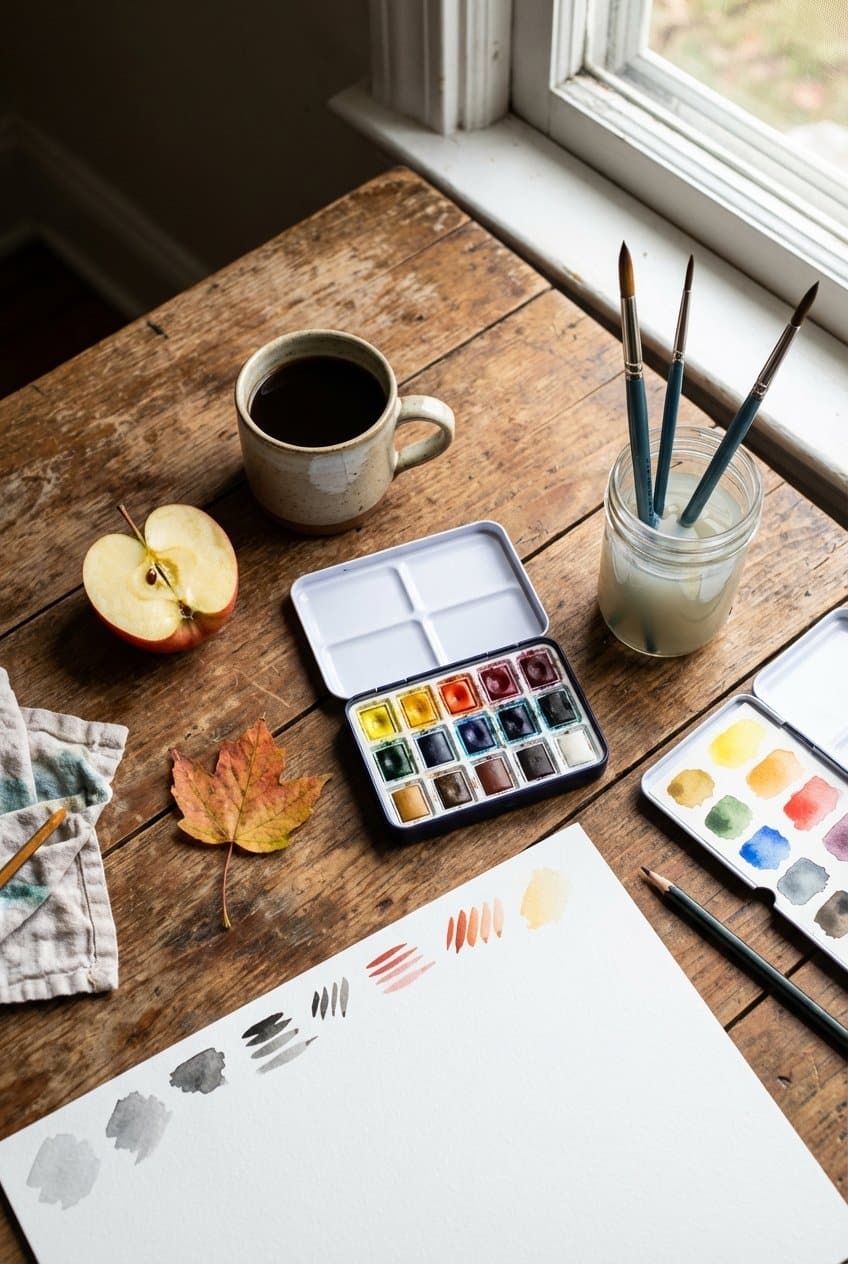
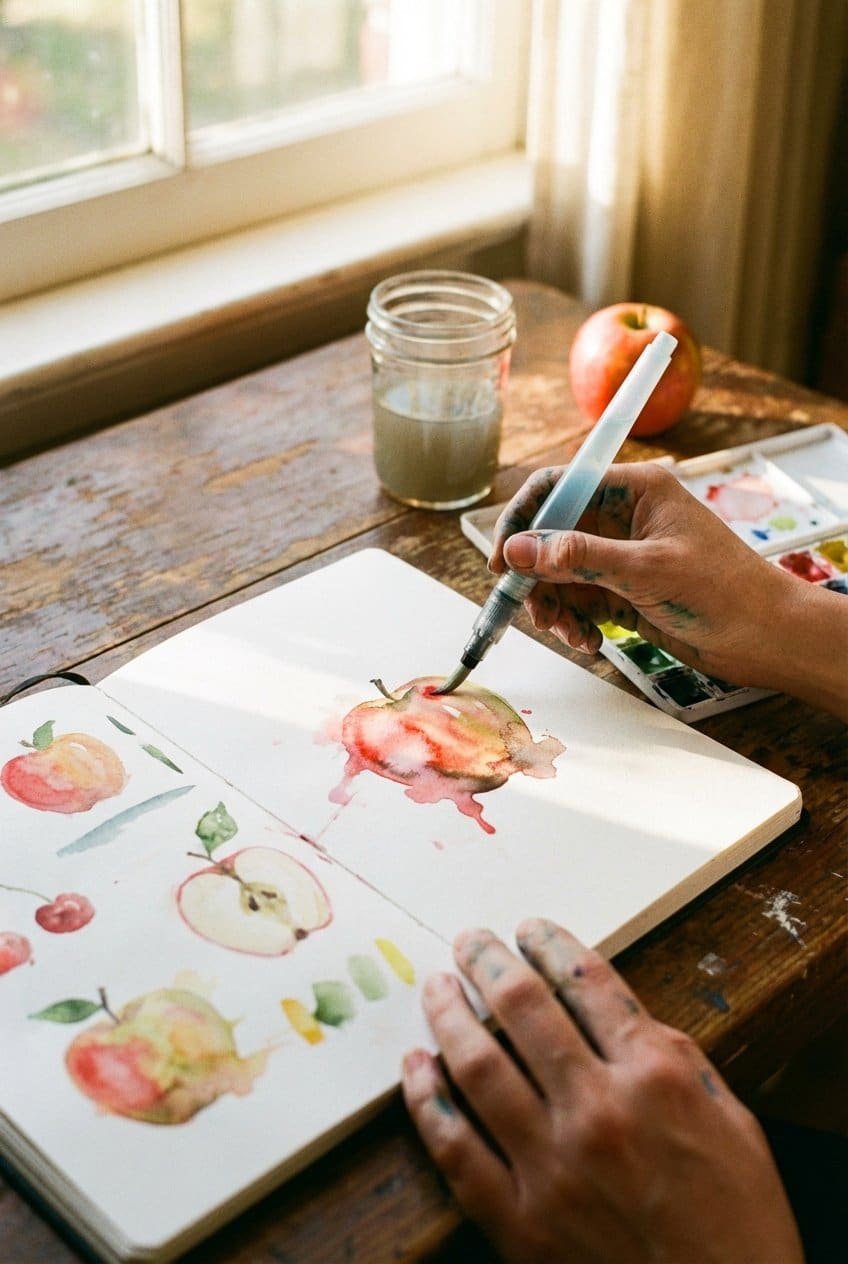
Produce is perfect for beginners because organic shapes naturally hide mistakes. A slightly lumpy apple still reads as an apple.
Top Picks for Beginners
- Apple – Simple round shape, teaches basic shading
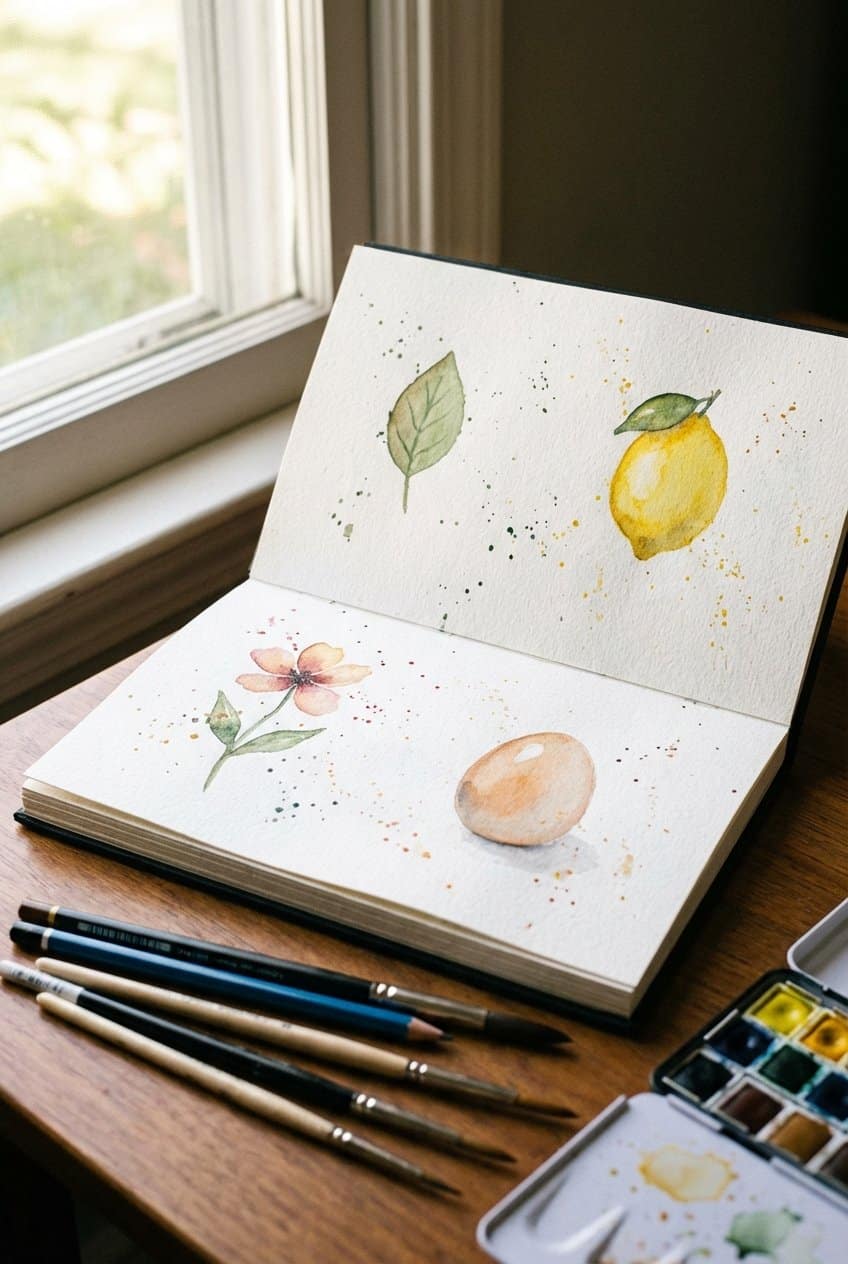
- Lemon or lime – Oval shape, bright color, quick to paint
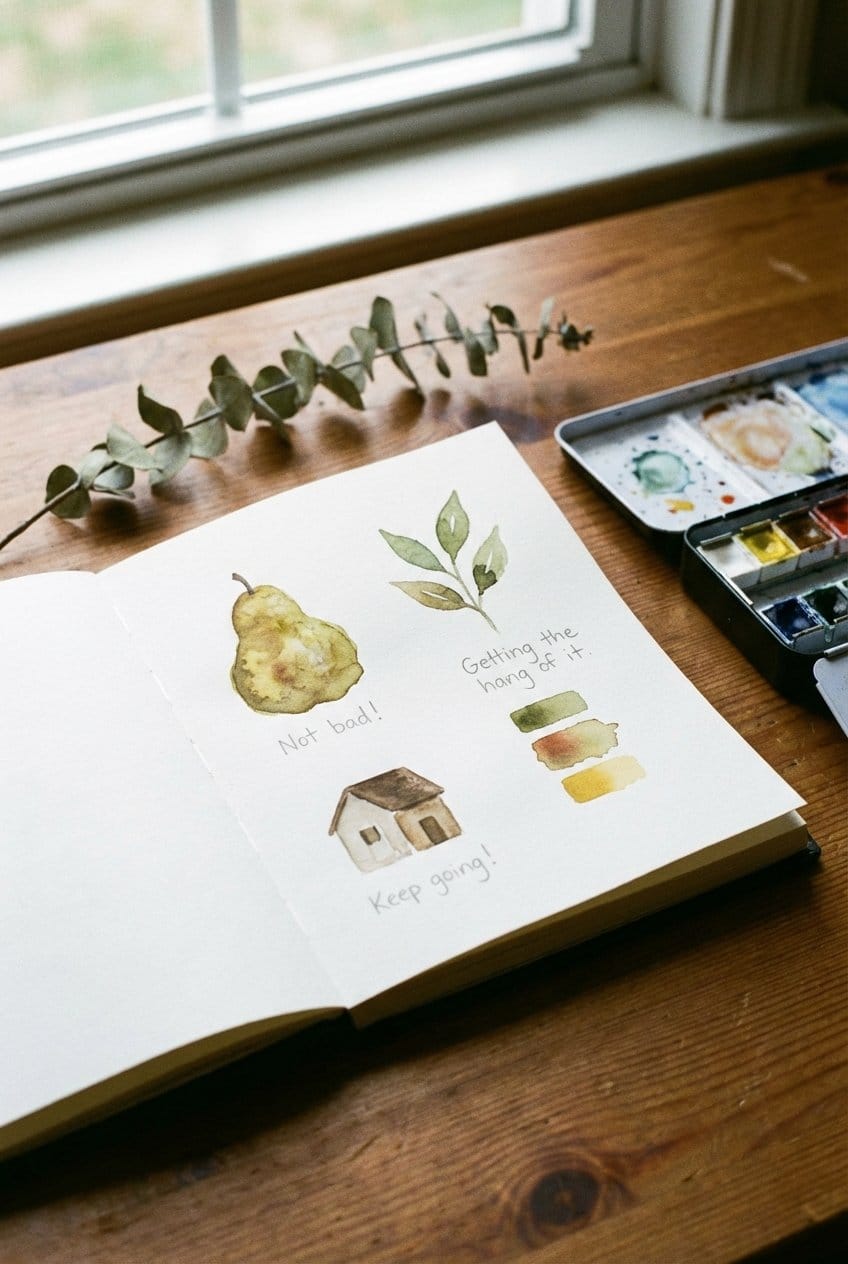
- Pear – Slightly more complex shape, beautiful gradients
- Orange – Round, vibrant, teaches color saturation
- Egg – The classic value study subject
- Cherry – Tiny, simple, perfect for practicing in miniature
I love using my Winsor & Newton Cotman set for fruit studies—the Cadmium Yellow and Alizarin Crimson make beautiful apple reds.
Simple Botanicals
Single leaves and simple flowers build confidence with organic shapes while teaching wet-on-wet techniques.
- Single leaves – Monstera, eucalyptus, or any houseplant leaf
- Simple flowers – Daisies, poppies, sunflowers with large petals
- Herbs – Rosemary sprigs, basil leaves, mint
- Succulents – Geometric patterns, forgiving shapes
- Feathers – Beautiful gradients, soft edges
Everyday Objects
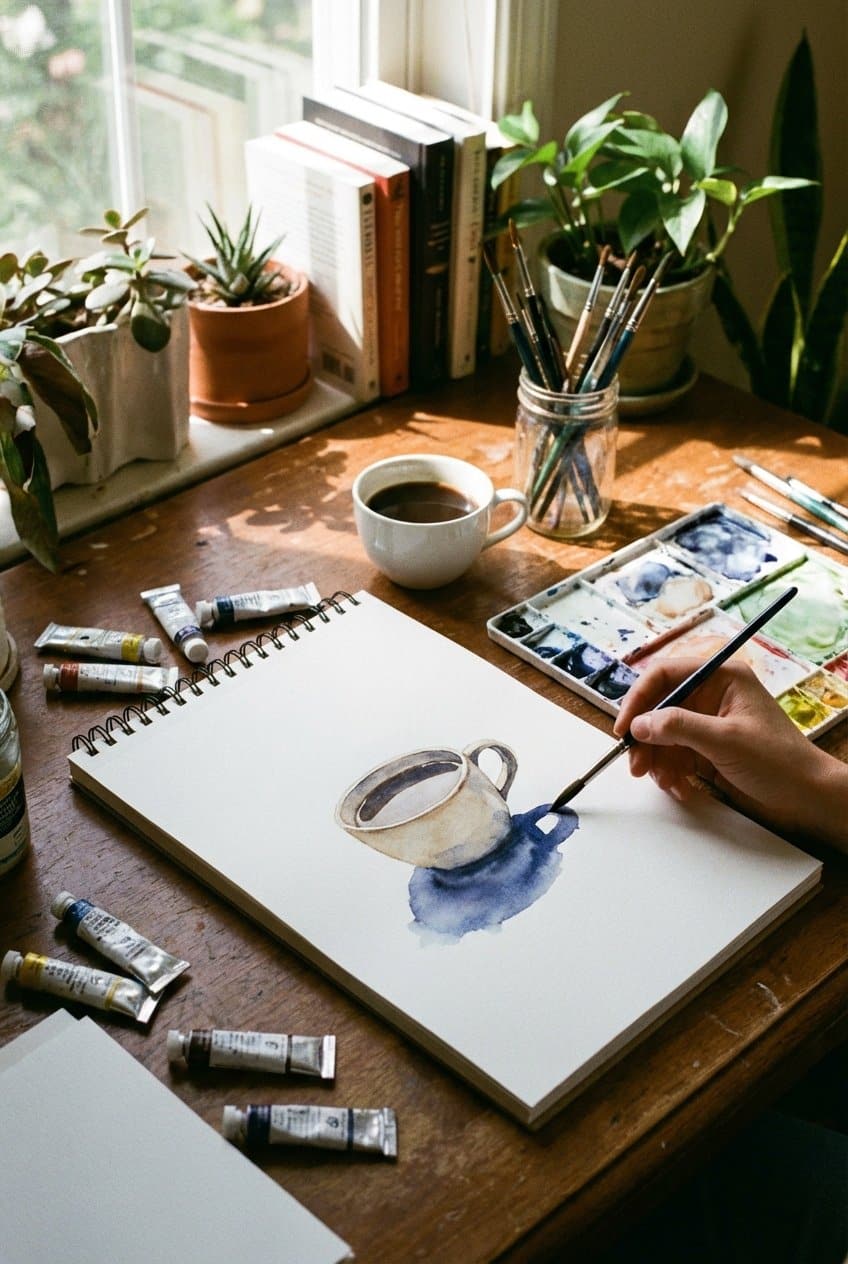
Simple household items make excellent subjects because you can paint from life without leaving your home.
- Coffee cup – Practice ellipses and simple shadows
- Jar or bottle – Transparency and reflections (simpler than it sounds)
- Candle – Warm colors, glowing light effect
- Ball of yarn – Organic sphere with texture
- Soap or eraser – Simple geometric forms
A quality sketchbook makes everyday painting more enjoyable. My Canson XL Watercolor Sketchbook is always within reach for quick studies.
What to Avoid as a Beginner
Quick Answer: Avoid subjects that require precise drawing, complex color mixing, or difficult water control until you’ve built foundational skills with simpler subjects.
Save these for later:
- Portraits – Require precise proportions and subtle color mixing
- Animals – Complex fur textures and anatomy
- Architecture – Demands accurate perspective and straight lines
- Glass with complex reflections – Advanced wet-on-wet control needed
- Detailed landscapes – Too many elements to manage at once
These subjects aren’t impossible—they just require skills you’ll develop through simpler practice. Give yourself time to build up to them.
Supplies You’ll Need
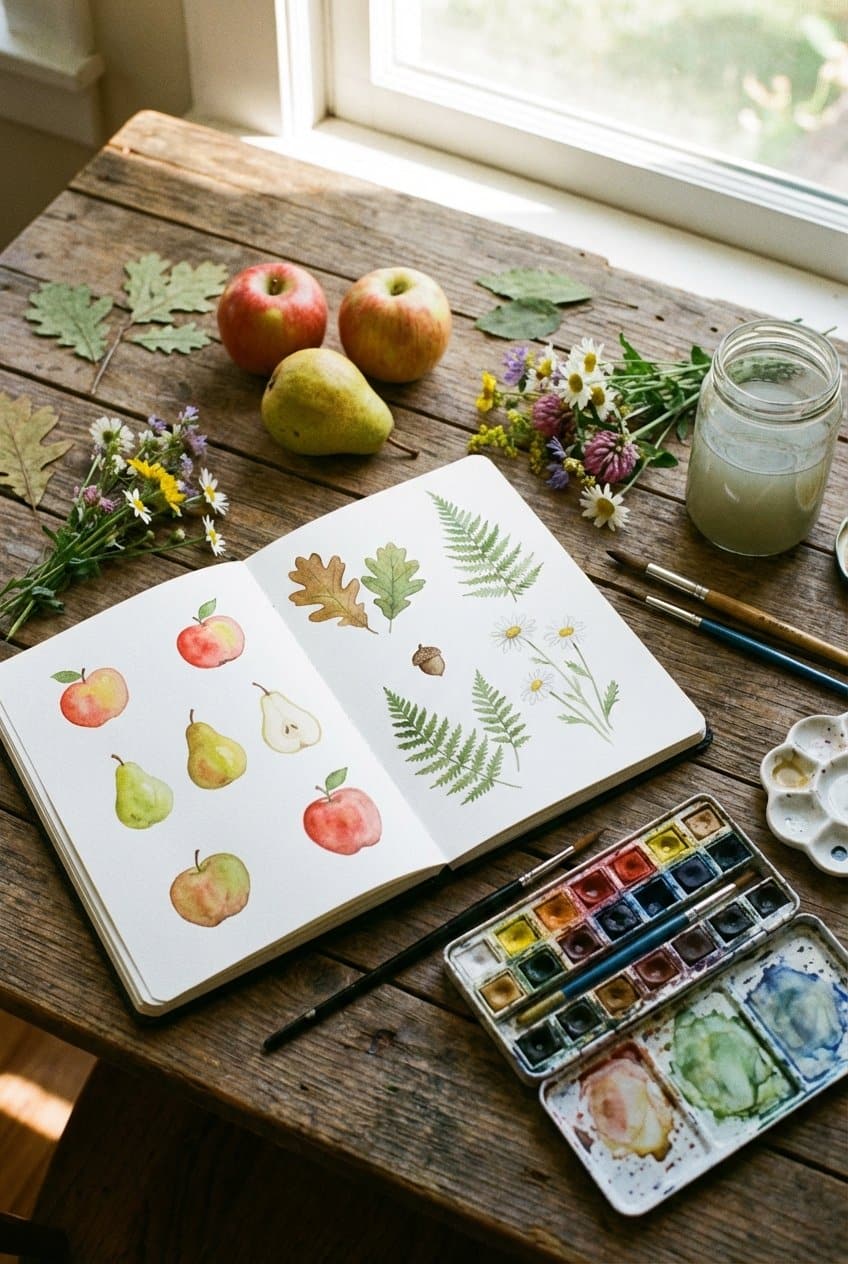
Basic supplies work perfectly for beginner subjects. Quality matters more than quantity.


This post contains affiliate links, which means I may earn a small commission at no extra cost to you if you make a purchase. I only recommend products I genuinely love and use myself!
Free Beginner Templates
Download these printable templates with simple subject outlines to get started with watercolor practice.
Want more? Check out my Payhip shop for premium templates!
Frequently Asked Questions
What’s the easiest thing to paint in watercolor?
Single pieces of fruit like apples, lemons, or oranges are the easiest watercolor subjects. They have simple round shapes, clear light and shadow, and organic edges that hide imperfections.
Should beginners paint from photos or life?
Both work! Photos are convenient and don’t move, but painting from life teaches you to observe more carefully. Simple still life setups at home are ideal for beginners—you control the lighting and can take breaks.
How many subjects should I practice before moving on?
Practice each simple subject several times before moving to more complex ones. When you can paint an apple confidently with good color mixing and value structure, you’re ready for more challenging subjects.
Final Thoughts
Choosing the right subjects as a beginner can make the difference between falling in love with watercolor and giving up in frustration. Start simple, build skills, and trust that those “basic” subjects are teaching you everything you need for more complex work later.
Pick up an apple or lemon from your kitchen today and give it a try. You might be surprised how satisfying a simple fruit study can be.
Head over to my YouTube channel for step-by-step tutorials every week!
Tag me on Instagram @artsydee when you paint your first subjects!
You Might Also Like
- Tiny Watercolor Florals for Sketchbooks
- One-Page Watercolor Sketchbook Ideas
- Simple Watercolor Shapes to Practice Daily
- Mini Watercolor Landscapes for Beginners
- Easy Watercolor Ideas Using Circles and Lines
Pin this for later!