Last Updated on October 13, 2026 by Dee
Here’s an honest guide to the best watercolor paper for beginners, plus two free printables: a Watercolor Paper Comparison Guide and Practice Test Sheets.
I’ve put together a free printable Watercolor Paper Comparison Chart for you with this post. Grab it just below — it breaks down every paper I recommend side by side!
Here’s a truth that nobody tells beginner painters: your watercolor paper matters more than your paints. Seriously. You can have the most gorgeous, expensive pigments in the world, and if you’re painting on flimsy paper that buckles and pills, your results will be frustrating every single time.
I learned this the hard way. Years of teaching watercolor workshops showed me the exact same pattern over and over — students blaming themselves for “bad technique” when the real problem was sitting right under their brush. Cheap paper warps. It doesn’t hold washes evenly. Colors look dull and muddy instead of vibrant and luminous. And the worst part? You start thinking you’re just not cut out for watercolor.
The good news is that finding the best watercolor paper for beginners doesn’t mean spending a fortune. There are genuinely excellent papers at every price point, and once you understand a few key differences — cold press vs hot press, cotton vs cellulose, weight and sizing — picking the right one becomes pretty straightforward.
Table of Contents
Free Watercolor Paper Comparison Chart
Before we get into the details, here’s a printable comparison chart that puts all the best watercolor paper for beginners side by side — paper type, weight, texture, price range, and my honest notes on each one. Print it out and take it with you next time you’re shopping for supplies.
👉 Pop your email into the box near the top of this post and I’ll send these straight to your inbox — free!
Once you’ve settled on your paper, my Patreon members get new watercolour reference sheets, colour mixing guides and practice templates every week.
See what’s on Patreon →Want Weekly Watercolor Resources?
If you love these free printables, you’ll absolutely love my Patreon. Every week I share new watercolor resources — reference sheets, colour mixing guides, painting tutorials, and practice templates. You get instant access to a growing library of creative resources the moment you join.
It’s the best way to keep your watercolor practice fresh with new inspiration every single week. Join me on Patreon here →
Why Watercolor Paper Makes Such a Huge Difference
Quick Answer: Watercolor paper is specifically designed to absorb water, hold pigment, and resist buckling — regular paper can’t do any of those things well, which is why your paintings look muddy and warp on standard sketchbook paper.
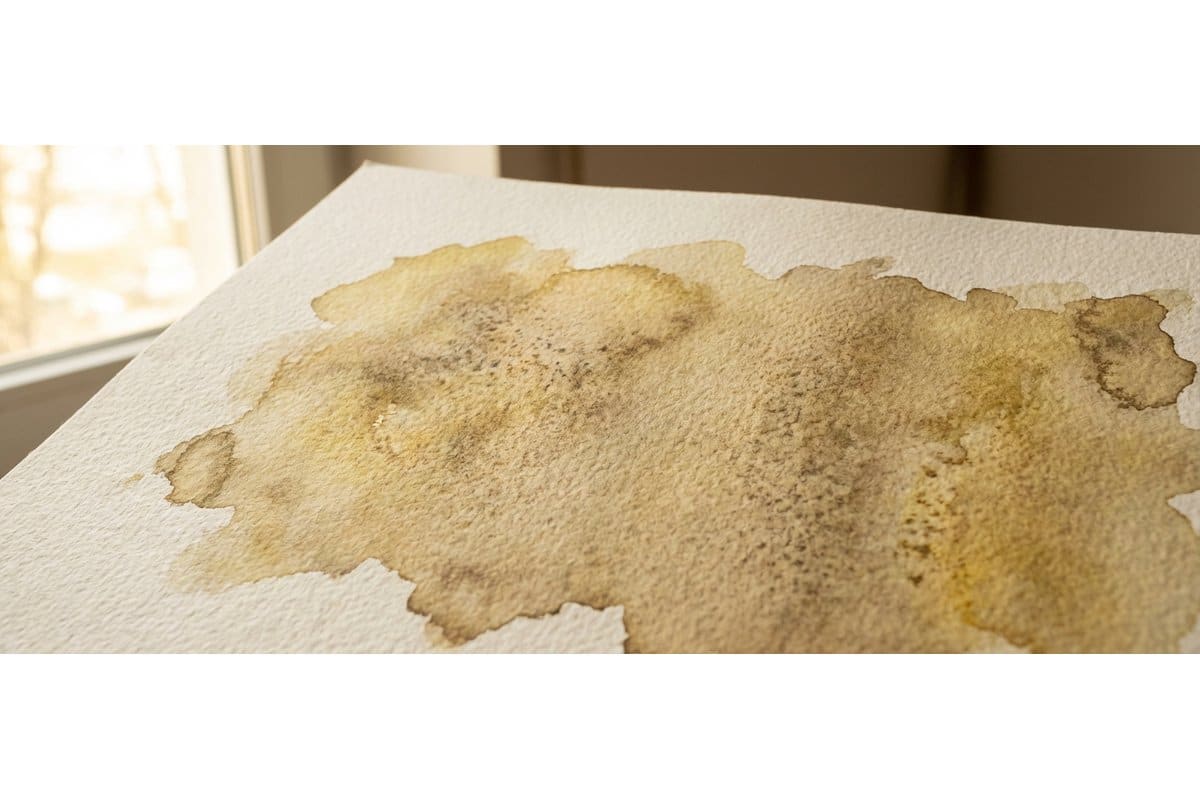
Watercolor is the most water-dependent painting medium there is. Unlike acrylics or oils, the paper isn’t just a surface you paint on — it’s an active part of the process. The paper absorbs water at a specific rate, holds pigment in its fibers, and (when it’s good paper) stays flat while you work.
Cheap paper fights you at every step. Water pools on the surface instead of absorbing evenly. Colors lift when you try to layer. The paper buckles into hills and valleys that make your washes run in directions you never intended. And once the paper starts pilling — those little fuzzy balls that appear when you scrub too much — there’s no saving it.
Good watercolor paper has internal sizing (a gelatin coating that controls absorption) and external sizing that lets you lift and layer without destroying the surface. This is why a simple wash on quality paper looks luminous and smooth, while the same wash on printer paper looks blotchy and sad. If you’re just getting started, check out my watercolor painting ideas for beginners — and trust me, the right paper will make every single one of those projects easier.
Cold Press vs Hot Press vs Rough: Which Should You Choose?
Quick Answer: Cold press is the best texture for most beginners — it has a gentle tooth that holds pigment beautifully and is forgiving with washes. Hot press is smooth and better for detail work, while rough paper has heavy texture best suited for expressive, loose painting.
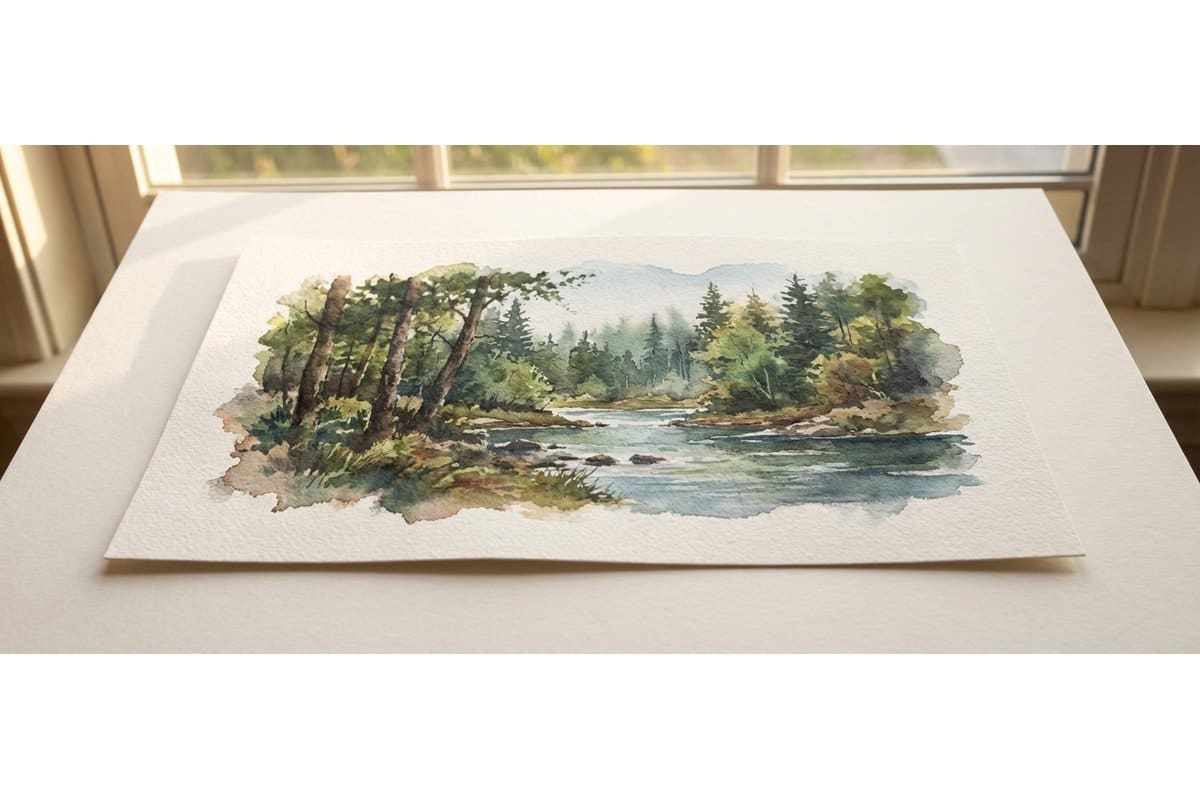
The texture of watercolor paper (called the “tooth”) comes from how it’s pressed during manufacturing. Cold press paper is pressed between cold rollers, leaving a medium texture with subtle peaks and valleys. This texture catches pigment in interesting ways, creating that characteristic watercolor look with natural variation in your washes.
Hot press paper runs through heated rollers that flatten the surface smooth. It’s gorgeous for botanical illustration, pen and wash work, and anything where you want crisp detail. But it’s less forgiving — washes can puddle unpredictably and mistakes are harder to lift.
Rough paper has the most dramatic texture, and it creates beautiful effects with dry brush techniques. Paint skips across the raised surface, leaving white specks of paper showing through. It’s fantastic for landscapes and expressive work, but it can be tricky for beginners who want smooth, even coverage.
My recommendation: Start with cold press. It’s the most versatile, the most forgiving, and it works beautifully for the simple watercolor ideas that most beginners start with. You can always experiment with hot press and rough later once you understand how water and pigment behave.
Cotton vs Cellulose: What You Need to Know
Quick Answer: Cotton paper absorbs water more evenly, stays wet longer (giving you more working time), and is far more durable. Cellulose paper is much cheaper and perfectly fine for practice, but it won’t perform as well for finished pieces.
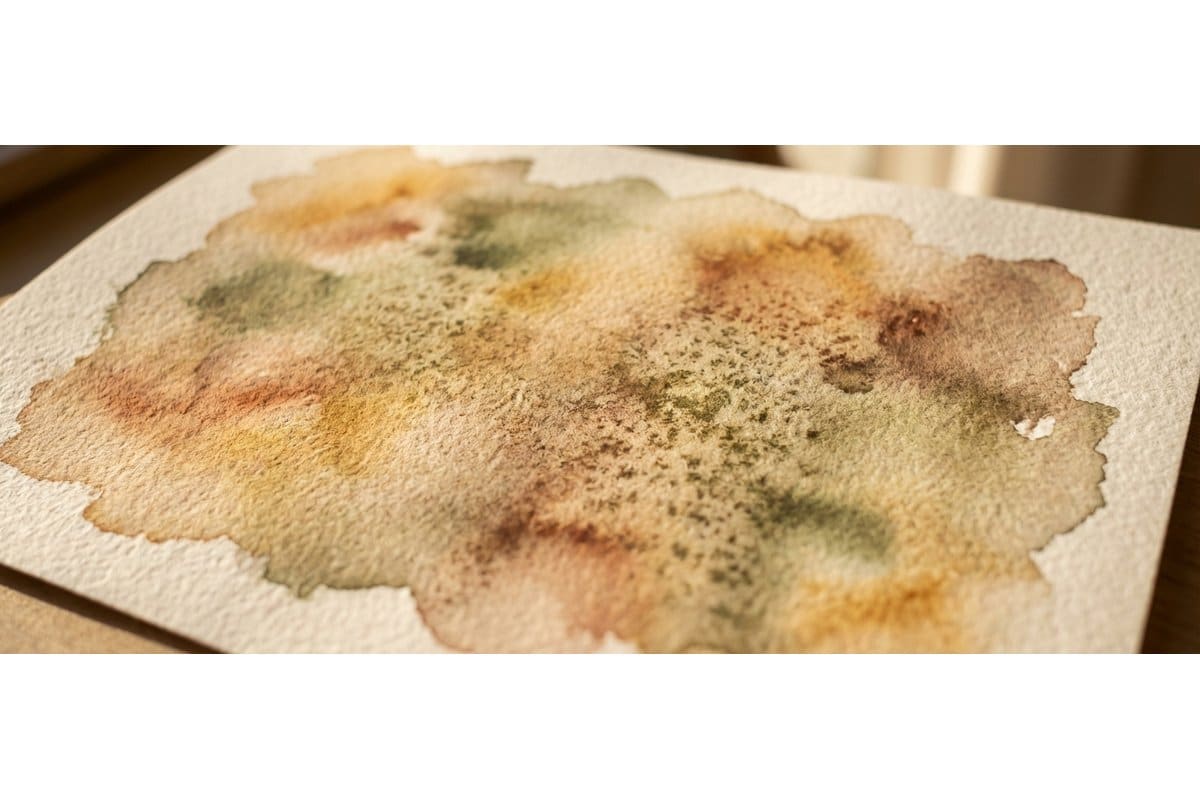
This is the single biggest factor that affects how your watercolor paper performs, and it’s also where the price difference really shows up. Cotton (also called “rag”) paper is made from cotton linters — the short fibers left on cottonseed after ginning. These fibers are incredibly strong, highly absorbent, and create a paper that can handle serious water application without breaking down.
Cellulose paper is made from wood pulp. It’s perfectly decent paper, and most beginner-friendly pads like the Canson XL Watercolor Pad are cellulose. The trade-offs: water absorbs faster and less evenly, you have less working time before the paper dries, and heavy scrubbing or lifting can damage the surface.
Here’s my honest take: cellulose paper is absolutely fine for practice, experimenting, and learning the basics. I wouldn’t tell any beginner they need to start with 100% cotton — that gets expensive fast. But when you’re ready to paint something you want to keep or frame, cotton paper makes a noticeable difference. The colors glow differently. The washes are smoother. It just feels different under your brush.
A great middle-ground approach: use cellulose for daily practice and technique experiments, and save a few sheets of cotton paper for when you want to paint something special. If you need project ideas, my easy watercolor sketchbook ideas are perfect for those cellulose practice sessions.
Paper Weight Explained (140lb, 200lb, 300lb)
Quick Answer: Paper weight tells you how thick the paper is. 140lb (300gsm) is the standard for watercolor and works well for most techniques. 300lb (640gsm) is thick enough that it never needs stretching. Anything under 140lb will buckle badly with wet washes.
Paper weight is measured in either pounds (lb) or grams per square meter (gsm), and it tells you how thick and sturdy the paper is. The measurement actually refers to how much a ream (500 sheets) weighs, which is why the numbers seem oddly large.
Here’s what the common weights mean for you:
- 90lb (190gsm): Thin. Will buckle significantly with any wet technique. Only useful for very dry applications or quick pencil sketches. Not recommended for actual watercolor painting.
- 140lb (300gsm): The standard. This is what you’ll find in most watercolor pads and what most artists use for everyday painting. It handles wet washes well, though heavy applications may still cause some warping. You can tape it down or stretch it to minimize buckling.
- 200lb (425gsm): A nice middle ground. Noticeably thicker, handles wet techniques with less warping, and doesn’t usually need stretching for moderate washes.
- 300lb (640gsm): Thick as cardboard. This paper virtually never buckles, even with extremely wet techniques. It’s the gold standard for large finished paintings, but it’s also the most expensive.
For beginners: 140lb (300gsm) cold press paper is the sweet spot. It’s affordable enough to practice on without guilt, sturdy enough to handle learning washes, and available from every major paper brand. If buckling drives you crazy, try taping the edges down with painter’s tape or washi tape before painting — it makes a huge difference.
Best Budget Watercolor Papers for Beginners
Quick Answer: The Canson XL Watercolor Pad and Winsor & Newton Cotman Watercolour Pad are the two best budget options for beginners. Both are cellulose, 140lb, cold press, and cost-effective enough for daily practice.
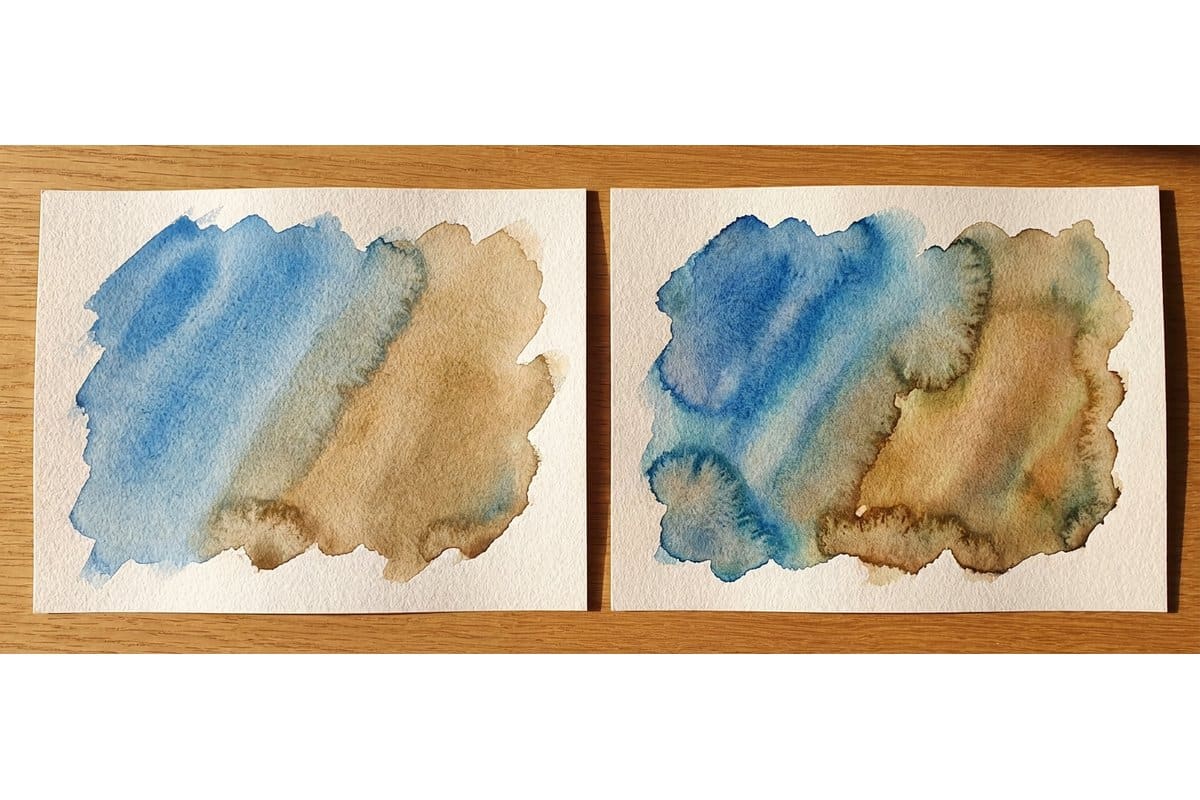
When you’re starting out, you need paper that’s good enough to learn proper technique but affordable enough that you don’t hesitate to use it. Here are my top budget picks:
Canson XL Watercolor Pad — This is the workhorse of beginner watercolor paper. It’s 140lb, cold press, and comes in generous sheet counts (30 sheets in the 9×12 pad). The texture is pleasant, washes lay down reasonably well, and it handles light to moderate water application nicely. It does buckle with very wet techniques, but for the price, it’s hard to beat. I still use it for testing color mixes and quick studies.
Winsor & Newton Cotman Watercolour Pad — Slightly nicer than the Canson XL in my experience. The surface feels a touch smoother, the sizing is more consistent, and colors look a bit brighter when they dry. It’s still cellulose and 140lb, but it behaves more predictably. If you can spend a few extra dollars, this is worth it.
Strathmore 400 Series Watercolor Pad — Another solid budget option. The paper has a nice natural white tone (some papers are too bright white) and handles pencil sketching beautifully before you add paint. The cold press texture is medium-grained and works well for both detailed work and loose washes.
All three of these pads pair perfectly with a good beginner watercolor set. You don’t need expensive paper to build solid painting skills — you just need paper that’s actually designed for watercolor.
Best Mid-Range Papers Worth the Upgrade
Quick Answer: Fabriano Artistico and Arches Watercolor Paper are the two best mid-range upgrades. Both are 100% cotton, and the difference in color vibrancy, wash smoothness, and working time is immediately noticeable.
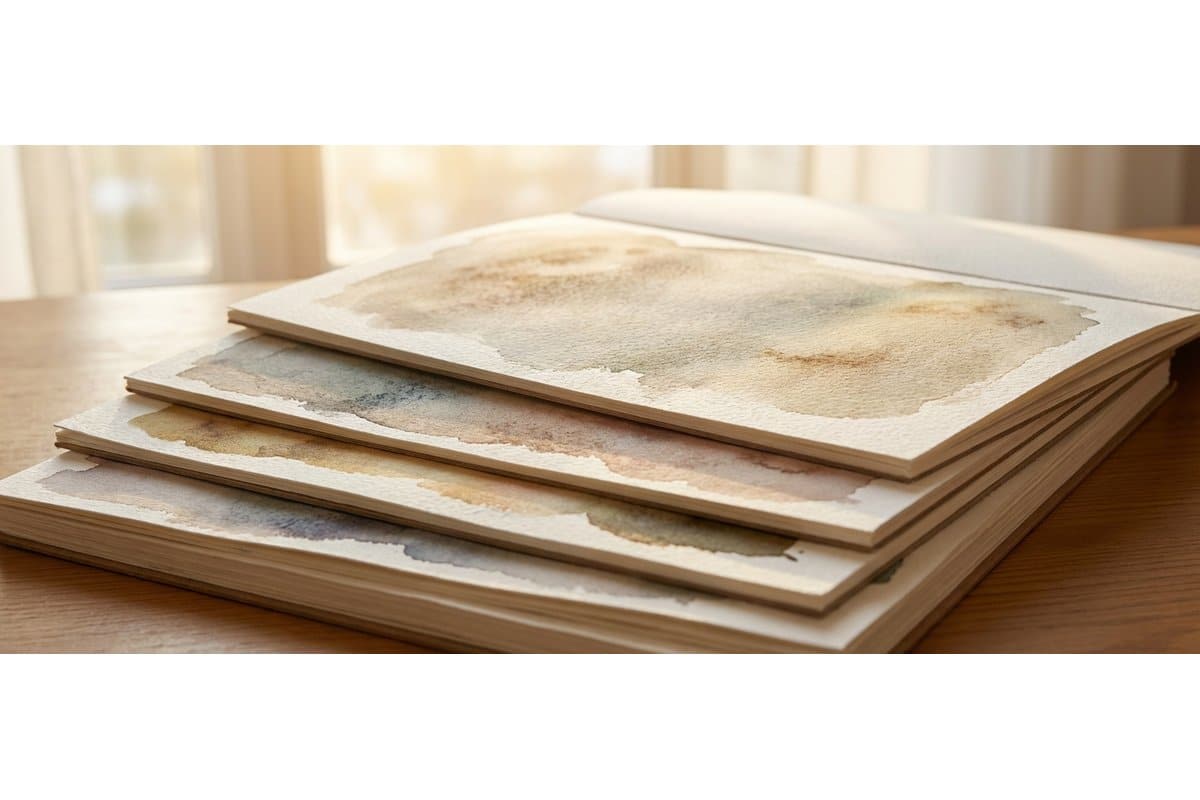
Once you’ve been painting for a few months and you understand the basics of water control, upgrading your paper is the single most impactful thing you can do. The jump from cellulose to cotton is dramatic — and honestly kind of addicting once you feel the difference.
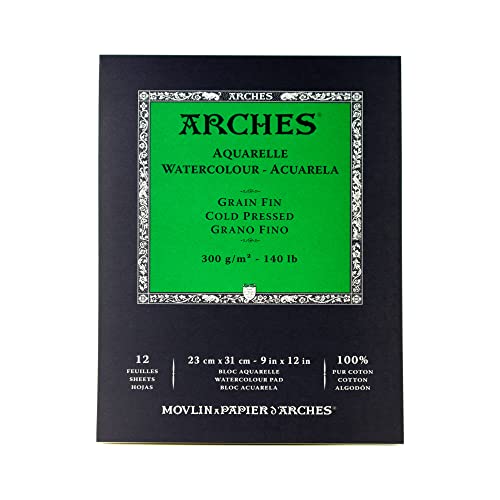
Arches Watercolor Paper — The industry standard for a reason. This 100% cotton paper is made in France and has been the go-to for professional watercolorists for decades. It comes in cold press, hot press, and rough textures, and the quality is remarkably consistent. Washes are luminous. You can lift color cleanly. It holds up to serious scrubbing without pilling. If I could only use one paper for the rest of my life, this would be it.
Fabriano Artistico — Made in Italy, and honestly just as good as Arches in many ways. Some artists actually prefer it — the surface has a slightly different feel, and some find that colors sit a bit differently. It’s 100% cotton, acid-free, and available in a beautiful natural white (called “traditional white”) and a brighter white. Try both and see which one speaks to your style.
For those gorgeous mid-range paintings, try some of the simple watercolor projects I recommend for beginners — they look absolutely stunning on cotton paper, and you’ll really see the difference in your finished pieces.
Watercolor Pads vs Blocks vs Loose Sheets
Quick Answer: Pads are cheapest and most portable. Blocks are glued on all four sides to prevent buckling (no stretching needed). Loose sheets give you the most flexibility with size and are the most economical for larger work.
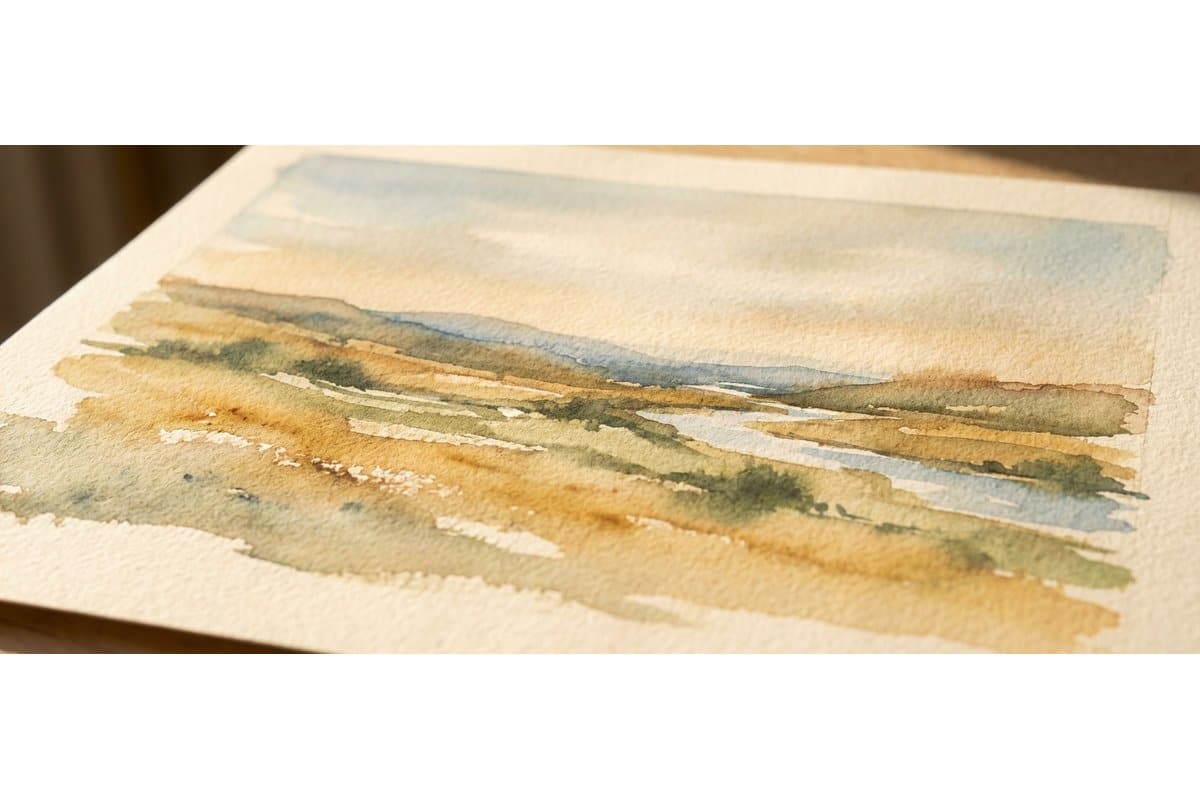
Watercolor Pads are what most beginners start with, and for good reason. They’re portable, affordable, and the sheets tear out cleanly along a perforated edge. The downside is that individual sheets aren’t held down, so they’ll buckle with wet washes. You can tape them to a board before painting to help with this.
Watercolor Blocks are pads where the paper is glued on all four edges (with a small opening to slide a palette knife in when you want to remove a finished piece). Because the paper is held down on all sides, it barely buckles even with very wet techniques. Blocks cost more per sheet than pads, but the convenience is worth it if buckling is your biggest frustration.
Loose Sheets come as individual large sheets (typically 22×30 inches) that you cut to whatever size you need. This is the most economical way to buy quality paper like Arches, and it gives you complete control over your painting dimensions. The trade-off is that you need to stretch or tape the paper before painting.
My suggestion for beginners: start with a pad for everyday practice, and pick up a block when you want to paint something without the hassle of taping or stretching. Once you’re buying cotton paper regularly, switch to loose sheets — the cost per painting drops significantly. Bring your pad along when you try watercolor sketchbook projects on the go.
How to Test Watercolor Paper (My Simple Method)
Quick Answer: Test watercolor paper with four simple steps: a flat wash for evenness, a wet-on-wet test for blending, a lifting test with a damp brush, and a drying test to check for buckling. This takes about 10 minutes and tells you everything you need to know.
Whenever I try a new paper, I run it through four quick tests before committing to a full painting. This saves me from discovering mid-painting that the paper isn’t right for what I’m trying to do.
Test 1 — Flat Wash: Mix up a medium-strength wash and brush it smoothly across a 3-inch square area. Watch how the paint absorbs. Does it soak in evenly? Does the color pool in spots? Does the paper start buckling immediately? Good paper absorbs evenly and maintains a consistent tone when dry.
Test 2 — Wet-on-Wet: Wet a section with clean water, then drop in two different colors and let them bloom into each other. Notice how far the pigment spreads and how the edges dry. Cotton paper gives you more time to work with wet-on-wet because it holds moisture longer.
Test 3 — Lifting: Let a painted area dry completely, then run a clean damp brush across it and blot with a tissue. How much color comes up? Good paper lets you lift and correct. Cheap paper either won’t release the color at all or pills up when you try.
Test 4 — Buckling Check: After all your tests dry, flip the paper over. Is it warped? Wavy? Still reasonably flat? This tells you how the paper will behave for larger, wetter paintings.
Try running all four tests on any new paper you buy — it only takes about ten minutes and tells you everything you need to know. Keep a swatch sheet with your notes so you can compare papers over time.
My Top Watercolor Paper Picks
Here’s a quick-reference table of my favorite watercolor papers at every price point. I’ve personally tested every single one of these, and they all earn their spot for different reasons.
|

|

|
This post contains affiliate links, which means I may earn a small commission at no extra cost to you if you make a purchase. I only recommend products I genuinely love and use myself!
Frequently Asked Questions
What is the best watercolor paper for beginners on a budget?
The Canson XL Watercolor Pad is the best budget option for beginners. It’s 140lb cold press, comes in a generous 30-sheet count, and handles basic washes and techniques well enough to build your skills without worrying about wasting expensive paper. The Winsor & Newton Cotman pad is another excellent choice that performs slightly better for just a bit more money.
Can I use regular printer paper for watercolor painting?
Technically yes, but you won’t enjoy the results. Regular printer paper is about 20lb and has no sizing — it buckles instantly with water, tears easily when wet, and colors look dull because the paper can’t hold pigment properly. If you’re just doing quick color swatches or testing paint mixes, printer paper works in a pinch. For actual painting, even basic watercolor paper like the Canson XL makes an enormous difference.
What weight of watercolor paper should a beginner use?
140lb (300gsm) is the standard weight that works best for beginners. It’s thick enough to handle wet washes without excessive buckling, affordable enough for regular practice, and available from every major brand. If you tape the edges down before painting, 140lb paper behaves beautifully for almost any technique you’d want to try as a beginner.
Is cotton watercolor paper worth the extra cost?
For practice and learning — no, cellulose paper is perfectly fine and much more budget-friendly. For paintings you want to keep, gift, or sell — absolutely yes. Cotton paper absorbs water more evenly, gives you more working time, produces more vibrant colors, and is much more forgiving with lifting and corrections. I recommend starting with cellulose for daily practice and keeping some cotton sheets for your best work.
Do I need to stretch watercolor paper before painting?
It depends on the weight. Paper that’s 300lb (640gsm) or heavier virtually never needs stretching. For 140lb paper, stretching helps a lot if you’re doing very wet techniques, but taping the edges to a board with painter’s tape is often enough for most beginner projects. Watercolor blocks eliminate this problem entirely since the paper is glued down on all sides.
Final Thoughts
Choosing the best watercolor paper for beginners doesn’t have to be complicated. Start with a cold press, 140lb pad in a cellulose paper like the Canson XL or Winsor & Newton Cotman. Use it freely for practice — fill pages, experiment, make happy messes. And when you’re ready for something special, treat yourself to a few sheets of Arches or Fabriano Artistico cotton paper and feel the difference for yourself.
The right paper won’t make you a watercolor master overnight. But it absolutely removes one of the biggest frustrations beginners face, and it lets you see your actual skill level instead of fighting your materials. That alone is worth a few extra dollars.
Don’t forget to grab the free Watercolor Paper Comparison Chart from this post. It’ll make your paper shopping so much easier.
Want to see these techniques in action? Head over to my YouTube channel where I share step-by-step watercolor tutorials every week. Hit subscribe so you don’t miss the next one!
And if you want daily watercolor inspiration, come find me on Pinterest — I’m always pinning new ideas and tutorials.
You Might Also Like
- Watercolor Painting Ideas for Beginners
- Simple Watercolor Ideas for Beginners
- Easy Watercolor Sketchbook Ideas
- Best Watercolor Set for Beginners
- Watercolor Gift Guide for Beginners
Pin this for later!
Free Watercolor Practice Test Sheets
Not sure which paper suits your painting style? These test sheets give you structured exercises to try on any paper: wet washes, dry brush, lifting, layering, and more. Print a set for each paper you own and compare results side by side.
Good paper takes half the frustration out of learning watercolour — the other half is knowing what to actually paint on it. My Patreon members get weekly watercolour resources, reference sheets and colour mixing guides, plus premium reference sets with colour-recipe cards from £14 (~$18).
Browse the reference sets →