Last Updated on July 20, 2026 by Dee
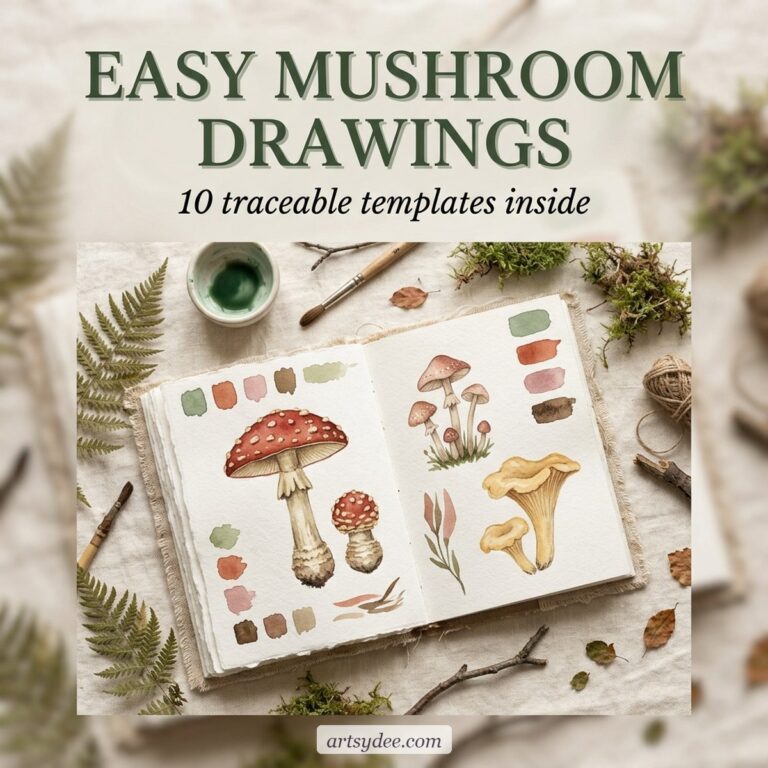
Mushrooms are the gentlest gateway drug for cottagecore sketchbooks. A round cap, a soft stem, a few cream spots — and somehow you’ve made something that feels foraged from a fairytale forest. They’re forgiving for absolute beginners, they look great in graphite or watercolour, and they pair beautifully with ferns, moss, and tiny snails.
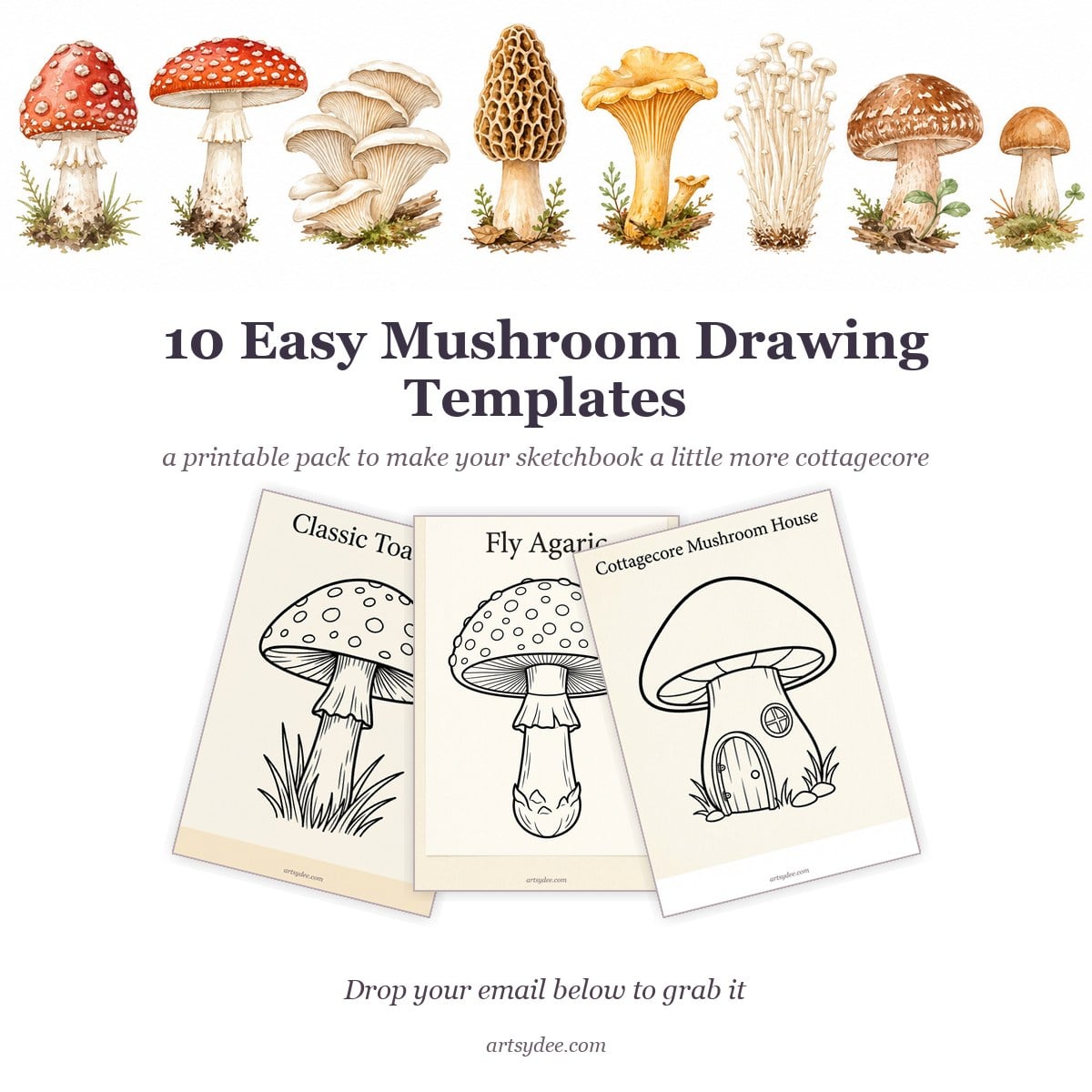
I’ve put together a free pack of 10 easy mushroom drawing templates — a classic toadstool, the iconic fly agaric, oyster cluster, morel, chanterelle, enoki, shiitake, a tiny forest mushroom cluster, a whimsical mushroom house, and a toadstool with a snail. Trace them, watercolour over them, or use them as warm-ups when your sketchbook feels intimidating.
🎬 Prefer watching? Subscribe to my YouTube channel — I drop sketchbook flip-throughs and step-by-step tutorials every week.
Table of Contents
Why mushrooms are the perfect beginner subject
Quick answer: Mushrooms are made of two simple shapes — an oval cap and a stem — which makes them forgiving for beginners. They look beautiful even when they’re a little wonky, they pair with almost any medium (graphite, ink, watercolour), and you can finish a satisfying drawing in about 15 minutes.
If you’re staring at a blank sketchbook and your brain has gone quiet, a mushroom is a kind invitation. The forms are clean. The values are gentle. And the cottagecore aesthetic gives you permission to add as much moss, as many ferns, and as many tiny stars as your heart wants — there’s no version of “wrong” because real mushrooms come in every shape and colour you can imagine.
The other thing I love: mushrooms make space for atmosphere. A single toadstool nestled in a patch of grass, with a tiny snail on the stem and a fern frond curling behind, already feels like a finished piece. You’re not painting a portrait — you’re suggesting a whole forest floor.
Cottagecore mushrooms sorted? My shop has premium drawing template sets for the rest of that forest floor.
Browse the shop →Grab your free 10 mushroom drawing templates
Quick recap of what’s in the pack — all sized for A4, all clean line art you can trace or paint over:
- Classic toadstool — the storybook shape with a wide round cap and slim stem
- Fly agaric — the iconic spotted red-cap of cottagecore moodboards
- Oyster mushroom cluster — overlapping fan shapes growing from one base
- Morel — the distinctive honeycomb-textured conical cap
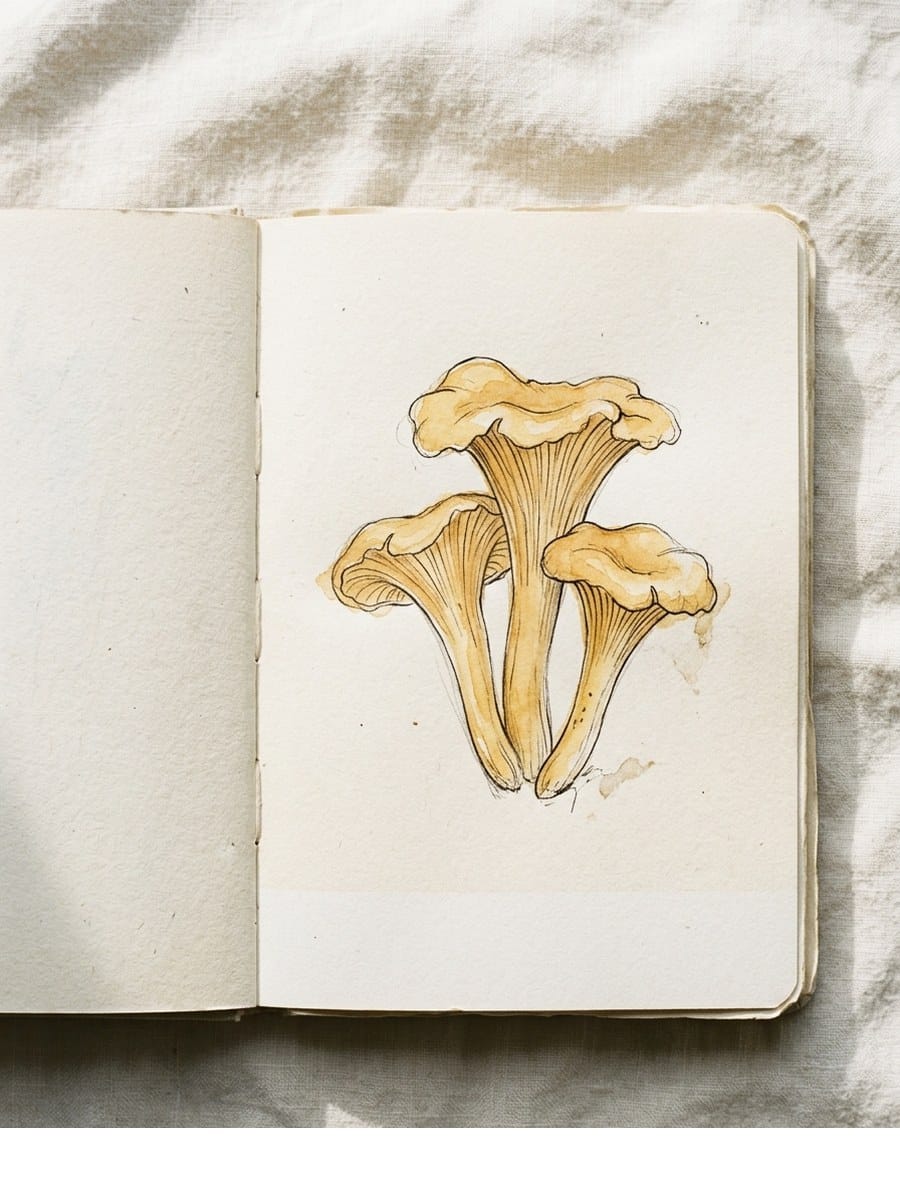
- Chanterelle — funnel-shaped with wavy edges and false gills
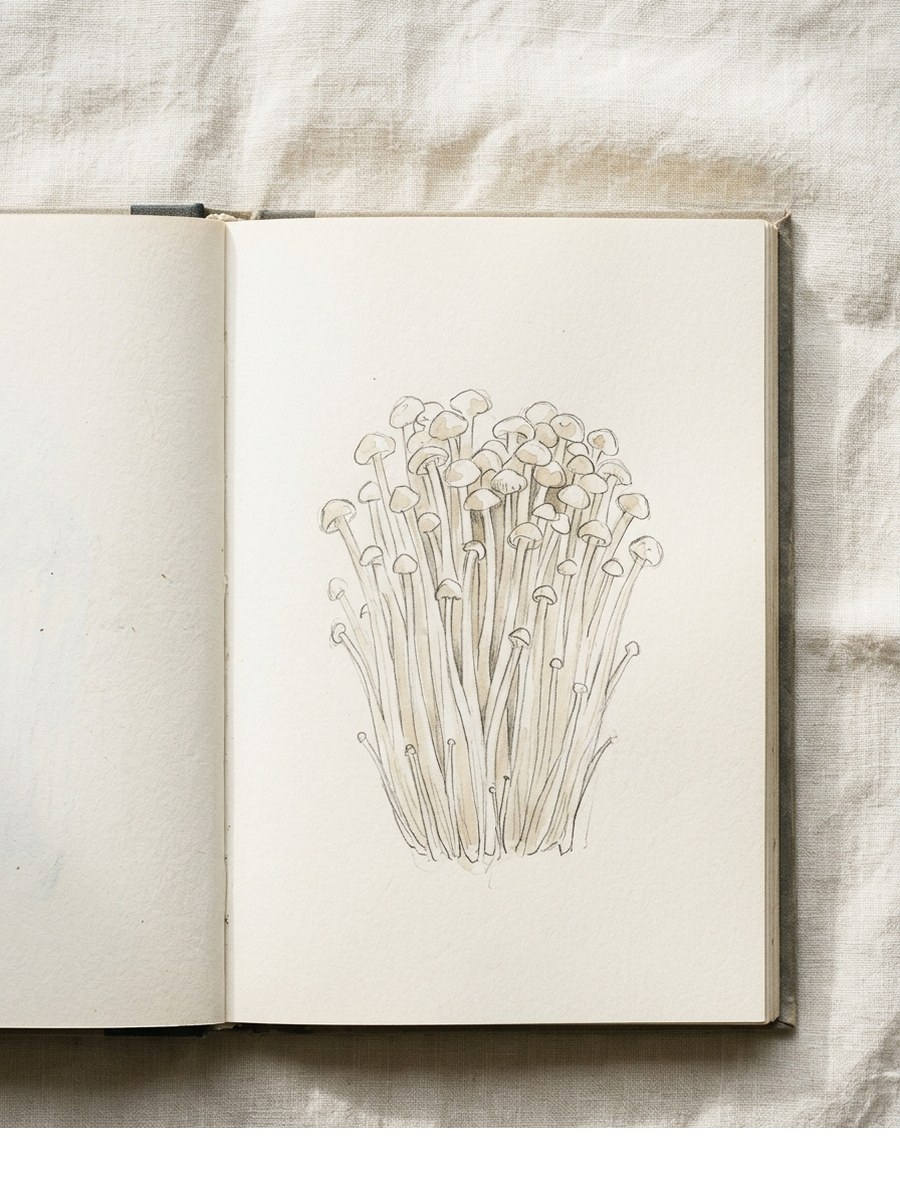
- Enoki cluster — slender pale stems topped by tiny round caps
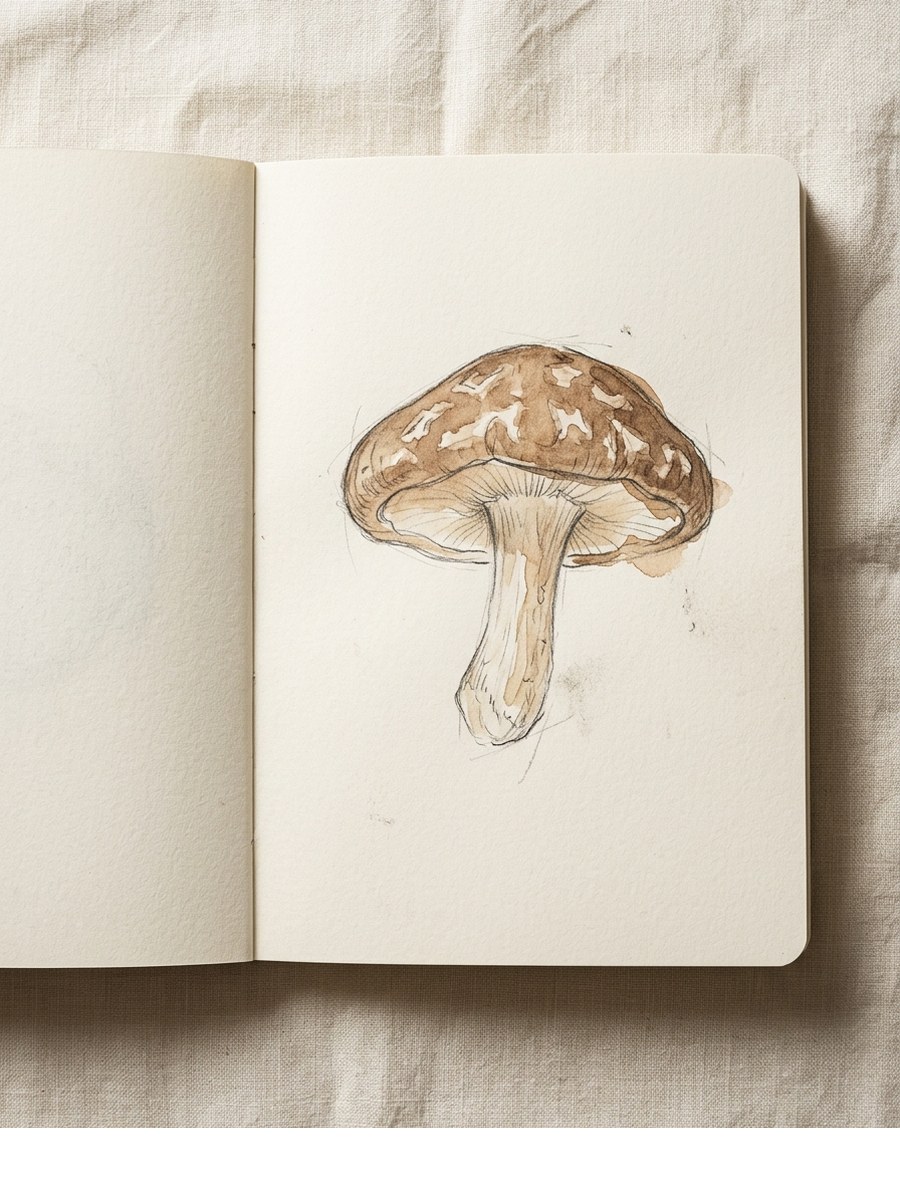
- Shiitake — wide round brown cap with subtle surface cracks
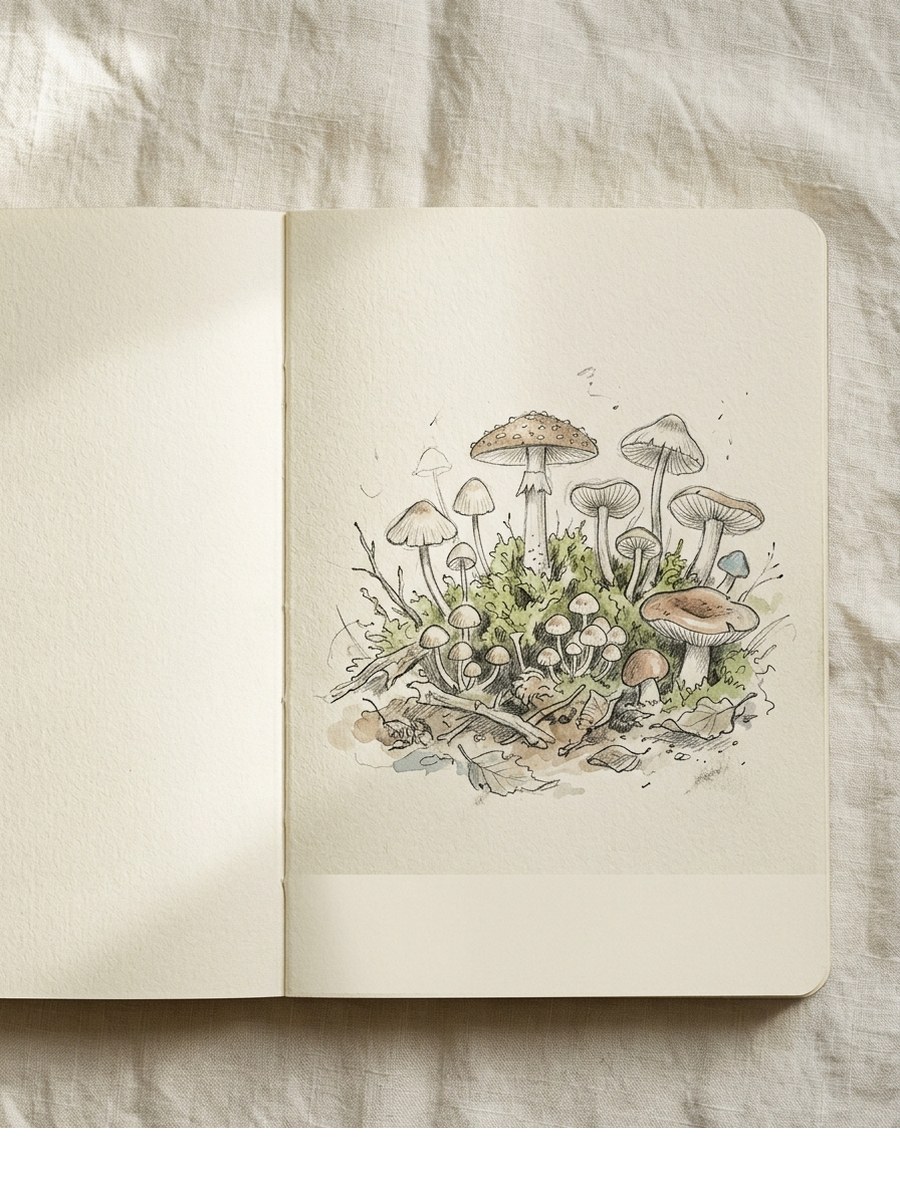
- Tiny forest mushroom cluster — a scattered grouping in different small shapes
- Cottagecore mushroom house — the whimsical one with windows and a door
- Mushroom with snail — a toadstool with a tiny garden snail crawling up the stem
Scroll back up to the email box if you haven’t grabbed it yet — pop your email in and the pack lands in your inbox in a couple of minutes. That’s the only step.
What you need to get started
Quick answer: A pencil, an eraser, a piece of paper, and a printed template are enough. If you want to add value or wash, a graphite set (2H–6B) covers all the shading you’ll need; for paint, a small watercolour pan set and a single round brush will get you through every mushroom in this pack.
I’m a fan of keeping the supply list short — mushrooms reward restraint more than they reward equipment. Here are the bits I actually reach for when I’m sketching cottagecore mushrooms:
Heads up: a couple of links below are affiliate links. If you click and buy something I may earn a small commission at no extra cost to you. I only link to supplies I genuinely use.
- A soft graphite pencil set — a Faber-Castell graphite set is great for layered shading on the gills under a toadstool cap.
- A small watercolour pan set — I use a Winsor & Newton Cotman pocket box for everything cottagecore; the cadmium red, raw umber and sap green cover every mushroom in this set.
- Cold-press watercolour paper — even if you’re tracing, paint over a printed template on a sheet of Strathmore 400-series watercolour paper for the loveliest washes.
- A round watercolour brush — a single Princeton Velvetouch round size 6 covers caps, gills, and every tiny spot.

|

|

|

|
10 easy mushroom drawings to try
Quick answer: The ten mushrooms in this guide go from absolute-beginner (a single classic toadstool) to gently more involved (a whimsical mushroom house and a clustered scene with a snail). Pick whichever one matches your mood — there’s no order you need to follow.
1. The classic toadstool
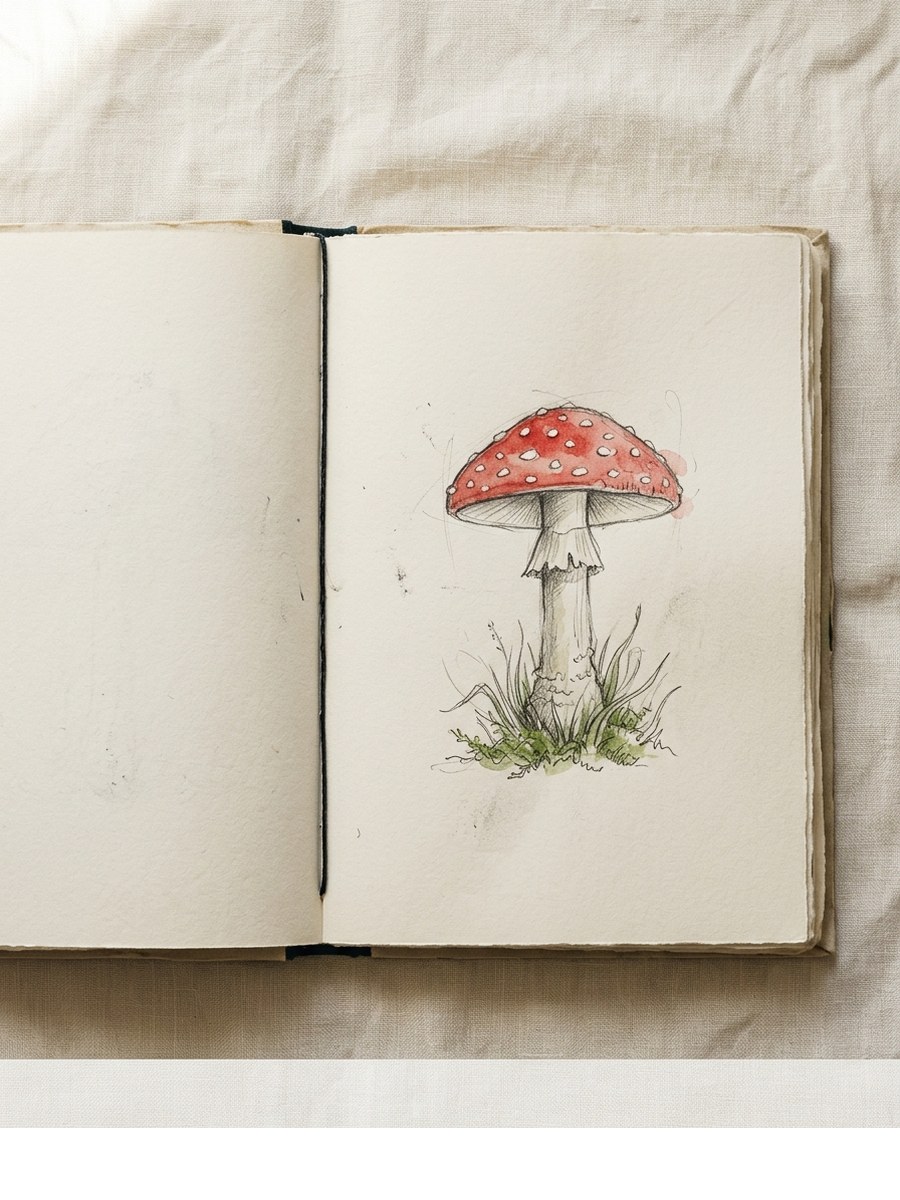
Start with the storybook shape — a slim white stem topped by a wide rounded cap that arches gently down at the edges, with simple cream spots scattered across the surface. Soft gills under the cap, a small grass tuft at the base. This is the mushroom that lives in every fairytale, and it’s the friendliest one to begin with.
2. The fly agaric
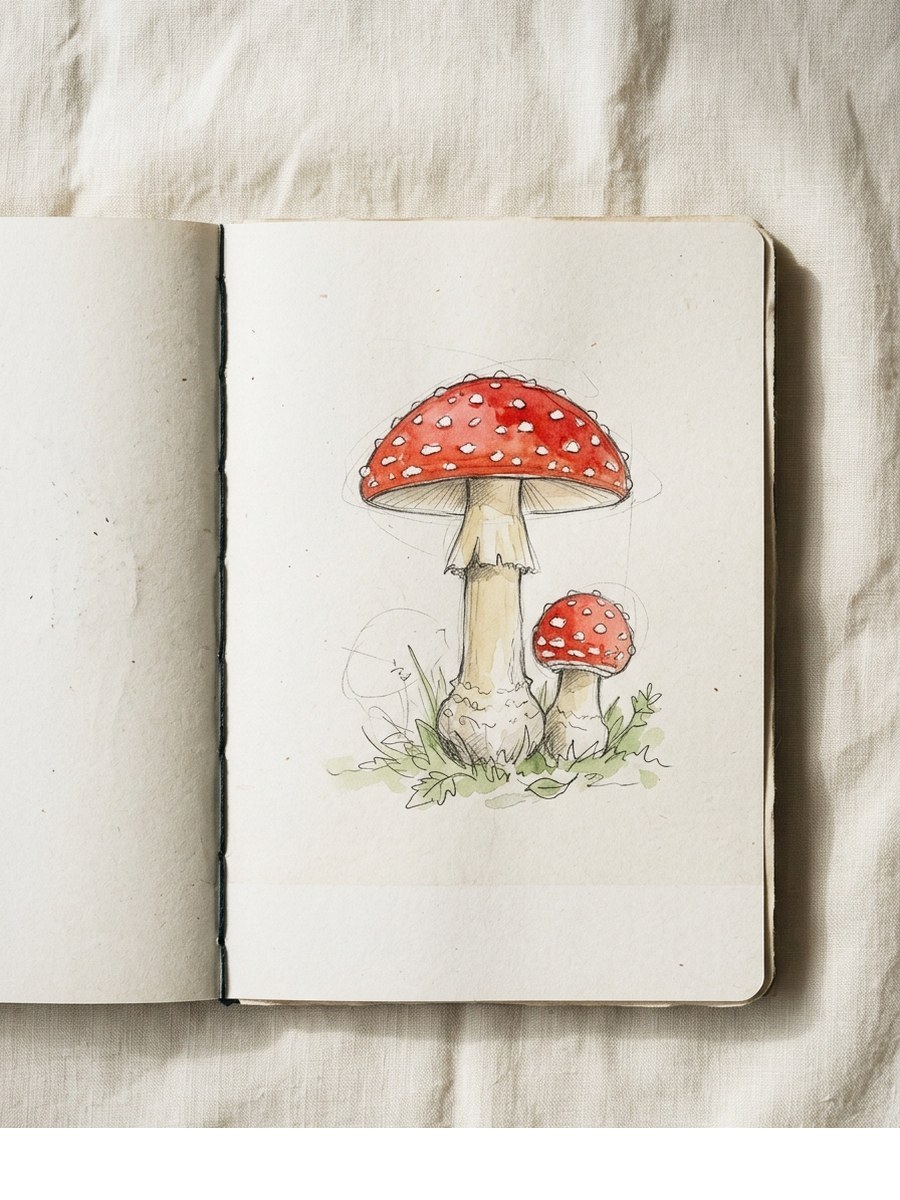
The icon. A bright red cap covered in cream wart spots, sturdy white stem with a small ring (the annulus), bulb at the base. The fly agaric is the one you’ve seen on every Mario block and every cottagecore moodboard — and once you draw it, it’s hard to stop. Pay attention to the spots: they’re irregular, slightly raised, scattered rather than evenly placed.
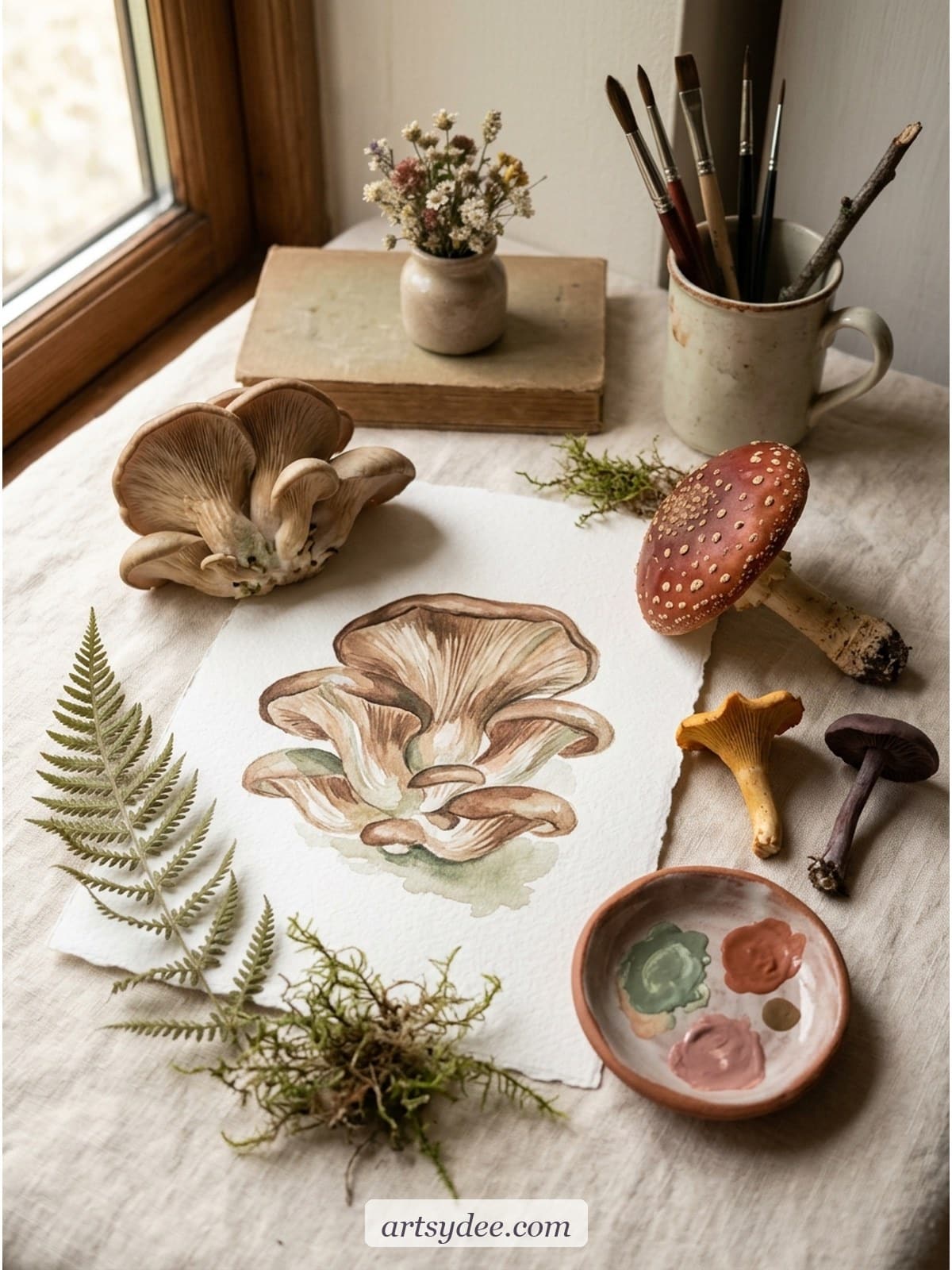
3. The oyster mushroom cluster
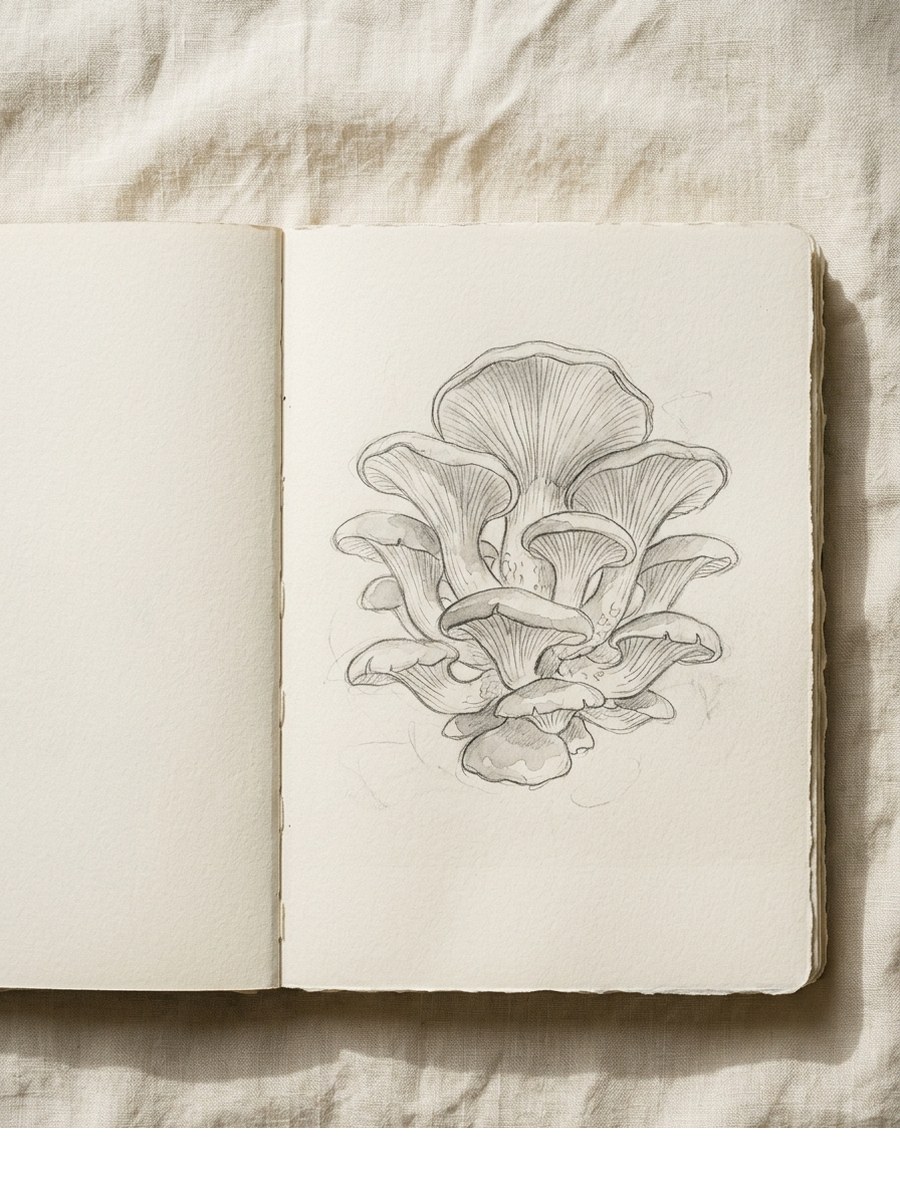
Three or four fan-shaped caps growing together from one central base, with their decurrent gills running visibly down short side stems. Looks more complex than it is — once you’ve drawn one cap, just overlap the next slightly behind it. Beautiful with a pale grey wash.
4. The morel
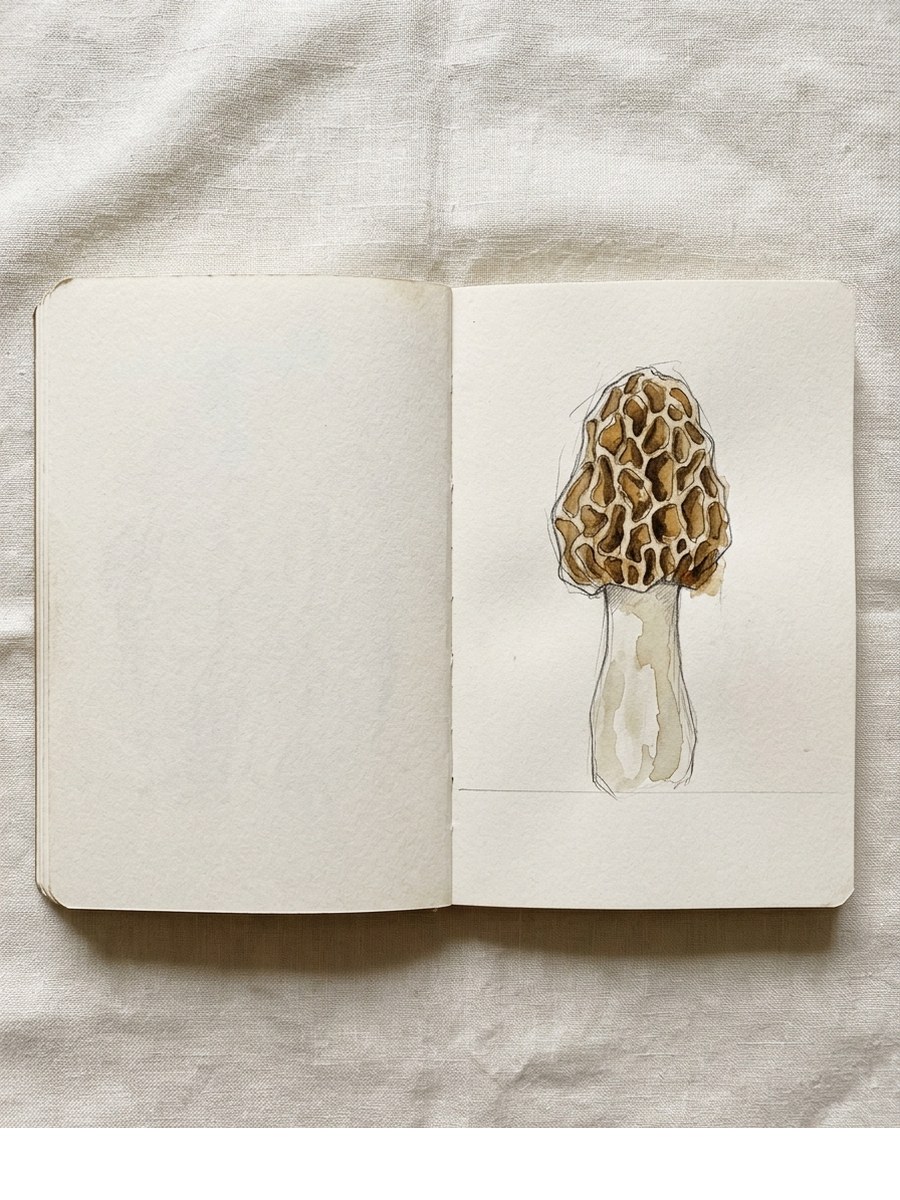
The honeycomb mushroom. A conical cap covered in irregular pits and ridges, sitting on a slim hollow stem. The texture looks intimidating but it’s just a series of soft uneven shapes — don’t try to be too neat. A few moss accents at the base ground the whole thing.
5. The chanterelle
A funnel shape with wavy lifted edges, false gills (forked ridges) running down a tapering stem. Looks like a small trumpet. A warm yellow ochre wash brings the chanterelle to life — it’s the most golden mushroom in the set.
6. The enoki cluster
Many slender pale stems gathered together at the base, each topped by a tiny round cap. Almost like a small bouquet. Keep the lines loose and let the stems lean in slightly different directions — too straight and they look like pasta.
7. The shiitake
Wide round brown cap with subtle cracks and patches across the surface, gills tucked underneath, a sturdy curved stem. Very satisfying to shade — the cap has a lot of texture variation, which means your “imperfections” will read as detail.
8. The tiny forest mushroom cluster
A scattered grouping of five or six tiny mushrooms in different small shapes — some round, some pointed, some with ruffled caps — growing from a small patch of moss. This one is part doodle, part atmosphere. Wonderful as a sketchbook border or a corner accent on a journal page.
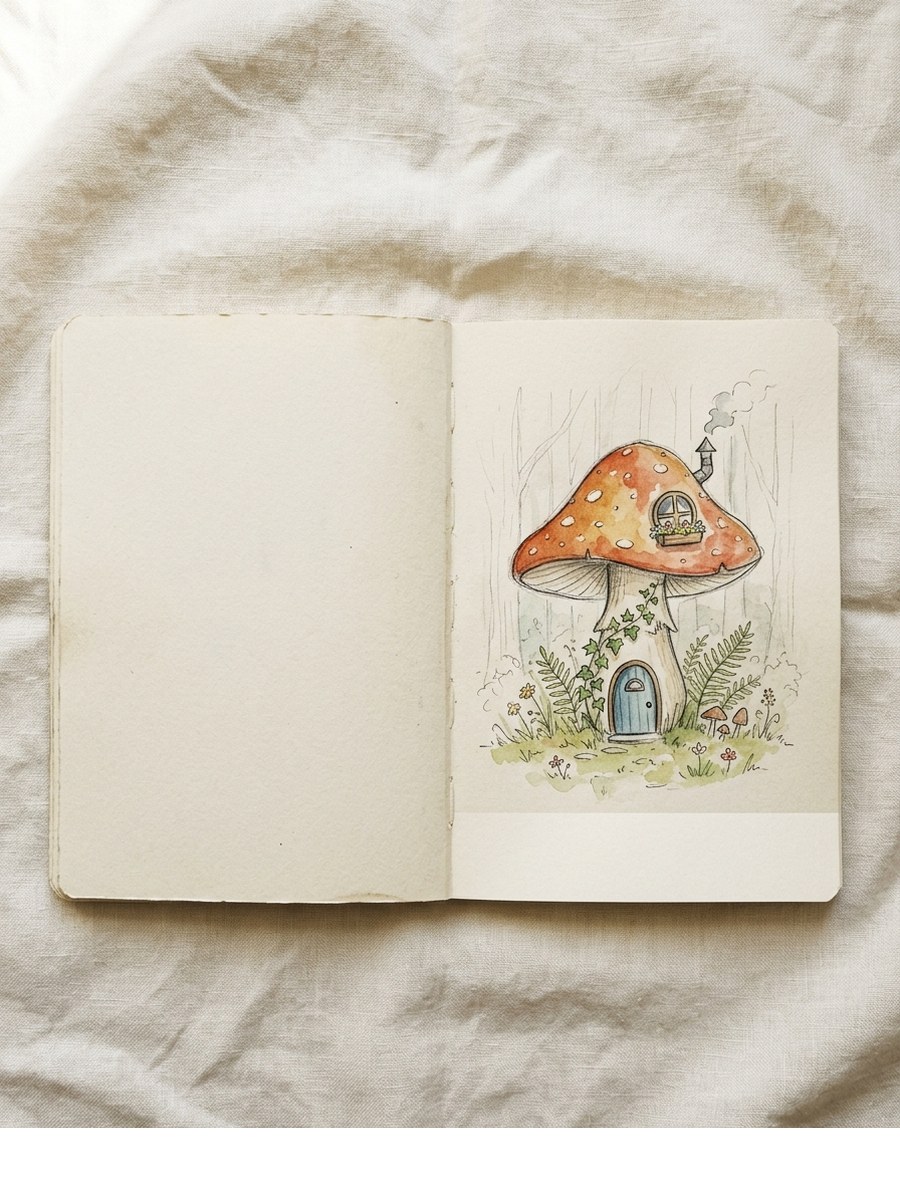
9. The cottagecore mushroom house
The whimsy one. A large fly-agaric-style mushroom with a small round door and two round windows in the cream stem, a tiny chimney on the cap, surrounded by little grass tufts and a single tiny wildflower. This is the mushroom you’d put on a child’s wall, or in a sketchbook page about a good day. The trick is keeping the door and windows simple — too much detail and the magic leaks out.
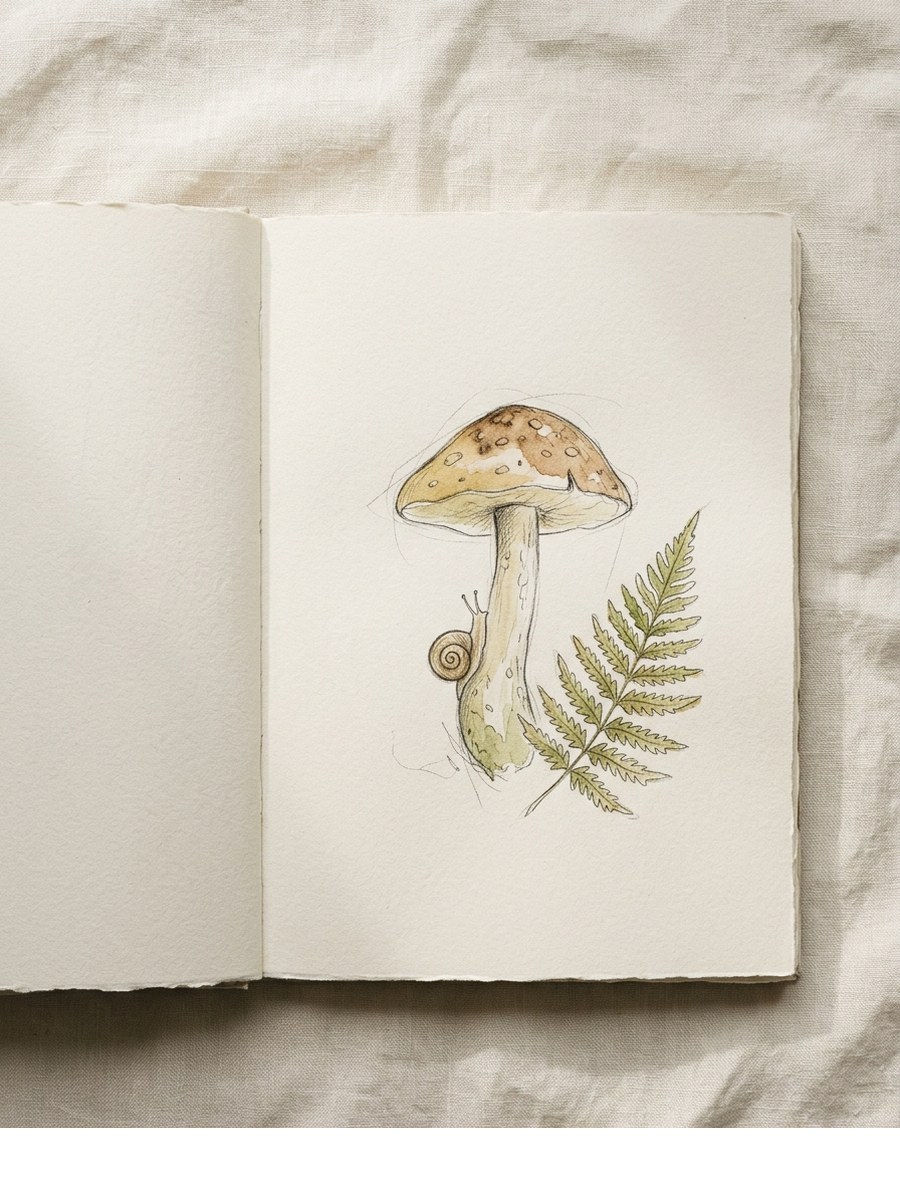
10. The mushroom with snail
A single round-capped toadstool with a tiny garden snail crawling up the side of the stem, fern fronds curling around the base. The snail makes the whole composition feel like a tiny narrative — like you’ve stumbled across a quiet moment on the forest floor. Two soft pencil curves give you the snail’s body, and a small spiral becomes the shell.
How to take your mushroom drawings further
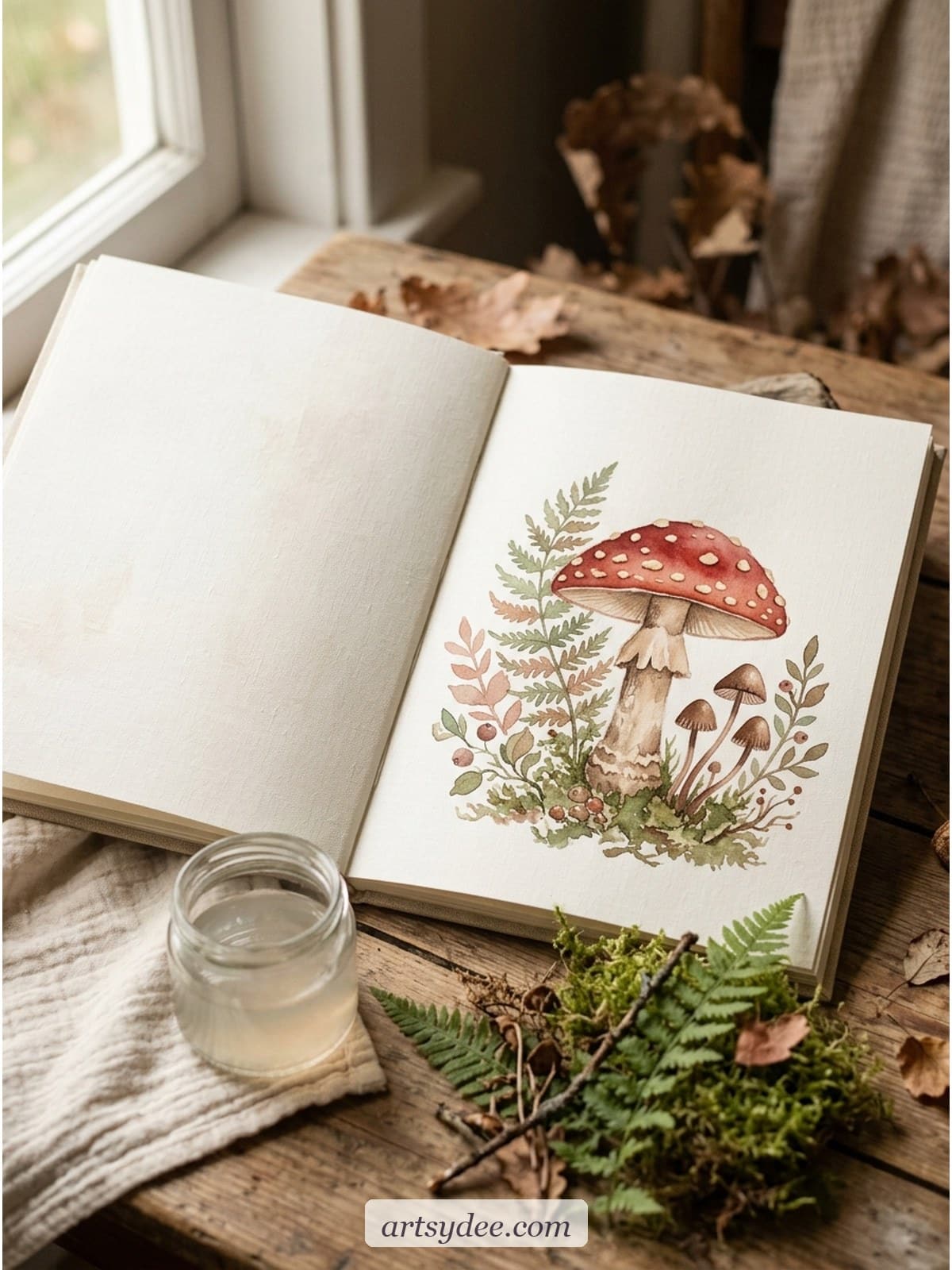
Quick answer: Once you’re comfortable with the line work, paint over a printed template with a soft watercolour wash — cadmium red for the fly agaric cap, raw umber for shiitake brown, sap green for moss, or a wet-on-wet bleed of warm terracotta and cream for a forest-floor scene. Watercolour over a traceable line is the fastest way to graduate from “drawing” to “painting”.
If you want to keep practising, try the same mushroom four times across one page in different mediums — graphite, ink, watercolour, gel pen. You’ll learn more from one page of comparison than from four separate finished pieces. And once you’ve drawn one species enough times to know it by feel, try it again in a different palette: the fly agaric is iconic in red, but it’s stunning in dusky lavender too.
And if mushrooms turn into a phase you want to stay in, my Patreon drops new watercolour template packs every month — the kind you can trace, paint, or re-mix into your own sketchbook. The Tier 2 Creatives Treasure Chest is £8 a month and includes the full back catalogue of watercolour PDFs, Procreate brushes, and printable extras (a lot of which sit in this dreamy cottagecore-and-botanical space).
Tips for beginners
Quick answer: Sketch with a light pencil first (anything from 2H to HB), build the cap before the stem, vary your spot sizes for fly-agaric mushrooms, draw clusters by overlapping rather than spacing, and let mushrooms sit on a small grass tuft so they don’t float on the page.
- Sketch lightly first. A pencil that’s too dark will dent the page and shadow your watercolour wash. Use a soft hand and a 2H if you’re doing line work, an HB if you’re shading.
- Cap before stem. The cap shape sets the whole mushroom. Get the curve and proportion right, then build the stem to match — not the other way around.
- Vary your spot sizes. Real fly-agaric spots are irregular. A row of identical dots looks like polka-dot wallpaper, not a mushroom.
- Cluster by overlapping. When you draw oyster or enoki mushrooms, overlap the shapes rather than lining them up. The overlap is what makes a cluster feel three-dimensional.
- Ground them. Even one tiny grass tuft or a moss accent at the base stops a mushroom looking like it’s floating. Add a small shadow line under the base if you want extra weight.
Want monthly templates? Join the Creations Club
If junk-journal-adjacent printables are more your thing — vintage ephemera, scrapbook kits, pocket pages, decorative borders, and seasonal collections — that’s the home of the Artsydee Creations Club. £8 a month, new printables every month, and a growing back catalogue. Watercolour and Procreate templates live on my Patreon; junk-journal printables live in the Creations Club.
You can also browse the full Artsydee Payhip shop if you’d rather pick up individual template packs.
Mushroom drawing FAQ
What’s the easiest mushroom to draw for beginners?
Start with a classic toadstool. It’s two simple shapes — a wide rounded cap and a slim stem — and you can finish it in two minutes. Add cream spots if you want it to read as a fly agaric, or leave it plain for a softer storybook look.
Can I print these mushroom templates on regular paper?
Yes — they print beautifully on standard A4 printer paper for tracing and pencil work. If you want to paint over them with watercolour, print onto a sheet of cold-press watercolour paper instead so the paper doesn’t buckle.
What pencils should I use to draw mushrooms?
A 2H for the initial outline (so it stays light and erases cleanly), an HB or 2B for general shading, and a 4B–6B for the deepest shadows under the cap and inside the gills. A blending stump helps for soft cap textures, but your finger works in a pinch.
How do I draw the spots on a fly agaric mushroom?
The spots are irregular wart-like marks rather than perfect dots. Vary the sizes — some larger, some tiny — and scatter them unevenly across the cap, with more concentration near the centre. Leave some areas of clean red showing between them; spots that overlap the edges of the cap should be cropped naturally.
Can I sell drawings I make using these templates?
The templates are for personal practice — trace them, paint over them, fill your sketchbook. Original artwork you create after practising is yours. The template files themselves can’t be resold or redistributed.
Final thoughts
If your sketchbook has been quiet, a mushroom is a kind way back in. It’s small, it’s forgiving, it makes space for atmosphere, and it asks almost nothing of you in terms of supplies. Print one of the templates tonight, trace it lightly, and see what happens when you add a bit of wash and a tiny snail.
📌 Pin this for later — save the pin below to your favourite sketchbook board so the templates stay close to hand. And if you’d like more like this, follow me on Pinterest where I share a new aesthetic drawing prompt or template pack most weeks.
You might also like
- Easy Drawings for Beginners — 50 simple ideas to get you sketching tonight
- Aesthetic Things to Draw — moody, dreamy, sketchbook-friendly prompts
- Mushroom Drawing — a deeper dive on cottagecore mushroom art
- 100 Sketchbook Prompts — a year’s worth of drawing ideas
- Sketch Ideas for Beginners — gentle, low-pressure drawing prompts
Ten free mushroom templates — toadstools, morels, the little snail — make a lovely start to a cottagecore sketchbook. My Payhip shop has premium drawing template sets, reference packs and Procreate brushes for the ferns, moss and everything else you’ll want to add.
Have a browse →