
Last Updated on October 15, 2026 by Dee
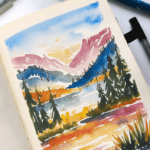
Here are 16+ easy watercolor tutorials for beginners, from simple florals to dreamy landscapes, plus free printable painting templates for watercolor.
Want to paint flowers step by step?
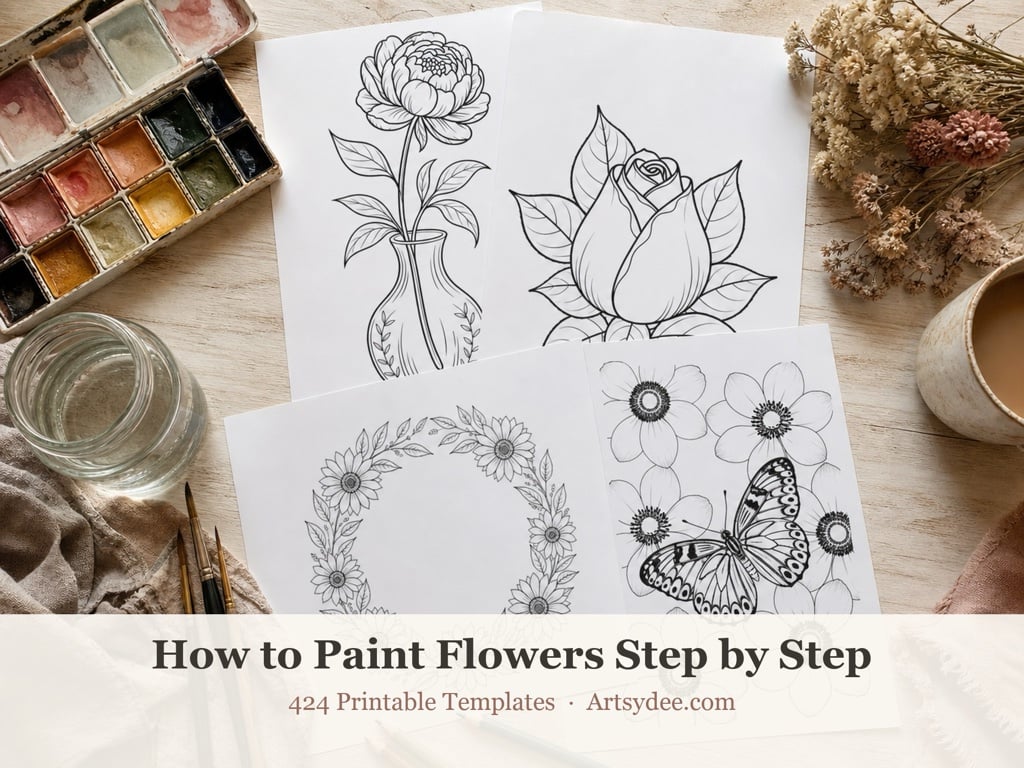
My How to Paint Flowers Step by Step bundle has 424 printable watercolour practice templates across 15 flower collections, plus 4 step-by-step painting guides for iris, peonies, spring flowers and sunflowers. A4 templates plus tutorial PDFs, £22.
See the 424 templates →Watercolor painting is a beautiful and versatile medium, perfect for beginners who want to explore their creativity. Whether you’re just starting out or looking to refine your skills, these easy and free watercolour tutorials will guide you step by step. From simple floral compositions to dreamy landscapes, you’ll find inspiring projects to practice essential techniques like blending, layering, and brush control.
Grab the free Artsydees Printable Templates For Watercolor at the top of this post!
Table of Contents
16+ Best Watercolor Tutorials for Beginners
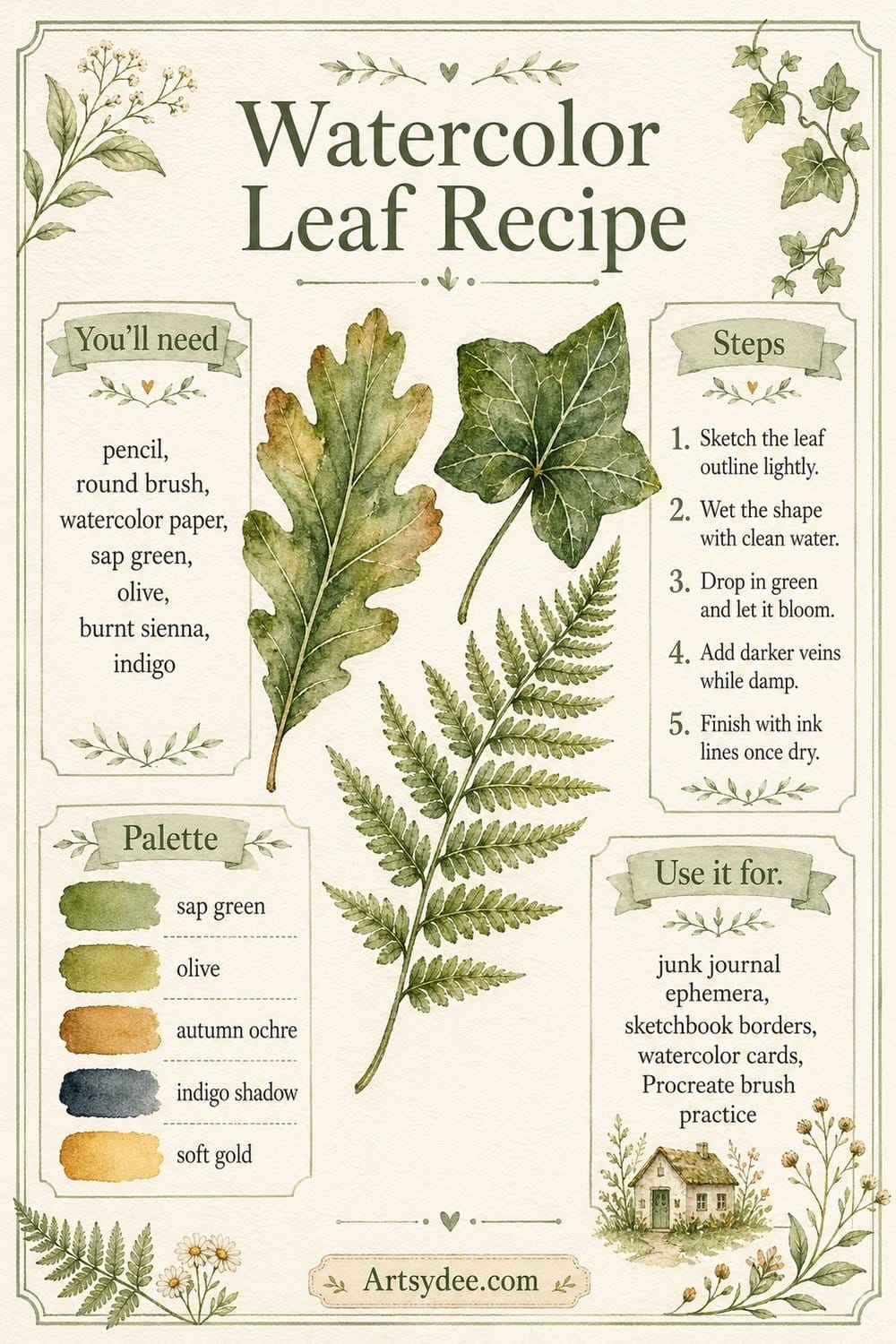
Here’s a quick watercolor leaf recipe to warm up with — pin it before diving into the tutorials below.
1. Unlock the Beauty of Watercolor Sunflowers with Line and Wash by Artsydee
2. Paint A Whimsical Watercolor Butterfly
3. Hummingbird Watercolor: Watercolor Paintings Easy Step By Step (Line & Wash)
Learn how to paint a vibrant watercolor hummingbird using the beautiful line and wash technique! This beginner-friendly tutorial will guide you through sketching delicate details with ink and layering watercolor washes to bring your hummingbird to life. You’ll practice blending colors, adding depth with line work, and creating a loose yet expressive style. This is a perfect project for anyone looking to explore ink and watercolor together. Plus, grab the free printable template to make sketching easier!
4. 5 EASY Watercolour Flowers (Beginner Watercolor Projects) by Emma Jane Lefebvre
Emma Jane Lefebvre’s popular tutorial teaches you how to paint five gorgeous blooms: roses, pansies, forget-me-nots, dahlias, and tulips. She makes the process easy and fun!
5. Water Colour Techniques For Beginners by Jenna Rainey
This in-depth guide by Jenna Rainey is your one-stop shop for watercolor basics. You’ll learn about supplies, washes, gradients, layering, and all the must-know techniques.
6.【5 Watercolor Mistakes】And How To Avoid Them by Laovaan
Even beginners can make mistakes! Laovaan’s video helps you avoid common pitfalls like overworking your paint or using dirty water so you’ll create beautiful pieces from the start.
7. Easiest Way to Paint TEN Trees with Watercolor! by Jenna Rainey
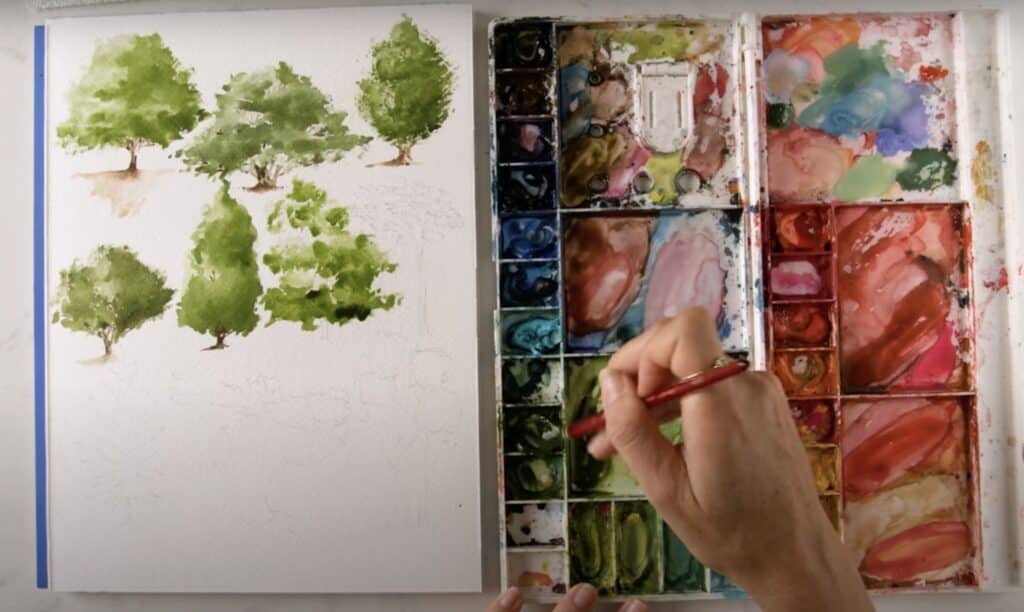
Jenna Rainey is back with a delightful tutorial on painting various trees, from simple pines to majestic oaks. Perfect for practicing those watercolor skills.
8. Loose-Style Beach Scene (with color mixing lesson) by Jenna Rainey
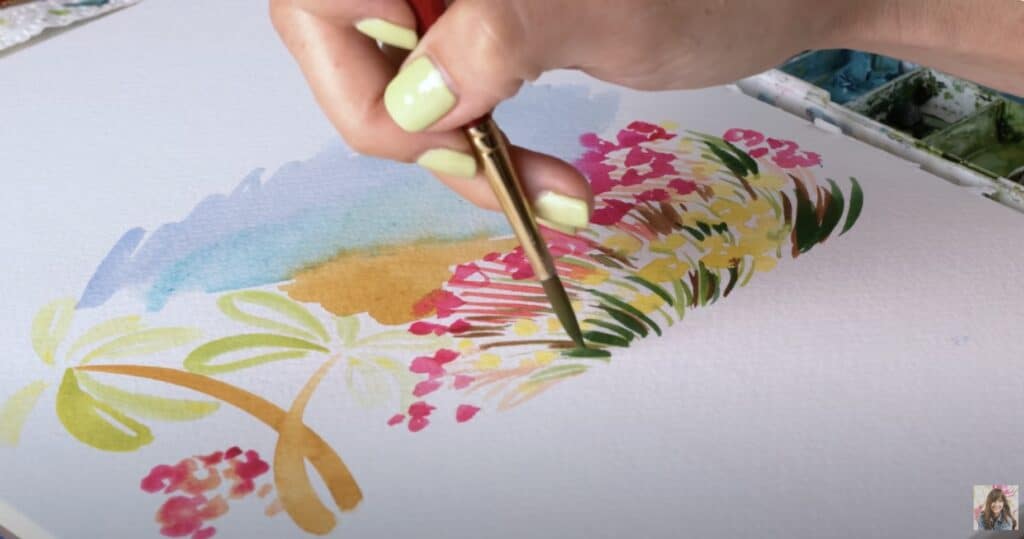
Learn a dreamy, loose-style with Jenna Rainey’s beach scene tutorial. This relaxed approach is fantastic for beginners, and you’ll even get a color-mixing lesson!
9. Easy Watercolor Techniques For Beginners by The Mind of Watercolor
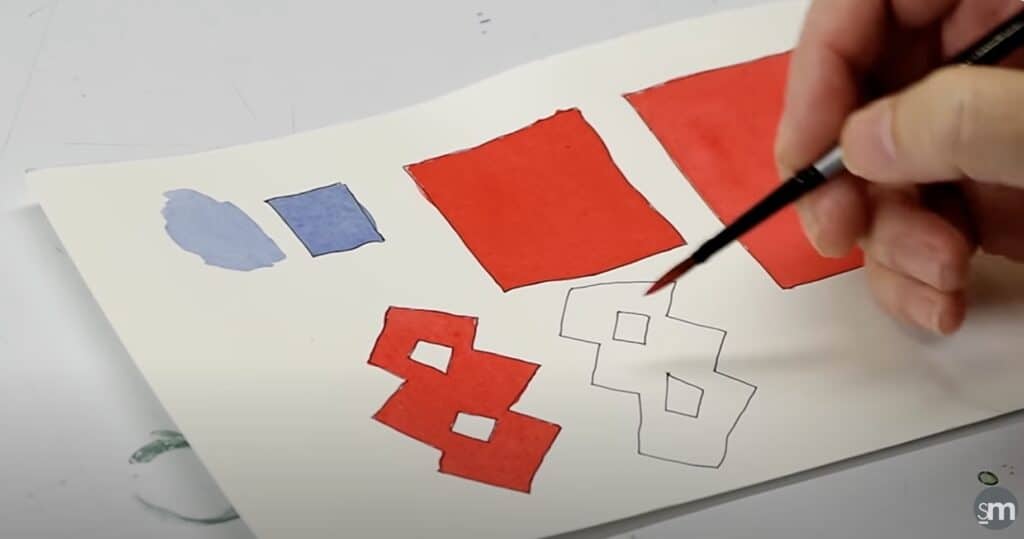
This awesome tutorial is your starting point for mastering watercolor essentials. Learn techniques like wet-on-wet, wet-on-dry, blending, and a whole lot more.
10. How To Paint Watercolor Landscapes by Shayda Campbell
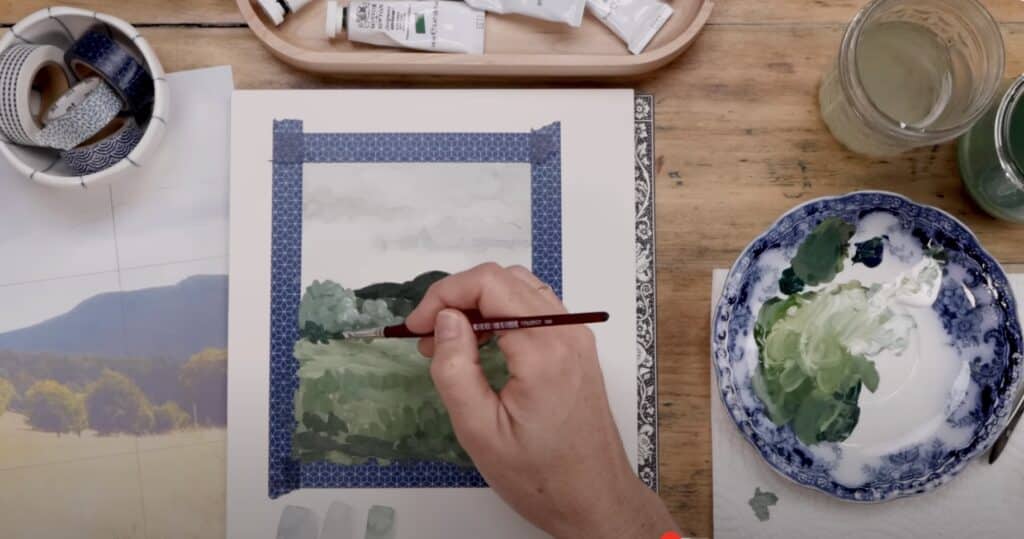
Level-up your skills with Shayda Campbell’s stunning mountain landscape tutorial. You’ll learn how to layer colors and create amazing depth!
11. Watercolor for Beginners – How to Paint a Galaxy by Creations CeeCee
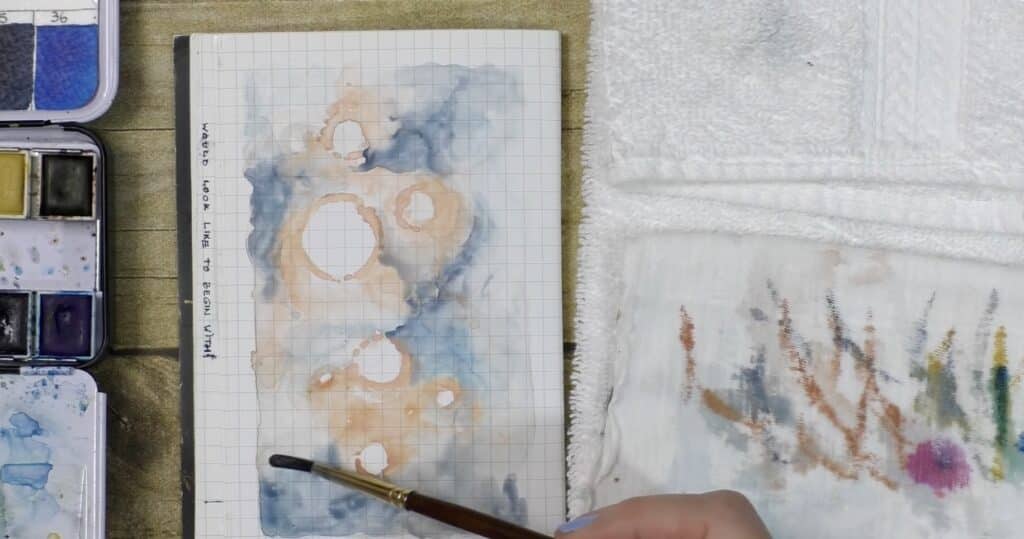
Blast off with this popular tutorial! Learn to paint gorgeous watercolor galaxies, perfect for those who love a cosmic vibe.
12. How to Paint Watercolor Flowers Step By Step by Karen Rice Art
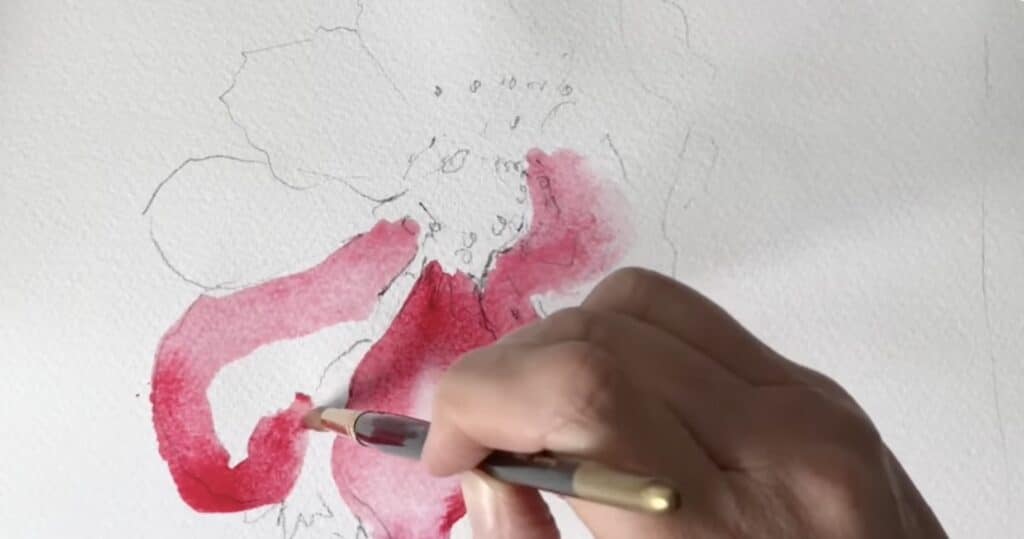
Karen Rice’s gentle style is ideal for beginners who might be a little nervous. Learn to paint simple flowers in a relaxing and encouraging way.
13. Watercolor Tutorial: How to Paint a Bird by Oliver Pyle
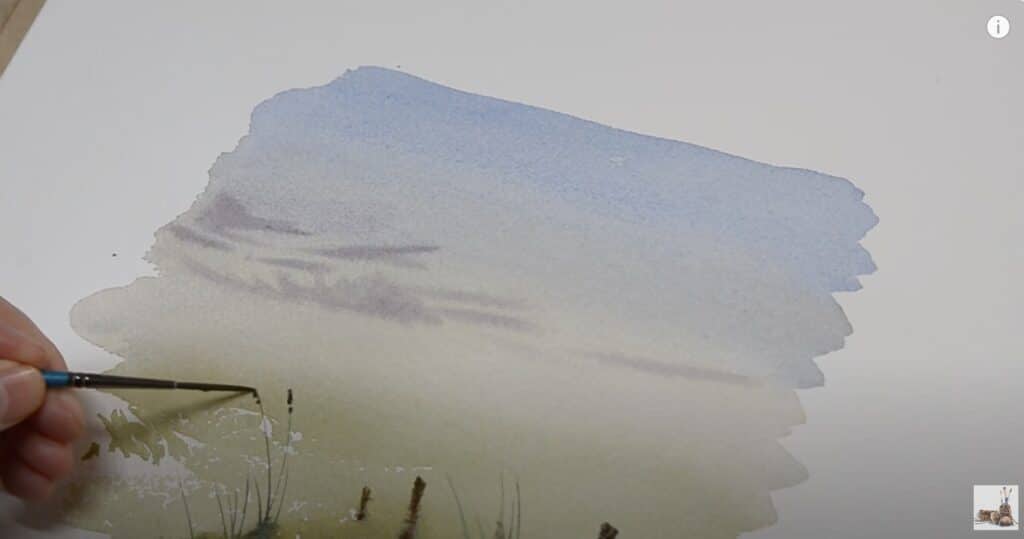
Paint those feathered friends with Oliver Pyle’s detailed bird tutorial. If you have some basic skills, you’ll be creating beautiful birds in no time.
14. How to Paint Loose Florals by Diane Antone Studio
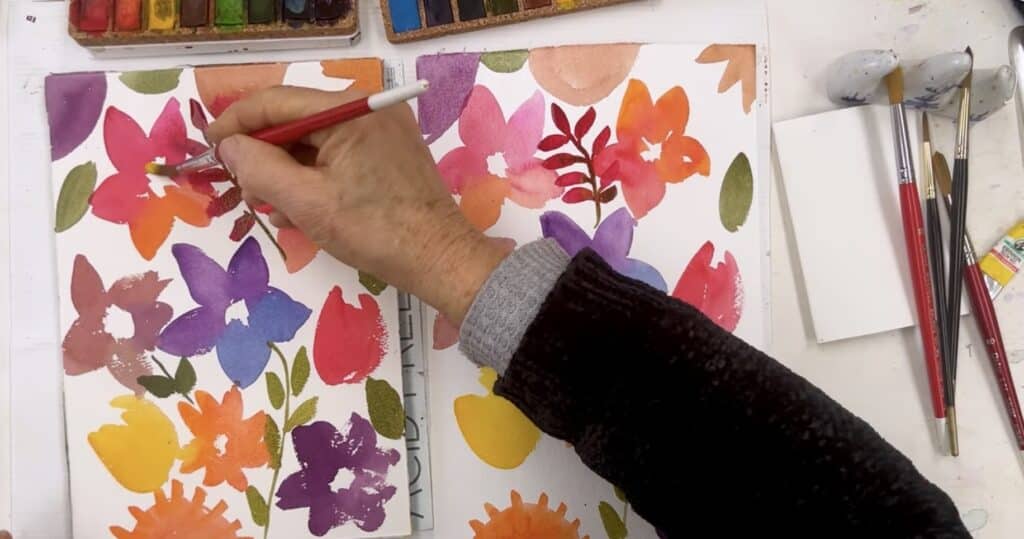
Embrace a free-flowing style with Diane Antone. This approach is fantastic for beginners who love a less controlled, more expressive way of painting.
15. EASY Watercolor Tutorial for Beginners: Sunset Scene by In the Studio with Michele Webber
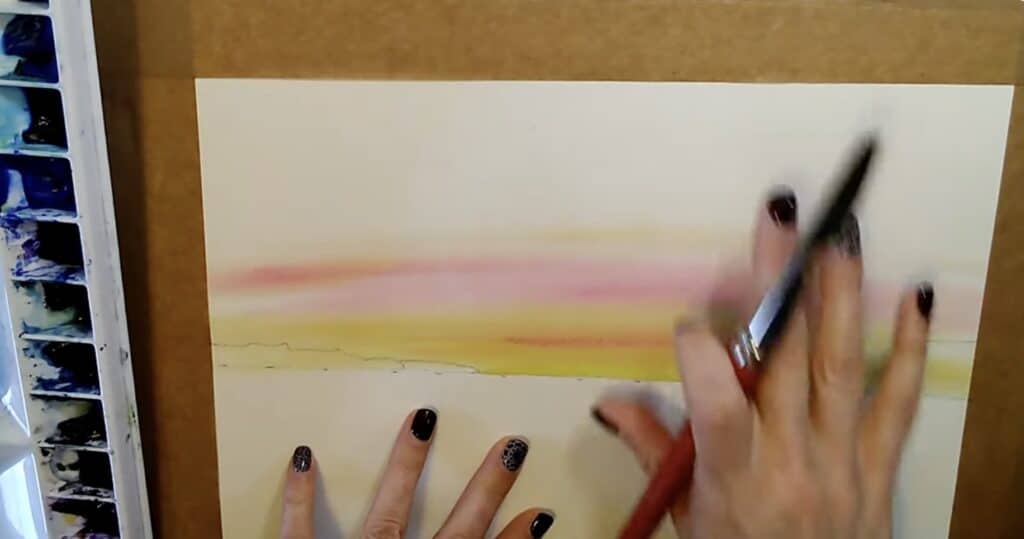
Paint a beautiful sunset scene with Michele Webber. Learn essential washes and color blending skills for those dreamy watercolor effects.
16. Easy Watercolor Landscape Tutorial | Beginners Welcome! by Matthew White
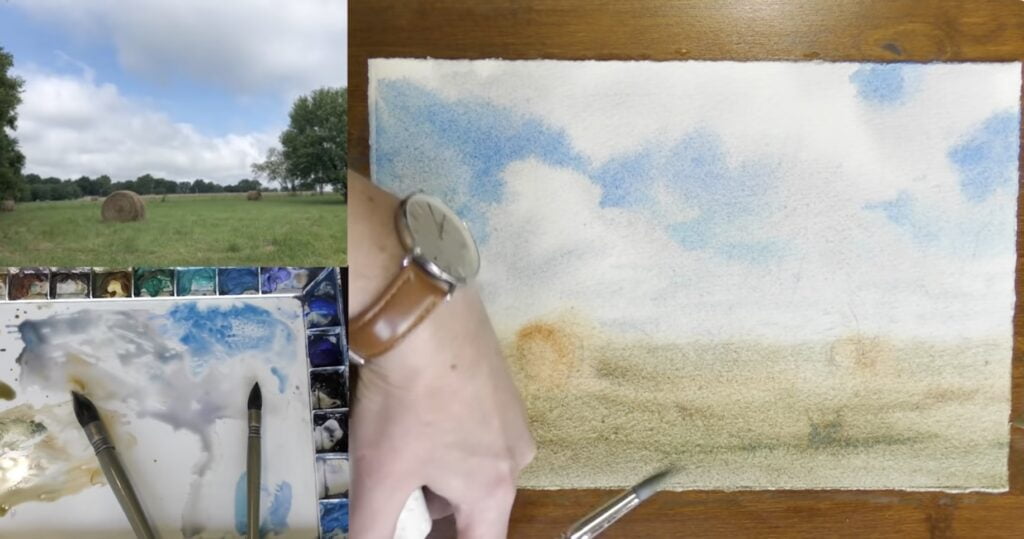
Matthew White’s relaxing landscape tutorial is a perfect project for landscape lovers. Get comfy and learn some peaceful painting techniques.
17. How to Paint a Robin | Watercolor Tutorial by Let’s Make Art
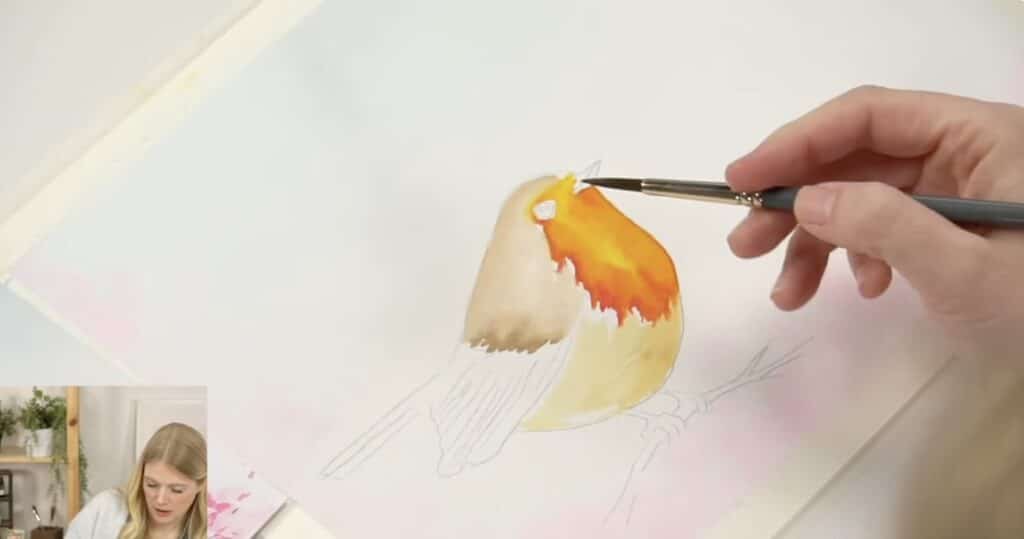
Learn to paint the classic backyard bird with Let’s Make Art’s easy-to-follow tutorial. It’s a great way to practice painting animals!
18. Watercolor Techniques for Beginners (That Actually Work!) by Kirsty Partridge Art
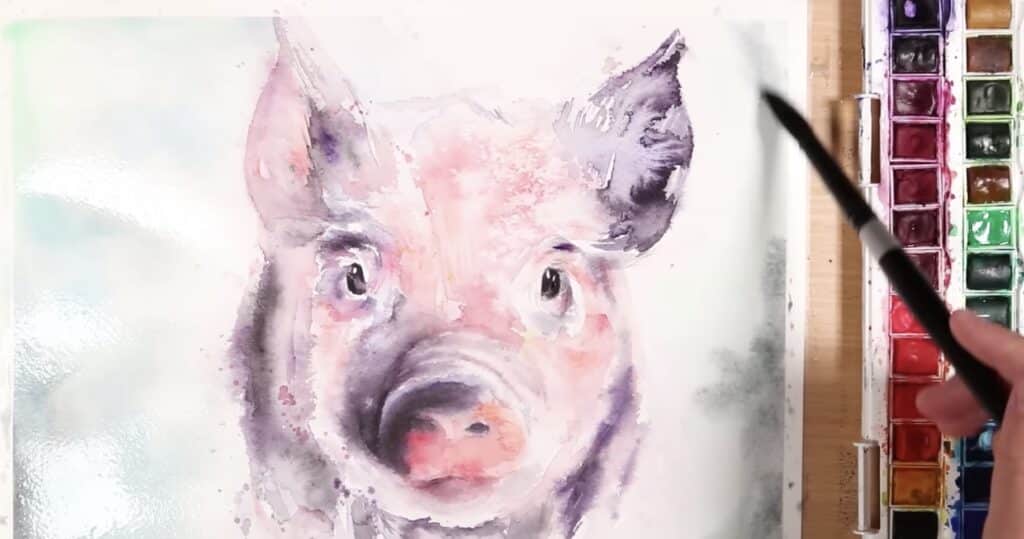
Kirsty Partridge focuses on core watercolor techniques that will dramatically improve your skills. Perfect for building a strong foundation.
Let me know which tutorials you enjoy most, and share your beautiful watercolor creations!
Pin This For Later!

Love These Watercolor Templates? Get Even More Exclusive Creative Goodies on My Patreon! 🎨
If you’re enjoying these free printables, why not join my Artsydee Patreon community? As a member, you’ll gain access to exclusive Procreate tutorials, watercolor lessons, and tons of printables like this one—delivered to you monthly (and sometimes even twice a month!). Plus, you’ll get sneak peeks at upcoming projects and have a say in what content I create next. ✨
Join today and unlock premium resources to take your creativity to the next level!
For little painters, try these free canvas painting templates for kids.
Frequently Asked Questions About Easy Watercolor Tutorials
What’s the best watercolor paper for an absolute beginner?
Cold press watercolor paper at 140lb (300gsm) is the sweet spot — it has just enough tooth to hold pigment without buckling when you lay down a juicy wash. Student-grade pads from Strathmore, Canson XL, or Arteza are perfectly fine while you’re learning. Save the 100% cotton paper (Arches, Saunders Waterford) for when you’re painting things you actually want to frame.
Do I need expensive paints to follow these tutorials?
Not at all. A 12 or 24-pan student set from Winsor & Newton Cotman, Sakura Koi, or Van Gogh will carry you through every tutorial in this post. The truth is that paper quality matters far more than paint quality in the beginning — bad paper will sabotage even the most expensive pigments.
What’s the difference between wet-on-wet and wet-on-dry?
Wet-on-wet means you wet the paper first and drop pigment into the damp surface — you get those dreamy, soft, bleeding edges (perfect for skies, galaxies, and loose florals). Wet-on-dry means you load a wet brush with paint and apply it to dry paper — you get crisp edges and more control (perfect for petals, leaves, and detail work). Most paintings use both, layered.
Why does my watercolor keep looking muddy?
Almost always one of three culprits: dirty rinse water, overworking the paint after it’s started to dry, or mixing too many colors together (especially complementary colors). Keep two jars of water on your desk — one for rinsing, one for clean mixing — and let each layer dry fully before you go back in. Patience is genuinely the technique.
Can I use the printable templates with any paint brand?
Yes — the templates are just pencil-style outlines printed on regular paper. For best results, print them onto proper watercolor paper using an inkjet printer (laser printer toner can repel watercolor in odd ways), or trace them onto watercolor paper using a lightpad or a sunny window.
Are these tutorials suitable for kids?
Most of them, yes — especially the loose florals, butterflies, and beach scenes. The galaxy and sunset tutorials are particularly forgiving and feel magical for younger painters. I’d skip the more detailed botanical and bird tutorials for very young children and start them with the simpler shapes first.
How long does it actually take to get “good” at watercolor?
You’ll see real progress after about 30 hours of painting — which sounds like a lot until you realise that’s 15 minutes a day for four months. The trick is consistency over intensity. One small painting every day will move you faster than a four-hour session every other weekend.
Tube watercolors or pan watercolors — which should I buy?
Pans for beginners. They’re tidier, more portable, and force you to mix colours on a palette (which is half the skill). Move to tubes when you’re painting larger pieces or want to mix big washes — at that point the squeeze-and-go format saves you time.
How do I fix a watercolor painting that’s gone wrong?
Honestly? Most of the time you don’t — and trying usually makes it worse. Lift gently with a clean damp brush while the paint is still wet, blot with a tissue if a wash gets out of control, or once it’s dry, lean into the “happy accident” and let the unintended bloom become part of the painting. Watercolor rewards working with the medium rather than against it.
How often do you add new tutorials and templates?
I add a new watercolor template set to the blog most Mondays, and I send the printable straight to your inbox when you drop your email into the form on this post. If you want the full library — including the premium reference sets with hand-mixed colour recipe cards — that lives over on my Patreon, where I also share the painted samples and step-by-step process videos.
Other Articles You May Enjoy…
How to Paint Watercolor Palm Trees
How to Paint a Cherry Blossom Watercolor
Pen and Ink Watercolor Flowers
Best Watercolor Set For Beginners
Looking for things to draw on your hand? 50 Easy drawing ideas
🎬 Love video tutorials? Subscribe to my YouTube channel for weekly art tutorials and creative inspiration!
Working through these tutorials? My Patreon reference sets add colour-recipe cards so every mix is easy to repeat.
Explore the Patreon sets →If these free painting tutorials got you started, my premium reference sets on Patreon go further — finished pieces with colour-recipe cards so you always know exactly which paints to mix. From £14 (~$18).
Explore the Patreon sets →
Thank you Artsydee for so generously pulling together and sharing such useful wonderful skills and techniques in water colouring. As I retiree and a beginner, I trully appreciate and treasure your sharing.
Warmest regards