Last Updated on October 13, 2026 by Dee
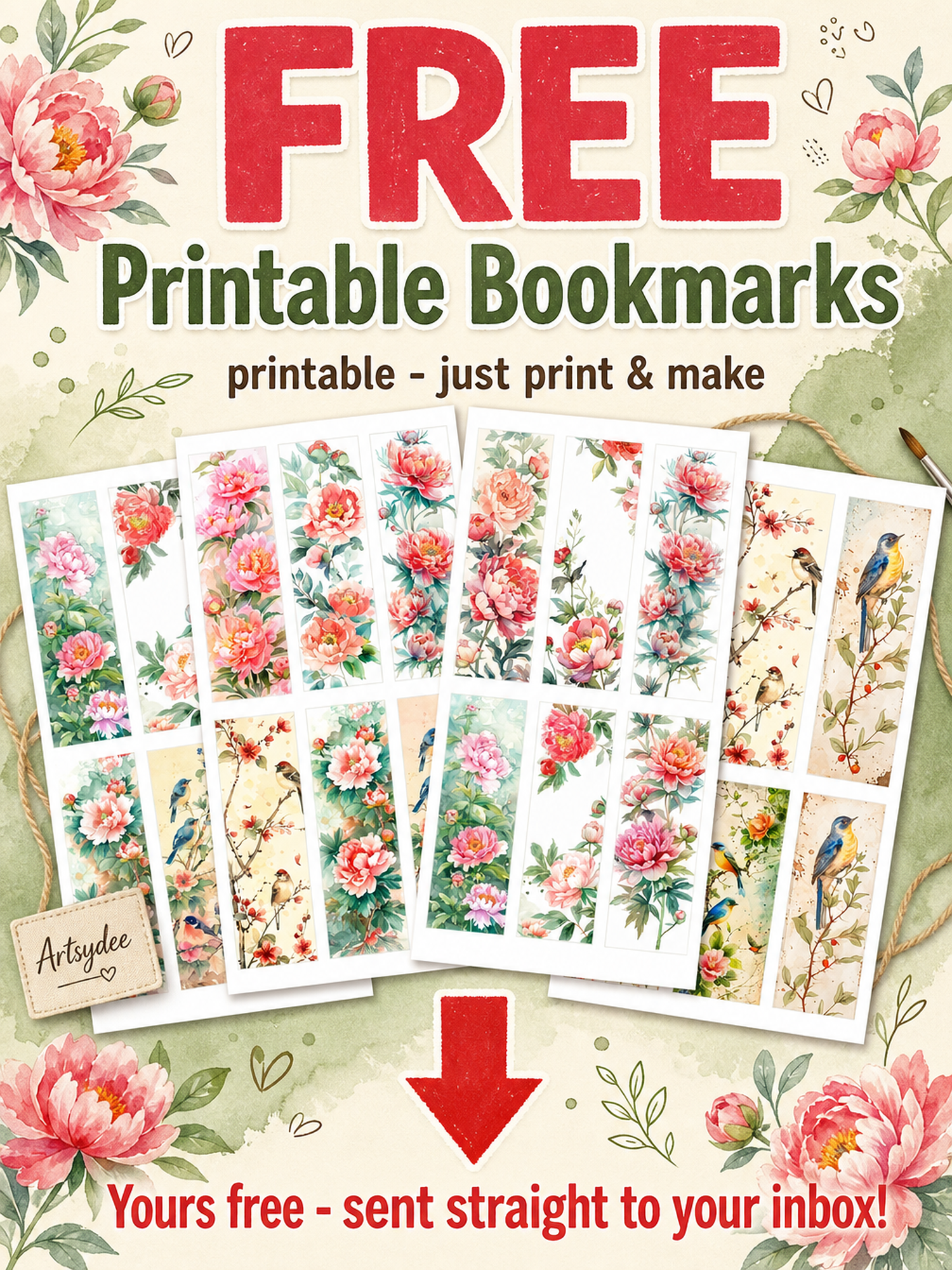
Here are 30+ easy watercolour ideas for beginners, plus a set of free Printable Bookmarks sent straight to your inbox.
There’s something deeply satisfying about picking up a brush for the very first time. No sketching, no planning — just water, pigment, and paper doing their thing together. If you’ve been wanting to try watercolour but aren’t sure where to start, this is your sign.
Grab my free Printable Bookmarks at the top of this post, then scroll on for 30+ easy watercolour ideas for beginners.
Watercolour is one of the most beginner-friendly mediums once you stop fighting it. The secret? Work with the paint rather than against it. And the best way to learn is simply to paint — over and over, with simple ideas that build your confidence without overwhelming you.
I’ve rounded up 30+ easy watercolour ideas for beginners, sorted by subject so you can jump straight to whatever appeals to you. Plus — I’ve got a set of free Printable Bookmarks for you: pop your email into the sign-up box above and I’ll send them straight to your inbox.
🌟 Love painting videos? Subscribe to Artsydee on YouTube for weekly watercolour tutorials and creative inspiration — it’s free!
Table of Contents

Free: Printable Bookmarks
My free Printable Bookmarks pack is a set of 40 illustrated bookmarks to print, cut out and tuck into your favourite books. It’s waiting in the sign-up box at the top of this post: pop your email in and I’ll send it straight to your inbox.
Enjoying these beginner ideas? My premium reference sets on Patreon come with colour-recipe cards so you always know exactly which paints to mix.
Browse the reference sets →Want 400+ Creative Resources?
If you love these free printables, you’d really enjoy the Artsydee Creations Club. Every week I add new resources — watercolour templates, Procreate brushes, junk journal kits, coloring pages, and more. Plus you get instant access to a vault of 400+ creative resources the moment you join.
It’s just £8/month (or save with the annual plan) and it’s the best way to keep your creative practice stocked with fresh inspiration. Check out the Creations Club here →

Easy Floral Watercolor Ideas
Quick Answer: Florals are the single best starting point for beginner watercolourists — soft edges, loose petals, and natural imperfection are all part of the look.
Flowers were made for watercolour. The medium’s happy accidents — bleeds, soft edges, pigment pooling — all mimic how real flowers look. Don’t aim for botanical precision. Loose and impressionistic is exactly right.
- Simple daisy — five petals, yellow centre. That’s it. Repeat them scattered across the page.
- Loose rose — start with a tight spiral centre, then add curved petal shapes outward. No outline needed.
- Cherry blossoms — paint tiny four-petal flowers along a curved branch. Vary pink tones for depth.
- Single sunflower — bold golden petals around a dark centre. Practice one large, confident petal at a time.
- Lavender sprig — a simple upright stem with tiny oval dots of purple. Add a warm grey-green for leaves.
- Poppy — two or three bold red petals, slightly crinkled at the edges. Leave a white highlight in each petal.
- Wildflower meadow — scatter loose dots, small crosses, and tiny petals across wet paper. Let them bloom organically.
For loose floral work, I love using a good round brush — the pointed tip gives you control for fine details, while the belly holds enough water for soft washes.

Simple Landscape Watercolor Ideas
Quick Answer: Simple landscapes for beginners use flat washes and basic shapes — the trick is layering from light to dark and working with the wet paint rather than overworking it.
Landscapes can feel intimidating, but at the beginner level they’re just a series of simple washes. Sky, horizon, ground. Warm tones for sunsets. Cool blues for misty mornings. Start with the lightest areas and work darker from there.
- Gradient sunset sky — wet the paper first, then drop in warm orange, yellow, and pink. Let colours blend on the paper.
- Simple mountain silhouette — paint the sky, let it dry, then add simple mountain shapes in a slightly darker tone.
- Foggy forest — overlapping washes of soft blue-grey for trees fading into mist. Each layer slightly darker.
- Still lake reflection — mirror the sky in the water below. Horizontal strokes help suggest calm water.
- Rolling hills — layered sweeping curves in different greens. Overlay each once the previous layer is dry.
- Beach scene — blue sky, pale sand, a strip of ocean. Simple but satisfying. Add a tiny figure if you’re feeling adventurous.
- Storm clouds — dark blue-grey wet-on-wet clouds. Leave white paper showing through for highlights.
Abstract Watercolor Ideas for Beginners
Quick Answer: Abstract watercolour is the most forgiving approach for beginners — there’s no right or wrong outcome, and the medium’s natural flow does most of the beautiful work for you.
Here’s a secret: abstract watercolour is the easiest place to start. There’s no subject to get wrong. You’re just exploring colour, water, and what happens when you let go. These ideas are genuinely fun to do.
- Colour blending study — wet a square of paper and drop in two contrasting colours. Watch them find each other.
- Salt texture — drop sea salt onto a wet wash. As it dries, it pulls the pigment into snowflake patterns.
- Wet-on-wet blossoms — drop a circle of water, then touch the edge with a loaded brush. Pigment blooms outward.
- Geometric colour fields — mask off simple shapes with painter’s tape, fill each with a different wash, reveal clean edges when dry.
- Ink and watercolour splatter — paint loose washes, then flick ink with a brush for energetic dots.
- Galaxy wash — deep blue-purple wet wash, drop in black and white, splatter tiny white dots for stars.
- Loose circles study — paint overlapping circles in a limited palette. Wet-on-wet for soft edges, dry-on-dry for defined ones.
Cute Animal Watercolor Ideas
Animals are a brilliant beginner subject because you can make them as simple or as detailed as you like. Loose and gestural works really well — you don’t need every whisker or feather.
- Bumblebee — a tiny oval of warm yellow with black stripes and small transparent wings. Simple and adorable.
- Goldfish — orange-gold oval body with flowing fins. Wet-on-wet for soft colour transitions.
- Cat silhouette — a simple sitting cat shape in a rich dark tone. Add texture with a dry brush after.
- Bluebird on a branch — small cobalt body, rusty-orange breast. Let the colours softly bleed at the join.
- Hedgehog — a soft brown oval body with radiating dry-brush spines. Leave the snout area paler.
- Butterfly wings — use symmetry to your advantage. Fold a piece of damp paper and press both sides together.
- Frog on a lily pad — bright green with yellow-green highlights. Add a calm blue-green circle of water beneath.
Fun Food Watercolor Ideas
Food paintings are charming, quick, and incredibly satisfying. Loose and impressionistic is better than stiff and over-worked. A strawberry with three confident strokes looks better than one painted in ten hesitant ones.
- Lemons — a classic beginner subject. Warm yellow oval, darker crescent shadow, tiny white highlight. Done.
- Strawberry — bright red with tiny seed dots. A crisp green leaf cap at the top.
- Avocado cross-section — sage green outer, creamy yellow middle, dark brown stone. Easy layers.
- Watermelon slice — bold red-pink with black seeds and a clean green rind. Great for practising flat washes.
- Cherries pair — two glossy red circles on long curved stems. Leave a small white dot in each for shine.
- Cinnamon rolls — warm tan spirals with soft brown swirls. A drizzle of white icing over the top.
- Cup of tea — a simple mug silhouette with a warm amber liquid. A thin curl of steam above. Cosy and quick.
Seasonal Watercolor Ideas
Painting with the seasons keeps your practice fresh and gives you a built-in source of inspiration year-round. Each season has its own colour palette and mood — lean into them.
- Spring blossom branch — sweeping dark branch with clusters of pale pink blossoms. Add a soft blue sky wash behind.
- Summer sunflower field — bold golden heads above a loose green wash. Impressionistic and joyful.
- Autumn leaf collection — single leaves in red, amber, and burnt orange. Let the wet pigment bleed within each leaf shape.
- Winter snowfall — a dark night sky with falling white dots (masking fluid beforehand, or gouache after) and bare tree silhouettes.
- Mushrooms in autumn leaves — warm earthy tones. Red-capped mushrooms among loose leaf shapes.
- Spring rain puddle — soft grey sky reflected in a puddle of water. Add concentric ripple circles.
- Cosy winter mug — a warm mug by a frosted windowpane. Blues outside, warm amber and red inside.

Top Tips for Beginner Watercolour Painters
Quick Answer: The most important beginner watercolour tip is to use less water than you think you need, let each layer dry completely before adding the next, and embrace happy accidents rather than fighting them.
These are the things I wish someone had told me at the beginning — hard-won lessons that would have saved a lot of muddy, overworked paintings.
- Work light to dark. Watercolour doesn’t erase. Plan your lightest areas first and build depth in layers.
- Let layers dry completely. Painting wet-on-wet on purpose is a technique. Painting wet-on-wet by accident gives you muddy colour bleed you didn’t ask for. When in doubt, wait.
- Use good paper from the start. Cheap paper buckles, pills, and fights you. Cold press watercolour paper (300gsm) makes a dramatic difference. I use the Canson XL Watercolor Sketchbook for practice — it’s good quality without breaking the bank.
- Keep two water jars. One for rinsing your brush, one for fresh water. Once your rinse water goes murky, it muddies every colour you mix.
- Don’t overwork the paint. Watercolour needs space to breathe. Brush a stroke, then leave it. Going back in while it’s wet and dragging the brush creates streaks.
- Start with a limited palette. Three or four colours are more than enough when you’re learning. More colours usually means more muddy results.
- Paint small to begin with. A postcard-sized painting is so much less intimidating than A4. Small pieces let you experiment quickly without investing hours in a single piece.
How to Get Started with Watercolour Painting
Quick Answer: To get started with watercolour painting, you need just four things: a small set of paints, two round brushes, a sheet of cold press watercolour paper, and a glass of water. Then paint something simple on day one — don’t wait until you feel “ready”.
The infographic above covers these steps visually, but here’s the full breakdown for anyone who wants the detail.
Step 1: Gather Your Supplies
You don’t need much. A small set of watercolour paints (12-24 colours), two round brushes (a medium size 8 and a fine size 2 are a great starting combo), a sheet of cold press paper, and a glass of clean water. That’s it.
Step 2: Wet Your Brush First
Always wet your brush in clean water before picking up paint. This helps the pigment flow smoothly and prevents colours from going on too dry and streaky.
Step 3: Load the Brush with Colour
Touch the tip of your wet brush to the watercolour pan or a small pool of tube colour. Don’t scrub — just a light touch. Too much pressure breaks down brush hairs. You can always add more colour, but pulling it out of the paper is much harder.
Step 4: Paint the Light Layers First
Start with the palest, most diluted wash. Use lots of water. Pale washes dry lighter than they look when wet, so err on the side of dilute for your first passes. You can always go darker — you can’t go back.
Step 5: Let It Dry Properly
I cannot stress this enough. Wait until the paper has no sheen left before adding the next layer. Rushing this step is responsible for 90% of beginner frustration. When in doubt, make a cup of tea and come back.
Step 6: Add Details with Confidence
Once your base layers are dry, go in with a finer brush and darker tones for details. This is where the painting comes alive. Small, deliberate marks work better than large, tentative ones. Trust yourself.
Watercolour Supplies for Beginners
You really don’t need much to get started with watercolour. Resist the urge to buy everything at once — a small, quality kit beats a huge mediocre one every time. Here’s what I’d recommend picking up first:

|

|

|

|
This post contains affiliate links, which means I may earn a small commission at no extra cost to you if you make a purchase. I only recommend products I genuinely love and use myself!
One thing worth saying: the Winsor & Newton Cotman set is genuinely excellent for beginners — real pigmented colours that behave predictably, without the steep price tag of professional paints. Many painters use them long past the beginner stage.
Looking for more watercolour resources? Check out my Payhip watercolour collection — I have ready-to-use templates, painting packs, and guides to help you build your practice.
Bonus Idea: Paint Your Own Bookmarks
Bookmarks make a perfect beginner watercolour project: cut a narrow strip of watercolour paper, paint a simple flower or a loose wash, and you’re done in one sitting. And don’t forget the free Printable Bookmarks in the sign-up box at the top of this post.
Frequently Asked Questions
What are the easiest watercolor ideas for beginners?
The easiest watercolour ideas for beginners are simple florals (single flowers like daisies or roses), loose landscapes (gradient skies and rolling hills), and abstract colour washes. These subjects work with watercolour’s natural flowing quality rather than requiring precise control. Simple food subjects like lemons and strawberries are also beginner-friendly and great for practising shape and colour mixing.
What watercolor supplies do I need as a beginner?
As a beginner, you need just four things: a basic watercolour paint set (12-24 colours), two round brushes (a size 8 and size 2 are ideal), cold press watercolour paper (300gsm), and a glass of water. A ceramic palette for mixing is helpful but not essential — many beginner paint sets include one. Avoid buying lots of supplies before you start; keep it simple until you know what you actually need.
How do I stop my watercolors from looking muddy?
Muddy watercolours are almost always caused by one of three things: mixing too many colours together, painting wet-on-wet by accident (applying paint before the previous layer is dry), or using dirty rinse water. Keep two water jars — one for rinsing, one for clean water. Let each layer dry completely before adding the next. Work with a limited palette of 3-4 colours rather than mixing everything together.
Can I teach myself watercolor painting?
Absolutely. Watercolour is one of the best mediums for self-teaching because feedback is immediate — you can see what the paint is doing and adjust in real time. Start with simple subjects, paint regularly (even just 15 minutes a few times a week), use good paper, and don’t try to be perfect. Consistent practice teaches you more than any amount of reading about technique.
Is watercolor hard to learn?
Watercolour has a steeper learning curve than some other mediums because you can’t easily paint over mistakes — but it’s far from impossible to learn as a beginner. The key mindset shift is treating the paint’s flowing, unpredictable nature as a feature rather than a bug. Once you work with the water rather than trying to control it, progress happens quickly.
Final Thoughts
The best watercolour idea for a beginner is always the one that sounds like fun to you right now. Not the most impressive, not the most technically correct — the one that makes you want to pick up a brush. That’s the whole point.
Bookmark this post and come back whenever you need a new starting point. Work through the list section by section, or skip straight to the subjects that call to you. There’s no wrong way to use it.
Want to see watercolour techniques in action? Head over to my YouTube channel where I share step-by-step tutorials and creative painting sessions. Hit subscribe so you don’t miss the next one — it’s a lovely little corner of the internet for anyone who loves art.
And if you want even more inspiration, these posts might spark some ideas:
Come and share what you’ve been painting! Save ideas on Pinterest and catch tutorials on YouTube @artsydee. I’d love to see your watercolour journey!
You Might Also Like
- Easy Watercolor Sketchbook Ideas to Fill Your Pages
- How to Paint Loose Watercolour Flowers
- Free Watercolor Sketchbook Templates
- Loose Watercolor Sketchbook Pages — Ideas and Inspiration
- Simple Watercolor Ideas for Beginners
📌 Pin this for later!

If these free beginner ideas got your brushes moving, you’ll love my premium reference sets on Patreon — each one pairs a finished painting with colour-recipe cards so you never have to guess a mix again. They start from £14 (~$18).
Browse the reference sets →