

Last Updated on July 26, 2026 by Dee
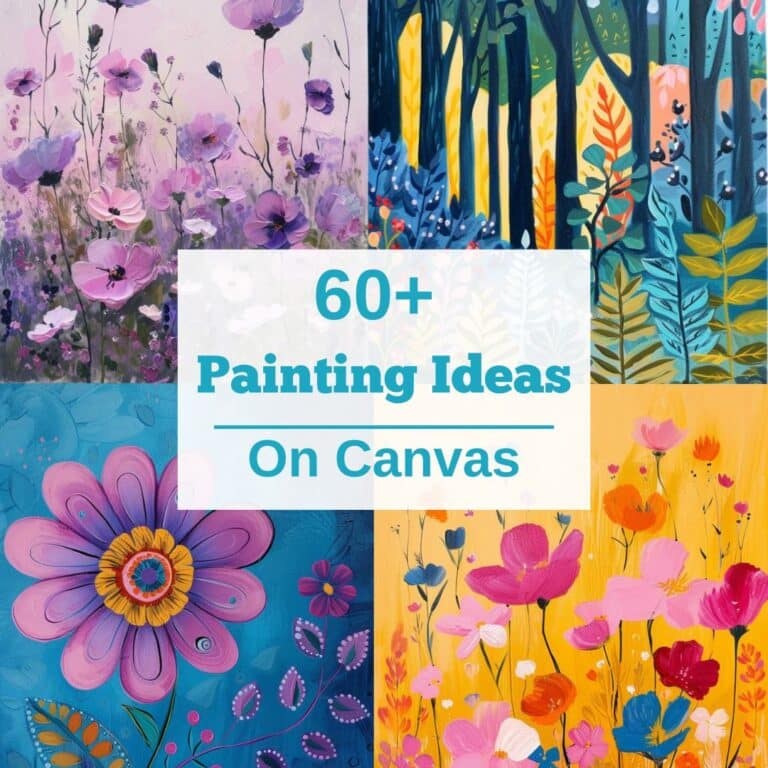
Dive into the vibrant world of canvas painting with our list of 55+ creative painting ideas on canvas! Perfect for beginners and seasoned artists alike, we’ve got something for everyone—from easy acrylic techniques to the rich, classic look of oil paint. Get ready to unleash your inner artist and transform that blank canvas into a masterpiece. And don’t forget to grab our free printable painting templates at the end to give you a headstart on your painting journey. Let’s get painting!


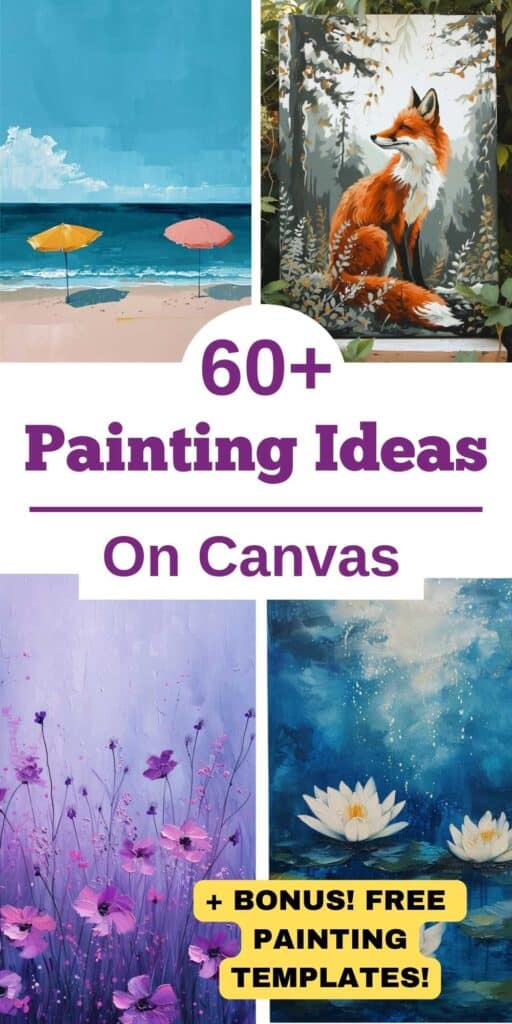
55+ Painting Ideas on Canvas
Now that you’re all set to embark on your artistic adventure, let’s dive into the heart of this post: a treasure trove of painting ideas on canvas. We’ve organized these inspirations into thoughtful subsections to help you navigate based on your interests and skill level. Whether you’re looking for a simple start or a fun project, there’s a canvas waiting for your unique touch.
Painting Ideas on Canvas for Beginners

If you’re looking for projects that won’t overwhelm you, these easy painting ideas are perfect. They’re simple, satisfying, and great for all ages. Starting with the basics, these ideas will help you get comfortable with your brushes and paints, guiding you through the fundamentals of canvas art.
Fun Painting Ideas on Canvas
Ready for a splash of joy? This section is all about letting loose and enjoying the process. These ideas are sure to bring a smile to your face as you create.
Landscape Painting Ideas on Canvas for Beginners
Nature offers an endless palette of inspiration. These beginner-friendly landscapes are a great way to start capturing the beauty of the outdoors.
Oil Painting Ideas on Canvas for Beginners
Explore the lush world of oil paints with these beginner ideas. You’ll learn about blending, texture, and more as you start your oil painting journey.
Painting a Landscape on Canvas Step-by-Step
In this section, we’ll guide you through a step-by-step tutorial to create your very own landscape painting on canvas. Landscape art is a fantastic way to bring the beauty of the natural world into your home and offers a serene escape for both the artist and viewer.
Before we begin, for visual learners who might appreciate a video tutorial, check out this helpful YouTube video that provides a detailed guide on creating a beautiful landscape painting with acrylics.
Step-by-Step Landscape Canvas Painting Tutorial
Materials Needed:
- Canvas
- Acrylic paints
- Brushes
- Palette or mixing surface
- Cup of water
- Paper towels or a rag
- Easel (optional for comfort)
Instructions:
- Prepare Your Canvas: Start by setting up your workspace. If you’re using an easel, place your canvas on it. Otherwise, lay it flat on a table covered with newspapers or a cloth to protect the surface.
- Sketch Your Landscape: Lightly sketch out the basic outline of your landscape with a pencil. This could include the horizon line, any significant landforms like mountains or hills, trees, a river, or other key features.
- Block in the Sky: Begin by painting the sky. Decide if you want a sunrise, sunset, midday, or twilight sky and choose your colors accordingly. Use broad strokes to fill in the sky area, blending the colors directly on the canvas for a natural look.
- Paint the Background: Move on to the most distant elements, like mountains or far-off trees. Use muted colors as things in the distance often appear lighter due to atmospheric perspective.
- Add the Midground: Paint in the midground area, which may include fields, forests, or water. This area will have more detail than the background but less than the foreground.
- Detail the Foreground: The foreground is where you’ll want the most detail because it’s the closest to the viewer. Add elements like rocks, plants, or water reflections with smaller brushes to capture finer details.
- Highlight and Shadow: Once the basic layers are dry, add highlights where the light would naturally hit and shadows for depth and dimension.
- Final Touches and signature!
The Ultimate DIY Canvas Painting Kit: Your Art Supply Treasure Trove
**This page may contain affiliate links to products I have used or recommended. If you purchase something from this page, I may receive a small percentage of the sale at no extra cost to you.**
Get ready to unleash your inner Van Gogh with this curated list of tools and art supplies for creating your very own DIY canvas painting! Whether you’re crafting a serene seascape or a vibrant abstract, these are the essentials you’ll need to bring your vision to life:
Canvases: Your blank slate awaits! Choose from a variety of sizes to suit your masterpiece. These stretched canvases are pre-primed and ready for action.
Acrylic Paint Set: Pop open a set of acrylic paints and let the colors flow! With a rainbow at your fingertips, the only limit is your imagination.
Brush Set: A trusty set of paintbrushes is like a magic wand for your art. From broad strokes to fine lines, these brushes will be your loyal sidekicks.
Palette Knife: For those who like to add a bit of texture and flair, a palette knife is your go-to tool for spreading, scraping, and layering.
Easel: Stand up and paint with pride on this adjustable easel. It’s like a throne for your canvas!
Palette: Mix your heart out on this essential paint palette. It’s the command center for your color schemes.
Apron: Keep the paint on the canvas and off your clothes with a stylish and protective artist’s apron.
Oil Paint Set: For those who adore the rich, buttery texture of classic paintings, an oil paint set will provide the sumptuous palette you need to create depth and luminosity in your work.
Grab the Free Printable Stencils for Painting
👉 Pop your email into the box near the top of this post and I’ll send these straight to your inbox — free!
Painting Ideas on Canvas: FAQ
What’s the easiest painting idea on canvas for a complete beginner?
Start with something simple and satisfying — a loose abstract, a single-colour sky, or a basic landscape. The beginner section of this post is built around low-pressure projects that help you get comfortable holding a brush and mixing colour before you tackle anything detailed. A landscape is a lovely first canvas because you work in a clear order, sky first.
What supplies do I need to start canvas painting?
The essentials are a pre-primed stretched canvas, a set of acrylic paints, a few brushes in different sizes, a palette or mixing surface, a water cup and paper towels. A palette knife, easel and apron are nice extras but not must-haves. Acrylics are the friendliest starting point; oils give that rich, buttery classic look once you’re ready for them.
How do I paint a landscape on canvas step by step?
Sketch your horizon and main shapes lightly in pencil, then block in the sky first with broad strokes. Work from the most distant elements forward — muted, lighter colours for far-off hills, more detail as you reach the foreground. Add highlights and shadows once the base layers are dry, then sign it. Working back to front keeps everything sitting in the right depth.
Is there a free printable to help me start?
Yes — there’s a free printable painting template pack near the end of this post. Once you unlock it, the templates give you ready-made outlines so you can jump straight to the fun part, choosing colours and painting, instead of worrying about drawing the shapes from scratch. It’s a gentle way to get a headstart on your first few canvases.
Should beginners use acrylic or oil paint?
For most beginners I’d say acrylic. It’s affordable, dries fast, cleans up with water and is very forgiving if you want to paint over a mistake. Oils are wonderful for blending and that luminous, old-master depth, but they dry slowly and need a bit more setup. Try acrylics first, then explore oils when curiosity strikes — plenty of artists happily use both.
What size canvas should I buy to practise on?
Smaller canvases, around 8×10 or 11×14 inches, are ideal for practice. They’re cheaper, quicker to fill, and far less intimidating than a big wall of white. Buying a bulk pack of small pre-primed canvases means you can experiment freely and try lots of the ideas in this post without feeling like you’re wasting anything.
How do I stop my canvas painting from looking flat?
Two things make the biggest difference: value and layers. Keep distant objects lighter and cooler, and save your strongest darks and crispest detail for the foreground. Then, once your base is dry, add highlights where the light naturally hits and shadows for depth. That contrast between light and dark is what gives a painting its sense of dimension.