Last Updated on November 3, 2026 by Dee
You can buy printable junk journal kits from Etsy, from independent designers’ own shops, from design marketplaces and through monthly memberships. The best place is whichever one lets you see every page before you pay and tells you plainly what size, format and licence you’re getting. Below is what to check, and the free beginner pages if you’d like to try a kit before buying one.
I make printable kits for a living, so I’m not neutral here. I’ve tried to write the page I’d want to read if I were buying from someone else: where to look, what to check and what to skip. My own kits are near the bottom, with their prices.
If you only read one bit, read the checklist in the second section. It’s the stuff I wish someone had told me before my first few kit purchases.
Table of Contents
Where can you buy printable junk journal kits?
There are five main places. Each has its own trade-off.
Etsy
Etsy has the biggest choice by far, from tiny one-sheet ephemera packs to kits with hundreds of pages. Reviews and buyer photos help a lot. The downside is that quality varies wildly and listings can be hard to compare, so read what’s actually in the download and look at every preview image, not just the first one.
A designer’s own shop
Many kit makers also sell from their own website or a shop platform like Payhip, Shopify or Gumroad. If you already like someone’s style, this is often where their newest kits turn up first, and you can usually email the person who made the kit if a file won’t open.
Design marketplaces
Sites like Creative Market and Design Bundles sell a lot of papers, clipart and ephemera. They lean more towards designers than journalers, so you’ll often get loose files rather than a kit laid out to print and fold. They’re good for building your own mix. Check the licence carefully, because it changes from shop to shop.
Memberships and subscriptions
Some makers run a club where you get new kits every week or month. That works well if you journal regularly and like one person’s style. It works less well if you only make a journal now and then, because the files pile up.
Free printables
Lots of bloggers, including me, give away sample pages, and public-domain image archives have thousands of old botanical plates, maps and adverts you can print. Free pages are a lovely way to start. You do the work of matching them up yourself, which is the thing a paid kit saves you.
How do you choose a good printable junk journal kit?
Before you buy, check these. A good shop answers most of them on the product page.
- Can you see every page? A preview grid of the whole kit is worth more than any description. If only three pretty pages are shown, ask why.
- Is it the right paper size? In the UK and Europe you want A4. In the US you want Letter. Some kits include both. A kit made only for the other size will still print, but you’ll lose a strip at the edge or gain a white margin.
- What format are the files? A PDF is easiest to print in one go. PNG or JPG files are better if you want to resize pieces, print one page at a time or use them on an iPad. Kits with both give you the choice.
- What resolution is it? Look for 300 DPI. Lower than that and fine details like text on tickets can print fuzzy.
- How much is actually usable? A page count tells you less than you’d think. One kit’s 60 pages might all be full scenes, another’s might include tags, pockets, envelopes and cut-out pieces you’ll really use. Count the bits, not just the pages.
- Are there plain papers? Busy pages are lovely on their own but hard to layer. A few quieter backgrounds and writing pages make a kit far easier to build a journal from.
- How much ink will it use? Dark, full-bleed pages look rich on screen and drink ink. If you print at home, a kit with lighter backgrounds is kinder to your printer.
- What does the licence say? Most kits are for personal use. Some allow you to sell a limited number of handmade journals. If you want to sell what you make, check before you buy, not after.
- Are there instructions? If the kit has fold-up pockets or envelopes, a page that shows how to fold them saves a lot of guessing.
What should a beginner kit include?
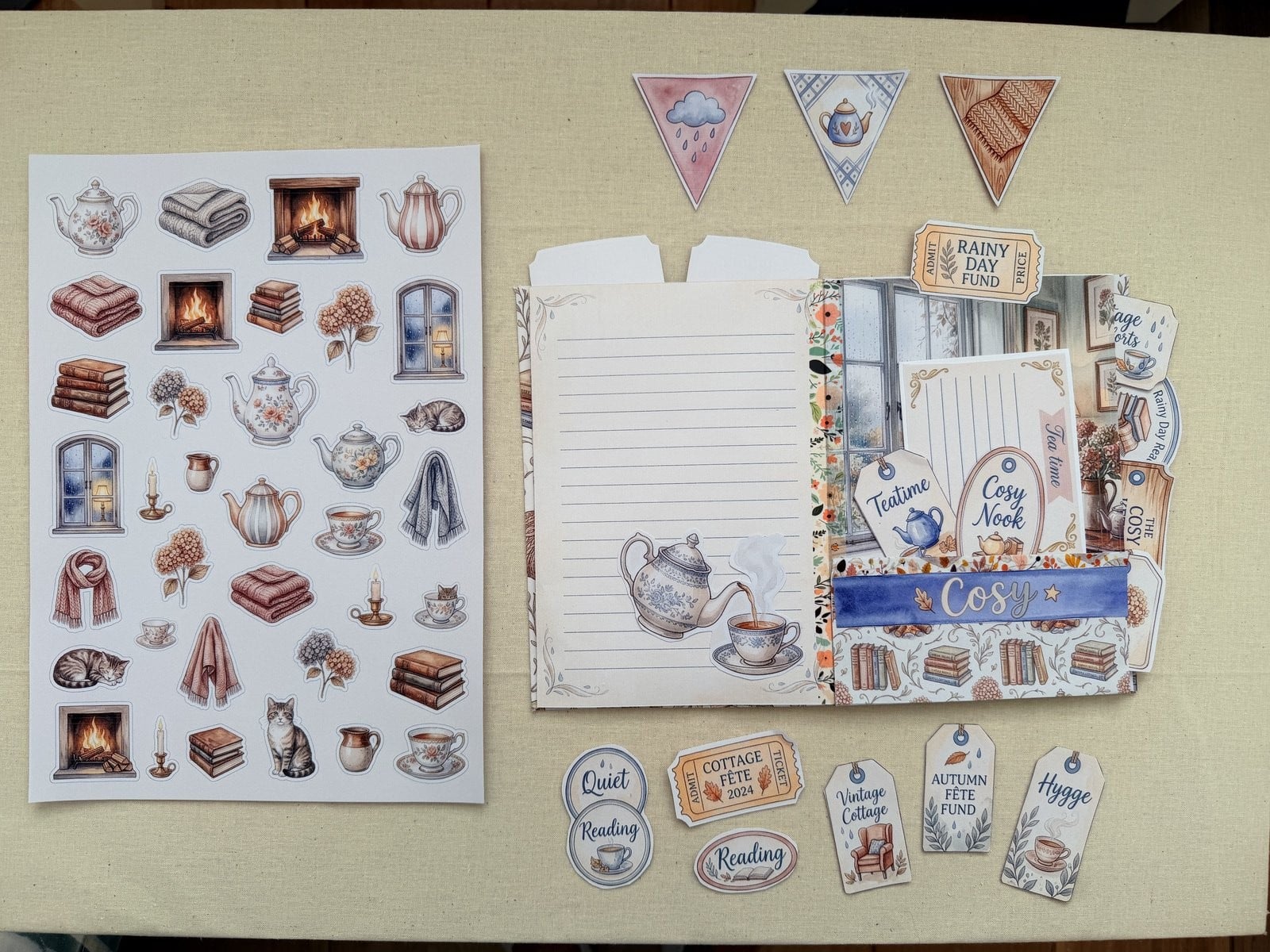
If it’s your first journal, look for a kit with a bit of everything rather than the biggest page count. Something like this is plenty:
- a cover page
- a few full-page pictures to build spreads around
- some plain or lightly patterned backgrounds
- lined or framed pages to write on
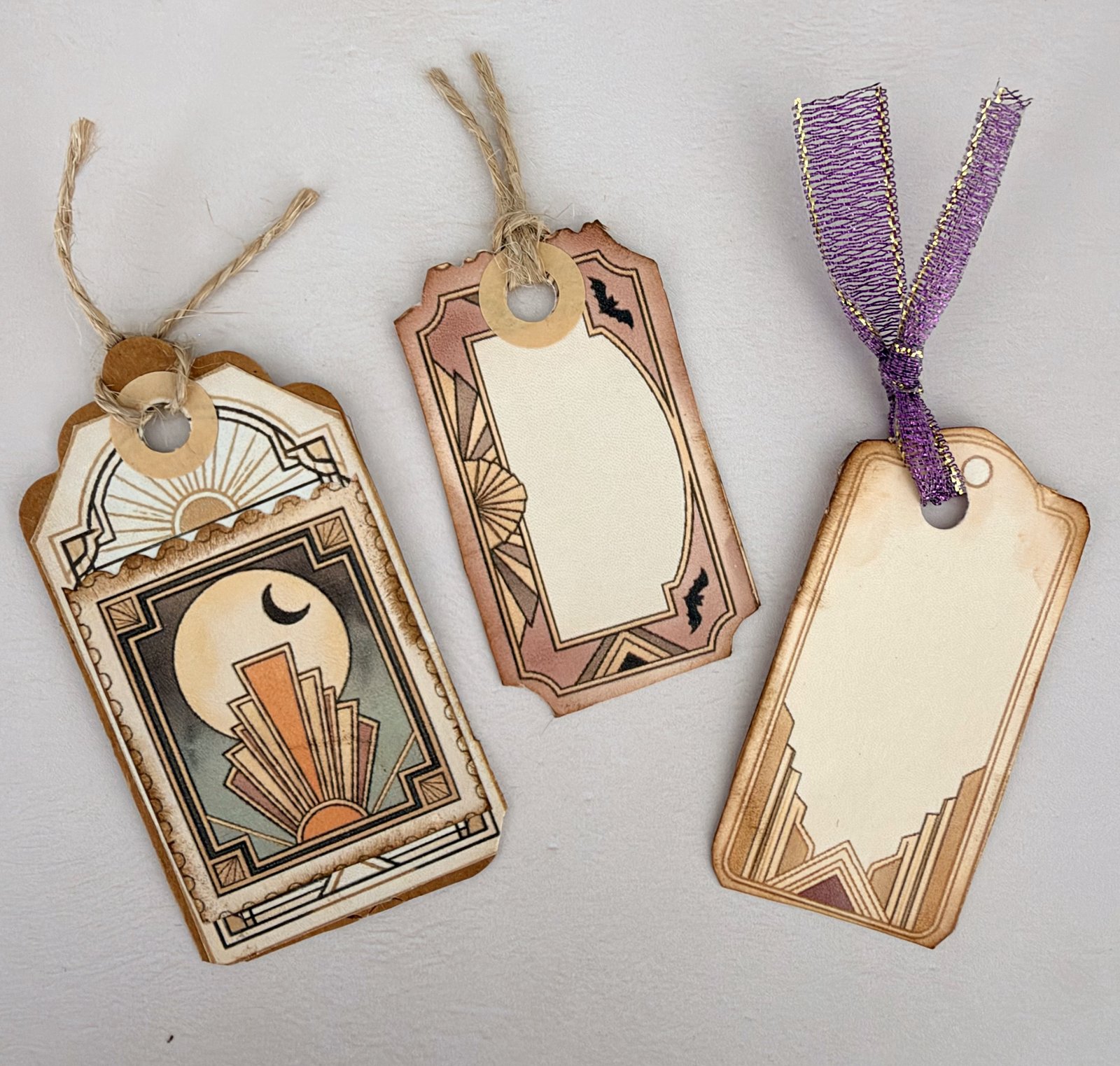
- tags, journaling cards and a pocket or envelope
- a sheet of small pieces to cut out
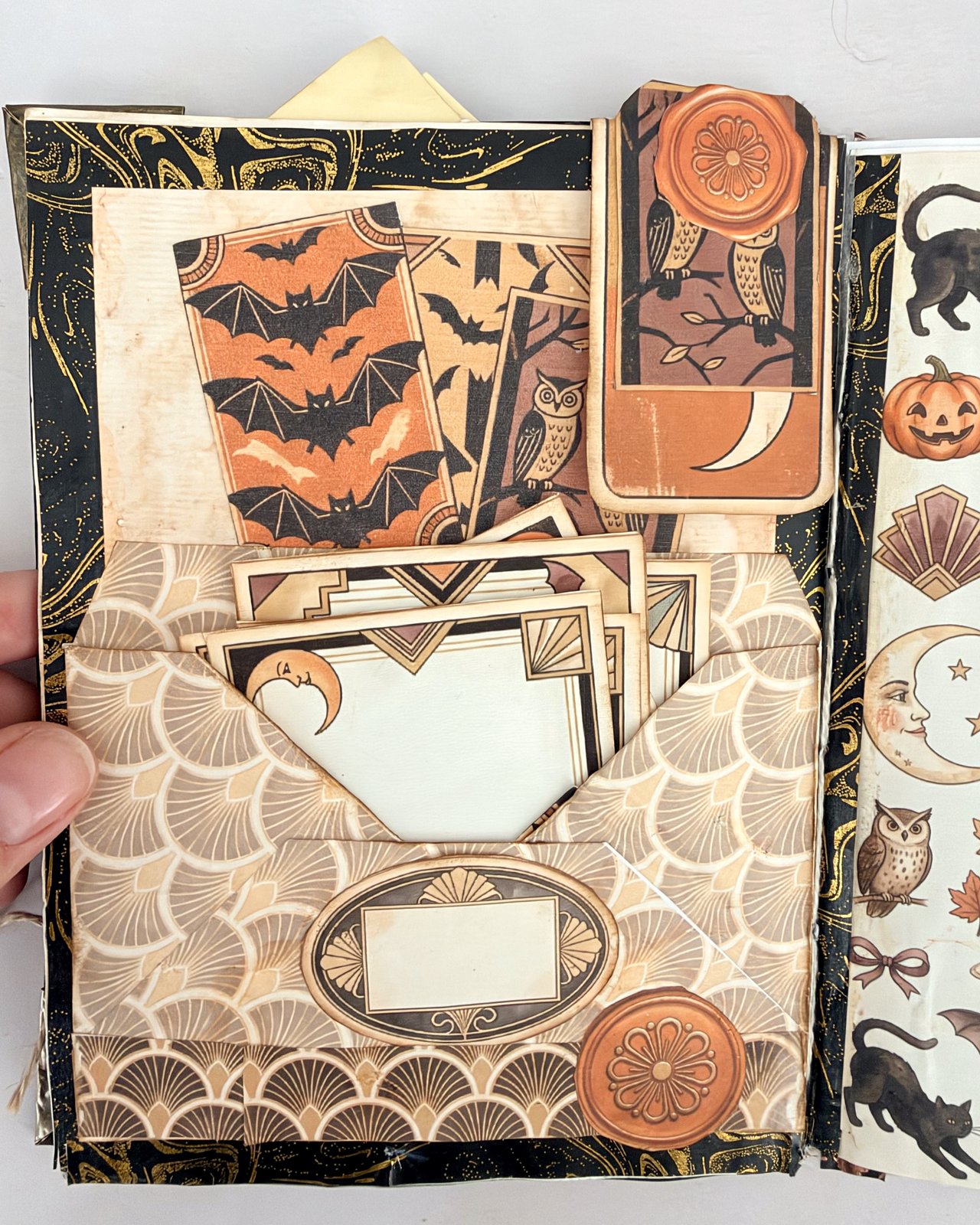
That’s enough for a small journal of one or two signatures. When you’ve made one, you’ll know whether you want more scenes, more ephemera or more writing space, and you can buy the next kit with that in mind. If you’re not sure what to do with all the pieces, I wrote up 17 easy beginner projects to make with a printable kit, and how to turn a printable kit into a real journal walks through printing, folding and sewing.
Is a printable kit worth it, or should you use free pages?
Honestly, start free. Print a handful of free pages, make a tiny journal and see if you enjoy it. A paid kit is worth it when you want everything to match without hunting for it, when you want fold-ups and ephemera designed to go together, or when you want enough pages for a proper chunky journal. If free pages make you happy, that’s a perfectly good way to journal.
Where to buy my junk journal kits
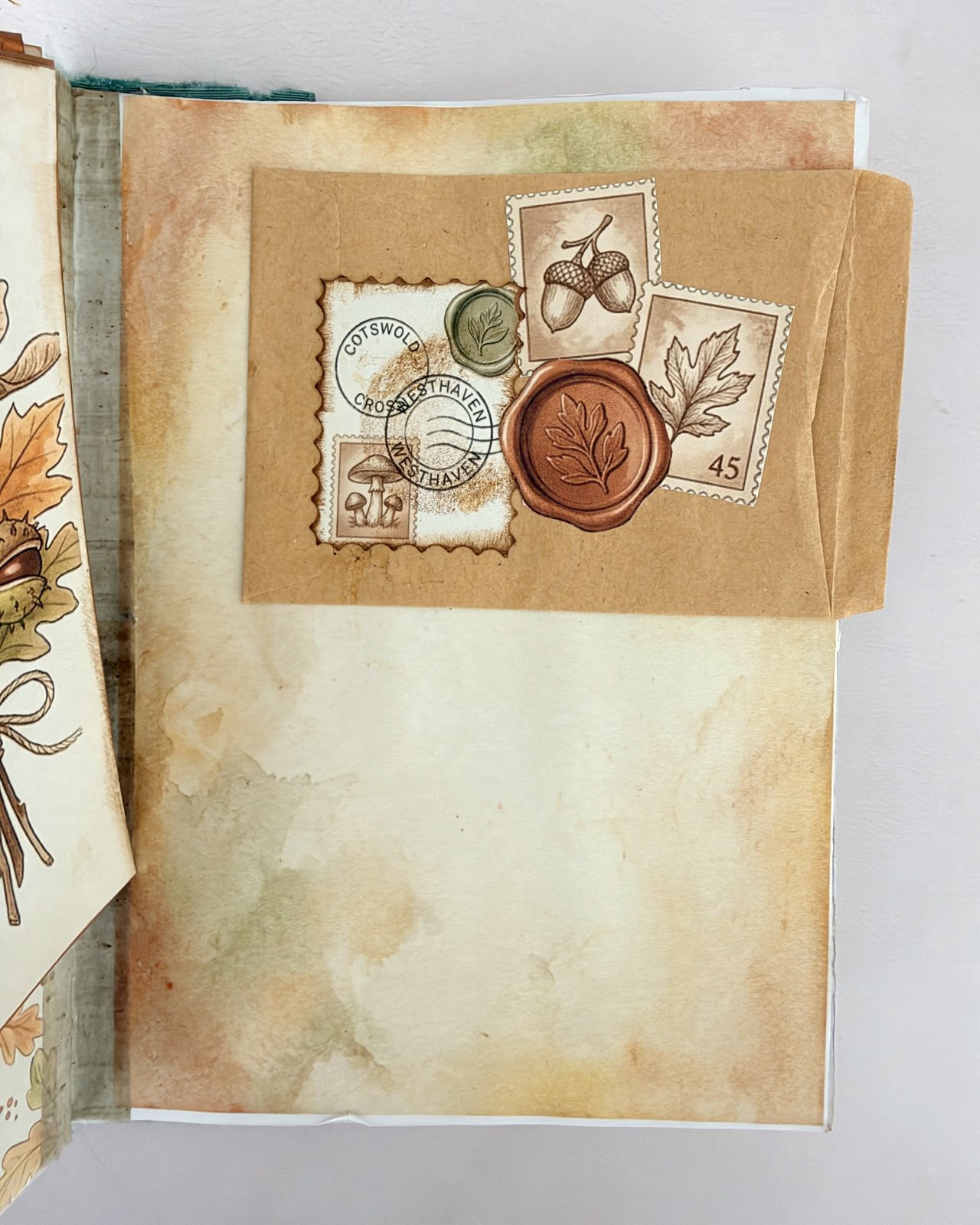
My kits are in my Payhip shop. They’re printable downloads, so nothing is posted to you. Here are a few, with their current prices:
- Once Upon a Time: 75 printable pages, a fairy-tale storybook kit in dusty rose, blue and sage, with a how-to page for the fold-ups and a beginner ideas page. £9.
- The Antiquarian Bookshop: 66 printable pages, a vintage bookshop theme. £9.
- Winter Woodland: 71 printable pages, deer, fox, robin and snowy forest scenes, wintry without being Christmassy, in A4 and US Letter. £9.
- Winter Cardinals: 52 printable pages, cardinals, snowy birch scenes and sentiment pages, with a fold-up booklet layout. £9.
- The Quiet Library: 80 printable pages, a vintage library theme. £9.
- Rainy Cottage: 59 printable pages, a cosy cottage theme. £9.
What’s included varies from kit to kit (some come in A4 and US Letter, some have a folded booklet layout, some have a how-to page), so each product page lists exactly what’s in the download. Check the licence on the product page too, because it isn’t the same on every kit. If you buy a few at once, the code BUNDLE20 takes 20% off when your basket comes to £25 or more.
💛 Make journals often? The Artsydee Creations Club is my membership for junk journalers, with new printable kits added through the year. There are a few membership levels, and the prices for each are on the Club page.
Frequently asked questions
Where is the best place to buy printable junk journal kits?
There isn’t one best place. Etsy has the most choice, designers’ own shops often have their newest kits, and memberships suit people who journal every week. Choose the shop that shows every page and states the size, file format and licence clearly.
How much does a printable junk journal kit cost?
It varies a lot between shops and sizes of kit. Compare what you get, such as usable pages, tags and ephemera, rather than the headline price. My own single kits are £9 each.
What paper size should a printable junk journal kit be?
A4 if you’re in the UK or Europe, US Letter if you’re in the US. Some kits include both. You can print the other size, but you’ll lose a strip at the edge or gain a white margin.
Can I sell junk journals I make from a printable kit?
Only if the kit’s licence allows it. Most printable kits are for personal use. Some allow a limited number of handmade sales. Check the product page before you buy.
Do I need a special printer for printable junk journal kits?
No. An ordinary home inkjet is fine. Print at 100% or actual size, not fit to page, and use thin card for covers and tags.
Can I try a kit for free first?
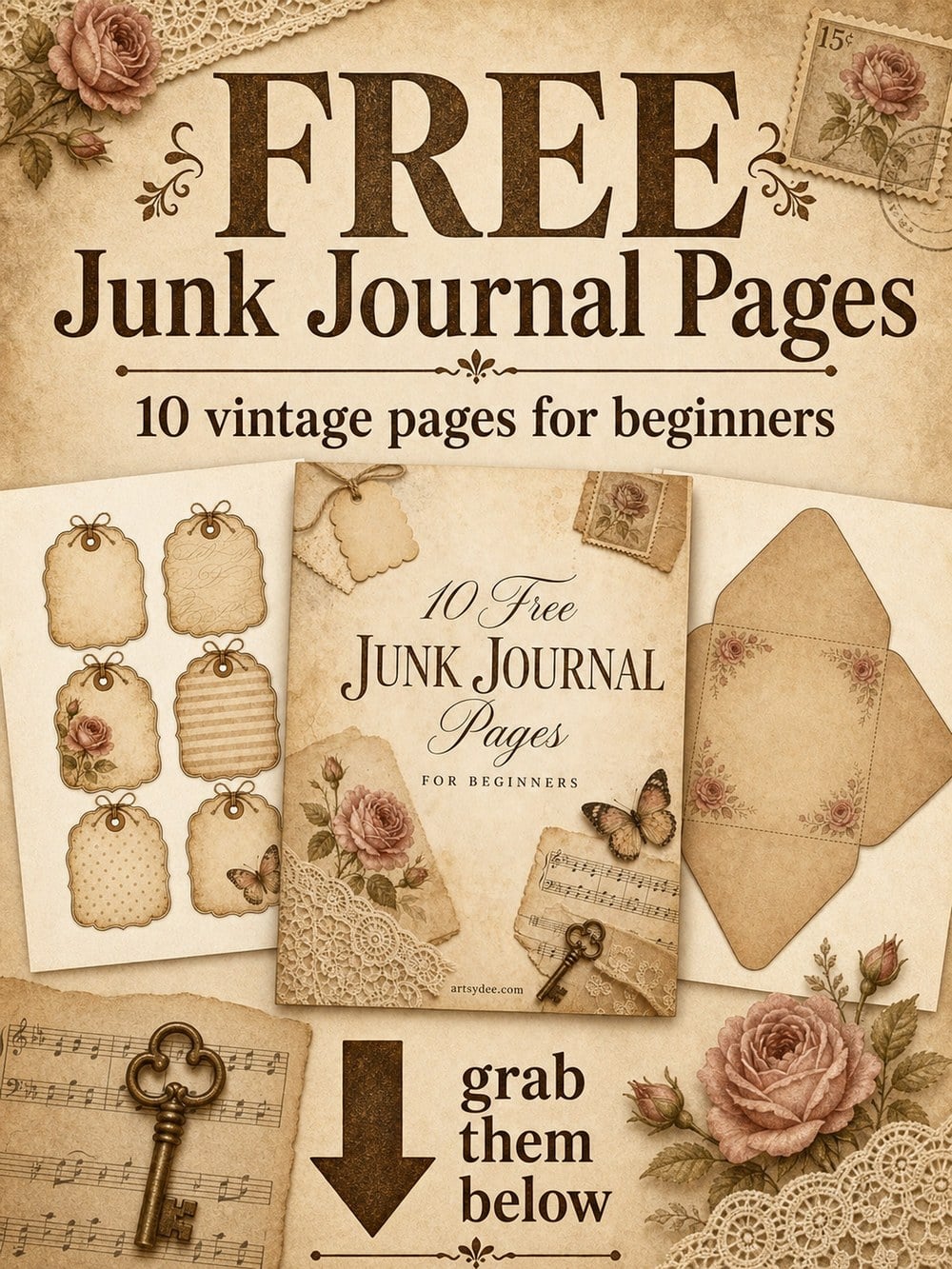
Yes. Pop your email in the box at the top of this page and I’ll send you 10 free beginner pages, including tags, a pocket envelope and washi strips.
Final thoughts
Whichever shop you buy from, look at every page, check the size and the licence, and start small. A few free pages and one well-chosen kit will teach you more about what you like than a huge bundle you never print.
Pin this for later so it’s easy to find when you’re ready to buy a kit, and come and say hello on Pinterest, where I save all my printables.
I also make relaxed art videos on my YouTube channel. Subscribe here if you’d like the next one in your feed.
Dee x