Last Updated on October 23, 2026 by Dee
Here are 12 cosy autumn subjects to paint in watercolour for beginners, plus free Fall Watercolour Templates: printable line-art of pumpkins, leaves, foxes and hedgehogs.
To help you start without staring at a blank page, I have made you a free set of Watercolour Templates for Beginners — printable line drawings you can trace or paint straight over, so you can skip the sketching and go right to the colour. Pop your email in below and they are yours.

Want more autumn to paint?
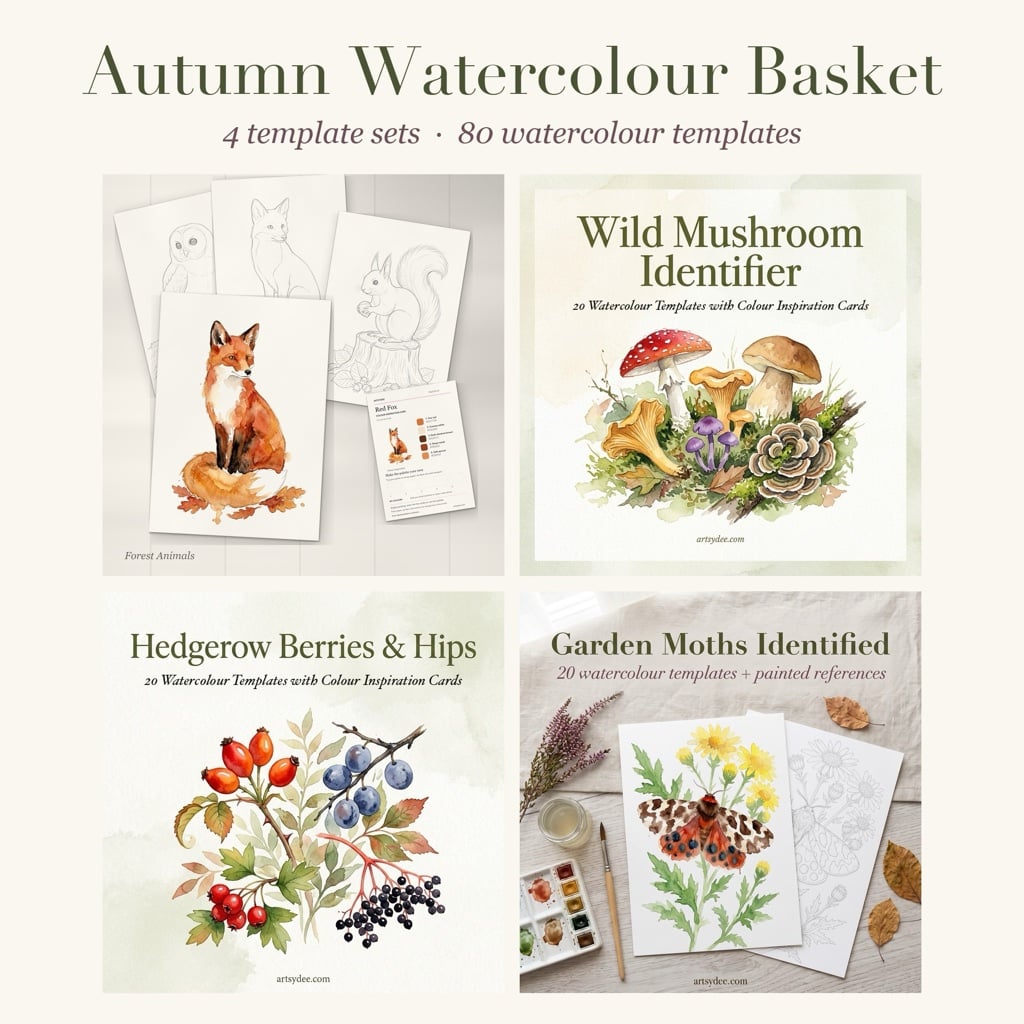
My Autumn Watercolour Basket bundles four template sets: Forest Animals, Wild Mushroom Identifier, Hedgerow Berries & Hips and Garden Moths. That’s 80 templates for £25 (£56 if you bought them separately).
See the autumn basket →There is a particular kind of quiet that arrives with autumn — golden light, the first crisp mornings, a mug going cold beside you while you paint. Watercolour and autumn are made for each other: all those rusts and ambers and soft misty greys are exactly the colours the season hands you for free.
Whether you have been painting for years or you only picked up a brush last week, autumn gives you the gentlest, most forgiving subjects there are — a single leaf, a fat little pumpkin, a sprig of berries. Nothing has to be perfect. In fact, the slightly wobbly, blooming, imperfect look is exactly what makes loose autumn watercolour so lovely.
Table of Contents
Why autumn is the best season to paint in watercolour
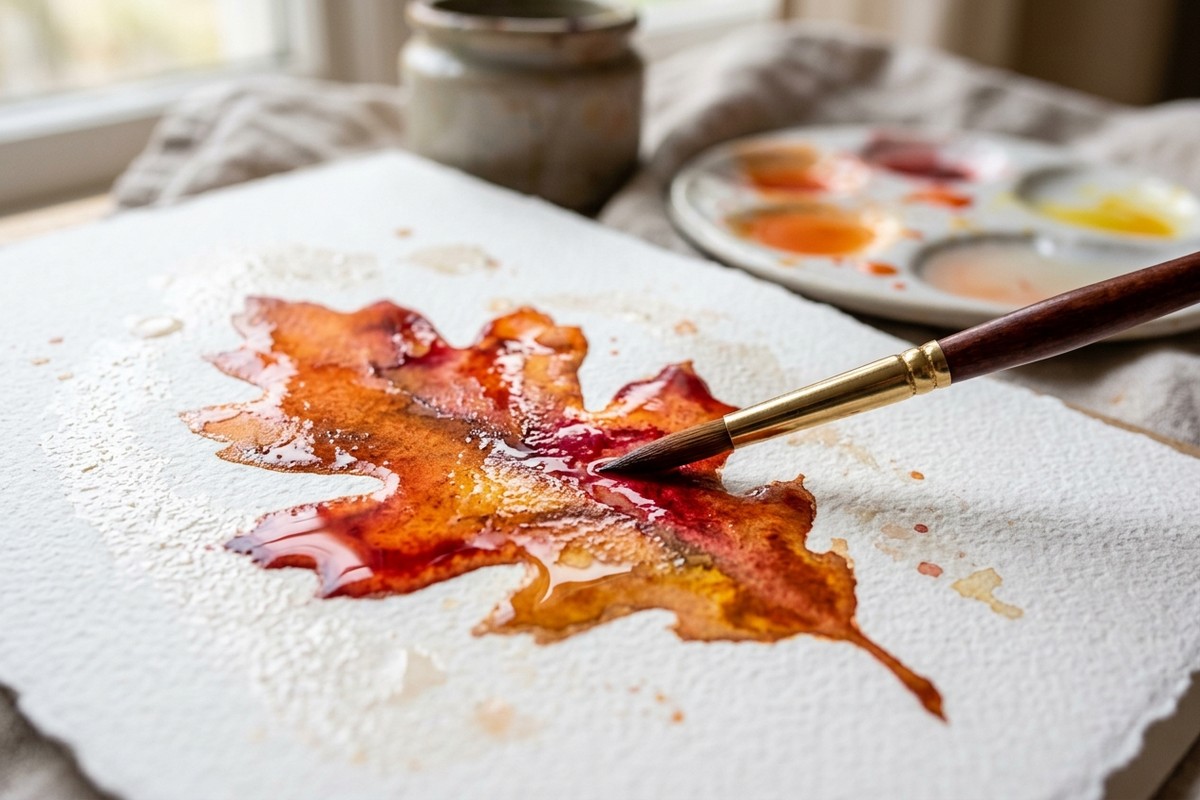
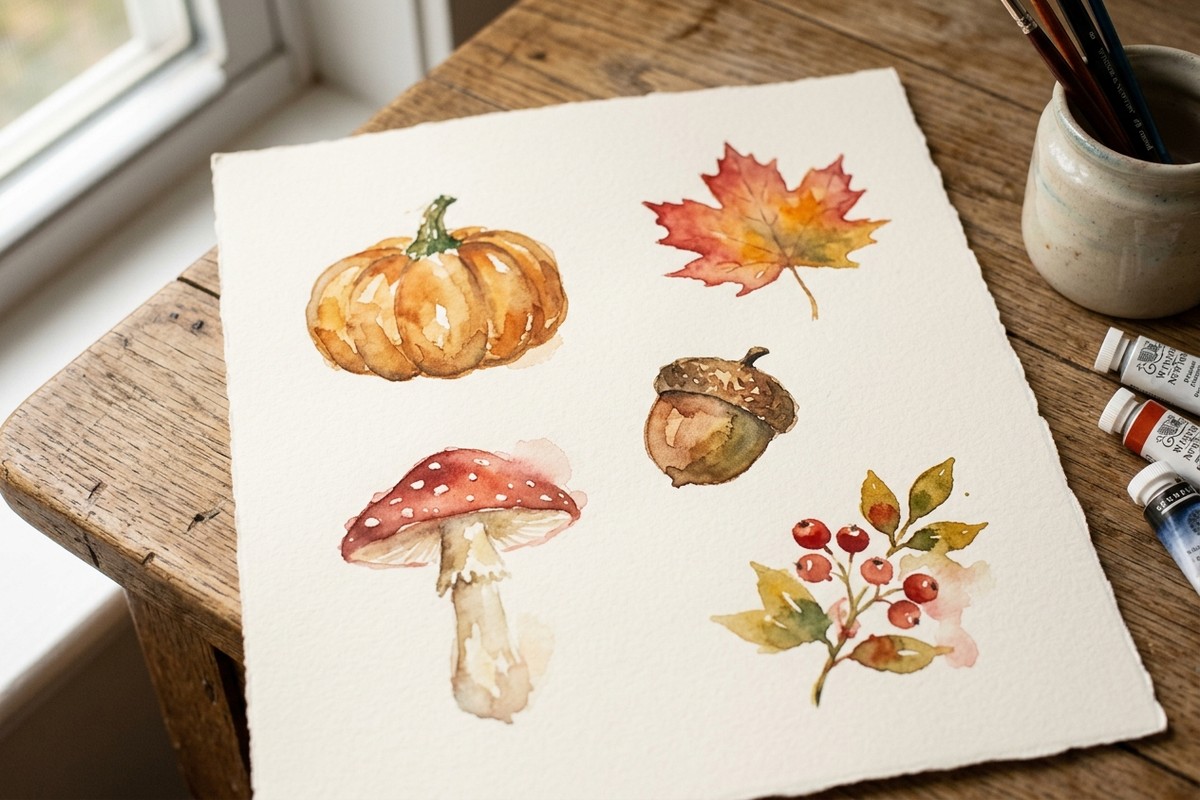
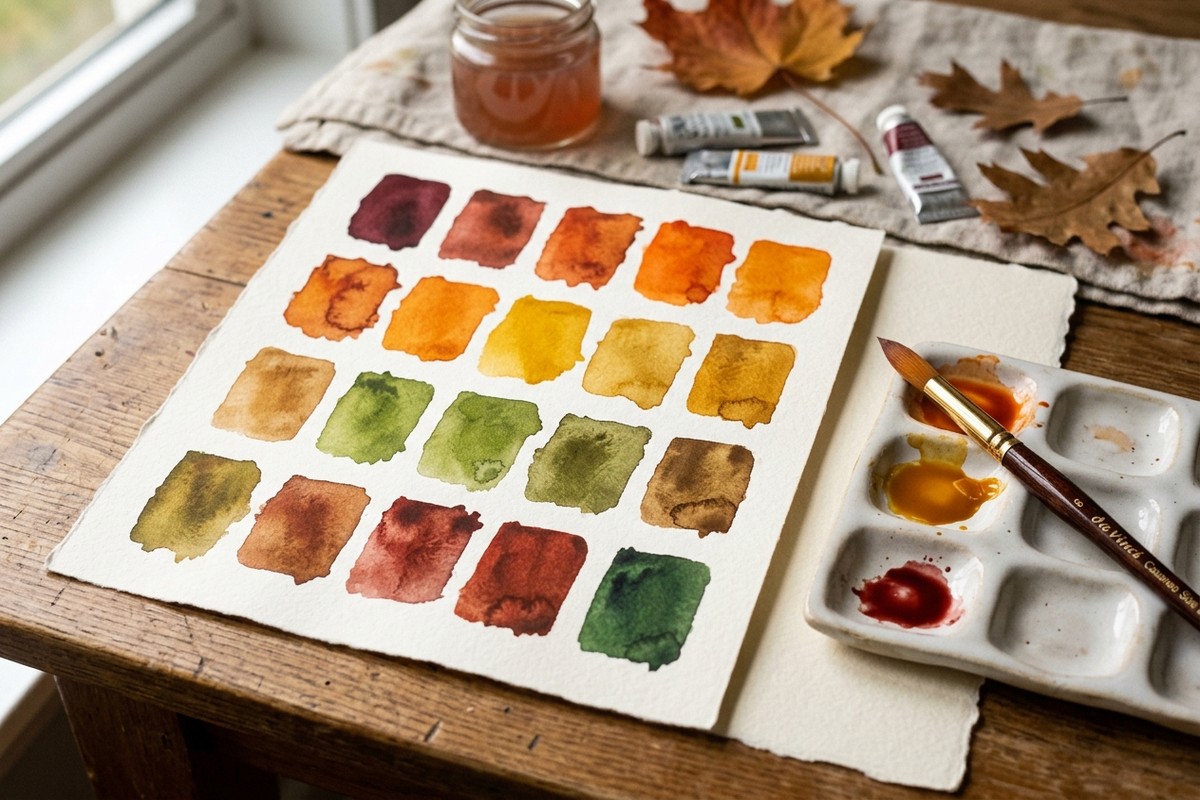
Autumn is forgiving in a way spring and summer are not. The palette is warm and limited, the shapes are simple and rounded, and a little bit of mess reads as atmosphere rather than a mistake. A leaf that bleeds at the edges looks like it is catching the light. A pumpkin with uneven colour looks heirloom and real. That is a wonderful place to relax into.
If you are brand new, my easy watercolour pumpkins tutorial is a lovely first project, and these ideas layer right on top.
A cosy autumn watercolour palette
You do not need many colours for autumn. A warm, earthy palette does most of the work and keeps everything looking harmonious:
- Burnt sienna and burnt umber for pumpkins, acorns and bark
- Yellow ochre and raw sienna for wheat, straw and golden leaves
- Alizarin crimson or a warm red for maple leaves and berries
- Sap green softened with a little brown for fading foliage
- Payne’s grey for misty backgrounds and shadows
12 fall watercolour painting ideas for beginners
Here are twelve simple subjects to try — pick whichever one makes you want to reach for a brush.
- A single fallen leaf. The classic first project. One maple or oak leaf, wet-on-wet so the colours bleed and blend.
- A cluster of little pumpkins. Three heirloom pumpkins in different sizes and colours — sage, cream, rust.
- Acorns and oak leaves. Tiny, quick, and endlessly repeatable for a border or a card.
- Woodland mushrooms. Toadstools and chanterelles are all soft caps and gentle stems — very beginner-friendly.
- A sprig of berries. Rowan or rosehips: dab warm red, drop in a darker note while wet.
- A steaming mug. A simple cup with a wisp of steam — pure autumn comfort.
- A cosy knitted jumper. Loose folds in oatmeal and mustard; a lovely study in soft shadow.
- Wheat and dried grasses. Thin golden strokes; a calming, meditative subject.
- A misty morning landscape. Wet-on-wet layers of grey and gold with a lone tree.
- Apples on a branch. Red and green with a white highlight left unpainted.
- A sunflower going over. Even a drooping, past-its-best sunflower is beautiful in autumn.
- A woodland animal. A fox, hedgehog or squirrel in warm loose washes to finish your collection.
Love painting cosy scenes? My watercolour cottage painting guide and still life drawing ideas pair beautifully with these.
Loose watercolour techniques that suit autumn
- Wet-on-wet for soft, blooming leaves and misty skies.
- Dropping in colour — touch a second pigment into a still-wet shape and let it spread on its own.
- Leaving white for highlights instead of using white paint.
- A dry-brush drag for bark texture and dried grasses.
A few supplies I always reach for
- A small set of warm earth tones (you truly do not need 24 colours)
- One round brush, size 6 or 8, that holds a good point
- Cold-press watercolour paper, 300gsm, so it does not buckle
- A jar of water and a scrap of kitchen roll to lift and blot
Want something ready to paint? Try these outline drawings for painting, or print a few free printable watercolor templates for adults.
Frequently asked questions
What is the easiest autumn subject to paint in watercolour?
A single fallen leaf. It is one simple shape, it looks best a little imperfect, and wet-on-wet blending does most of the work for you.
Do I need special paints for autumn watercolour?
No. A small warm palette — burnt sienna, yellow ochre, a warm red, sap green and a grey — mixes almost every autumn colour you will need.
How do I stop my colours turning muddy?
Use fewer colours, let each layer dry before adding the next where you want crisp edges, and rinse your brush well between warm and cool pigments.
Can complete beginners paint these?
Absolutely. Autumn shapes are rounded and forgiving, and the free outline templates let you skip sketching and go straight to colour.