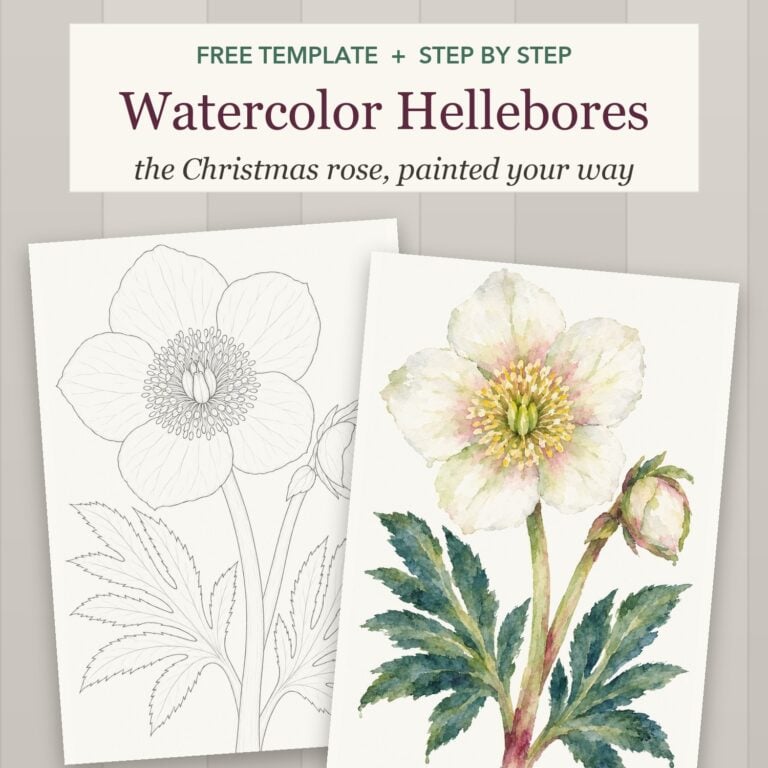
Hellebores are the flowers that turn up when nothing else will, nodding in the cold border in January, and they are surprisingly kind to paint in watercolor.
Get the free hellebore watercolor template 👇
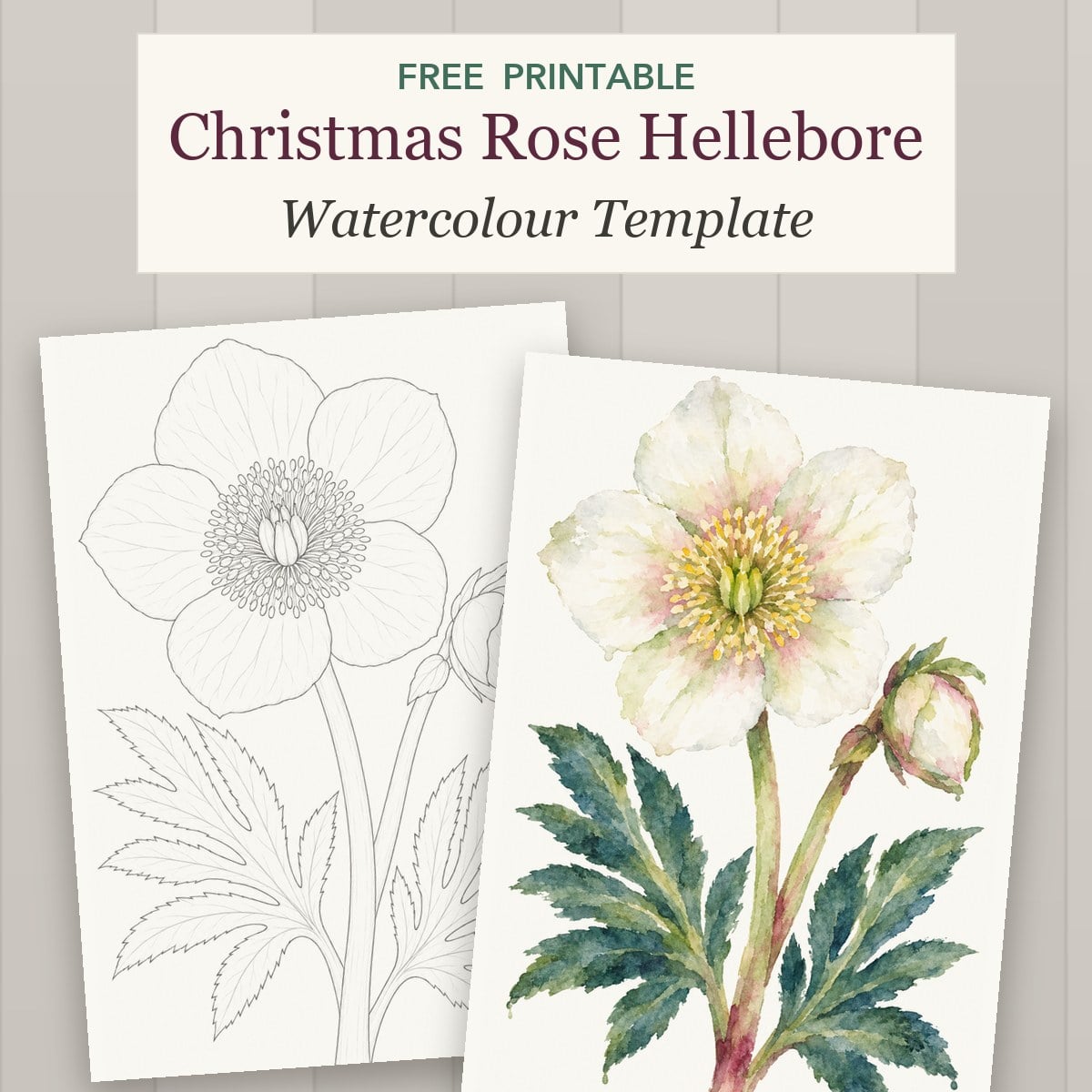
Quick answer: Draw five rounded sepals around a green center, paint each sepal with a pale wash, drop plum or green into the base while damp, then add speckles and the stamens once dry.
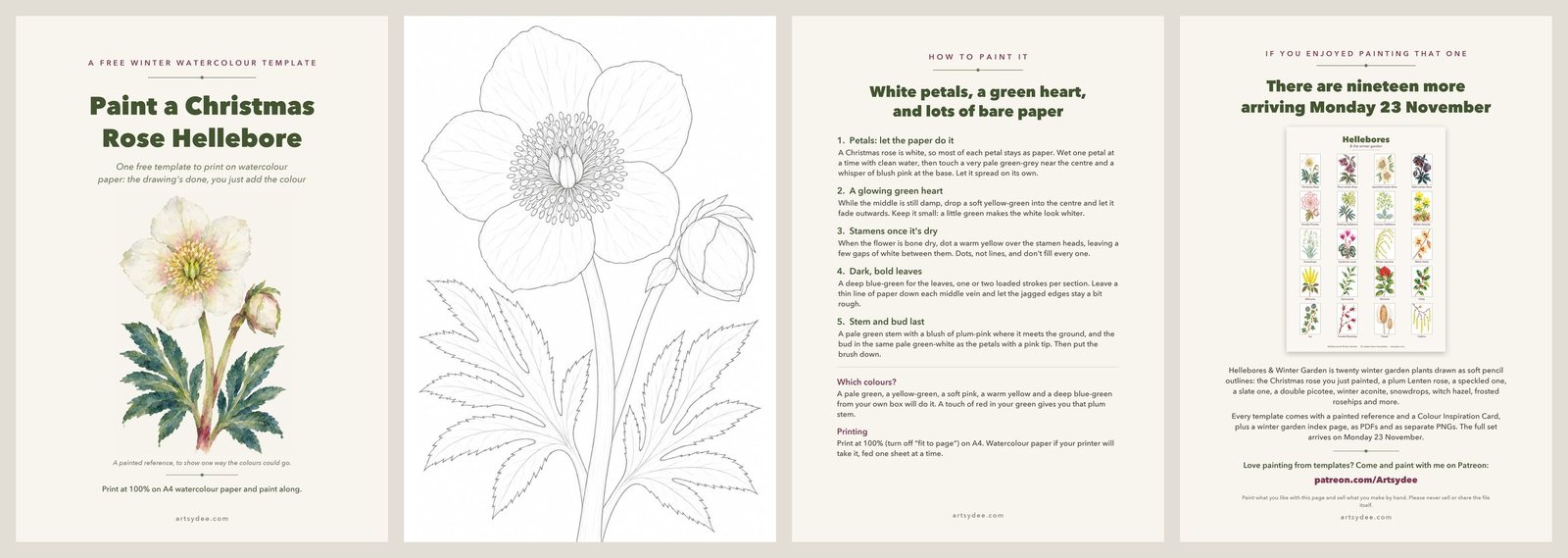
I’ve made you a free printable Christmas rose template: one open hellebore, a bud and two big jagged leaves, drawn as a soft pencil outline so you can go straight to the paint. It comes as a four-page PDF with a painted reference, a how-to-paint page and a page on the colors to use.
Below I’ll walk you through painting it step by step, plus how to tell a Christmas rose from a Lenten rose, and how to paint the plum and speckled ones too.
Table of Contents
What You Need to Paint a Hellebore
You don’t need anything fancy. Hellebores are mostly about water control and leaving white paper, so a few decent basics go a long way:
- Watercolor paper, 300 gsm (140 lb) if you can. A Canson XL watercolor pad is a good, affordable start, and it feeds through most home printers one sheet at a time.
- Paints in a pale green, a yellow-green, a soft pink, a warm yellow and a deep blue-green. Any student set will do. I like the Winsor & Newton Cotman set for exactly this kind of painting.
- A round brush with a good point, around a size 6. The Princeton Heritage round holds plenty of water and still makes neat little stamen dots.
- Masking tape, two jars of water (one for rinsing, one clean) and a paper towel.
- The free template from the box at the top of this post.
Some links in this post are affiliate links. If you buy through them I may earn a small commission, at no extra cost to you. I only link to things I actually use.
Your Free Christmas Rose Template
The template is the Christmas rose, Helleborus niger, and I picked it on purpose. It’s the simplest hellebore to paint: one flower facing you, one bud, two leaves, and big clean petal shapes with nothing crowding them. If you’ve never painted a white flower before, this is a lovely one to learn on.
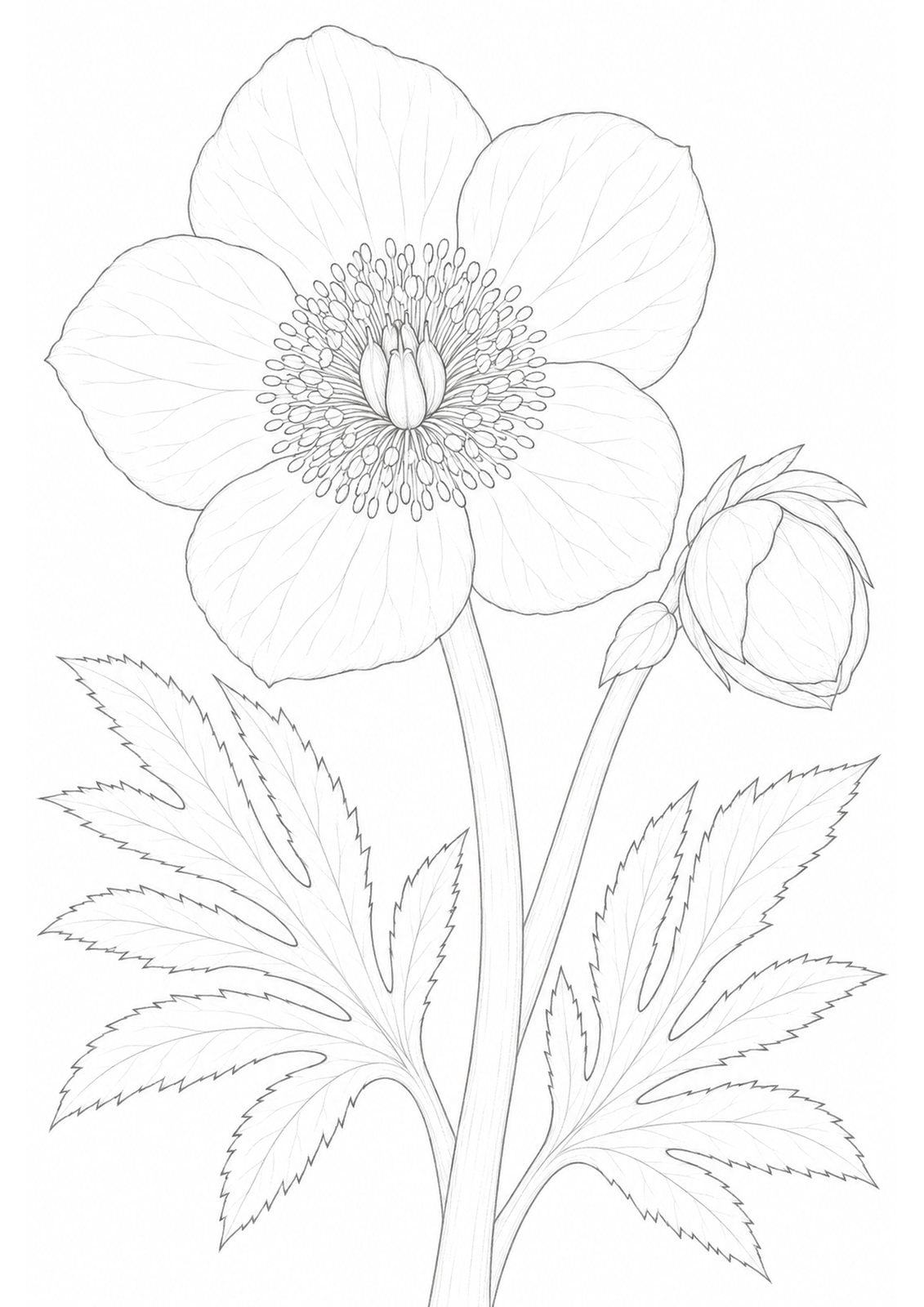
The PDF has four pages: a cover with the painted reference, the outline itself, a how-to-paint page with five short steps and the colors to use, and a last page about where to find more. The outline is a full A4 page at 300 dpi, so it prints crisp and the pencil lines are soft enough to disappear under the paint.
Christmas Rose or Lenten Rose? A Quick Guide
People call all hellebores “winter roses”, but there are two you’ll meet most often, and they paint quite differently.
The Christmas rose (Helleborus niger)
Pure white flowers that often blush pink as they age, opening from late December into January. The flowers look outwards rather than down, and the center is a bright ring of yellow stamens around a little green cluster. It’s the one on your free template.
The Lenten rose (Helleborus orientalis)
Flowers a bit later, around Lent (February into March), and comes in almost every color: cream, blush, plum, deep wine, slate that’s nearly black, and lots of speckled ones. Lenten roses usually nod their heads down, so you see them side-on or from below.
One thing that’s true of both: those big “petals” are really sepals, which is why they last so long on the plant and why they often fade to green as the seed forms. Hellebores also have little cup-shaped nectaries tucked inside the ring of stamens. You don’t need to paint those, but it’s nice to know what you’re looking at.
How to Paint a Watercolor Hellebore, Step by Step
Here’s how to paint the Christmas rose on your template. Give yourself about forty minutes, most of which is waiting for things to dry, so put the kettle on.
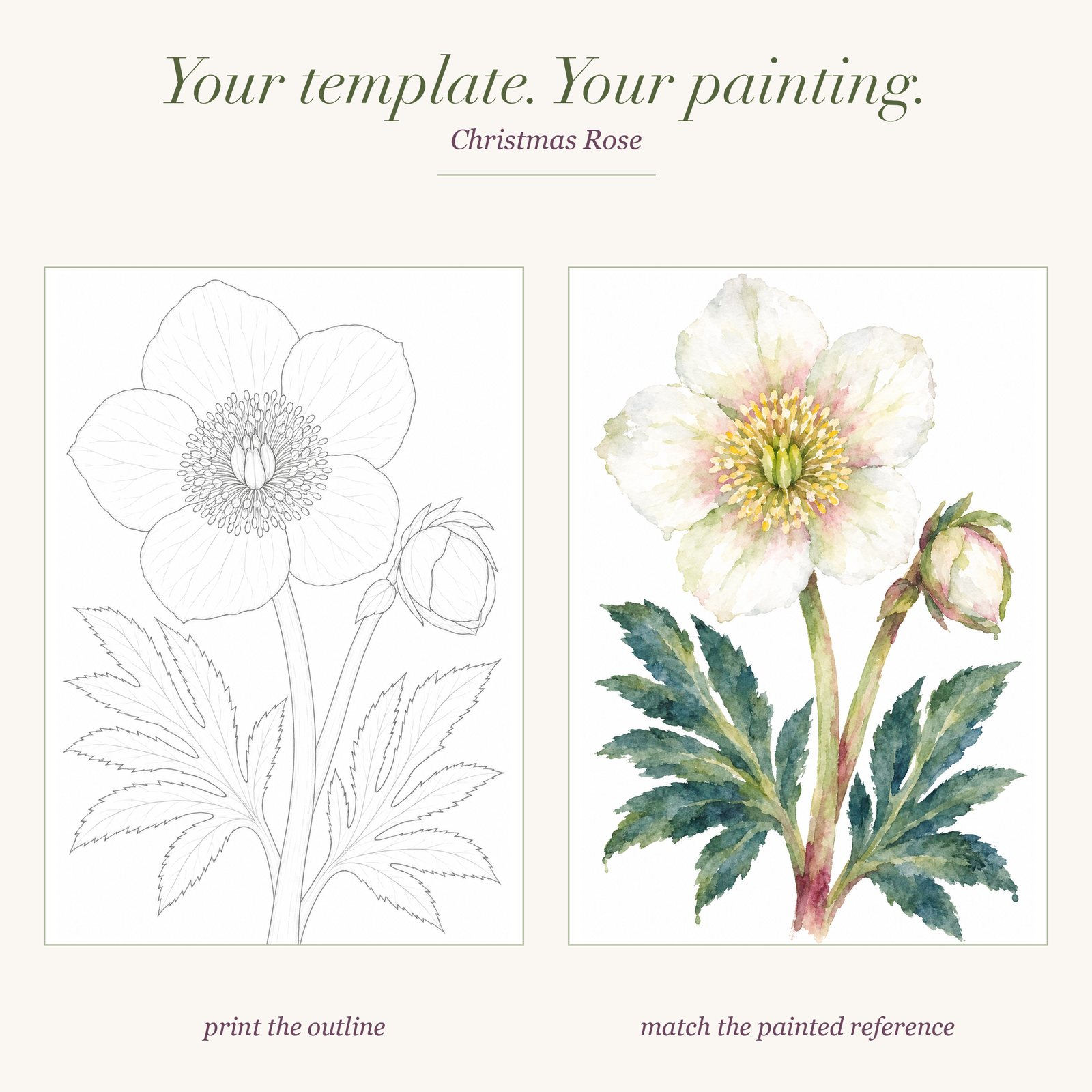
Step 1: Print the template and tape it down
Print the Christmas rose template at 100% on A4 (or “fit to page” on US Letter) on watercolor paper, if your printer will take it. If it won’t, this guide to printing templates on watercolor paper walks you through it, or you can trace the outline across with a light pad.
Tape the sheet down on all four sides with masking tape. Hellebore petals get a lot of water, and taped paper dries flatter.
Step 2: Wet one petal and let the paper do the work
A Christmas rose is white, so most of each petal stays as bare paper. Wet one petal with clean water, right up to the pencil line. While it’s shiny, touch a very pale green-gray near the center and a whisper of soft pink at the base, and let it drift outwards on its own.
Do the petals that don’t touch first, then go back for the ones in between once the first ones are dry. That way the petals stay separate shapes instead of one big white blob.
Step 3: Drop a green heart into the middle
While the center of the flower is still damp, drop a soft yellow-green into the very middle and let it fade outwards. Keep it small. A little green makes the white around it look whiter, which is exactly the trick you want.
Want the outline for this? Grab the free Christmas rose template here and it’ll be in your inbox in a minute.
Step 4: Dot in the stamens once it’s dry
Wait until the flower is bone dry (back of your hand on the paper: if it feels cool, it’s still wet). Then dot a warm yellow over the stamen heads with the tip of a small round brush. Dots, not lines, and leave a few gaps of white between them so they sparkle. You don’t need to fill every circle on the template.
Step 5: Paint the leaves dark and bold
Now the fun bit. Mix a deep blue-green and paint each leaf section with one or two loaded strokes. Leave a thin line of paper down the middle vein and let the jagged edges stay a little rough. Hellebore leaves are tough, leathery and dark, and that dark green is what makes the pale flower glow.
If you want more depth, drop a touch of blue or a little purple into the base of each leaf while it’s still wet.
Step 6: Stem, bud, and stop
Paint the stems a pale green with a blush of plum-pink where they meet the ground. The bud is the same pale green-white as the petals, with a pink tip. Then put the brush down. Honestly, stopping early is the hardest step in watercolor, and the one that makes the biggest difference.
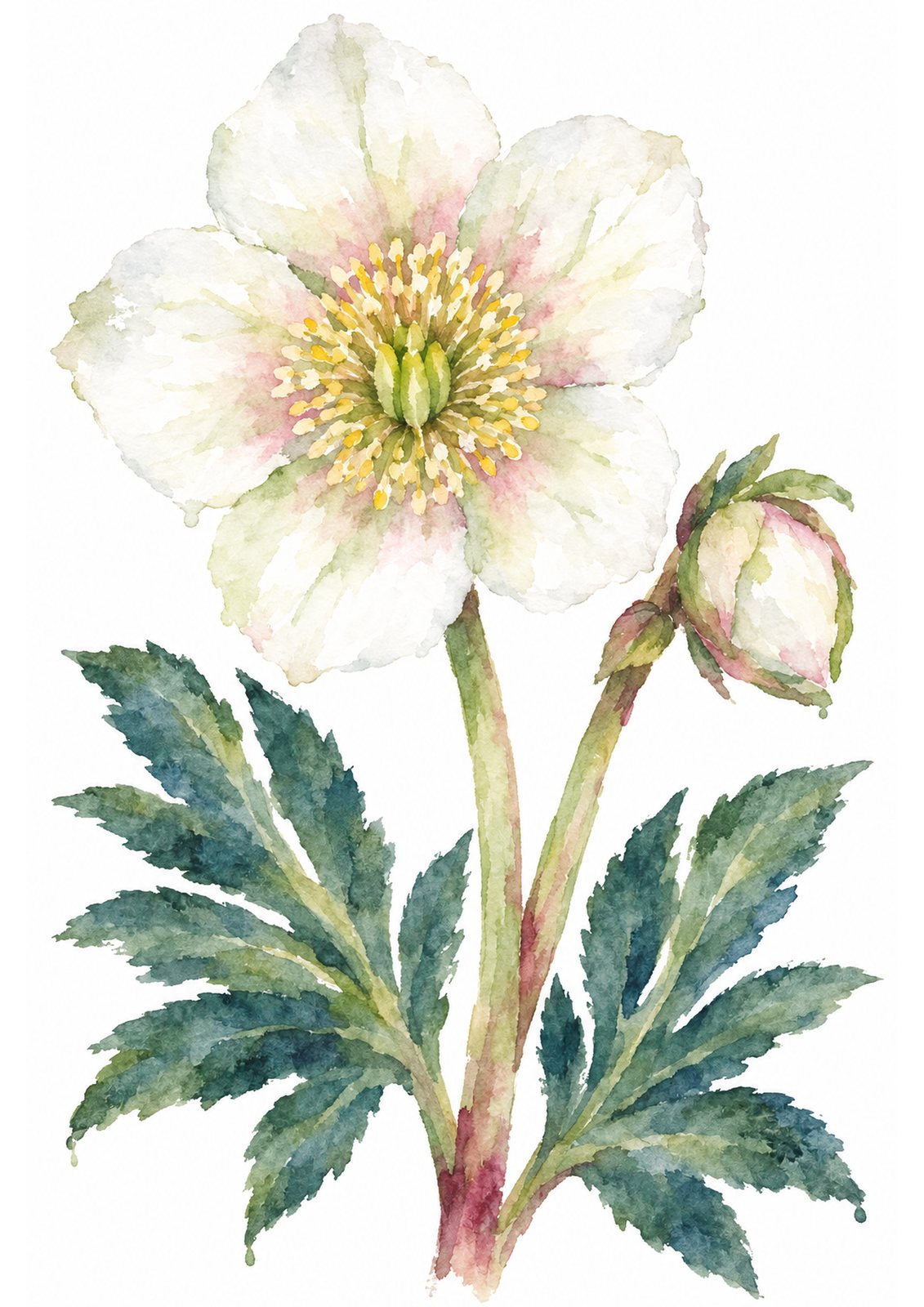
Look at how little paint is on the petals in that painted reference. Almost all the color is in the center and the leaves. If your flower starts looking gray or muddy, it’s nearly always because the petals have been worked too much, so next time, wet, touch and walk away.
Painting Plum and Speckled Lenten Roses
Once you’ve painted a white Christmas rose, the colored Lenten roses are the natural next step, and they’re a bit of a treat.
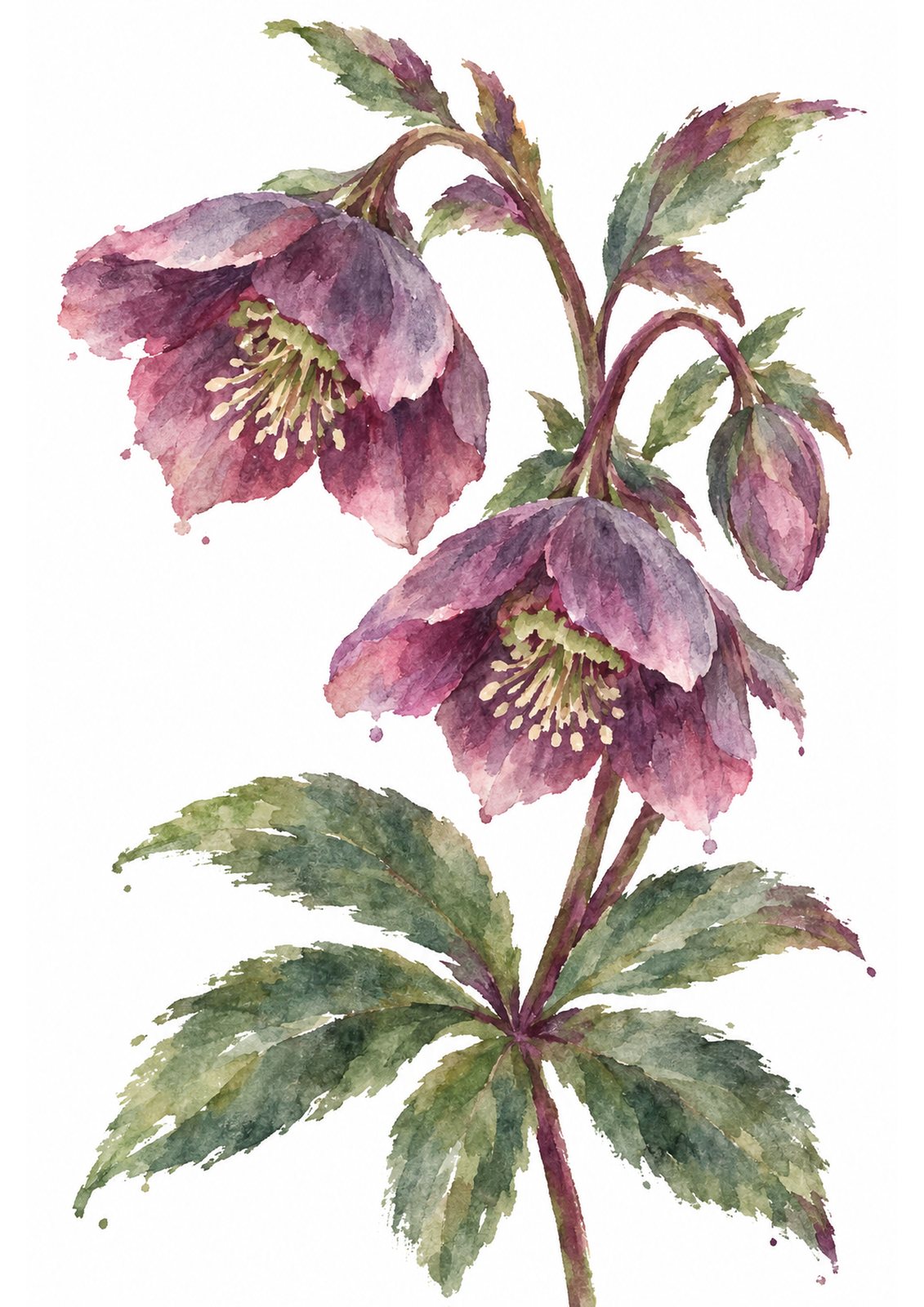
For a plum hellebore, wet the petal and float in a mix of crimson with a touch of blue or purple. While it’s still wet, drop a darker, stronger version of the same mix into the base of each petal so it fades towards the edge. Let it dry before you add a few darker veins with a small brush.
For a speckled one, paint the petal pale cream or blush first and let it dry completely. Then flick or dot tiny wine-red speckles from the center outwards, thicker near the middle and fewer towards the edge. Hold the brush loosely, and don’t make the dots too even.
For the near-black slate hellebores, mix a deep purple with a little blue and a touch of brown, and leave a thin edge of paper or lighter color around each petal, or it turns into a dark blob. Nodding flowers seen from below are great for this: you get the dark outside of the petals and just a glimpse of the paler inside.
Little Things That Make Hellebores Look Real
- Save your whites. The brightest thing on the page should be bare paper, not white paint.
- Keep the green center small. A thumbnail of yellow-green is plenty. Too much and the flower turns into a daisy.
- Let the leaves be darker than you think. Hellebore leaves are properly dark, and that contrast is what makes a white flower glow.
- Paint petals alternately. Skip one, paint the next, so wet petals never touch and bleed into each other.
- Stop sooner. If you’re wondering whether it needs one more layer, it probably doesn’t.
If you’d like more practice with this loose, leave-the-paper-white way of painting flowers, my loose watercolor flowers tutorial is a good next stop, and watercolor flowers for beginners has lots of easy first flowers to try.
Want to Paint the Whole Winter Garden?
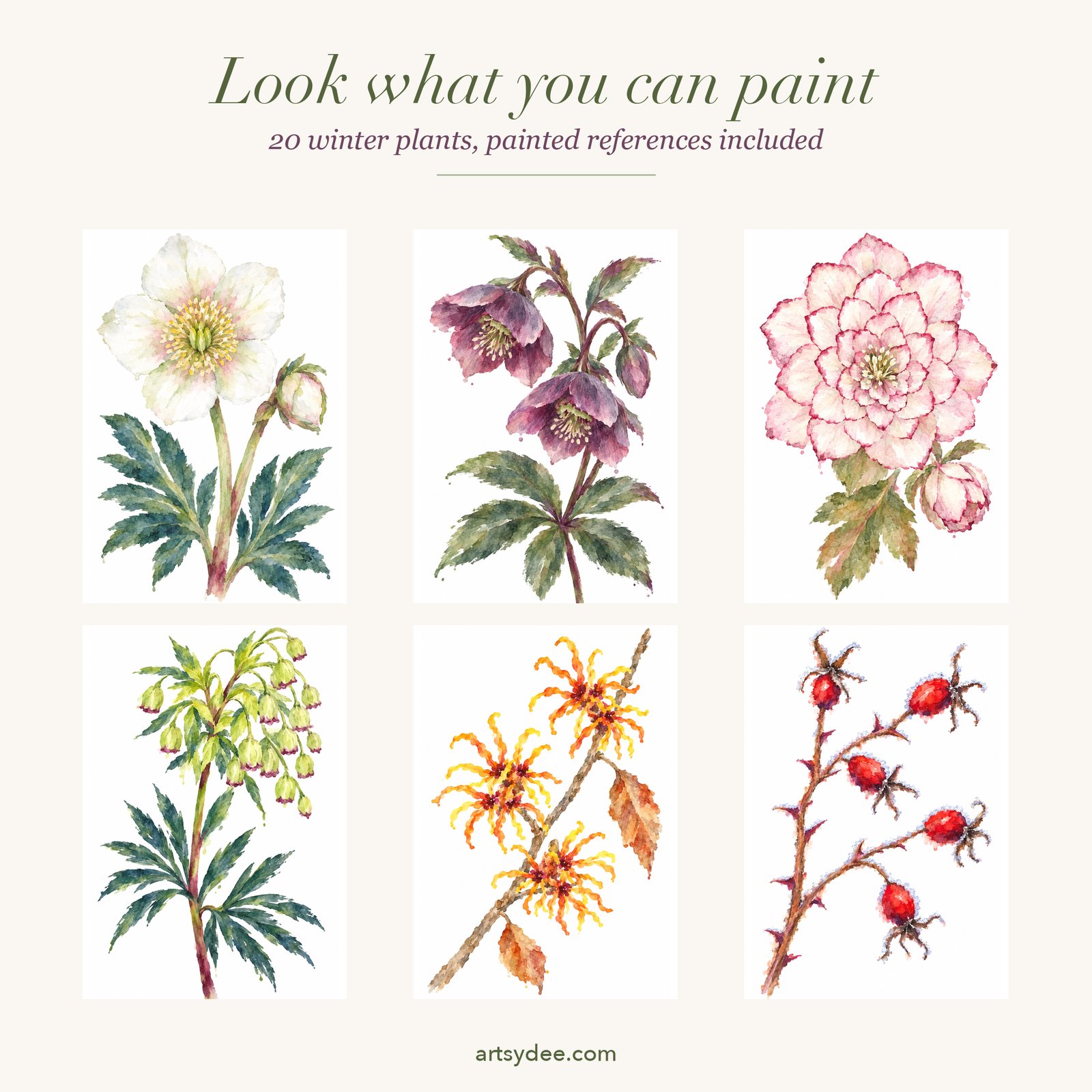
The Christmas rose is one of twenty winter garden plants I’ve drawn as soft pencil outlines: seven hellebores (Christmas rose, plum, speckled and slate Lenten roses, a double picotee, stinking hellebore and Corsican hellebore) and thirteen other things that are actually flowering in January, from winter aconite and snowdrops to witch hazel, cyclamen and frosted rosehips.
Hellebores & Winter Garden is coming
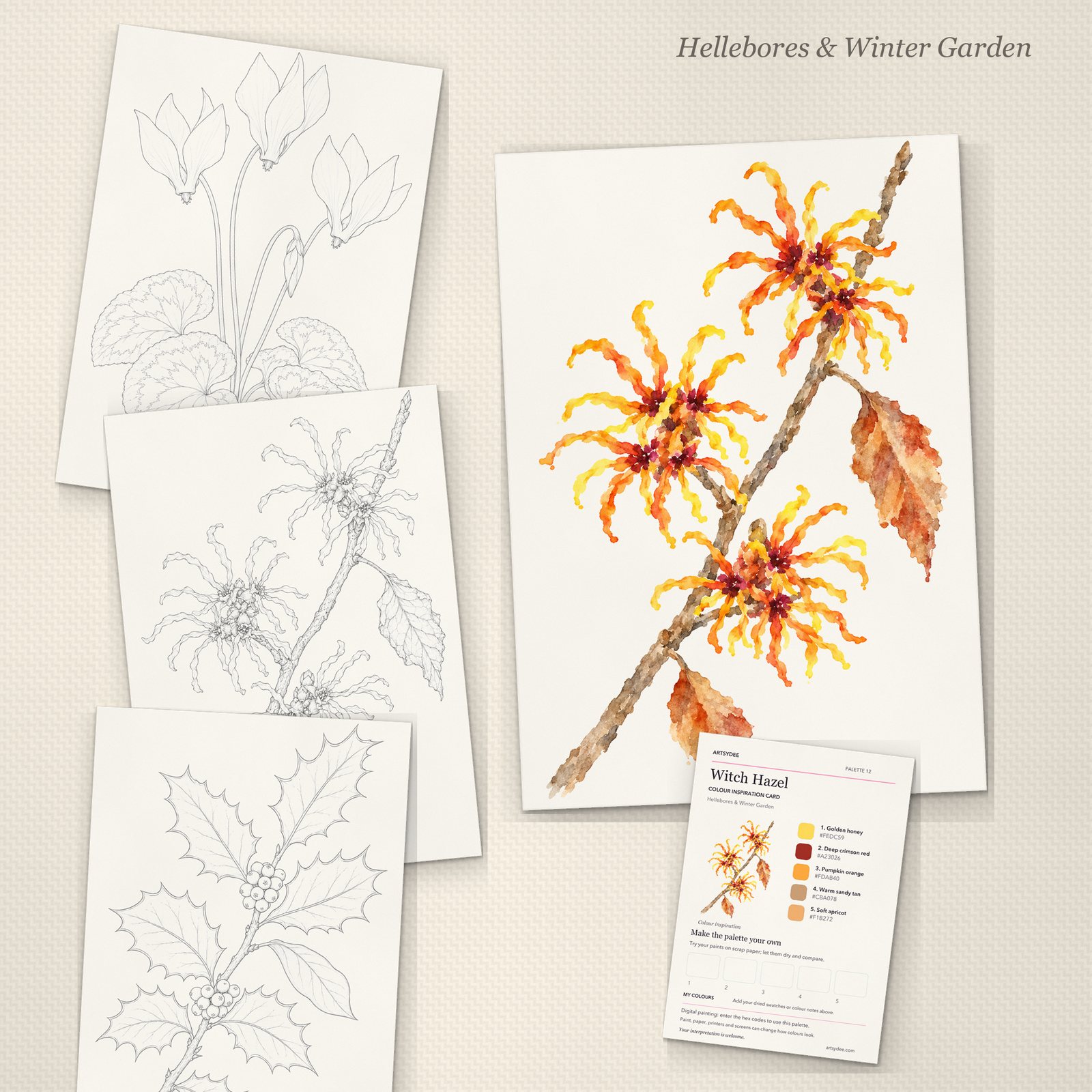
The full Hellebores & Winter Garden set arrives on Monday 23 November: twenty winter garden plants to paint, from hellebores and snowdrops to witch hazel and frosted rosehips.
Every template in the set comes with a painted reference and a Colour Inspiration Card, plus a winter garden index page. Grab the free Christmas rose above and you’ll hear about the full set in my newsletter the week it’s ready. In the meantime, all my other printables are in my Payhip shop.
Love Painting From Templates? Join Me on Patreon
If you love painting from printed outlines, come and join me on Patreon. It’s where my weekly watercolor template sets go out to members: printed outlines with painted references, so you can see where the color goes, plus Procreate stamps and palettes.
Frequently Asked Questions
How do you paint a hellebore in watercolor?
Paint the five petals (really sepals) with a very pale wash, drop green or plum into the base while it’s damp, and leave lots of white paper. Once it’s dry, dot in the yellow stamens and any speckles, then paint the leaves in a deep blue-green. A printed template means you can skip the drawing and go straight to the paint.
What colors are hellebores?
Hellebores come in white, cream, blush pink, plum, deep wine, slate (almost black), green and soft yellow, and many are speckled or edged with a darker color. The Christmas rose is white, often blushing pink as it ages. Most of the garden colors you see in late winter are Lenten roses, which come in every shade from white to near-black.
What is the difference between a Christmas rose and a Lenten rose?
The Christmas rose is Helleborus niger: pure white flowers that open in the depths of winter, usually facing outwards. The Lenten rose is Helleborus orientalis (and its hybrids): it flowers a little later, around Lent, comes in many colors from white to plum and slate, and its flowers tend to nod downwards. Neither is actually a rose.
Why do hellebore flowers face down?
Many hellebores, especially Lenten roses, nod their flowers downwards to keep rain and snow off the pollen and nectar in the middle. For painting, that means you’ll often see them side-on or from below, which is why a template of an open, outward-facing Christmas rose is such a friendly place to start.
Final Thoughts
A white hellebore is one of those paintings that looks clever and is mostly about knowing when to leave the paper alone. Wet a petal, touch in a little green and pink, make the leaves dark, and stop. That’s really it.
If you’d like the outline, pop your email in at the top of the post and the Christmas rose is yours. Paint it once for practice, then paint it again for a winter card.
For more painting ideas, come and find me on YouTube (subscribe here so you don’t miss the next one) and on Pinterest, where I save all my winter painting ideas.
Last updated 27 October 2026.
You Might Also Like
- Easy Winter Watercolor: Paint a Snowy Cottage (Free Template)
- How to Paint a Watercolor Robin (Free Robin Template)
- Easy Christmas Watercolor Paintings for Beginners
- How to Paint Dahlias in Watercolor
- Watercolor for Beginners: 20 Easy First Paintings
Pin this for later!
Happy painting!
Dee x