Last Updated on October 13, 2026 by Dee
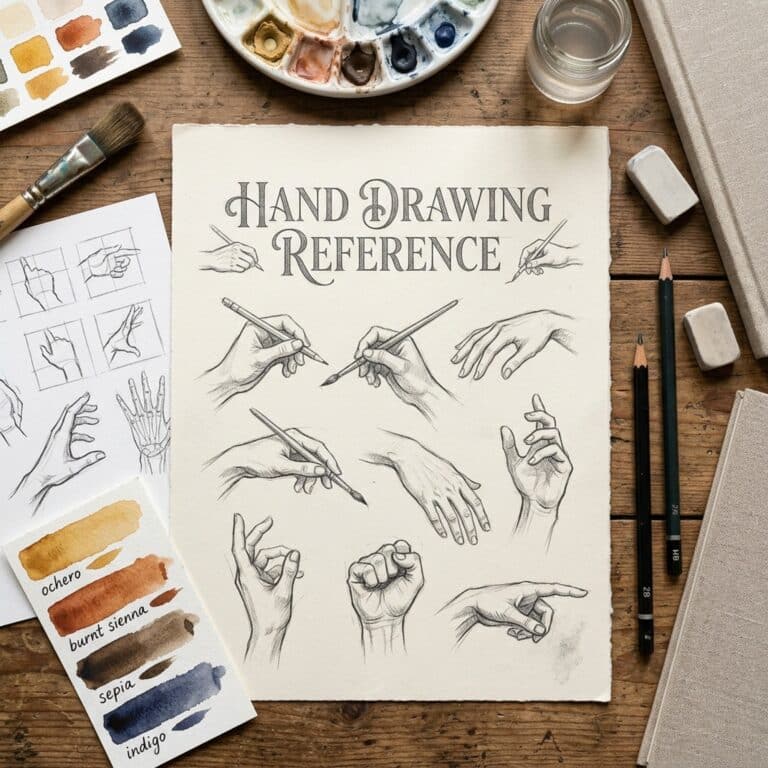
This hand drawing reference covers poses, angles and gestures, from open palms to fists, plus a free Hand Drawing Reference Guide with 8 sample templates.
I’ve put together this hand poses reference, with hand drawing reference images, angles and free templates, so you’ve got everything in one place. Whether you’re sketching hands for the first time or you want to level up your figure drawing, these references will help.
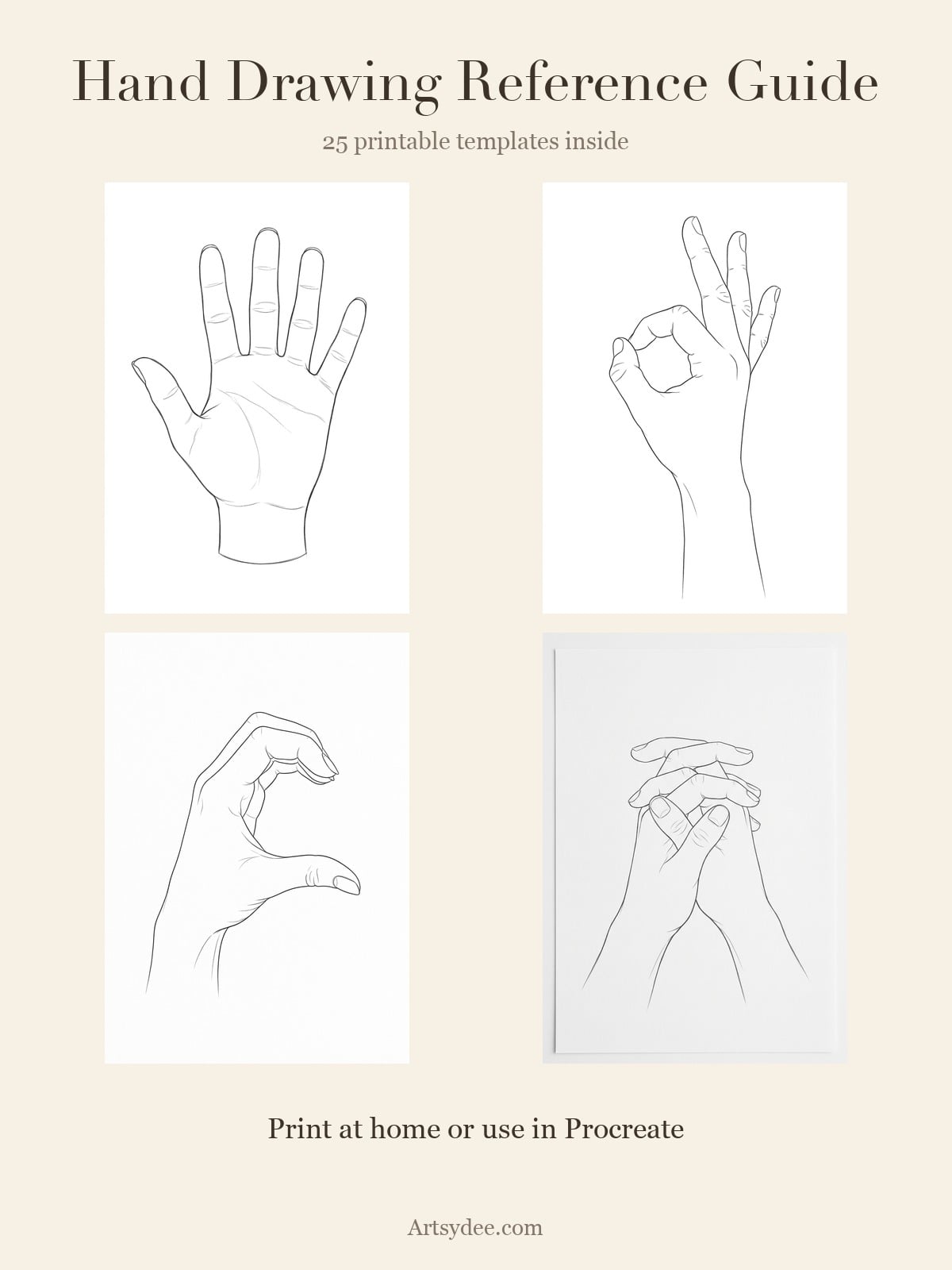
Get your FREE Hand Drawing Reference Guide Here 👇🏻
Updated: October 2026
Hands are one of the trickiest things to draw. All those joints, all those angles — it’s enough to make you want to hide every hand behind a convenient coffee mug forever.
But here’s the thing. Hands tell stories. A clenched fist, an open palm, fingers wrapped around a paintbrush — they carry so much expression. And once you’ve got a good set of references to work from, drawing hands goes from nightmare to actually quite satisfying. If you need a warm-up, my easy drawing ideas for beginners is a great place to start.
Quick Answer: This hand poses reference covers open palms, fists, pointing, relaxed hands, holding objects and expressive gestures. Start with a box for the palm and cylinders for the fingers, then refine the outline.
Getting comfortable with hands? There’s a whole shop of premium drawing template sets waiting for whatever you sketch next.
See the template sets →Why Hand Drawing References Matter
Even experienced artists keep hand reference sheets nearby. Hands have 27 bones, dozens of muscles, and they change shape dramatically depending on the gesture. Working from reference isn’t cheating — it’s how professionals work.
A good hand reference helps you:
- Understand proportions (fingers are longer than you think)
- Capture natural gestures instead of stiff poses
- Build confidence before drawing from imagination
- Practice difficult angles like foreshortening
Hand Anatomy Basics for Artists
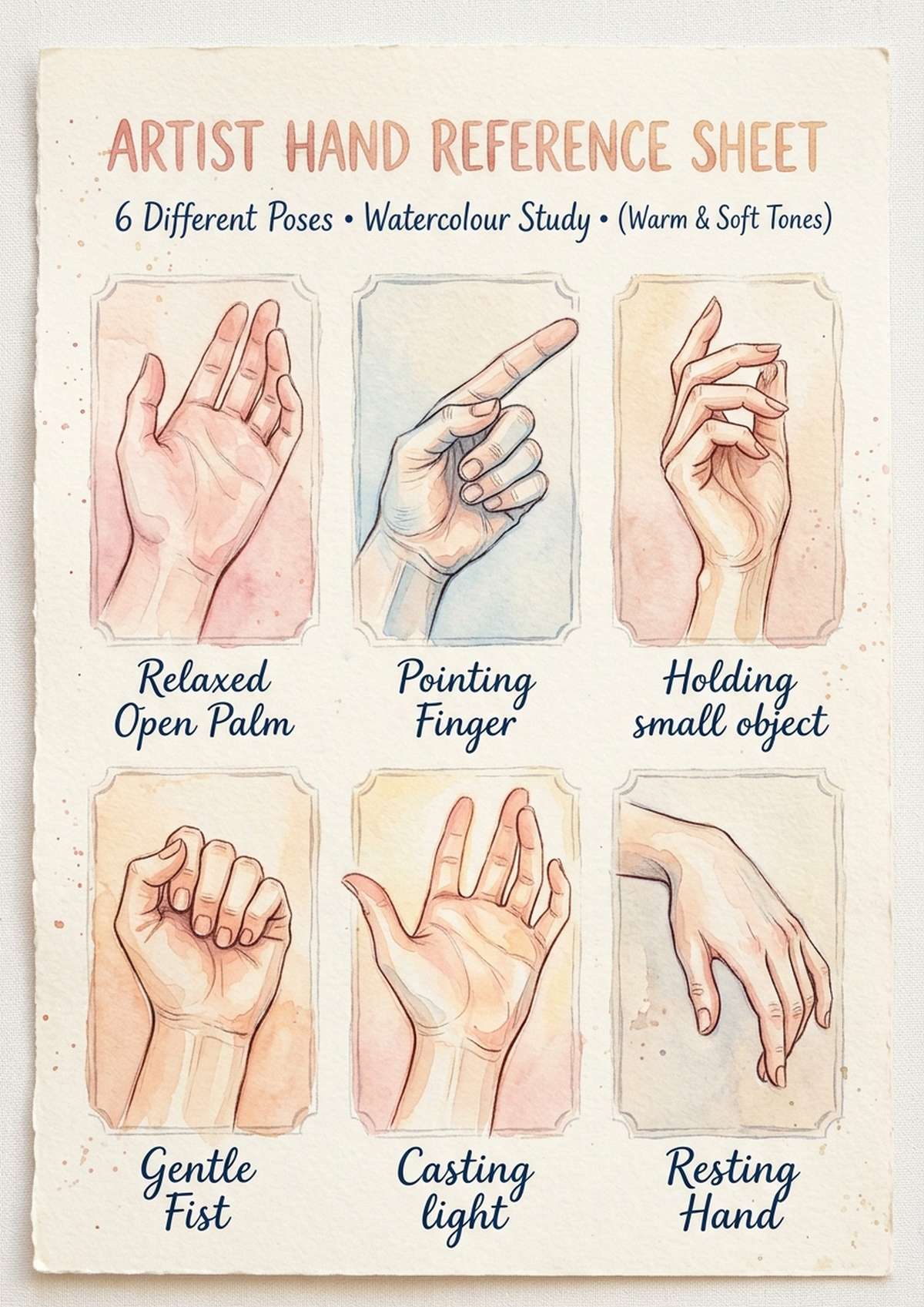
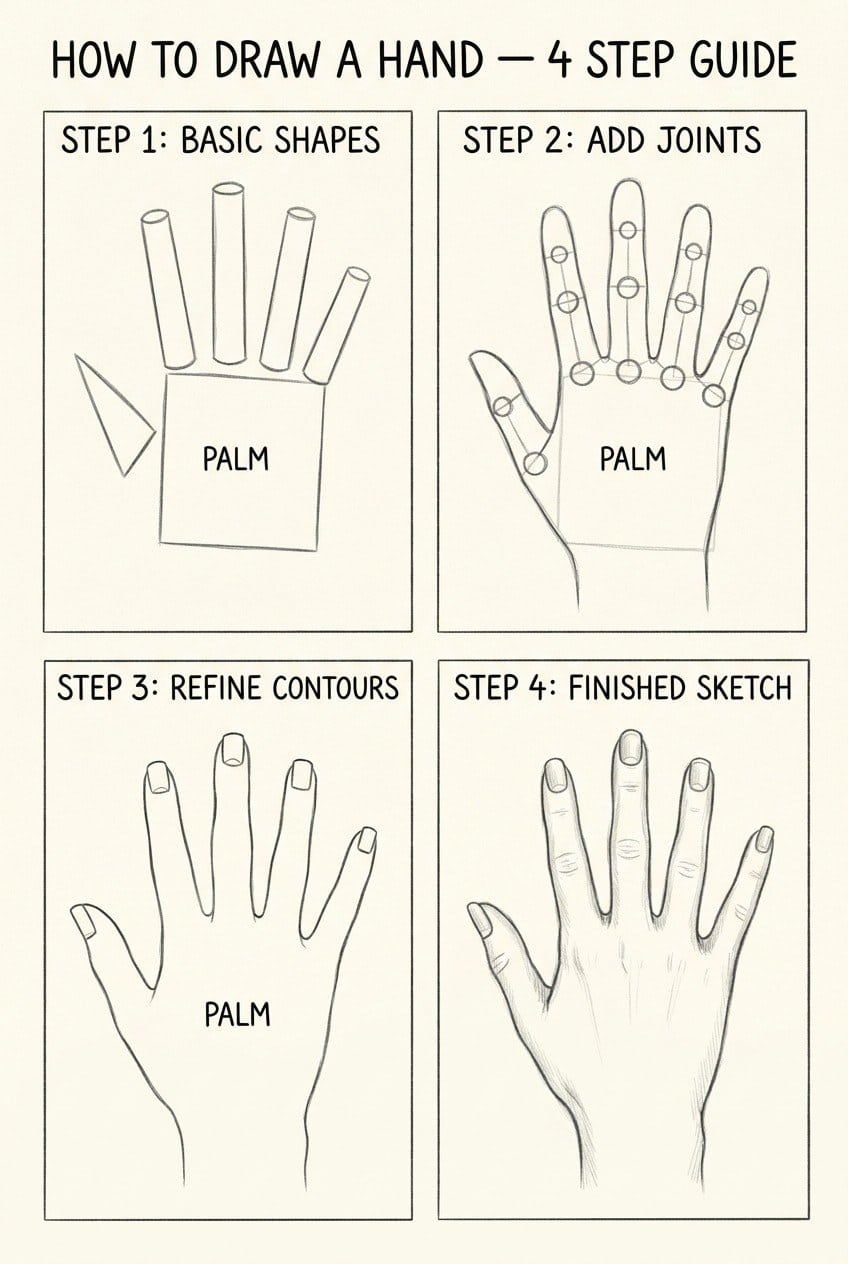
Hand anatomy for artists comes down to a few key landmarks, not a medical textbook’s worth of detail: the palm, the fingers, and the thumb.
- The palm is roughly a square shape, slightly longer than wide
- Fingers are about the same length as the palm
- The thumb sits lower and moves independently — it’s the rebel of the hand
- Knuckles form a gentle arc, not a straight line
- The wrist is narrower than the palm and connects at an angle
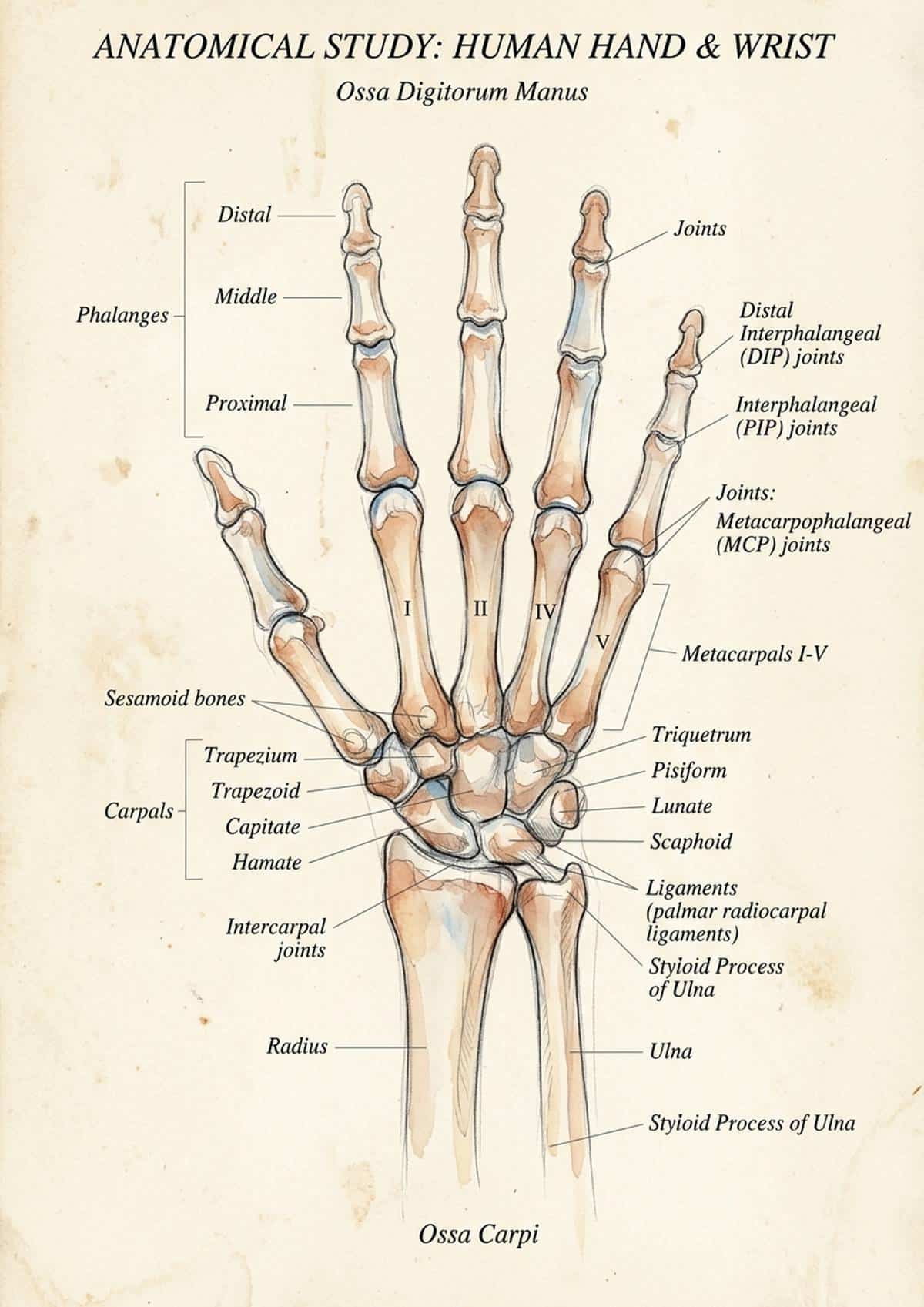
Once you can see these basic shapes, breaking down any hand pose becomes much easier. Start with the palm block, add the finger cylinders, then refine. This same approach works for anything — see my how to draw flowers step by step tutorial for another worked example.
Easy Hand Poses to Start With
If you’re new to drawing hands, start with these friendlier poses. They have fewer overlapping fingers and clearer shapes:
- Open palm — flat hand, fingers together. Simple shapes, great for beginners.
- Relaxed hand — slight natural curve to the fingers. More lifelike than a flat palm.
- Fist — compact shape, good for understanding how fingers fold.
- Thumbs up — one finger extended, rest curled. A fun one to practice.
- Pointing finger — teaches you to isolate one finger from the group.
Female Hand References
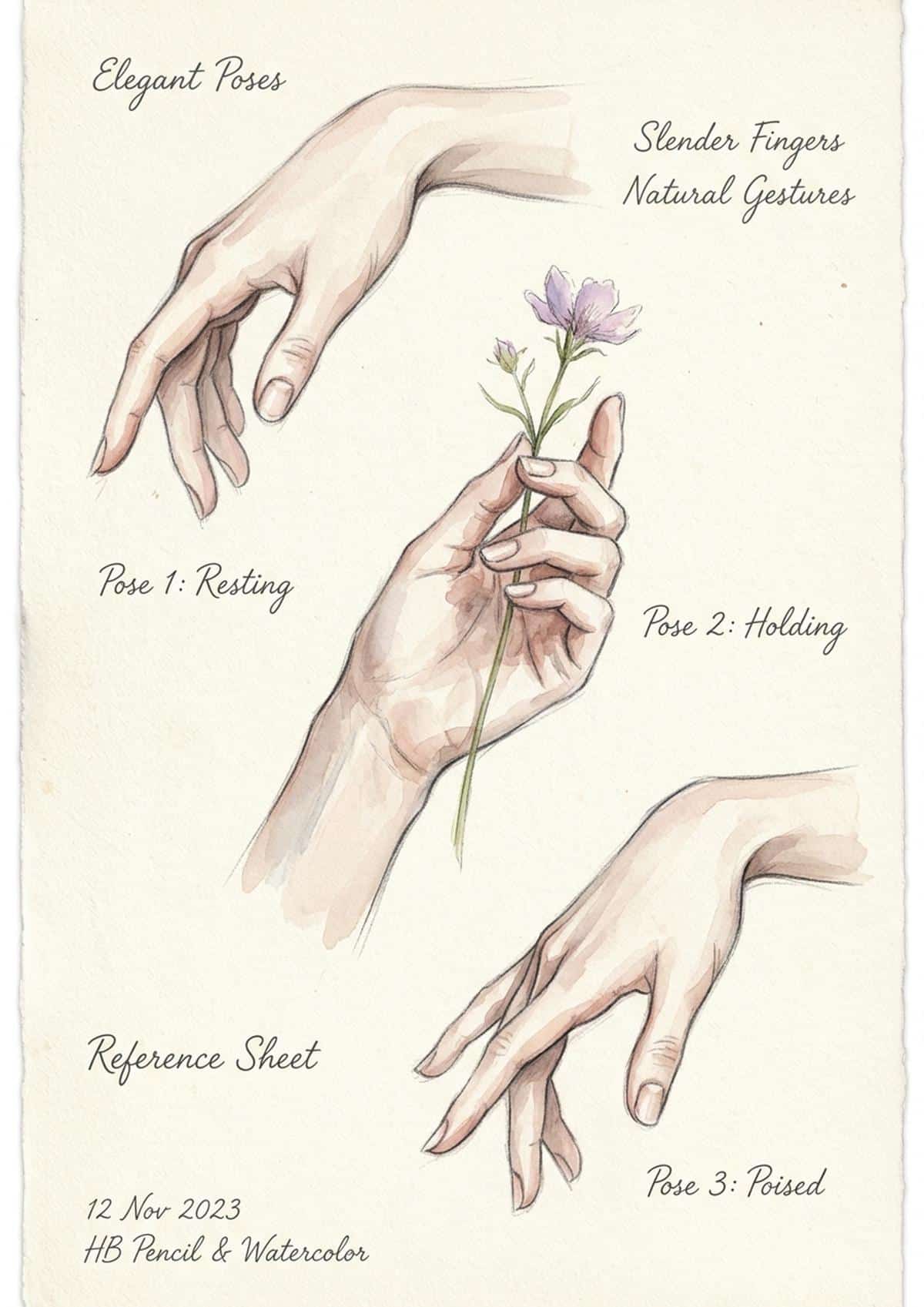
Female hands tend to have more slender fingers, narrower palms, and more graceful gestures. The key differences to watch for:
- Longer, more tapered fingers relative to palm size
- Softer transitions at the knuckles
- More curved, flowing gesture lines
- Often depicted with elegant poses — holding a flower, resting on a surface
Male Hand References
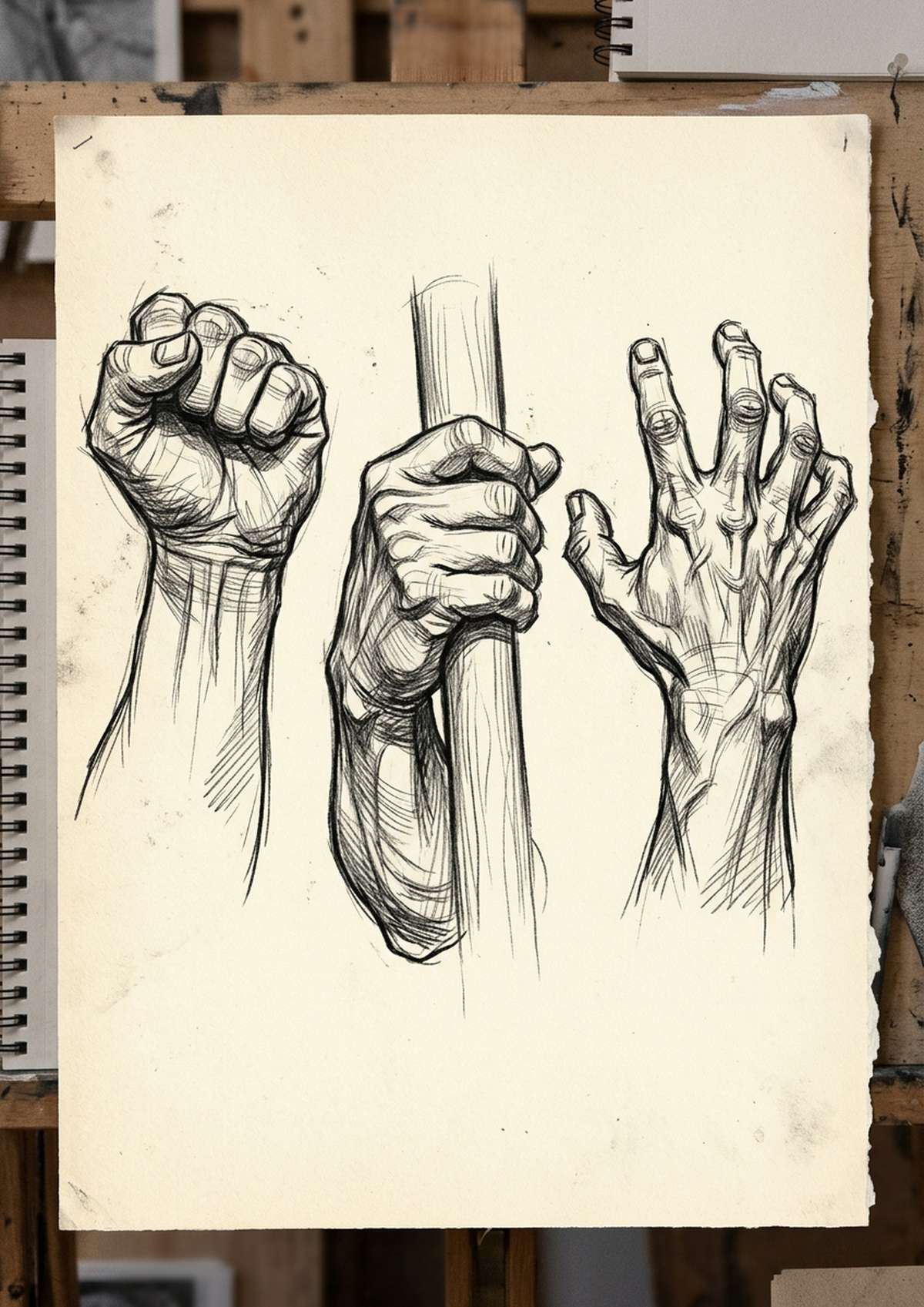
Male hands are typically broader with more defined knuckles and stronger angular shapes. When drawing masculine hands:
- Wider palms with more visible tendons
- Squarer fingertips
- More prominent knuckle ridges
- Stronger grip poses — clenched fists, gripping tools
Dynamic Hand Gestures
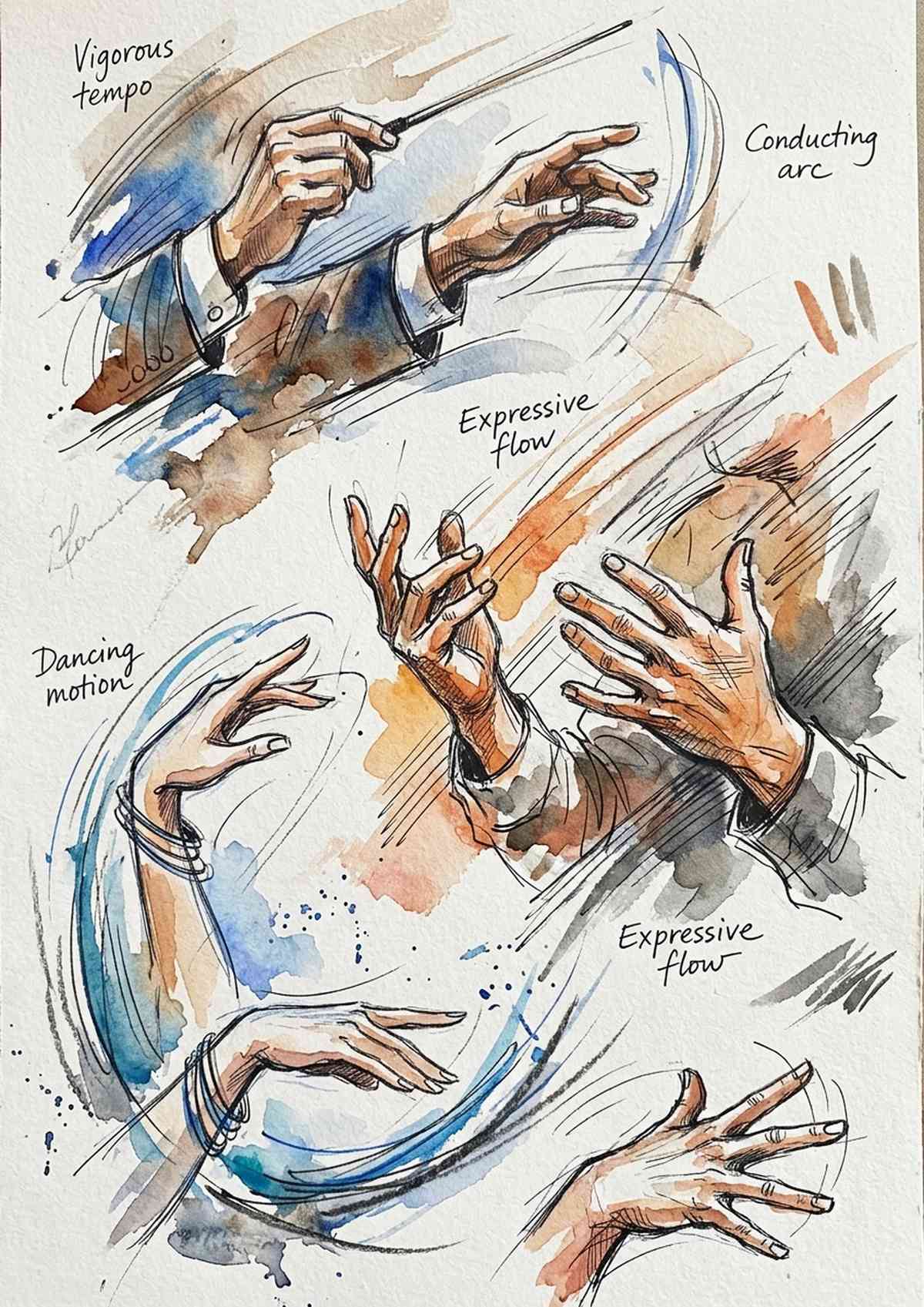
Once you’re comfortable with static poses, try drawing hands in motion. Gesturing hands — conducting music, waving, reaching — add life and emotion to your art. The trick is capturing the flow of movement through the wrist and fingers. For more movement-focused drawing practice, see my how to draw animals for beginners guide.
Drawing Baby Hands
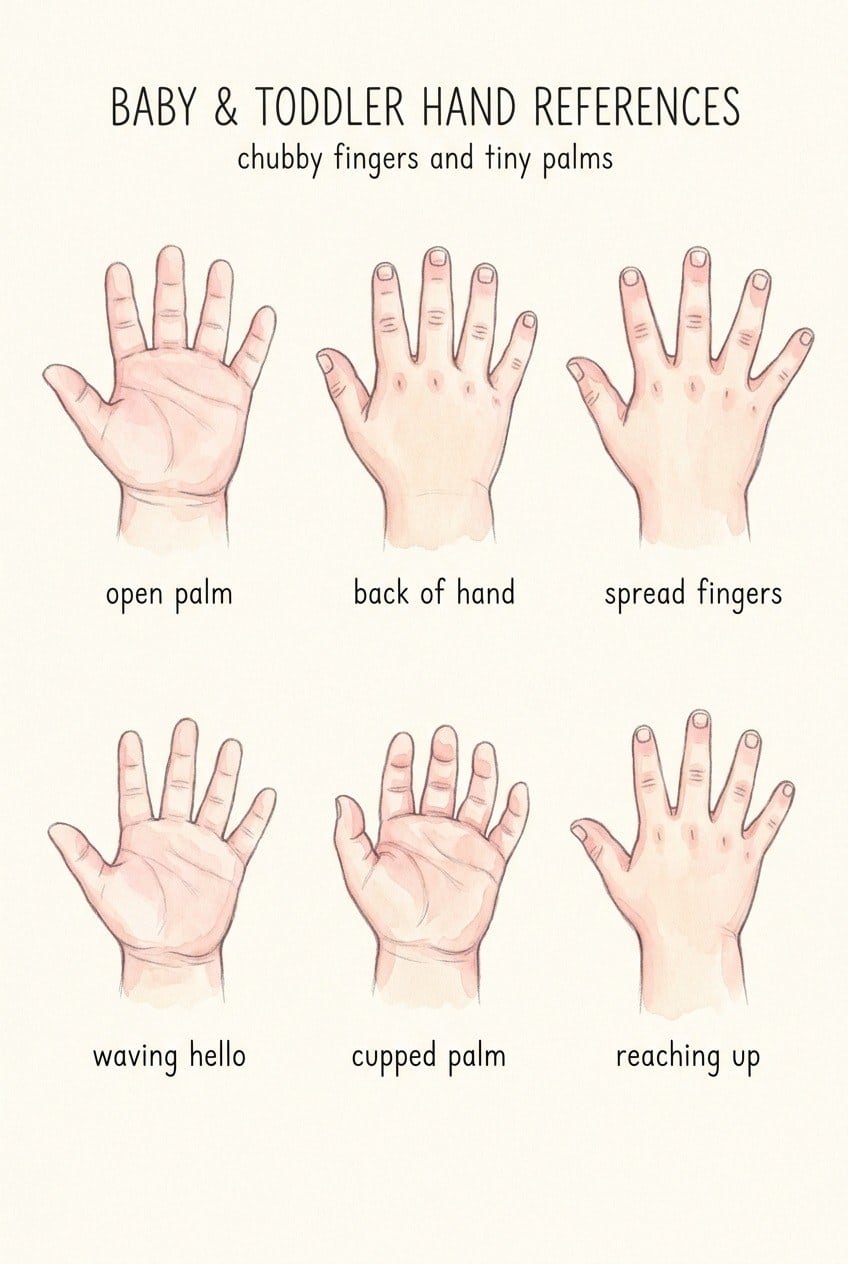
Baby hands are adorable to draw and surprisingly different from adult hands. They’re chubby, the fingers are shorter relative to the palm, and the knuckle dimples are more pronounced. The proportions are completely different — much rounder, much softer. Perfect for greeting cards and children’s illustration. If you’re painting for little ones, you’ll love my watercolour for kids: easy projects guide too.
Elderly Hands — Drawing Character
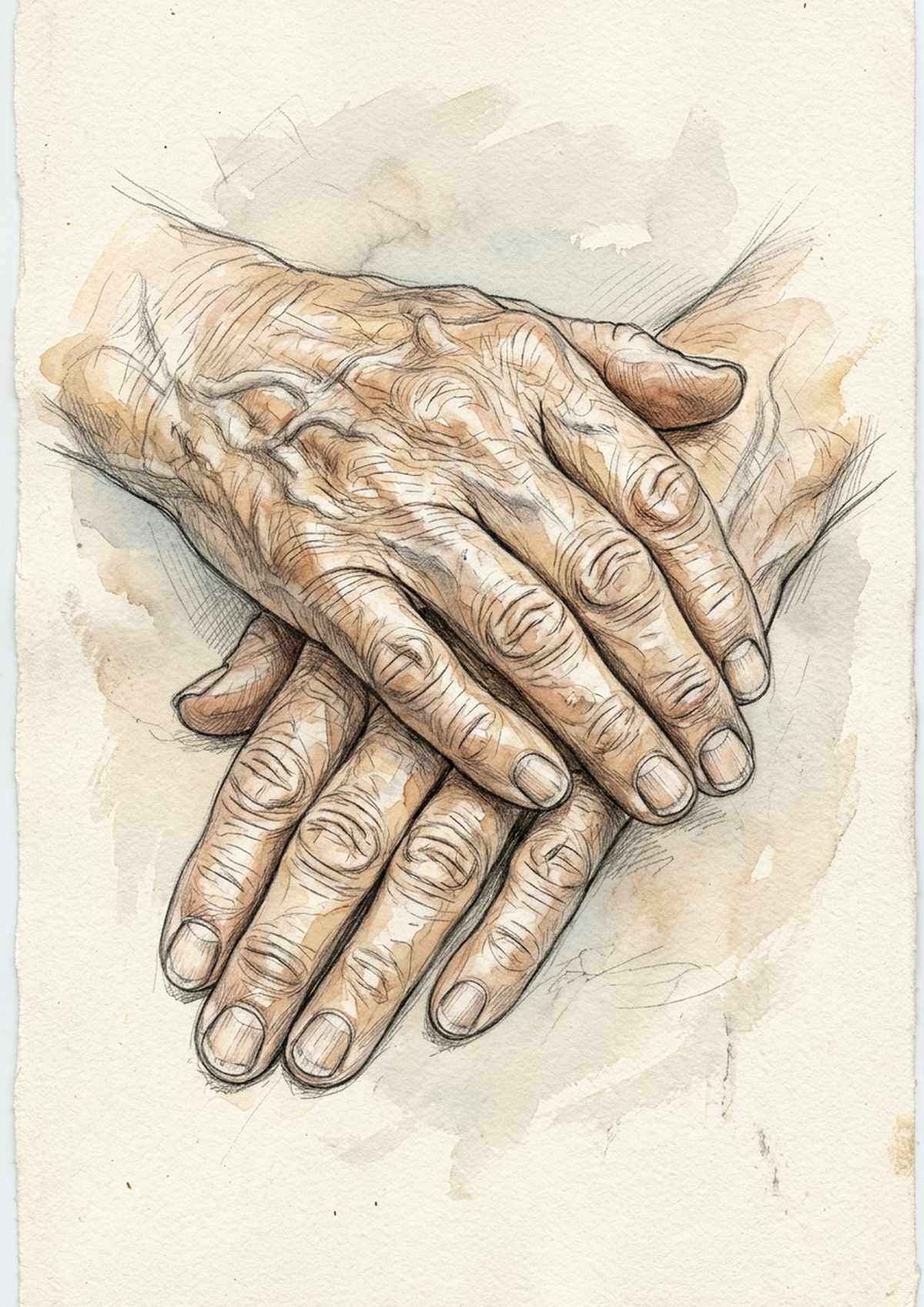
Older hands tell the most beautiful stories. Visible veins, prominent knuckles, thin skin showing tendons — these details add incredible character. Don’t shy away from wrinkles and texture. They’re what make elderly hand drawings so powerful and evocative.
Hands Holding Objects
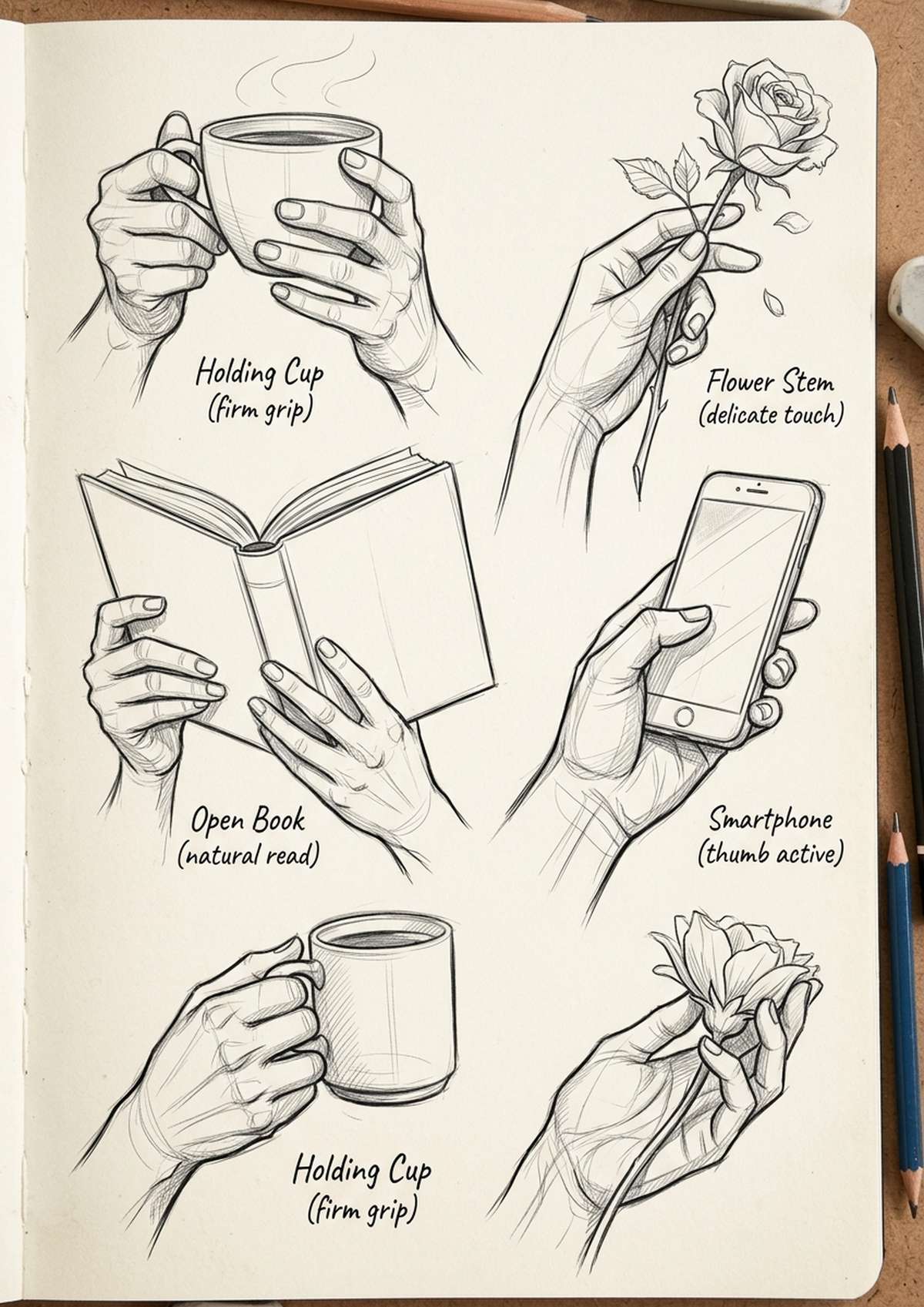
In real life, hands are almost always doing something — holding a cup, gripping a pen, cradling a phone. Practising hands with objects teaches you how fingers wrap around different shapes and how grip pressure changes the hand’s appearance.
Expressive Hand Gestures
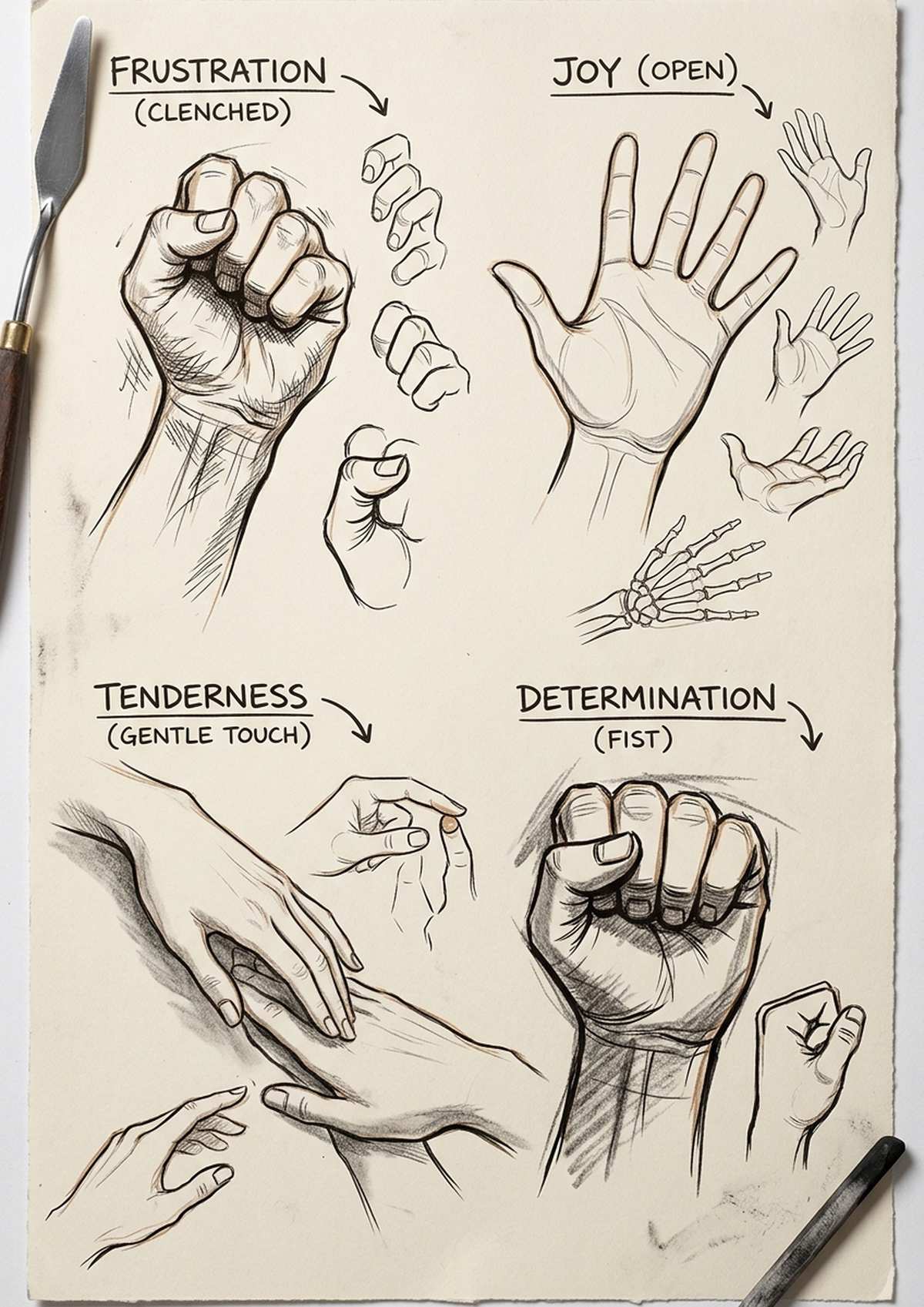
Hands can express emotion just as powerfully as faces. A clenched fist shows anger or determination. An open, upturned palm shows vulnerability or offering. Clasped hands convey anxiety or prayer. Pay attention to the tension in the fingers — tight and spread means stress, loose and curved means calm.
Free Hand Drawing Templates
I’ve created a set of 25 hand drawing templates that you can trace, paint over, and use as practice guides. Each template is a clean line drawing of a different hand pose — from open palms to pointing fingers to clasped hands.
Want a free taster? Grab my free Hand Drawing Reference Guide. It includes 8 sample hand templates from the full pack, ready to print and practise on.
Get your FREE Hand Drawing Reference Guide Here 👇🏻
For the full 25-template pack, check out the Hand Drawing Templates Pack — perfect for watercolour practice, sketchbook work, or just building your hand-drawing confidence.
Tips for Drawing Better Hands
- Start with basic shapes. Block in the palm as a rectangle, fingers as cylinders. Refine later.
- Use your own hand. It’s always available. Hold it in different poses and sketch what you see.
- Draw hands daily. Even 5-minute sketches build muscle memory fast. Pair it with one of my easy sketchbook ideas for daily prompts.
- Don’t outline first. Start with gesture lines showing the flow and energy of the hand, then add form.
- Study the negative space. The gaps between fingers are just as important as the fingers themselves.
- Foreshortening is your friend. Don’t avoid tricky angles — practise them with references until they click.
- Trace first, then freehand. Using templates to trace builds understanding of the shapes before you try from scratch.
Recommended Art Supplies for Hand Drawing
You don’t need much to practise drawing hands, but these supplies make the process more enjoyable:
- Staedtler Mars Lumograph Pencils — my favourite sketching pencils. The 2B and 4B are perfect for hand studies.
- Strathmore 400 Series Sketch Pad — lovely smooth paper that takes pencil and light watercolour beautifully.
- Winsor & Newton Cotman Watercolour Set — if you want to paint over your hand templates, this starter set is brilliant value.
Hands Reference Sheet: How to Practise from It
A hands reference sheet works best when you treat it like a set of exercises rather than pictures to copy. Here’s a simple routine I’d use with the hand poses reference in this post:
- Two-minute gestures. Draw five different hand poses fast, just the palm as a box and the fingers as lines. Speed stops you getting stuck on knuckles.
- One careful study. Pick one pose and build it properly: palm block, finger cylinders, then the outline.
- Same pose, new angle. Turn the reference in your head and draw it from the side. This is where you really start to understand hands.
What about a 2D hand reference?
If you draw cartoons, anime or flat illustrations, a 2D hand reference simplifies things even further: fewer knuckle lines, rounder fingertips and often just four fingers. The underlying shapes are the same, so practising with realistic hand poses first makes stylised hands much easier. For tiny stylised figures, try these chibi base poses.
To draw hands that belong to a whole figure, pair this with my figure drawing reference and female poses reference. For faces, try the face drawing reference or this face reference guide with free face templates.
Frequently Asked Questions
What is the best hand poses reference for beginners?
Start with simple, flat poses: an open palm, a relaxed hand from the side and a loose fist. They show the basic proportions without fingers overlapping, which is what makes hands hard.
What is a 2D hand reference?
It’s a simplified, stylised hand used in cartoons, anime and flat illustration, often with rounder fingers and fewer details. Learning realistic hand shapes first makes 2D hands much easier to draw.
How do I use a hands reference sheet?
Do quick two-minute gesture sketches of several poses, then one careful study of a single pose. Drawing the same pose from a new angle is the fastest way to improve.
What is the best way to learn hand drawing?
Start with references and templates. Trace existing hand outlines to understand the shapes, then gradually move to drawing freehand from reference photos. Daily practice — even just 10 minutes — builds skill faster than occasional long sessions.
Why are hands so hard to draw?
Hands have complex anatomy with 27 bones and dozens of possible positions. They also foreshorten dramatically depending on the angle. The good news? With reference sheets and practice templates, hands become much more manageable.
How do you draw realistic hand proportions?
The middle finger is roughly the same length as the palm. The palm is slightly longer than it is wide. The thumb reaches to about the middle of the index finger’s first joint. Start with these proportions and adjust as you observe real hands.
Can I use these hand templates for watercolour painting?
Absolutely. The templates are designed as clean outlines specifically for tracing and painting over. Print them on watercolour paper (or trace with a lightbox) and add your own colour. They work beautifully with watercolour, coloured pencils, and markers.
Are these templates free to use?
The free Hand Drawing Reference Guide includes 8 sample templates. The full 25-template pack is available as a paid product. All are for personal use — trace them, paint them, use them in your sketchbook.
More Drawing References
If you found these hand references helpful, you might also enjoy:
- Easy Drawing Ideas for Beginners (+ FREE Printable Sketchbook Prompts)
- 9 Easy Sketchbook Ideas That Are Actually Fun to Make
- How to Draw Flowers Step by Step: Beautiful Botanical Sketches
- How to Draw Animals for Beginners: Easy Step-by-Step Guide
- Easy Things to Draw When You’re Bored
- What to Draw: 100+ Ideas for Your Sketchbook
Written by Dee Maene — artist, creative educator, and founder of Artsydee. I’ve been teaching drawing and watercolour techniques for over a decade, helping thousands of beginners find their creative confidence. When I’m not painting, I’m probably drinking tea and plotting my next sketchbook page.
The free hand reference images and template will carry you a long way — but hands are only the beginning of the tricky-bits list. My Payhip shop has premium drawing template sets, reference packs and Procreate brushes for the rest of the sketchbook.
Browse the shop →
Thank you Dee for thinking of me when sending me the invite to your added new page. Absolutely love your work. And your generosity of sharing your art knowledge. Thank you very much, Marian.